

Florida is a wonderful destination for birdwatchers, thanks to its warm climate, diverse habitats, and seasonal migrations. Among its colorful wildlife, Orange Birds in Florida stand out with striking feathers, warm orange breasts, and vivid wing patches. Some species display orange across most of the body, while others show orange only on the chest, belly, wings, or tail. You can spot these beautiful birds in backyards, forests, wetlands, parks, and coastal habitats.
From the familiar American Robin to the brilliant Baltimore Oriole, each species has unique markings and behaviors. Understanding their orange plumage, size, habitat, and seasonal patterns makes identification easier. This guide explores 15 fascinating Florida birds, including orange-breasted birds and colorful migratory birds.
Orange Birds in Florida at a Glance
The table below gives you a quick field guide before you explore each species. Notice how much orange can vary between birds. Some species look fiery from a distance. Others reveal their orange plumage only when they fly, turn, or catch direct sunlight.
| Bird Name | Orange Coloring | Size | Habitat | Florida Status | Best Time to See |
| American Robin | Orange-red breast | Medium | Lawns, parks, woodlands | Seasonal/Common | Winter–Spring |
| Baltimore Oriole | Bright orange underparts | Medium | Woodlands, gardens | Migratory | Fall–Spring |
| Orchard Oriole | Chestnut-orange underparts | Small–Medium | Open woods, groves | Seasonal | Spring–Summer |
| American Redstart | Orange patches | Small | Forests, mangroves | Migratory | Migration |
| Painted Bunting | Red-orange breast | Small | Scrub, grasslands | Seasonal | Spring–Fall |
| Vermilion Flycatcher | Orange-red body | Small | Open areas | Uncommon | Fall–Winter |
| Blackburnian Warbler | Orange throat | Small | Forest canopy | Migratory | Migration |
| Rufous Hummingbird | Orange-rufous body | Tiny | Gardens, feeders | Uncommon | Fall–Winter |
| Northern Flicker | Orange underwings | Medium | Woodlands, yards | Resident/Seasonal | Year-round |
| Eastern Towhee | Rufous-orange sides | Medium | Brushy habitats | Year-round | Year-round |
| Brown Thrasher | Rusty-orange tones | Medium | Shrublands | Year-round | Year-round |
| Carolina Wren | Warm reddish-brown tones | Small | Yards, woodland edges | Year-round | Year-round |
| House Finch | Orange-red coloration | Small | Urban areas | Local/Seasonal | Year-round |
| Scarlet Tanager | Red-orange appearance | Medium | Mature forests | Migratory | Spring–Fall |
| Summer Tanager | Red-orange body | Medium | Woodlands, gardens | Seasonal/Resident | Spring–Fall |
Cornell Lab identifies orioles as fruit-, nectar-, and insect-eating birds that often forage high in trees. The Florida Museum also lists species such as the Northern Flicker, Vermilion Flycatcher, House Finch, Brown Thrasher, and American Robin in its Florida bird collection.
What Are Orange Birds in Florida?
The phrase orange birds in Florida describes a visual group rather than a formal bird family. A bird may look orange because of bright feathers, reddish-orange pigments, or warm rufous markings. That difference matters when identification gets tricky, especially under changing sunlight.
How Orange Plumage Appears in Birds
Orange feathers can appear vivid, rusty, chestnut, or almost coppery. Pigments and feather structure influence these shades. Sunlight also changes how your eyes perceive color. For example, a distant tanager may look orange before appearing distinctly red through binoculars.
Why Some Birds Have Bright Orange Feathers
Bright plumage often reflects genetics, age, sex, diet, and seasonal condition. Male orioles and tanagers commonly show stronger colors than females. Diet can also influence carotenoid-based reds, yellows, and oranges, making nutrition part of the larger color story.
Orange Birds vs. Orange-Breasted Birds
Not every orange-looking bird has an orange body. American Robins mainly show orange-red breasts, while American Redstarts flash orange patches during active movements. Therefore, always check exactly where the orange markings occur before deciding which species you found.
15 Orange Birds in Florida
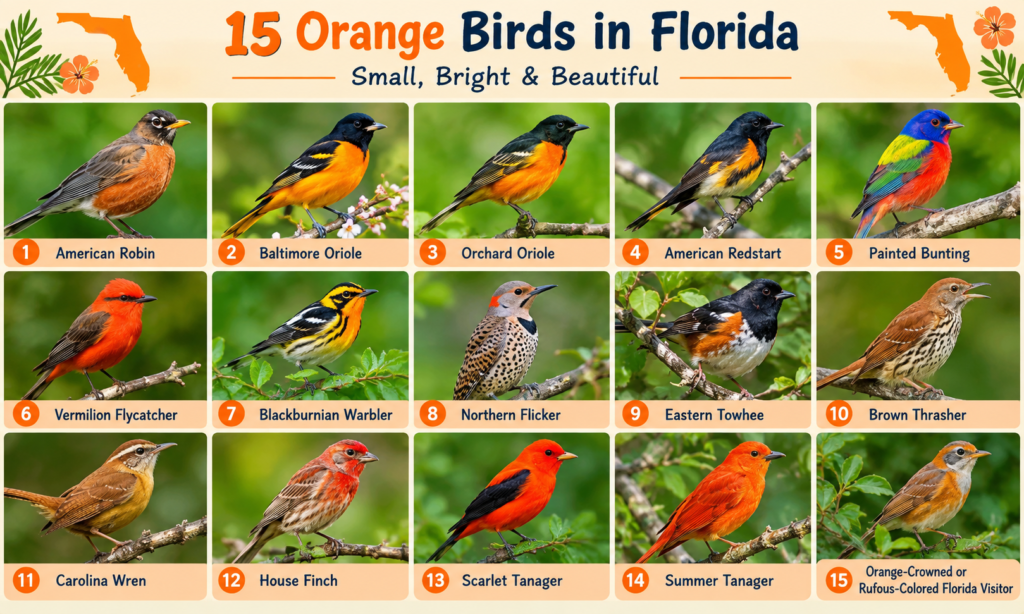
These 15 species offer a useful mix of bright plumage and subtler orange markings. Some are common winter visitors. Others appear during migration or breeding season. A few remain year-round. Together, they show just how varied Florida bird identification can become when color leads you toward the right species.
1. American Robin
The American Robin is one of Florida’s most familiar orange-breasted birds. Its rusty orange-red breast contrasts with a gray-brown back and darker head. During cooler months, robins can gather across lawns, parks, and open woodland. Their diet includes insects, earthworms, and fruit. The Florida Museum includes the species in its Florida bird collection.
2. Baltimore Oriole
Few birds create a stronger flash of color than the male Baltimore Oriole. His black head and wings contrast sharply with flame-orange underparts. Orioles often forage high in leafy trees while searching for insects, flowers, nectar, and fruit. Cornell notes that they also visit backyard fruit and nectar feeders.
3. Orchard Oriole
The Orchard Oriole is smaller and usually darker than its Baltimore cousin. Adult males show rich chestnut-orange underparts with black upperparts. They favor open woodland, scattered trees, orchards, parks, and river edges. Cornell describes this species as the smallest breeding oriole in North America.
4. American Redstart
The American Redstart looks like a tiny flying ember when it moves through foliage. Adult males are mostly black with bright orange patches on their sides, wings, and tail. They constantly flick their wings and tails while hunting insects. Cornell describes them as small, active warblers with distinctive orange patches.
5. Painted Bunting
The male Painted Bunting is a spectacular combination of blue, green, red, and orange. Its colorful appearance makes it one of Florida’s most memorable songbirds. Painted Buntings favor scrub, grasslands, brushy edges, and coastal habitats. They feed heavily on seeds and can become surprisingly elusive despite their brilliant plumage.
6. Vermilion Flycatcher
The Vermilion Flycatcher brings some of the brightest orange-red color to Florida’s birdlife. Males can show a fiery head, throat, and underparts against darker wings and back. They favor open landscapes where they can launch from perches to capture insects. The Florida Museum lists this species among Florida’s flycatchers.
7. Blackburnian Warbler
The male Blackburnian Warbler carries an astonishing orange throat for such a tiny bird. During migration, that fiery patch can stand out against dark leaves. These warblers spend much of their time high in forest canopies while searching for insects. Their small size makes binoculars extremely helpful during Florida migration.
8. Rufous Hummingbird
The Rufous Hummingbird is an excellent replacement for the earlier nonstandard “Black-and-Burnt Orange Warbler” entry. Males can show vivid orange-rufous plumage and a sparkling throat. Florida sightings are unusual rather than routine. UF/IFAS has documented Rufous Hummingbirds in Florida and describes the species as an uncommon visitor.
9. Northern Flicker
The Northern Flicker hides one of its best orange clues beneath the wings and tail. When it flies, those warm feathers can suddenly flash into view. Unlike many woodpeckers, flickers often forage on the ground for ants and other insects. The Florida Museum includes Northern Flicker among Florida’s woodpeckers.
10. Eastern Towhee
Eastern Towhees bring a handsome rusty-orange color to Florida’s dense vegetation. Males have black upperparts and warm rufous sides with a white belly. They often scratch through leaf litter while searching for food. Listen for movement beneath shrubs because these birds may reveal themselves before you see them.
11. Brown Thrasher
The Brown Thrasher has a warm, rusty appearance that can look distinctly orange in good light. Its long tail and streaked underside provide useful identification clues. This bird favors thick shrubs and woodland edges. It also has an impressive vocal repertoire, which makes sound an excellent identification tool.
12. Carolina Wren
Carolina Wrens are small birds with warm reddish-brown upperparts and a bold white eyebrow. Their upright tails and loud songs make them easier to recognize than their subdued color suggests. They commonly explore gardens, porches, brush piles, and woodland edges. The Florida Museum provides recordings of their distinctive calls.
13. House Finch
Male House Finches can show orange-red coloration around the face and breast. Their shades vary considerably, so some individuals look redder while others appear orange. These adaptable birds often use urban neighborhoods, gardens, parks, and feeders. Their association with developed areas makes them easier to encounter than many forest specialists.
14. Scarlet Tanager
The Scarlet Tanager is technically more scarlet-red than orange. However, warm sunlight can make its plumage appear strongly orange-red at a distance. Males pair brilliant bodies with dark wings. They favor mature woodland and migrate through Florida, giving birdwatchers another colorful forest visitor to watch for.
15. Summer Tanager
The male Summer Tanager ranges from deep red to vivid red-orange. That warm coloration can look almost flame-colored under direct sunlight. These tanagers use woodland edges, gardens, and mature trees while searching for insects and fruit. Florida birding resources note their presence during the warmer breeding season.
How to Identify Orange Birds in Florida
Successful orange bird identification takes more than spotting a bright feather. Start with color, then check shape, size, habitat, behavior, and season. This approach prevents common mistakes. After all, a rusty thrasher and an orange-breasted robin can look surprisingly similar from far away.
Look at the Whole Body
First, decide whether orange dominates the bird or appears in isolated patches. A mostly orange oriole has a very different visual pattern from a black American Redstart with orange wing patches. This simple distinction can eliminate several possibilities immediately.
Check the Breast, Belly, Wings, and Tail
Next, locate the orange precisely. Is it on the chest, belly, flanks, wings, or tail? Northern Flickers reveal orange mainly during flight. Robins display their strongest color on the breast. Location becomes a powerful field mark.
Pay Attention to Size and Shape
Size narrows your choices quickly. A tiny hummingbird has a completely different silhouette from a robin or thrasher. Look at the bill, tail length, body shape, and wing proportions. These details remain useful when poor light hides subtle colors.
Listen to the Bird’s Song
Birdsong can solve an identification puzzle when plumage alone fails. Florida’s bird community contains many visually similar species. Learning a few recognizable songs gives you another layer of evidence. The Florida Museum maintains recordings for numerous Florida species.
Consider the Habitat
Habitat provides another valuable clue. Orioles favor trees and open woodland. Towhees prefer dense brush. Flickers often forage on lawns and open ground. Matching a bird with its surroundings can quickly transform a vague guess into a confident identification.
Where to See Orange Birds in Florida
Florida’s varied landscape gives birdwatchers an impressive range of viewing opportunities. Birding locations include suburban gardens, pine forests, wetlands, coastal preserves, and migration corridors. You don’t always need a remote wilderness area. Sometimes a quiet neighborhood park can produce an excellent sighting.
Backyard Gardens and Bird Feeders
Your backyard can become a small birding station with native plants, clean water, and suitable food. Orioles may investigate fruit and nectar. Finches can visit seed feeders. Dense shrubs also provide shelter when birds need a quick escape from predators.
Florida’s Forests and Woodlands
Woodlands are especially useful during migration. Orioles, tanagers, warblers, thrashers, and flickers may use different layers of the same habitat. Search the canopy for orioles and warblers. Then scan the understory for towhees and thrashers.
Parks and Nature Preserves
Public parks can offer excellent habitat variety within a small area. Look for trails that cross woodland edges, open fields, ponds, and dense vegetation. These transition zones often concentrate birds because food and shelter occur close together.
Wetlands and Marsh Edges
Wetland edges can produce surprising bird diversity. Insects gather around vegetation and water. Fruit-bearing plants may grow nearby. Migrants can use these productive pockets as temporary refueling stations during long seasonal journeys.
Coastal Areas and Mangrove Habitats
Coastal Florida sits along important migration pathways. Birds may use coastal parks, hammocks, gardens, and mangroves while moving between seasonal ranges. Early mornings often provide the best combination of bird activity, cooler temperatures, and calmer conditions.
Migration Hotspots
Migration can turn an ordinary location into a birdwatching treasure chest. Spring and fall bring waves of movement through Florida. Check local bird reports and revisit productive locations because conditions can change dramatically from one morning to the next.
When Is the Best Time to See Orange Birds in Florida?
The best season depends on which Florida birds you want to find. Winter favors some northern visitors. Spring and fall bring migration. Summer can reveal breeding birds and territorial behavior. Therefore, Florida offers worthwhile birding opportunities across the entire calendar.
Winter Orange Birds
Winter can be especially productive for American Robins and other seasonal visitors. Cooler weather also makes extended walks more comfortable. Search open lawns, parks, woodland edges, and fruiting trees where birds can find energy-rich food.
Spring Migration
Spring migration brings a burst of movement through Florida. Orioles, warblers, tanagers, and other migrants can appear in parks and forests. Watch flowering trees and leafy canopies because insects often concentrate there when temperatures rise.
Summer Breeding Season
Summer changes the birding experience. Resident species become territorial while breeding visitors settle into suitable habitats. Listen for repeated songs from the same locations. Breeding males may also display their brightest plumage during this period.
Fall Migration
Fall migration sends birds south again. Coastal parks and woodland edges can become especially interesting. Fruiting plants can attract hungry migrants. Patience matters because a quiet patch of vegetation may suddenly come alive with several species.
Orange Birds in Florida by Region
Regional differences can help you plan your birding trip more intelligently. North, Central, South, and coastal Florida each offer different habitat combinations. However, birds move seasonally, so these categories should guide your search rather than act as rigid boundaries.
| Florida Region | Orange Birds You May Encounter | Best Habitats |
| North Florida | Robins, towhees, tanagers | Forests and yards |
| Central Florida | Orioles, buntings, flickers | Parks and woodlands |
| South Florida | Orioles, flycatchers, winter visitors | Gardens and open habitats |
| Coastal Florida | Migrants and seasonal visitors | Coastal parks and preserves |
Orange Birds vs. Similar-Looking Florida Birds
Color can fool even experienced birdwatchers. Red, orange, rust, chestnut, and brown often overlap visually. Bright sunlight can intensify warm colors, while shade can make orange appear brown. Age, sex, molt, and viewing angle can also alter the bird’s appearance.
Why Do Orange Birds Visit Florida?
Florida offers a fortunate combination of warmth, food, water, shelter, and diverse habitats. Its geographic position also places the state along major migration routes. That combination allows resident species to remain year-round while seasonal visitors use Florida as a wintering area or migration stop.
What Do Orange Birds in Florida Eat?
Food preferences vary widely between species. Insect-eating birds such as flycatchers and warblers actively hunt small prey. Orioles and tanagers also consume fruit. Finches favor seeds. Hummingbirds use nectar while taking tiny insects for protein. These dietary differences explain why varied habitats support more birds.
How to Attract Orange Birds to Your Florida Yard
A bird-friendly yard should offer more than a feeder. Native plants can provide natural food and shelter throughout the year. Add clean water and dense vegetation. Then reduce unnecessary chemical use. The goal is a living habitat, not simply a feeding station.
Plant Native Fruit-Producing Plants
Native fruiting plants can supply berries while also attracting insects. That creates a broader food web for birds. Choose plants suited to your local Florida conditions. A diverse planting scheme usually supports more wildlife than one heavily planted species.
Provide Fresh Water
Fresh water can make your yard considerably more attractive. Use a shallow birdbath and clean it regularly. Place it where birds can see approaching predators. Nearby shrubs can provide cover without allowing cats easy access.
Offer Suitable Bird Feed
Choose food according to the birds you hope to attract. Fruit and nectar can appeal to orioles. Seeds work better for finches and some sparrows. Avoid assuming one feeder will attract every species because birds have specialized feeding habits.
Create Dense Cover and Nesting Habitat
Dense shrubs provide hiding places, resting spots, and potential nesting sites. Layered vegetation works particularly well because birds use different heights. Native trees can also create canopy habitat for orioles, tanagers, and migrating warblers.
Avoid Harmful Chemicals
Pesticides can remove insects that many birds depend on for food. They can also expose wildlife to unnecessary chemicals. A healthier approach uses native plants, habitat diversity, and targeted pest management. Your garden then becomes part of the local ecosystem.
Orange Birds vs. Similar-Looking Species
Some Florida birds may look orange even when their dominant plumage is red, brown, chestnut, or yellow. The trick is to compare several features together. Plumage color, body shape, habitat, behavior, and season provide a far more reliable identification than color alone.
Conclusion
Florida’s colorful birdlife proves that orange comes in many shades. Some species display brilliant orange bodies. Others reveal rusty flanks, orange breasts, or hidden wing patches. Once you combine color, shape, habitat, behavior, and season, identification becomes much easier. Keep your binoculars ready because the next orange flash may be closer than you think.
For reliable identification, Cornell Lab’s species profiles provide detailed field marks and range information, while the Florida Museum offers a useful Florida bird collection and sound resources. The Florida Ornithological Society also maintains a statewide bird checklist.
FAQs
What is the most common orange bird in Florida?
The American Robin is one of the most familiar orange-breasted birds in Florida. It becomes especially noticeable during cooler months when wintering birds gather in open areas.
What small orange birds can be found in Florida?
American Redstarts, Blackburnian Warblers, and Rufous Hummingbirds can show striking orange coloration. Their size, behavior, and seasonal occurrence differ greatly, so habitat and timing help with identification.
What orange-breasted birds live in Florida?
The American Robin is the classic example. Baltimore Orioles, Orchard Orioles, and several migrants can also show orange or orange-red coloration across the breast and underparts.
What orange birds stay in Florida year-round?
Eastern Towhees, Brown Thrashers, Carolina Wrens, and Northern Flickers can occur year-round in suitable areas. Their exact local abundance depends on habitat and season.
What orange birds migrate through Florida?
Baltimore Orioles, Orchard Orioles, American Redstarts, Blackburnian Warblers, Scarlet Tanagers, and other colorful migrants can pass through Florida. Spring and fall migration offer some of the best opportunities.
What is the brightest orange bird in Florida?
The male Baltimore Oriole is one of the brightest and easiest orange birds to recognize. Vermilion Flycatchers and Rufous Hummingbirds can also show exceptionally vivid orange-red plumage.
Where is the best place to see orange birds in Florida?
There is no single best location. Parks, woodland edges, gardens, coastal preserves, and migration hotspots can all produce excellent sightings. Early morning usually offers the most active bird behavior.

Welcome to Birdelix! I’m Anam Sattar, an AI-powered SEO Specialist and Content Writer with over 5 years of experience in creating high-quality, search-optimized content. I help businesses improve their search engine rankings, increase organic traffic, and build beautiful, user-friendly websites. My mission is to make SEO, content creation, and web design simple, effective, and accessible for everyone. Let’s grow your online presence and achieve success together!