

Florida is home to an amazing mix of colorful birds, and Green Birds in Florida are especially fascinating to watch. From tiny hummingbirds to lively parakeets, these birds display shades ranging from emerald and olive to vivid lime green. You may spot small green birds in gardens, wooded parks, or quiet neighborhoods. Others, such as green parrots and green parakeets, often travel in noisy flocks above city streets.
Some species even resemble a green bird with black head, making identification easier when you know what to look for. Size, markings, habitat, flight style, and feeding behavior all provide useful clues. With careful observation, you can identify these beautiful Florida birds more confidently.
Green Birds in Florida at a Glance
The table below gives you a quick way to compare the 15 birds covered here. Some are regular Florida species, while others are uncommon or localized sightings. Range can also change with season and individual bird movements.
| Bird | Green Color | Size | Key Marking | Habitat | Florida Region |
| Nanday Parakeet | Green | Medium-small | Black head | Urban areas, parks | Localized Central & South |
| Mitred Parakeet | Bright green | Medium | Red facial markings | Cities, suburbs | Localized |
| Monk Parakeet | Green and gray | Medium-small | Gray face and breast | Urban areas | Central & South |
| Green Parakeet | Bright green | Small-medium | Green body | Urban landscapes | Localized South Florida |
| Yellow-chevroned Parakeet | Green and yellow | Small | Yellow wing markings | Woodlands, suburbs | Localized |
| White-winged Parakeet | Green | Small-medium | White wing patches | Urban areas | Localized South Florida |
| Red-masked Parakeet | Green and red | Medium | Red facial mask | Cities, neighborhoods | Localized |
| Rose-ringed Parakeet | Bright green | Medium | Long tail and neck ring | Urban areas | Localized |
| Cuban Emerald | Brilliant green | Tiny | Iridescent upperparts | Gardens, woodland edges | Very uncommon |
| Ruby-throated Hummingbird | Metallic green | Tiny | Ruby-red male throat | Gardens, woodland edges | Widespread |
| Green Heron | Dark green | Medium | Dark crown and back | Wetlands, ponds | Widespread |
| Buff-bellied Hummingbird | Green and buff | Tiny | Buff belly | Gardens, wooded areas | Very uncommon |
| Painted Bunting | Green in females | Small | Strongly different male plumage | Scrub, fields | North & Central |
| Red-eyed Vireo | Olive-green | Small | Red eye | Forests, woodlands | Widespread |
| Ovenbird | Olive-green | Small | Orange crown stripe | Forest floor | Mainly North & Central |
What Makes a Bird Look Green?
Green feathers aren’t always as simple as they appear. Pigments can influence color, while microscopic feather structures can reflect light in remarkable ways. Hummingbirds are a classic example because their metallic green feathers can seem brighter or darker as the bird moves.
Sunlight can completely change your impression of a bird. A parakeet hidden beneath shade may look dull green. The same bird can appear almost neon when sunlight strikes its feathers. Therefore, green plumage should always be considered alongside shape and markings.
How to Identify Green Birds in Florida
Color gives you the first clue. It shouldn’t give you the final answer. When identifying Florida bird species, look at several features together, including body shape, facial markings, wings, tail, bill, behavior, habitat, and location.
A good identification works like a detective story. Each feature adds another piece of evidence. If a small green bird has a hooked bill and a long tail, you’re probably looking at a parakeet rather than a songbird.
Check the Bird’s Size and Shape
Start with the overall silhouette. A hummingbird is tiny and compact, while a parakeet usually has a longer tail and a heavier bill. Songbirds tend to have slimmer proportions and different flight patterns.
Size can fool you at a distance. A bird perched high in a tree may look smaller than it really is. Compare it with nearby branches, leaves, or familiar birds whenever possible.
Look at the Head, Face, and Breast
The head often provides the quickest identification clue. A black head can point toward a Nanday Parakeet. A red facial mask suggests a Red-masked Parakeet. A bright throat can also separate one species from another.
Pay attention to the eyes as well. The Red-eyed Vireo has a useful red eye that contrasts with its olive-green body. Small details like these can turn a vague sighting into a confident identification.
Examine the Wings and Tail
Wing patterns become especially useful when several birds share similar green bodies. Yellow markings can reveal a Yellow-chevroned Parakeet. White patches can point toward a White-winged Parakeet.
Tail length also matters. Many parakeets have noticeably long tails. Hummingbirds have very different proportions, while songbirds usually have shorter and less dramatic tails.
Notice the Beak and Feeding Behavior
The bill tells another part of the story. Parrots have strong, curved bills designed for seeds, fruit, and other firm foods. Hummingbirds have slender bills suited to nectar and tiny prey.
Watch what the bird does rather than simply staring at its color. A hovering bird visiting flowers behaves very differently from a flock of noisy parrots feeding in a tree.
Use Habitat and Location as Clues
Habitat can narrow your choices surprisingly fast. A compact green bird beside a pond deserves different attention from a green bird screaming above a suburban street.
Florida’s wetlands, forests, gardens, coastal areas, and cities support different bird communities. Your location won’t identify a bird by itself. However, it can help confirm whether your visual identification makes sense.
15 Green Birds in Florida
Florida’s green birds include some obvious head-turners and some surprisingly subtle species. The following 15 examples cover parrots, parakeets, hummingbirds, herons, and woodland birds.
1. Nanday Parakeet
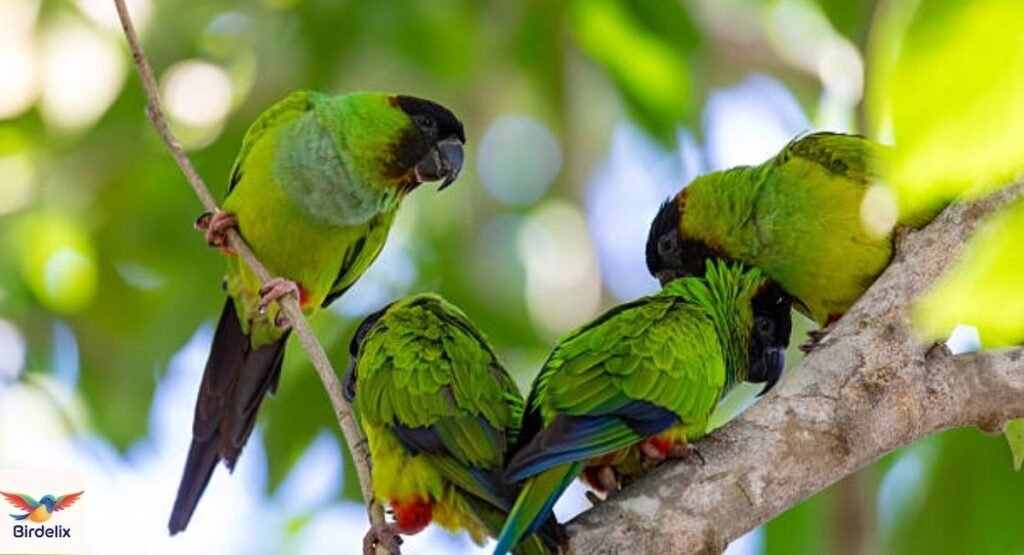
The Nanday Parakeet is one of the easiest matches for the phrase green bird with black head. Its body is mainly green, while its head and upper face create a striking dark contrast. Its long tail and sturdy bill reinforce the parakeet shape.
These birds can be social and conspicuous. Their loud calls may reveal a flock before you see it. In Florida, sightings are localized rather than evenly distributed across the entire state. That makes location especially important when identifying one.
2. Mitred Parakeet
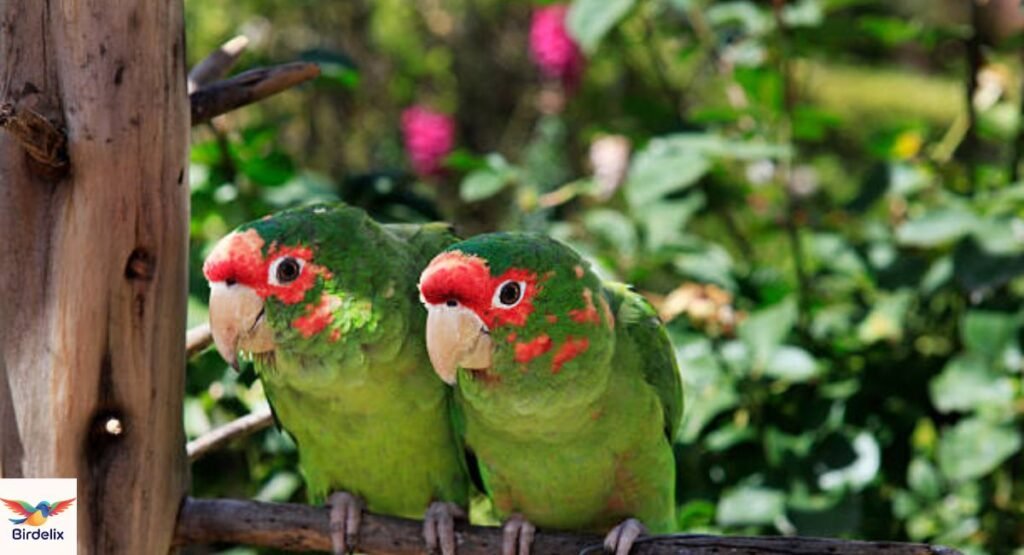
The Mitred Parakeet combines vivid green plumage with red around the face. Its long tail, pointed wings, and strong bill give it the unmistakable outline of a parakeet.
Look closely at the facial color when comparing it with other green parrots. Urban trees, suburban neighborhoods, and landscaped areas can provide suitable settings for sightings. Still, its Florida distribution is localized, so a photograph and location record can be useful.
3. Monk Parakeet

The Monk Parakeet has a green body that contrasts with grayish coloration around the face and breast. That muted chest pattern makes it look different from several brighter green parakeets.
It is also known for its social nature and communal nesting behavior. In developed areas, these birds can adapt remarkably well to human-altered landscapes. Their repeated calls and group behavior often make them easier to notice than quiet woodland birds.
4. Green Parakeet

The Green Parakeet has the straightforward appearance its name suggests. Its body is predominantly green, while its compact shape, curved bill, and elongated tail point toward the parakeet group.
When identifying this bird, don’t stop at color. Check the face, wings, tail, and bill carefully. Similar-looking green parakeets can share urban habitats, which makes small differences especially valuable.
5. Yellow-chevroned Parakeet
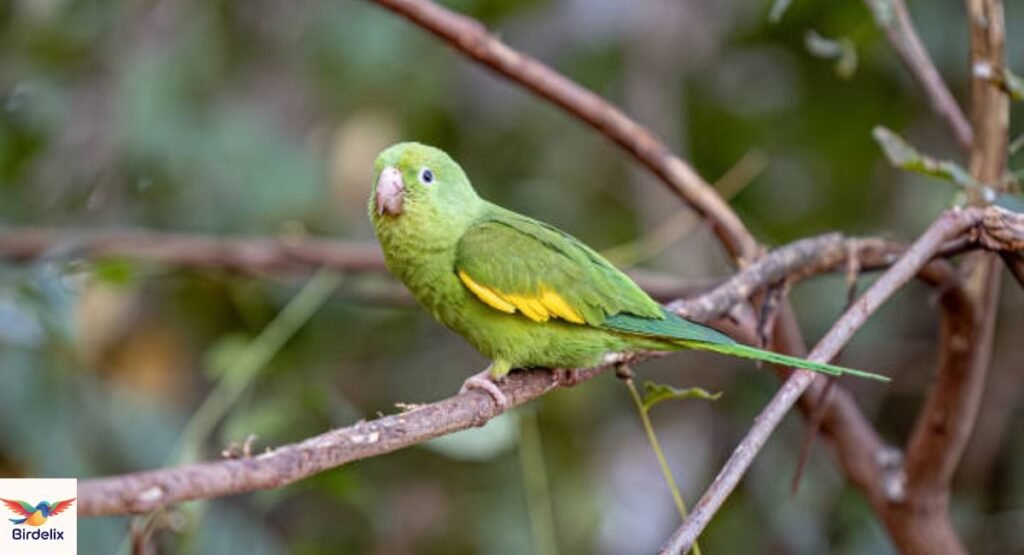
The Yellow-chevroned Parakeet is mostly green but carries distinctive yellow markings on the wings. Those markings can become particularly helpful when the bird takes flight.
Its small, slender body separates it from larger parrots. Watch the wings as the bird moves between trees. A flash of yellow against green can provide the clue you need when the bird disappears quickly.
6. Black-whiskered Vireo

The Black-whiskered Vireo has olive-green upperparts with a pale underside and a distinctive dark whisker-like marking beside its face. This subtle pattern makes it different from the brighter green parrots and parakeets often seen around Florida.
You are most likely to find this small songbird in South Florida birds habitats, especially dense shrubs, hammocks, and wooded areas. It often stays hidden among leaves, so listening for its repeated song can be just as useful as watching for its olive-green body.
7. Red-masked Parakeet

The Red-masked Parakeet stands out because of its vivid red facial area. Against the green body, that color creates a strong visual signature.
Its tail is relatively long and its bill has the sturdy shape expected in a parakeet. If you spot a green parrot with a clear red face, compare the facial pattern carefully before settling on an identification.
8. Rose-ringed Parakeet
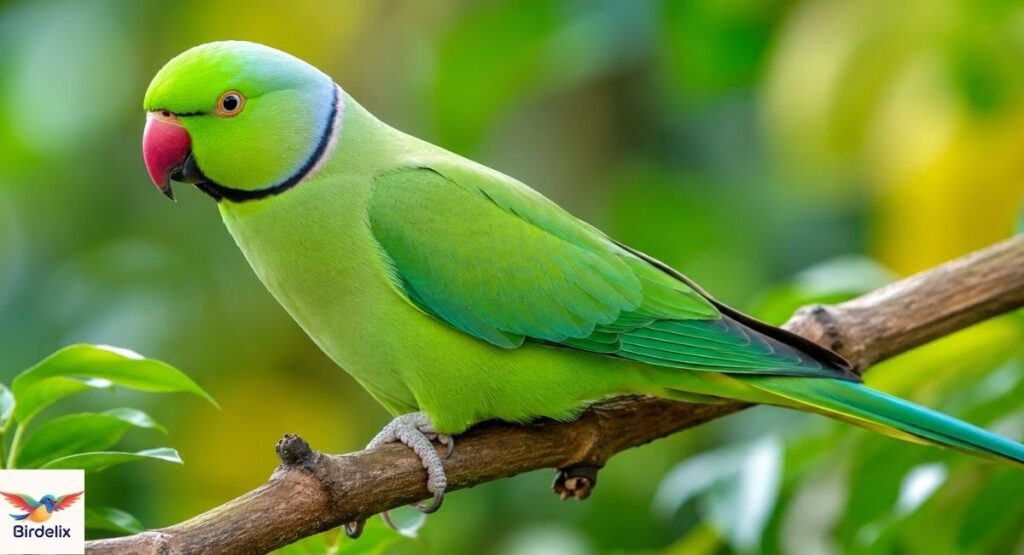
The Rose-ringed Parakeet is famous for its brilliant green body and unusually long tail. Adult males develop a dark-and-pinkish neck ring that becomes an important identification feature.
Females and immature birds don’t show the same obvious male ring. Therefore, sex and age can change the bird’s appearance considerably. A long-tailed green parakeet without a visible neck ring isn’t automatically a different species.
9. Cuban Emerald
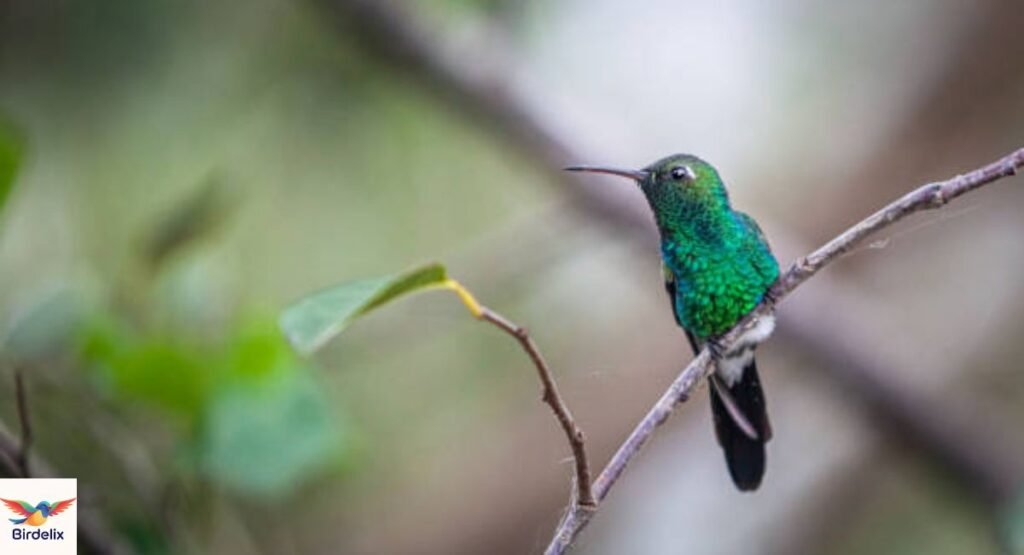
The Cuban Emerald is a tiny hummingbird with striking green upperparts and an iridescent appearance. Its size immediately separates it from parrots and parakeets.
Its rapid wing movement and hovering flight are equally distinctive. Florida sightings are not comparable to those of the common Ruby-throated Hummingbird. Treat an unusual hummingbird as a careful identification challenge rather than assuming every green hummingbird belongs to a common species.
10. Ruby-throated Hummingbird
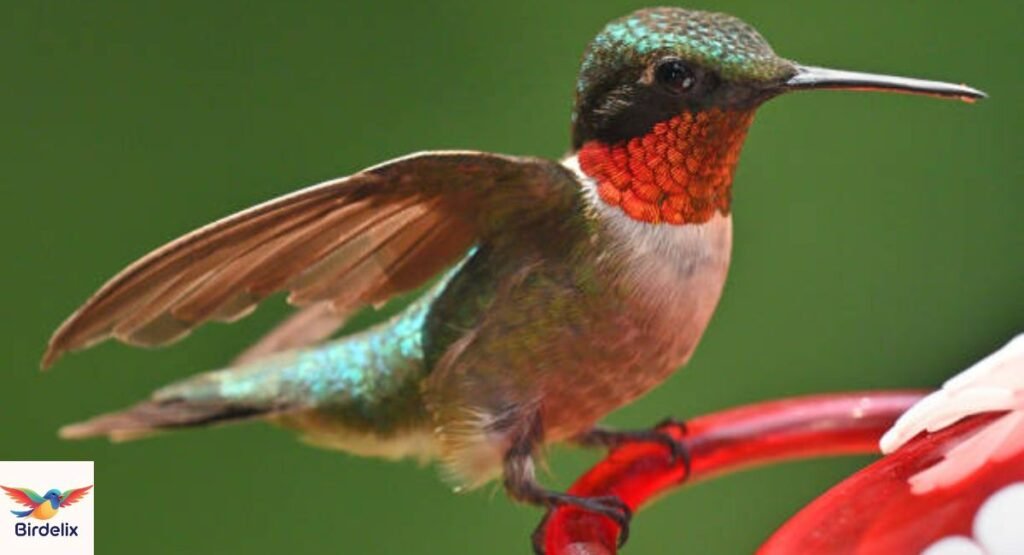
The Ruby-throated Hummingbird is the standout among Florida’s hummingbirds. UF/IFAS describes it as the state’s most common hummingbird, with metallic green backs and a tiny body of about three inches.
Adult males carry the famous ruby-colored throat. Females lack that red throat and show a paler underside. Most Florida hummingbirds are small enough to look almost jewel-like in motion. Their wings can beat between roughly 50 and 200 times each second.
11. Green Heron
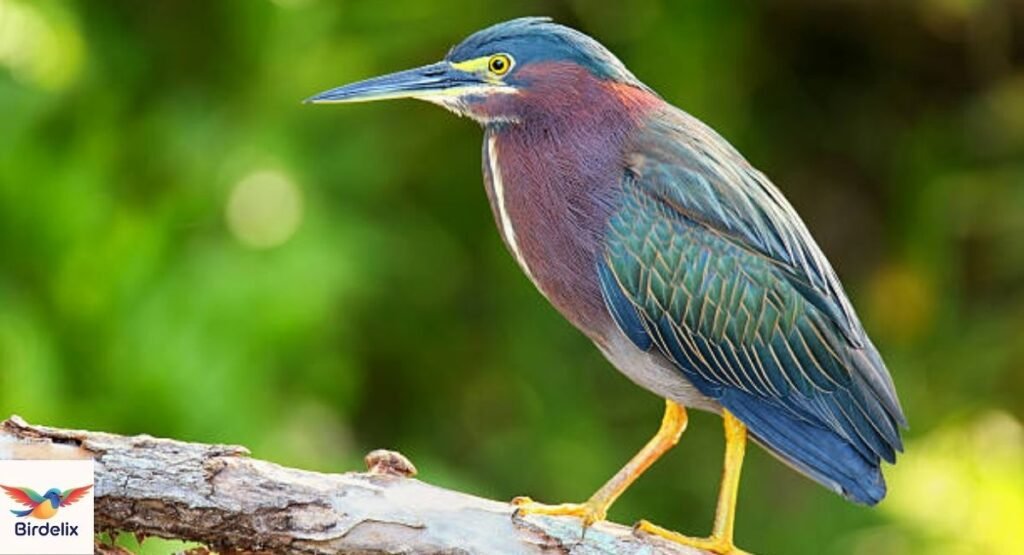
The Green Heron looks nothing like a parakeet despite its greenish plumage. It has a compact body, dark greenish back, dark crown, and relatively short legs compared with larger herons.
Look for it around ponds, canals, marshes, mangroves, and other wet habitats. Green Herons can remain remarkably still while hunting. UF/IFAS also notes their unusual ability to use small objects as fishing lures.
12. Buff-bellied Hummingbird

The Buff-bellied Hummingbird combines green upperparts with warmer buff coloration below. Its slender bill, tiny body, and hovering feeding style place it firmly among hummingbirds.
A sighting can be much more challenging than finding a Ruby-throated Hummingbird. Florida has only three regularly recognized hummingbird species, with Ruby-throated by far the most common. Black-chinned and Rufous Hummingbirds occur less often, particularly during winter.
13. Painted Bunting
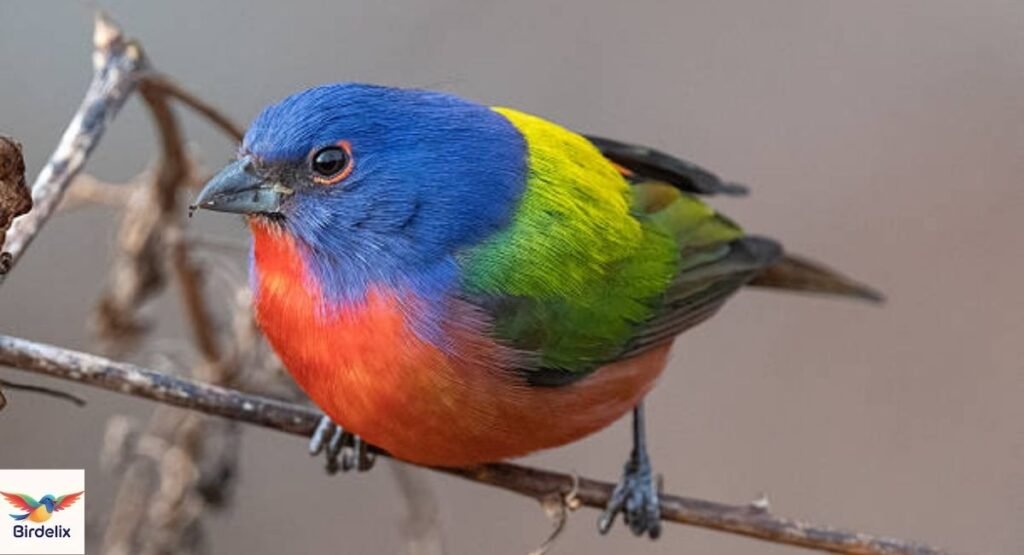
Painted Buntings provide an interesting twist because not every individual shows the famous male’s vivid colors. Females and immature birds can have attractive greenish or yellow-green plumage.
Adult males look dramatically different, with blue, red, and green tones. Florida’s scrub, fields, gardens, and coastal habitats can provide opportunities to encounter them. Their contrasting age and sex plumages make careful observation worthwhile.
14. Red-eyed Vireo
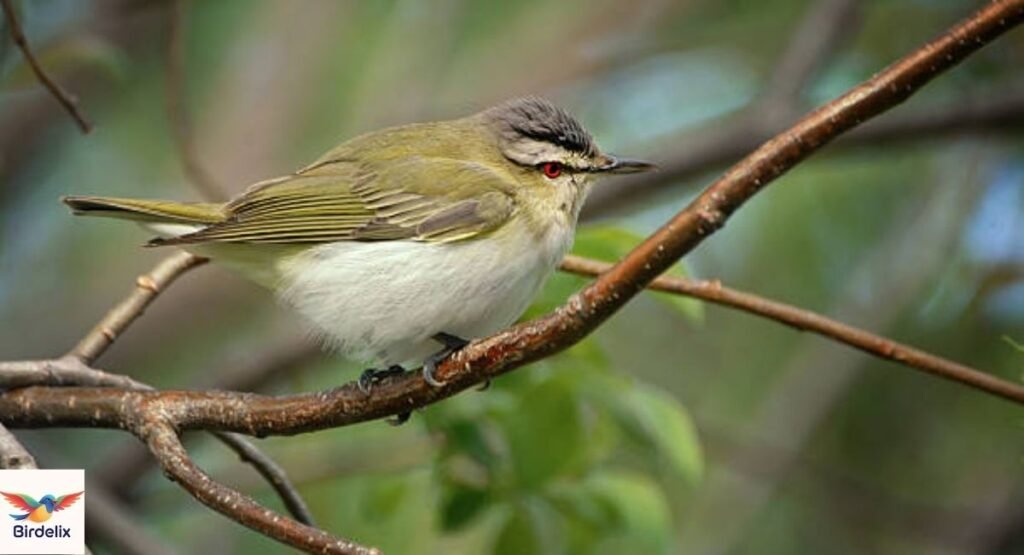
The Red-eyed Vireo is a quieter example of a greenish Florida bird. Its olive-green back contrasts with a much paler underside, while the red eye provides its signature feature.
It favors wooded environments rather than noisy urban streets. Its subdued coloration can make it difficult to spot among leaves. Listen as well as look. In dense foliage, the bird’s song may reveal its presence before its body does.
15. Ovenbird
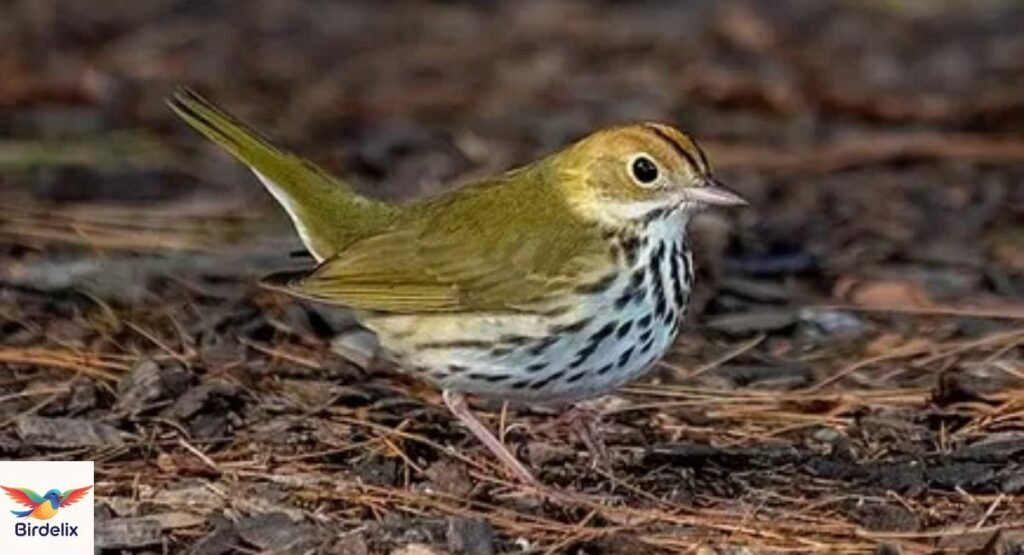
The Ovenbird has olive-green upperparts and distinctive head markings. Its overall color is subtle rather than brilliantly green, so it can easily escape notice.
Unlike parrots, it spends much of its time foraging on the forest floor. Watch leaf litter and shaded woodland paths rather than only scanning the treetops. This ground-based behavior is one of its most useful identification clues.
Green Parrots in Florida
Florida’s green parrots are generally easier to notice than many green songbirds. Their hooked bills, strong feet, long tails, loud calls, and social behavior give them a distinctive character.
However, “parrot” and “parakeet” can overlap in everyday bird names. Many birds called parakeets belong to the parrot family. When identifying one, focus on physical traits rather than the common name alone.
Green Parakeets in Florida
Florida’s green parakeets can be especially noticeable in urban and suburban landscapes. Mature trees, ornamental plants, fruiting trees, and accessible nesting structures can all create useful habitat.
Color alone can cause confusion. Instead, compare the head, face, wings, tail, and bill. A black head points you toward a different identification than a red mask or a bright yellow wing patch.
Small Green Birds in Florida
Small birds create some of the hardest identification puzzles. A tiny hummingbird can look like a green jewel, while a small songbird may show only a muted olive back.
Watch movement first. Hummingbirds hover and dart between flowers. Songbirds hop through vegetation. Small parakeets often fly rapidly between trees while calling loudly. These behavioral clues can be more reliable than color.
Bright Green Birds in Florida
Bright sunlight can make some birds look almost fluorescent. Parakeets may appear intensely green, while hummingbirds can produce a metallic flash that seems to change as they move.
Iridescence explains part of this visual drama. The feather structure reflects light differently depending on the viewing angle. A bird photographed from one direction may therefore look noticeably different from the same bird seen moments later.
Lime Green Birds in Florida
“Lime green” isn’t a formal bird color category. People usually use the phrase for feathers that appear bright yellow-green or unusually vivid.
If you see a lime-green bird, don’t rely on that description alone. Check the wings, head, tail, bill, and behavior. Strong sunlight can exaggerate yellow-green tones and make an olive bird appear much brighter.
Green and Black Birds in Florida
Green-and-black combinations can make identification much easier. A dark head, black wing area, or strong facial contrast may narrow your options quickly.
Still, distance can distort colors. Shadows can make green feathers appear black. Always check the entire bird before deciding. A photograph taken in good light can be particularly helpful for difficult sightings.
Green Birds With Black Heads in Florida
The Nanday Parakeet is the standout example when someone describes a green bird with black head. Its green body and dark head create an unusually sharp contrast.
Other birds can appear dark-headed when viewed from far away. Before confirming the identification, check tail length, bill shape, body size, flock behavior, and habitat. Those extra clues prevent color-based mistakes.
Big and Large Green Birds in Florida
Large green birds are usually easier to notice because their silhouettes are more dramatic. A large parrot or macaw can look completely different from a small parakeet when both fly overhead.
Pay attention to wingspan, bill size, tail length, and flight power. A large hooked bill suggests a parrot. A long narrow tail can point toward certain parakeets. These structural clues remain useful even when color is difficult to see.
Loud Green Birds in Florida
Some green parrots announce themselves long before they appear. Their calls can carry across neighborhoods, parks, and busy streets, especially when several birds travel together.
Sound can therefore become part of Florida bird identification. A loud flock flying between rooftops suggests a very different birding experience from a quiet hummingbird visiting flowers. Learn the general call pattern, then combine it with visual evidence.
Where to Find Green Birds in Florida
Florida offers an impressive range of bird habitats within a relatively small geographic area. Tropical vegetation dominates some southern landscapes, while northern forests and wetlands create a different bird community.
Urban areas shouldn’t be overlooked. Gardens, mature street trees, parks, drainage ponds, and landscaped neighborhoods can attract surprisingly diverse wild birds in Florida.
Green Birds in Miami, Florida
Miami’s warm climate and tropical landscaping create excellent conditions for observing colorful urban birds. Look around mature trees, gardens, parks, and residential neighborhoods.
South Florida is particularly interesting for parrot and parakeet watchers. However, local abundance changes by neighborhood. A quiet morning walk through leafy areas can reveal birds that disappear beneath midday traffic and noise.
Green Birds in Clearwater, Florida
Clearwater combines coastal neighborhoods with parks, landscaped gardens, freshwater habitats, and nearby wetlands. That mixture creates several opportunities for spotting green-plumaged birds.
Look for flowering plants when searching for hummingbirds. Near ponds and marshy edges, scan vegetation carefully for Green Herons. Urban trees can also attract parakeets and other adaptable birds.
Green Birds in Sarasota, Florida
Sarasota offers a blend of coastal habitat, parks, residential landscapes, wooded areas, and freshwater environments. That variety means habitat often provides the first clue.
UF/IFAS notes that Green Herons can occur in wetland environments around Sarasota and may even perch in unusual places near boats.
Green Birds in Tampa, Florida
Tampa provides an appealing mix of urban neighborhoods, parks, wetlands, and freshwater habitats. Mature vegetation can attract hummingbirds and woodland species, while open urban spaces may produce parakeet sightings.
The best approach is to match your search to habitat. Scan flowers for hummingbirds, leafy trees for songbirds, and shallow water edges for Green Herons.
Green Birds in Bradenton, Florida
Bradenton’s residential landscapes, parks, coastal areas, and inland green spaces offer several useful birding environments. Flowering plants can attract hummingbirds, while mature trees provide cover for songbirds and parrots.
Early morning is often the most productive period for observation. Birds are active, temperatures are comfortable, and human activity is usually lower.
Green Birds in South Florida
South Florida’s tropical and subtropical landscape makes the region especially interesting for colorful birds. Miami-Dade and Broward County neighborhoods contain abundant ornamental vegetation and mature trees.
Parrots and parakeets can be conspicuous in developed areas. Meanwhile, gardens can attract hummingbirds and other nectar-seeking birds. Florida-friendly landscaping can make residential spaces even more valuable to wildlife.
Green Birds by Habitat
Habitat is one of the strongest clues you have. A bird’s color may look ambiguous, but its surroundings can reveal what type of species you’re seeing.
Florida’s habitat mosaic includes gardens, cities, wetlands, forests, ponds, and coastal landscapes. Each environment offers different food, shelter, and nesting opportunities.
Green Birds in Backyards and Gardens
Backyards can become miniature wildlife habitats when they contain native plants, flowering species, fruiting vegetation, water, and shelter. Hummingbirds especially benefit from nectar-rich flowers.
UF/IFAS recommends using a variety of plants that bloom throughout the year. Native Florida plants such as firebush, coral honeysuckle, and coral bean can provide useful hummingbird resources.
Green Birds in Parks and Urban Areas
Urban parks can be surprisingly productive birding locations. Mature trees provide food and cover, while open lawns make moving birds easier to spot.
Parakeets may use city trees and buildings as part of their daily range. Hummingbirds can visit landscaped flower beds. Songbirds may remain hidden in shrubs, so slow observation usually beats a hurried walk.
Green Birds Near Wetlands and Ponds
Wetlands are particularly important for Florida’s water-associated birds. Green Herons often use vegetated pond margins and shallow water for hunting.
Don’t scan only the open water. Look along reeds, branches, mangroves, and shoreline vegetation. A Green Heron may stand almost motionless until it suddenly strikes at prey.
Green Birds in Forests and Woodlands
Forests provide cover for songbirds, migrants, hummingbirds, and other species. Dense foliage can make green birds difficult to see because their plumage blends naturally with leaves.
Use both sight and sound. Watch branches slowly and listen for repeated calls. Birds such as vireos can remain almost invisible while singing from dense vegetation.
Green Birds vs. Green Parrots vs. Green Parakeets
Not every green bird is a parrot. Hummingbirds have tiny bodies and slender bills. Songbirds have different feet, bills, and proportions. Herons have long legs and specialized hunting bills.
Parakeets usually show the classic parrot combination of a curved bill, strong feet, and a relatively long tail. Their flocking behavior and loud calls can provide additional clues when visual details are hard to see.
How to Attract Green Birds to Your Florida Yard
A bird-friendly yard starts with habitat rather than decoration. Native flowering plants can provide nectar, while fruiting and seed-producing plants offer additional food resources.
Water also matters. Keep birdbaths clean and refresh standing water regularly. UF/IFAS recommends changing birdbath water every few days when rainfall doesn’t do the job.
Avoid turning feeders into the entire food system. A diverse landscape gives birds shelter, natural food, insects, nesting opportunities, and places to rest. UF/IFAS also emphasizes that hummingbirds need more than sugar-water feeders, with plants providing important natural food.
Conclusion
Green birds in Florida come in many shapes, sizes, and shades. From tiny hummingbirds to noisy parakeets, each species has unique markings that make identification easier. Pay attention to the bird’s size, head pattern, wings, tail, habitat, and behavior. These simple clues can help you separate a bright green parakeet from a small songbird or heron.
Whether you explore South Florida, city parks, wetlands, or your backyard, keep your eyes open. With a little practice, spotting and identifying these colorful Florida birds becomes an enjoyable part of birdwatching.
FAQs
What is the most common green bird in Florida?
The Ruby-throated Hummingbird is one of Florida’s most familiar green-plumaged birds. UF/IFAS identifies it as the state’s most common hummingbird, with metallic green upperparts.
What green bird in Florida has a black head?
The Nanday Parakeet is the strongest match. Its green body, black head, long tail, and loud social behavior make it especially recognizable.
What are the small green birds in Florida?
Small green birds include hummingbirds, vireos, and some smaller parakeets. Size, flight style, bill shape, and feeding behavior help separate these groups.
Are there green parrots in Florida?
Yes. Florida has several green parrot and parakeet species, although their abundance varies by region. Some are strongly associated with urban and suburban environments.
Where can I see green birds in South Florida?
Try parks, gardens, residential neighborhoods, mature trees, and tropical landscapes. South Florida offers especially interesting opportunities for spotting parrots, parakeets, hummingbirds, and other colorful birds.

Welcome to Birdelix! I’m Anam Sattar, an AI-powered SEO Specialist and Content Writer with over 5 years of experience in creating high-quality, search-optimized content. I help businesses improve their search engine rankings, increase organic traffic, and build beautiful, user-friendly websites. My mission is to make SEO, content creation, and web design simple, effective, and accessible for everyone. Let’s grow your online presence and achieve success together!