

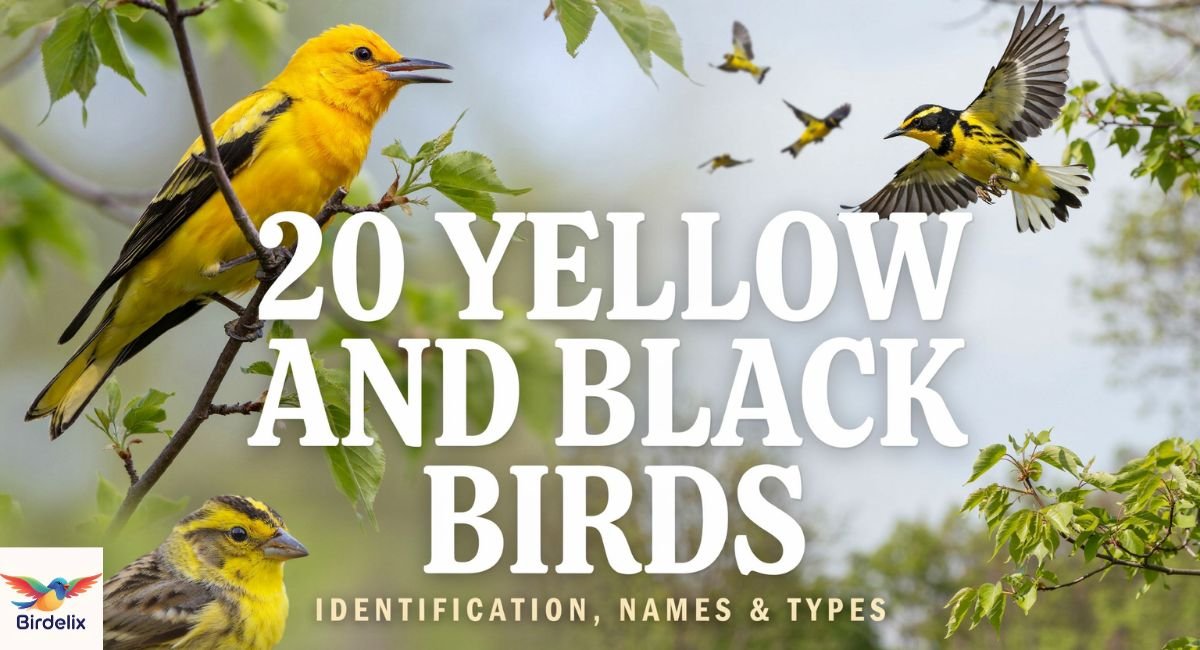
From backyard feeders to open grasslands, Yellow and Black Birds are among the most eye-catching birds in North America. Their bold plumage can feature bright yellow bodies, dark wings, black heads, or striking breast markings. Some are tiny warblers, while others are larger meadowlarks, orioles, and grosbeaks. Learning their colors is a great start, but bird identification also depends on size, bill shape, habitat, behavior, and range.
In this guide, you’ll discover 20 fascinating species, their scientific names, key markings, diets, and preferred habitats. You’ll also learn how to recognize yellow birds with black wings, black birds with yellow heads, and other colorful species commonly found across the United States.
What Are Yellow and Black Birds?
Yellow-and-black plumage develops through genetics, feather structure, and pigments. Melanin produces dark black and brown tones, while carotenoids create many yellow, orange, and red shades. Birds often obtain carotenoids through their diet, making food and feather growth closely connected.
Color can also change with age, sex, and season. Males often become brighter during breeding, while females and juveniles may look duller. The American Goldfinch is a classic example because its summer male plumage is much brighter than its winter appearance.
20 Yellow and Black Birds
These species show different versions of the same striking color combination. Some have yellow bodies and dark wings. Others have black bodies, yellow heads, or bold yellow breast markings. Their habitats range from wetlands and grasslands to forests and suburban gardens.
1. American Goldfinch
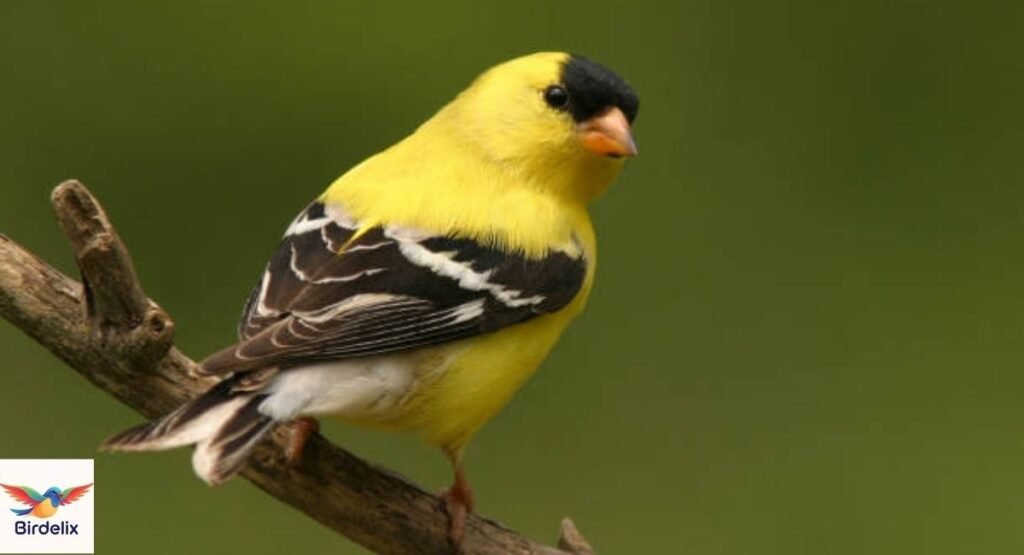
Scientific name: Spinus tristis
The American Goldfinch is one of the most recognizable yellow and black songbirds in the United States. Breeding males have bright yellow bodies, black foreheads, wings, and tails. Females are duller. They favor fields, gardens, roadsides, and feeders, where they mainly eat seeds. Their seasonal color change can be dramatic.
2. Western Tanager
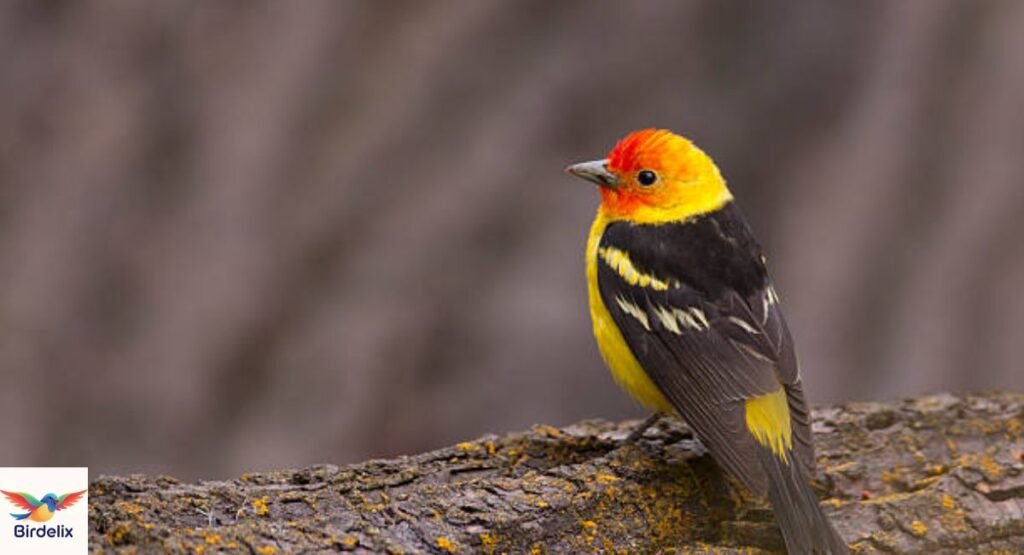
Scientific name: Piranga ludoviciana
The Western Tanager combines a yellow body with black wings and a striking red-orange face in breeding males. It breeds mainly in western forests and mountain regions. Its diet includes insects, berries, and other seasonal foods. The bright face makes it easy to separate from many simpler yellow birds with black wings.
3. Yellow-headed Blackbird
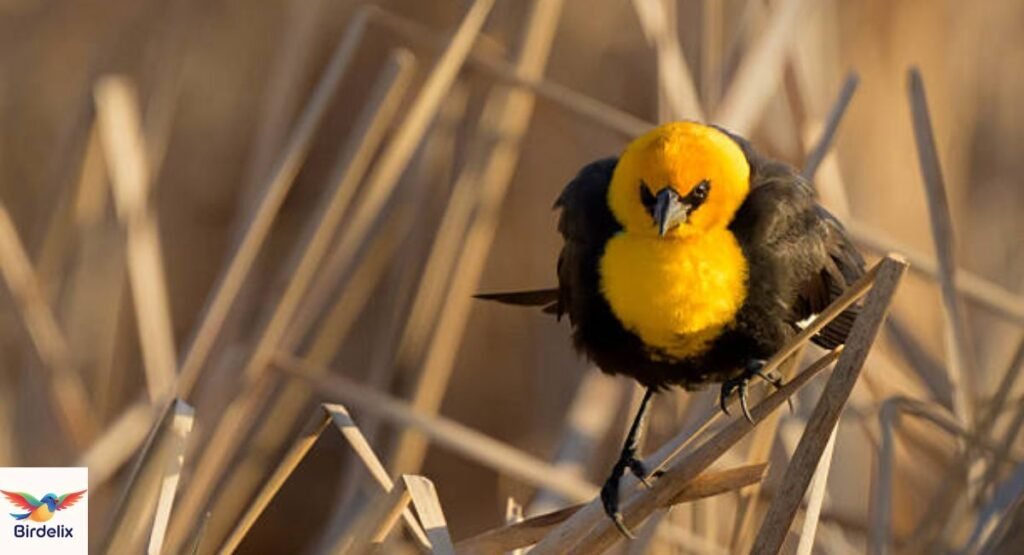
Scientific name: Xanthocephalus xanthocephalus
The Yellow-headed Blackbird has an unforgettable bright yellow head and breast against a glossy black body. It breeds around cattail marshes and freshwater wetlands across western and central areas. It also forages in fields and open country. During winter, large flocks can gather in parts of the Southwest.
4. Common Yellowthroat
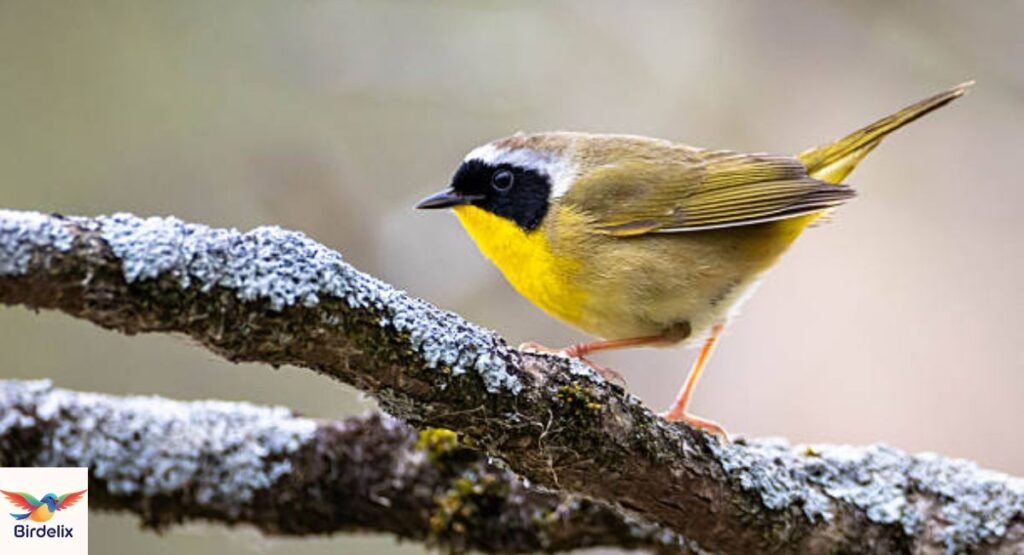
Scientific name: Geothlypis trichas
The Common Yellowthroat is a small songbird with a bright yellow throat and a bold black facial mask in males. Its olive upperparts provide camouflage in dense vegetation. It favors marshes, wet thickets, and brushy fields. Many populations migrate seasonally, while some remain farther south year-round.
5. Yellow Warbler
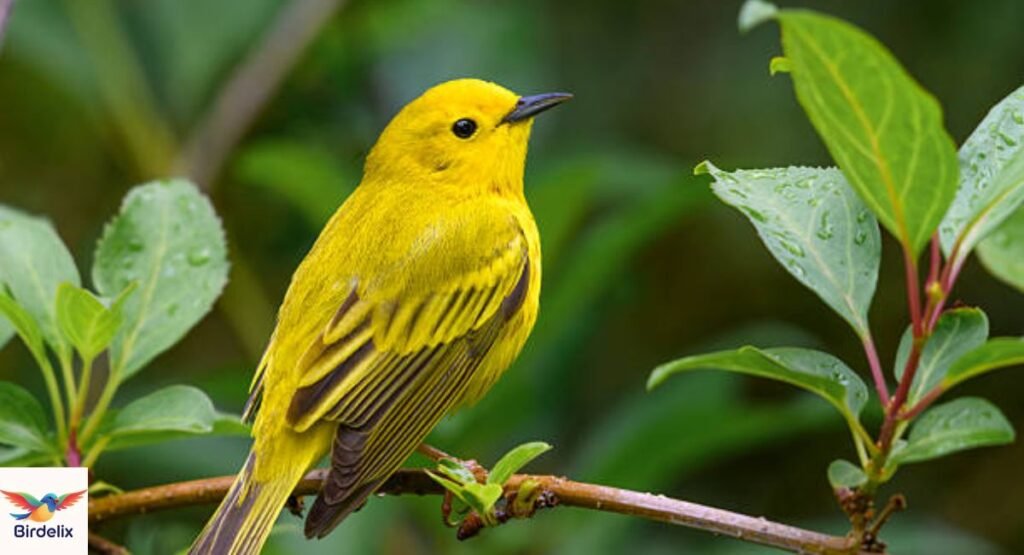
Scientific name: Setophaga petechia
The Yellow Warbler has bright yellow plumage that makes it especially noticeable during spring migration. Males often show reddish streaks across the breast. It breeds across much of North America and uses shrubs, woodland edges, streams, and wetlands. Small insects form an important part of its active feeding routine.
6. Hooded Warbler
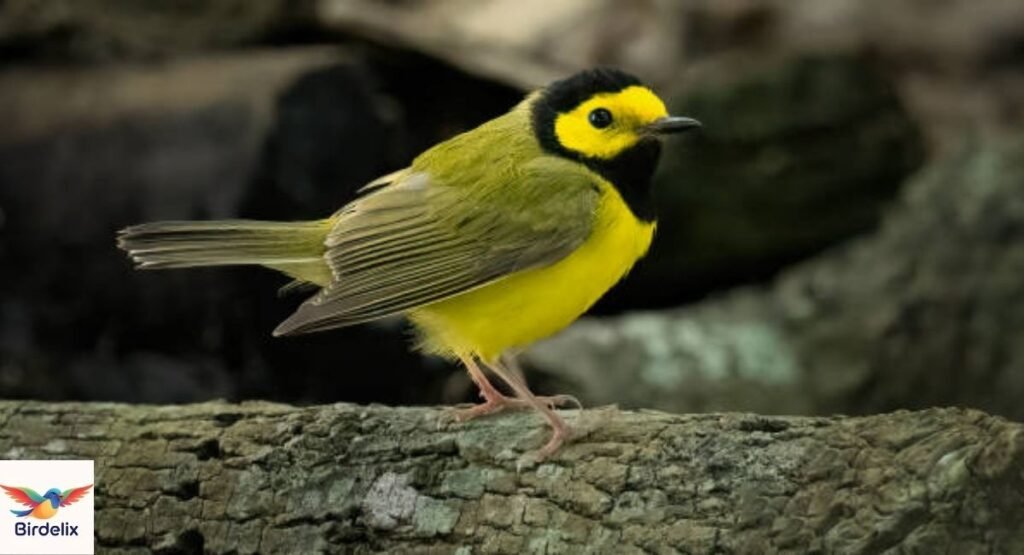
Scientific name: Setophaga citrina
The male Hooded Warbler has a yellow face and underside surrounded by a dramatic black hood. Its olive back and rounded shape provide additional clues. It prefers mature deciduous forests with dense understory. Females have a softer pattern, so the black hood is most useful when identifying adult males.
7. Blackburnian Warbler
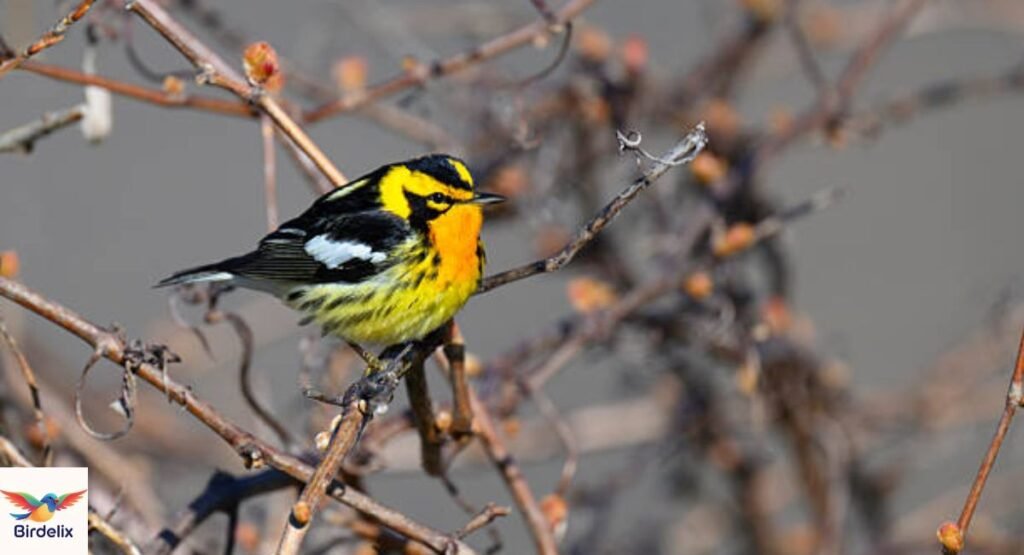
Scientific name: Setophaga fusca
The Blackburnian Warbler is famous for its brilliant orange throat, especially in breeding males. Yellow underparts, black markings, and dark wings complete the striking pattern. It breeds in mature forests across northern North America and migrates south during winter. It usually searches tree canopies for insects rather than feeding on the ground.
8. Black-throated Green Warbler
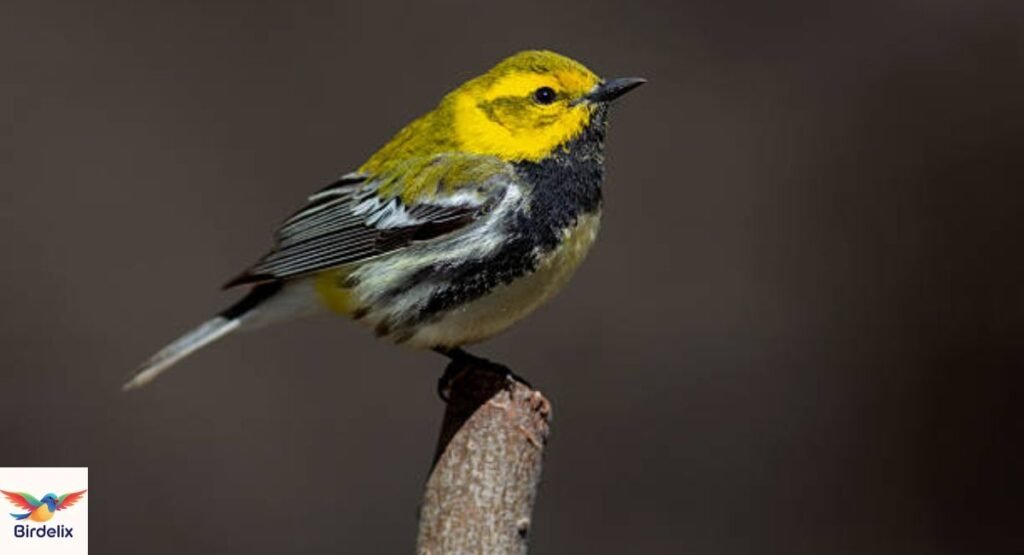
Scientific name: Setophaga virens
The Black-throated Green Warbler has a yellow face, olive-green upperparts, dark wings, and a strong black throat pattern. Mature forests provide its preferred habitat. Its distinctive song can help confirm an identification when foliage blocks your view. During migration, it actively searches branches and leaves for insects.
9. Magnolia Warbler
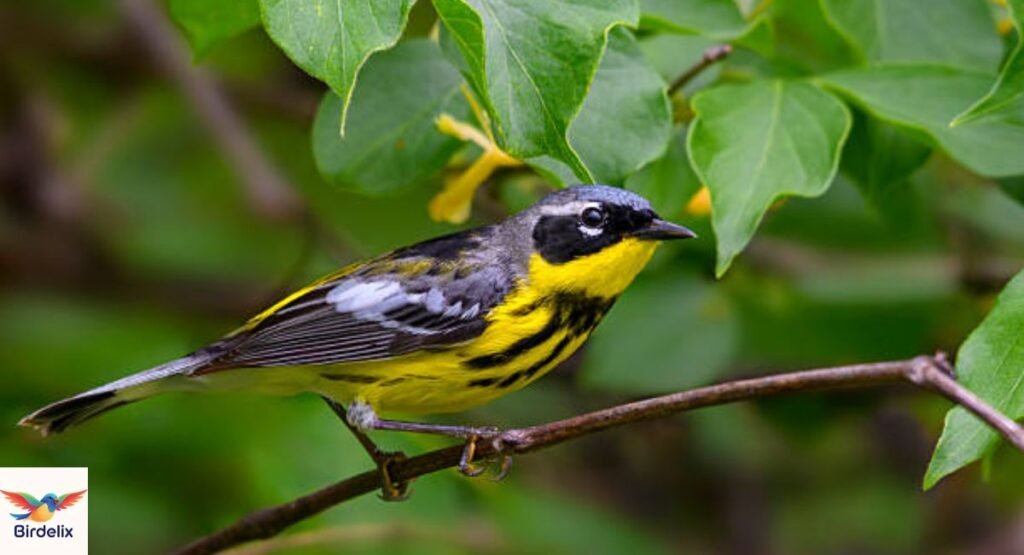
Scientific name: Setophaga magnolia
The Magnolia Warbler has a yellow breast with bold black markings and noticeable white patches in the wings. Its tail also shows a distinctive pattern. It breeds mainly in northern forests and Canada, then migrates south through Central America and the Caribbean. During migration, woodland edges can provide excellent viewing opportunities.
10. Wilson’s Warbler
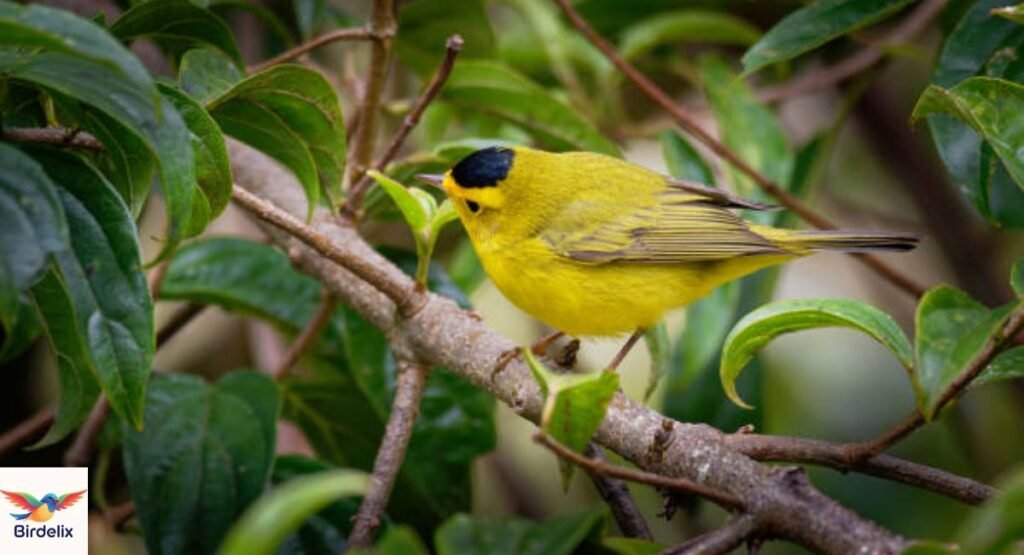
Scientific name: Cardellina pusilla
Wilson’s Warbler is a tiny yellow bird with darker wings and a distinctive black crown in males. It often moves quickly through shrubs and dense vegetation while searching for insects. It breeds across parts of western and northern North America. Many individuals migrate south after breeding, making spring and fall excellent viewing seasons.
11. Prairie Warbler
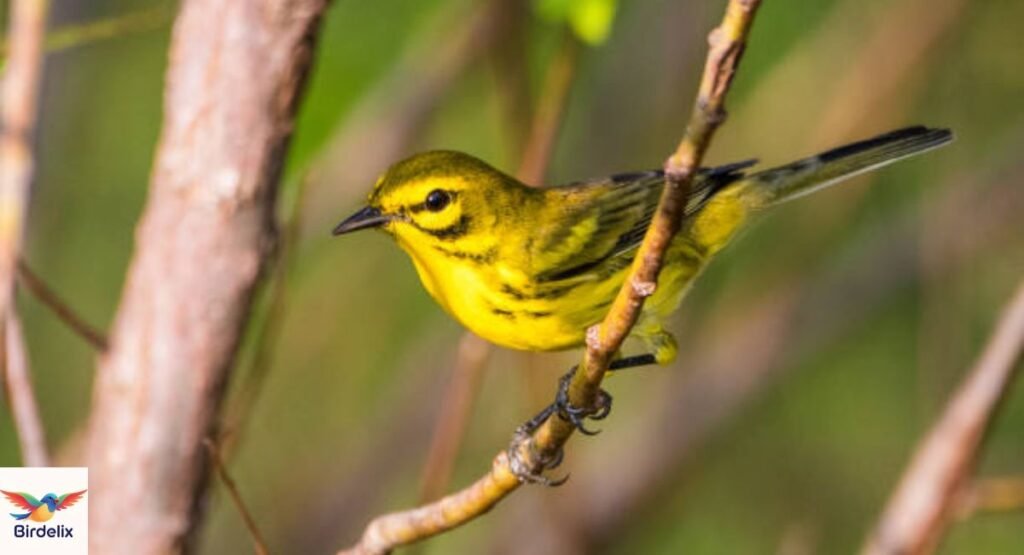
Scientific name: Setophaga discolor
The Prairie Warbler has bright yellow underparts with dark streaking along the sides and back. Despite its name, it often uses shrubby fields, young forests, pine growth, and woodland edges. It feeds mainly on insects and other small invertebrates. Its low vegetation habitat can make it easier to hear than actually see.
12. Prothonotary Warbler
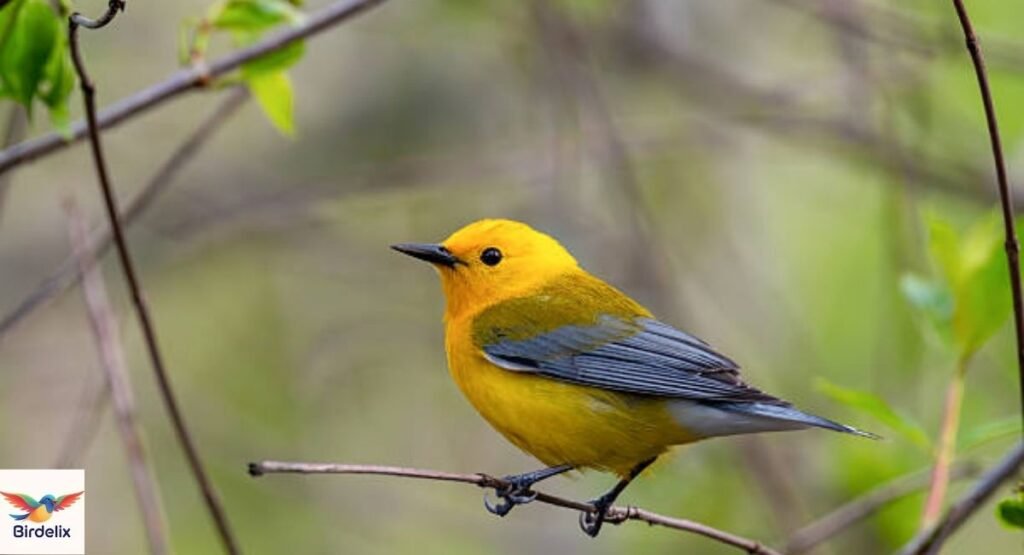
Scientific name: Protonotaria citrea
The Prothonotary Warbler has a rich golden-yellow body, blue-gray wings, and a darker tail. It prefers swamp forests, wooded wetlands, and areas near slow-moving water. Unlike most warblers, it commonly nests in natural tree cavities. This unusual nesting habit gives it a fascinating connection with wet woodland habitats.
13. Hooded Oriole
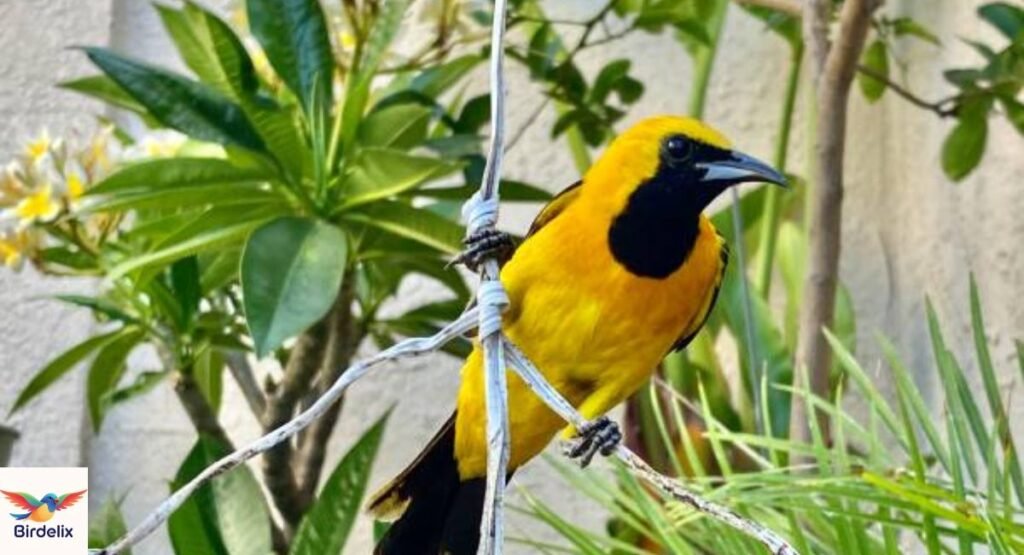
Scientific name: Icterus cucullatus
The Hooded Oriole combines a bright yellow-orange body with a contrasting black hood and wings. It is strongly associated with the southwestern United States, especially areas containing palms and open woodland. Its flexible diet includes nectar, fruit, and insects. Males show the strongest contrast, while females are generally less dramatic in color.
14. Bullock’s Oriole
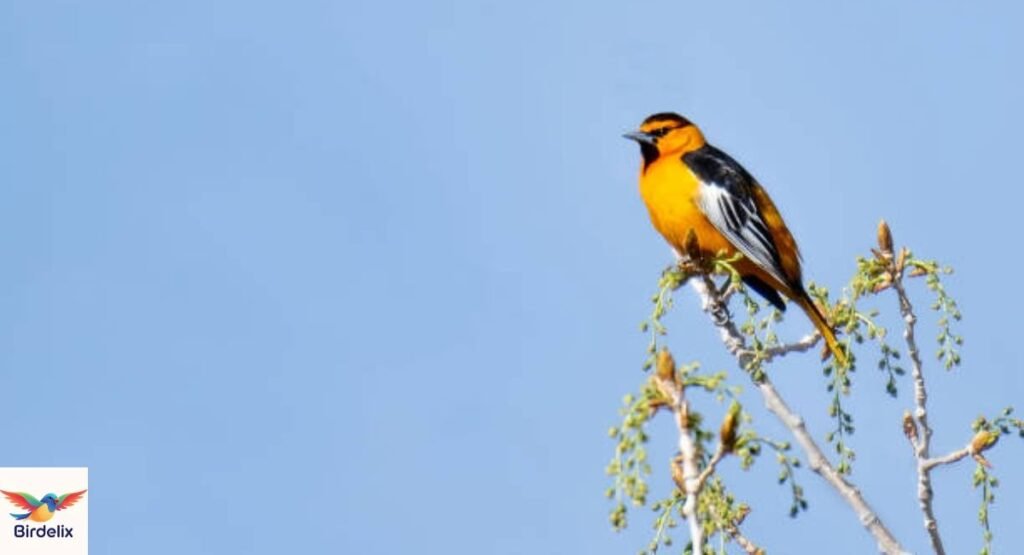
Scientific name: Icterus bullockii
Bullock’s Oriole has yellow-orange underparts with black markings around the head, wings, and tail. Males commonly show a dark eye-line that helps with identification. It favors open woodland, river corridors, and mature trees across western North America. Its diet includes fruit, nectar, and insects during different seasons.
15. Orchard Oriole
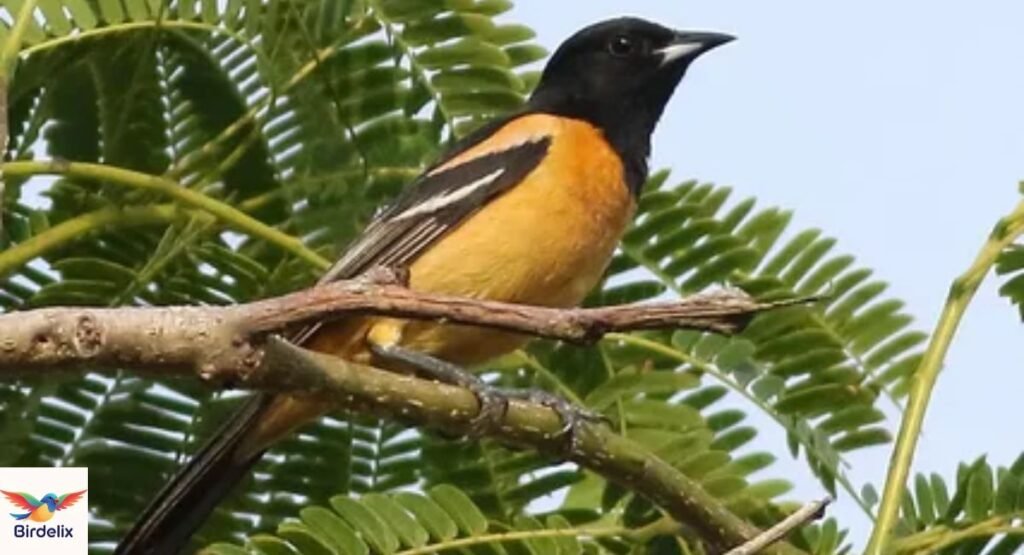
Scientific name: Icterus spurius
The Orchard Oriole is smaller and more slender than many other orioles. Adult males have dark upperparts with rich chestnut-orange underparts, while females are more yellow-green. It uses open woodland, river edges, orchards, and brushy habitats. Fruits, nectar, and insects all contribute to its varied diet.
16. Scott’s Oriole
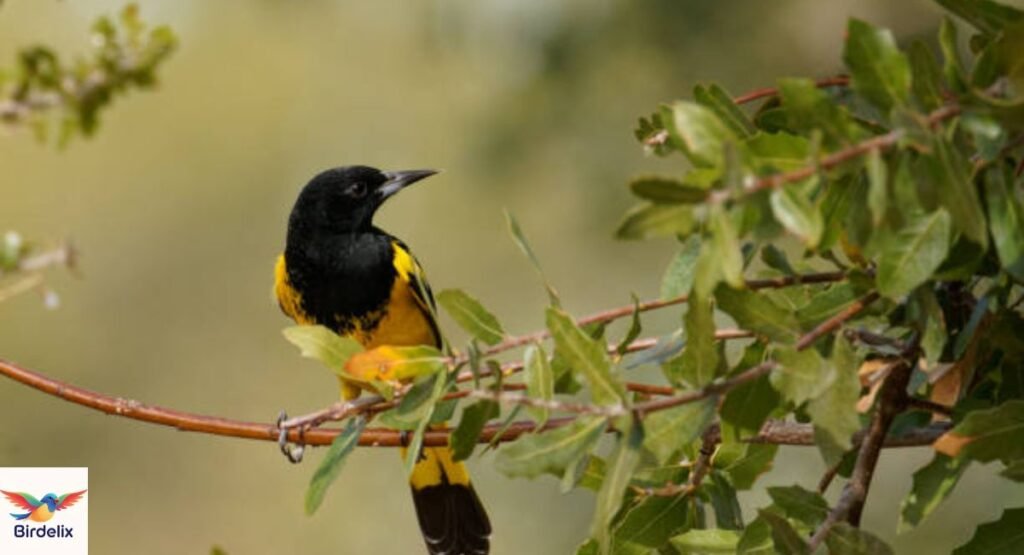
Scientific name: Icterus parisorum
Scott’s Oriole has a bold yellow body with extensive black on the head and upperparts. It is particularly associated with dry woodland, desert foothills, and yucca-rich landscapes of the Southwest. It feeds on insects, fruit, and nectar. Its strong black-and-yellow contrast makes it an excellent example of a desert-adapted oriole.
17. Eastern Meadowlark
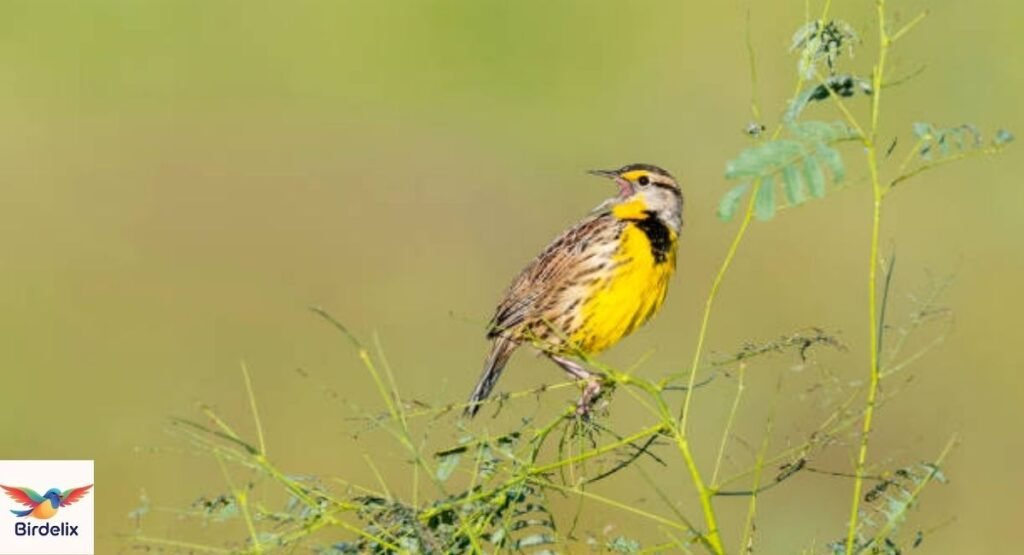
Scientific name: Sturnella magna
The Eastern Meadowlark has a bright yellow breast marked by a bold black V. Its brown back blends into grass and soil, providing useful camouflage. It lives in pastures, fields, and grasslands across much of the eastern United States. Its musical song is often easier to notice than the bird itself.
18. Western Meadowlark
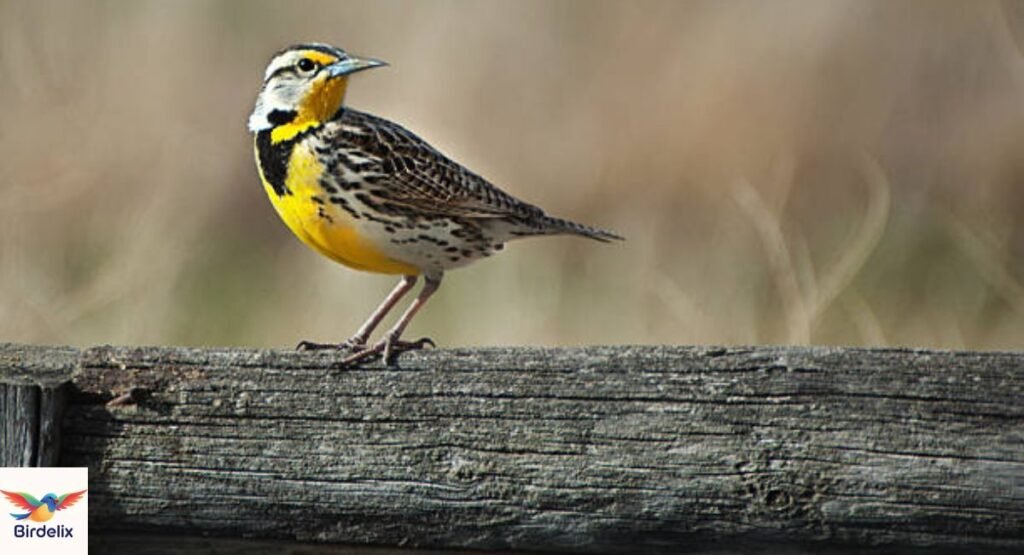
Scientific name: Sturnella neglecta
The Western Meadowlark looks remarkably similar to the Eastern Meadowlark, especially because both have yellow breasts and black chest markings. The strongest clues are geography, song, and subtle pattern differences. Western Meadowlarks prefer open country, including grasslands, ranchlands, agricultural fields, and prairies throughout much of western North America.
19. Red-winged Blackbird
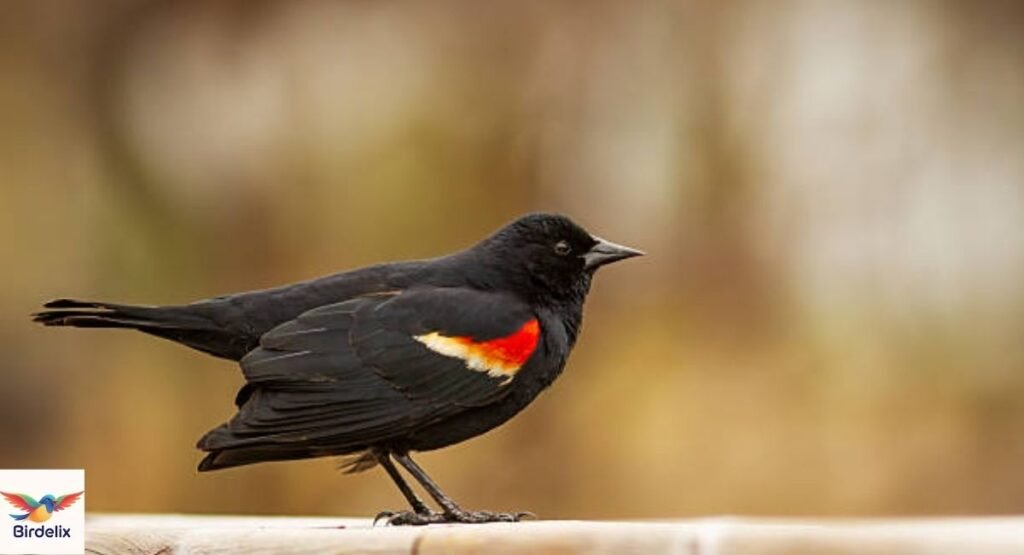
Scientific name: Agelaius phoeniceus
The male Red-winged Blackbird is glossy black with bright red shoulder patches that often show yellow edging. Females look very different and are heavily streaked brown. These birds commonly occupy wetlands, marshes, fields, and agricultural areas. Males can become highly territorial during breeding season and aggressively defend nesting areas.
20. Evening Grosbeak
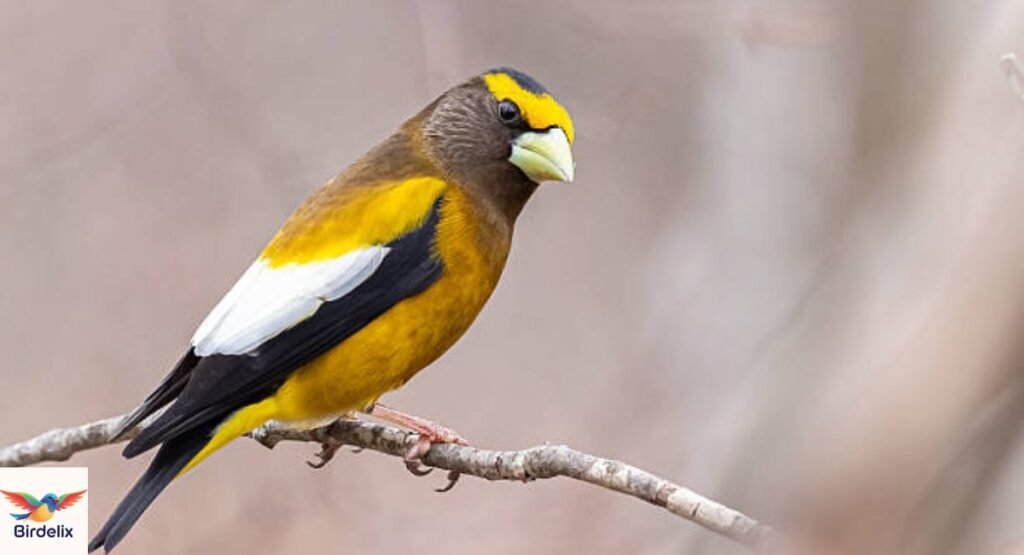
Scientific name: Coccothraustes vespertinus
The Evening Grosbeak is a large finch with a powerful conical bill. Breeding males show striking yellow-and-black plumage with white wing markings. Coniferous and mixed forests are important habitats. Seeds form a major part of its diet, and sightings can vary widely because populations may move in response to changing food supplies.
Yellow and Black Birds Identification Guide
Identifying a bird by color alone can lead you down the wrong path. Start with its size, bill, wing shape, head pattern, breast markings, habitat, and location. These details often reveal the species even when two birds share nearly identical colors.
The table below gives you a quick starting point for common black and yellow birds found in North America.
| Bird | Main Color Pattern | Best Identification Clue | Typical Habitat |
| American Goldfinch | Yellow body, black wings | Black forehead and wings | Fields, gardens, feeders |
| Yellow-headed Blackbird | Yellow head, black body | Entire yellow head | Marshes and fields |
| Common Yellowthroat | Yellow throat, dark mask | Black facial mask | Wet thickets |
| Eastern Meadowlark | Yellow breast, black V | V-shaped chest marking | Grasslands |
| Western Tanager | Yellow body, dark wings | Red-orange face | Western forests |
| Evening Grosbeak | Yellow, black, white | Huge conical bill | Forests |
Birds With Yellow Bodies and Black Wings
The American Goldfinch is one of the clearest examples, especially during the breeding season. Western Tanager and Evening Grosbeak also show strong yellow-and-dark contrasts. Compare wing shape, body size, bill structure, and habitat because several yellow birds with black wings can look surprisingly alike.
Black Birds With Yellow Heads
The Yellow-headed Blackbird is the standout species in this category. Its yellow head and black body create a sharp visual boundary. Look for its broad body, white wing patches, and wetland habitat. Females and immature birds are much duller, so identification becomes more difficult outside adult male plumage.
Black Birds With Yellow Beaks
Dark-bodied birds with bright yellow bills can be confusing because bill color changes across species, seasons, and ages. The bill should therefore be treated as one clue rather than the entire identification. Body shape, eye color, head markings, habitat, and geographic location provide stronger confirmation.
Small Yellow and Black Birds
Warblers and finches dominate the smaller end of this group. American Goldfinches have a thicker seed-eating bill, while warblers usually look slimmer and more delicate. Facial masks, crown patches, wing bars, and breast streaks are especially useful when identifying these small yellow and black birds.
Large Yellow and Black Birds
Larger examples include Yellow-headed Blackbirds, meadowlarks, orioles, and Evening Grosbeaks. Size alone can narrow your options quickly. A huge conical bill suggests an Evening Grosbeak, while a strong chest V points toward a meadowlark. Habitat can then confirm your identification.
Where Do Yellow and Black Birds Live?
Habitat is one of the most useful clues when identifying a bird. A species found deep inside a forest is unlikely to be the same bird you see standing in an open pasture. Learning habitat preferences makes field identification much faster.
Across North America, these birds occupy surprisingly different environments. Some prefer cattail marshes, while others thrive in desert foothills, mature forests, grasslands, or backyard gardens.
Forests and Woodlands
Warblers, tanagers, orioles, and Evening Grosbeaks commonly use forests and wooded areas. Some forage high in the canopy, while others stay near shrubs and low branches. During migration, woodland edges can become especially productive because many songbirds stop there to rest and feed.
Grasslands and Open Fields
Eastern and Western Meadowlarks are classic open-country species. Yellow-headed Blackbirds also forage in fields outside the breeding season. These habitats provide seeds, insects, and open ground for feeding. Agricultural areas, ranchlands, pastures, and prairie remnants can all attract different species.
Wetlands and Marshes
Wetlands provide food, nesting cover, and shelter for species such as Yellow-headed Blackbirds and Common Yellowthroats. Cattails and dense marsh vegetation are especially valuable. Some birds remain near water throughout the year, while others use wetlands mainly during breeding or migration.
Backyards and Gardens
Backyards can attract American Goldfinches, orioles, and other colorful songbirds. Native plants are particularly useful because they provide seeds, berries, nectar, insects, and cover. Bird feeders can help, but a habitat-rich garden often offers a broader and more natural food supply.
What Do Yellow and Black Birds Eat?
Diet varies greatly between species. Finches often rely heavily on seeds, while warblers consume many insects and other small invertebrates. Orioles commonly use nectar, fruit, and insects. Meadowlarks search the ground for insects and seeds, while Evening Grosbeaks use their powerful bills to handle hard seeds.
Season also changes feeding behavior. Insects can become especially important during breeding because growing chicks need protein-rich food. Fruits and seeds may become more useful later in the year. This flexible feeding strategy helps many birds survive changing conditions.
| Food | Birds That Commonly Use It | Why It Matters |
| Seeds | Goldfinches, grosbeaks | High-energy food |
| Insects | Warblers, meadowlarks | Rich protein source |
| Fruit | Orioles, tanagers | Energy and nutrients |
| Nectar | Orioles | Quick energy |
| Berries | Tanagers and songbirds | Useful seasonal food |
Yellow and Black Birds in North America
North America supports an impressive range of these colorful species. The United States and Canada contain breeding grounds, migration corridors, wintering areas, and year-round habitats for many of them. Cornell’s North American bird guide includes hundreds of species across different families and regions.
Migration creates another layer of variety. A bird may appear in your state for only a few weeks during spring or fall. Others remain year-round. Western Tanager, warblers, and many orioles can show strong seasonal movements, while habitat and latitude strongly influence where you see them.
How to Tell Similar Yellow and Black Birds Apart
The best bird identification combines several clues. Plumage pattern, size, bill shape, habitat, behavior, song, and location all matter. When colors overlap, one tiny detail can solve the mystery.
American Goldfinch vs. Yellow Warbler
American Goldfinches have a thicker conical bill and stronger black wings. Yellow Warblers look slimmer and usually show more uniform yellow plumage with reddish breast streaks in males. Their habitats overlap, but the goldfinch is more strongly associated with seed-rich fields, gardens, and feeders.
Eastern vs. Western Meadowlark
Both meadowlarks have yellow breasts with black markings. Geography and song are among the best clues. Eastern Meadowlarks dominate much of the eastern United States, while Western Meadowlarks are common farther west. Their songs sound distinctly different, making sound especially valuable when visual clues overlap.
Hooded Oriole vs. Bullock’s Oriole
Both orioles show yellow-orange and black coloration. Hooded Orioles have a stronger black hood and are strongly associated with the Southwest. Bullock’s Orioles show a more distinctive black eye-line and are widespread across western North America. Head markings and range usually settle the identification quickly.
Yellow-headed Blackbird vs. Red-winged Blackbird
These blackbirds are easy to confuse from a distance. Yellow-headed Blackbirds have an entire yellow head and breast, while Red-winged Blackbirds have small red-and-yellow shoulder patches. Their habitats can overlap around wetlands, but the size and location of the bright markings are unmistakable once you know what to look for.
Interesting Facts About Yellow and Black Birds
Bird colors aren’t simply decoration. Feather pigmentation can influence communication, mate choice, camouflage, and recognition. Melanin produces dark tones, while carotenoids contribute many yellow and warm colors. Some colors can therefore reflect both genetics and access to dietary pigments.
Seasonal plumage can also transform the same bird. American Goldfinches become dramatically duller during winter, while some migratory songbirds change appearance between breeding and nonbreeding periods. Their songs, nesting strategies, migration routes, and feeding habits add another layer to identification.
| Interesting Fact | Why It Matters |
| Melanin creates dark feather colors | It helps produce black and brown plumage |
| Carotenoids create many yellow tones | Diet can influence feather coloration |
| Males may be brighter | Breeding displays can influence mate choice |
| Plumage can change seasonally | Winter identification may be harder |
| Songs aid identification | Sound can reveal hidden birds |
Conclusion
The world of yellow and black birds is far more diverse than it first appears. American Goldfinches, warblers, orioles, meadowlarks, blackbirds, and grosbeaks all use different combinations of yellow and dark plumage. Their habitats and behaviors are just as varied.
For accurate identification, don’t rely on color alone. Look at the bill, wings, breast, head, size, habitat, season, and location. Once you learn these clues, even a quick glimpse can reveal the bird standing in front of you.
FAQs
Which birds have black bodies and yellow beaks?
Several dark-bodied birds can show yellow or yellowish bills. However, bill color should always be combined with body shape, head markings, habitat, and geographic range before making an identification.
Which birds have yellow bodies and black wings?
The American Goldfinch is one of the clearest examples. Western Tanager and Evening Grosbeak also show strong yellow-and-dark wing patterns, although their body shapes and head markings differ.
What is a small yellow bird with black wings?
The American Goldfinch is a common answer, especially when the bird has a bright yellow body, black wings, and a small conical bill. Several warblers can look similar at a distance.
What black bird has a yellow head?
The Yellow-headed Blackbird is the best-known example. Adult males have a bright yellow head and breast contrasting sharply with a black body and white wing patches.
Are yellow and black birds migratory?
Some are migratory, while others remain in the same region year-round. Warblers, tanagers, and many orioles can travel long distances, while migration patterns vary by species, population, and location.

Welcome to Birdelix! I’m Anam Sattar, an AI-powered SEO Specialist and Content Writer with over 5 years of experience in creating high-quality, search-optimized content. I help businesses improve their search engine rankings, increase organic traffic, and build beautiful, user-friendly websites. My mission is to make SEO, content creation, and web design simple, effective, and accessible for everyone. Let’s grow your online presence and achieve success together!