

Have you ever spotted a bird with a blush of rose and wondered what it was? Pink birds are among nature’s most eye-catching creatures, yet their colors come in many forms. Some display vivid pink plumage, while others show soft salmon shades across their chest, wings, or head. You can find these unusual birds around wetlands, forests, mountains, grasslands, and even city parks. Their color may come from diet, genetics, feather structure, or a mix of natural factors.
In this guide, you’ll discover 20 fascinating species from around the world. You’ll also learn their habitats, diets, behaviors, and key bird identification clues, making your next colorful sighting much easier to understand.
Pink Birds at a Glance: What Makes Them Pink?
Pink coloration can come from several biological processes. In many species, pink plumage develops partly from carotenoid pigments obtained through food. Flamingos offer the classic example. Their diet helps create the vivid color that makes them so recognizable.
However, diet isn’t the whole story. Genetics, feather structure, age, sunlight, molt, and breeding condition can also affect appearance. Some birds show pinkish feathers only in certain body areas. Others look rosy because pink combines with gray, white, brown, black, or iridescent colors.
Natural Pink Plumage vs. Pink-Looking Feathers
A bird doesn’t always need an entirely pink body to appear pink. Reddish-pink feathers, warm brown plumage, and reflective feather surfaces can create a rosy impression. Light can also change how colors appear, especially on iridescent hummingbird throats.
For example, male Anna’s Hummingbirds have a rose-pink throat and crown. Their feathers can look dramatically brighter when sunlight strikes them from the right angle.
Where Pink Color Appears on a Bird’s Body
Color placement can be an excellent identification clue. One species may have a pink chest, while another shows color across its wings, rump, belly, or shoulders. Some birds even have pink legs or a pinkish underside.
That detail matters in the field. A pink head can point toward one species, while pink wings or underparts may suggest another. Always examine the entire bird rather than relying on color alone.
Why Males and Females Can Look Different
Male and female birds sometimes wear noticeably different plumage. This difference, called sexual dimorphism, often appears strongest during breeding periods. Males may develop brighter colors that help attract mates or signal maturity.
Anna’s Hummingbirds show this beautifully. Adult males have a vivid rose-pink throat and crown, while females and immature males usually look greener and carry less pink.
20 Pink Birds of the World
The following species show how varied rosy coloration can become. Some are huge wetland waders, while others are tiny songbirds or colorful parrots. Their habitats span tropical forests, alpine mountains, Australian grasslands, coastal marshes, and even urban spaces.
For each species, look beyond color. Bird identification becomes much easier when you combine body shape, bill structure, habitat, behavior, geographic range, and age. That approach can prevent common mix-ups between species that share similar colorful plumage.
1. American Flamingo
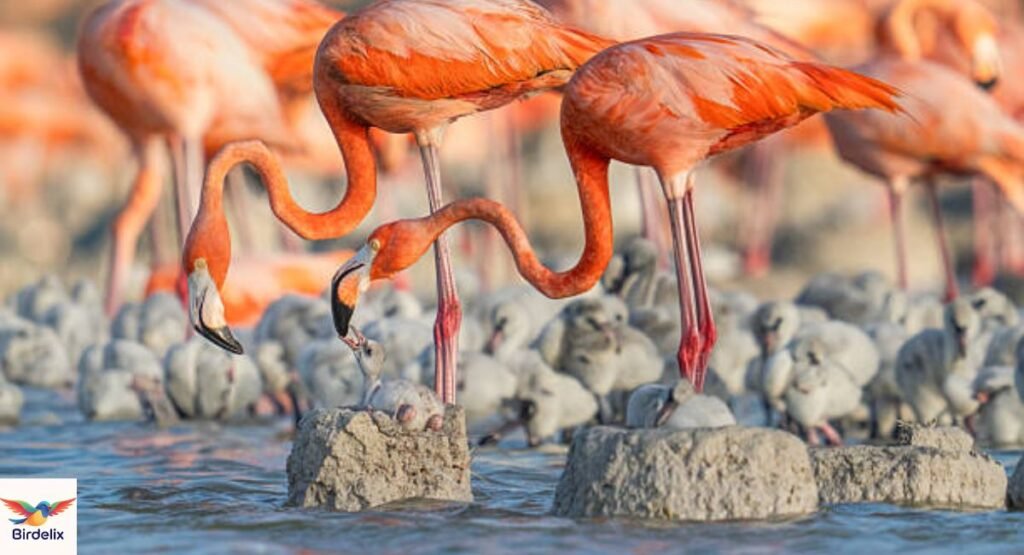
The American Flamingo is probably the world’s most recognizable pink wading bird. Adults have vivid pink plumage, exceptionally long legs, and a long, curved neck. Their large bills help filter tiny food items from shallow water, giving them a feeding method as unusual as their appearance.
Young birds look very different. First-year flamingos are largely brown and white before developing stronger adult coloration over several years. In the United States, sightings are especially associated with southern Florida, although their wider range extends through Caribbean and nearby regions.
2. Roseate Spoonbill
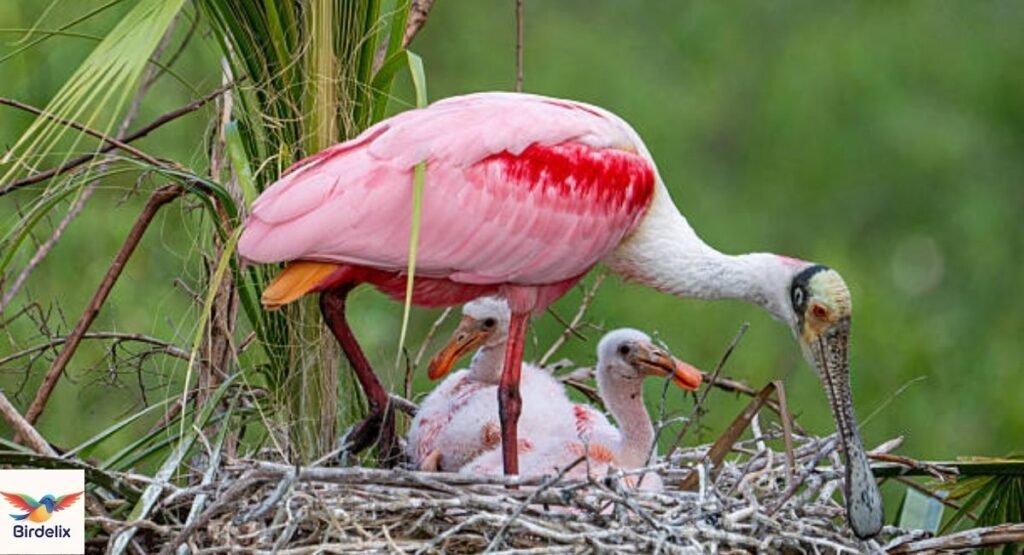
The Roseate Spoonbill combines rosy feathers with one of nature’s strangest bills. Its long, flattened bill ends in a broad spoon-shaped tip that sweeps through shallow water while the bird searches for food. Adults have vivid pink wings and body areas with deeper red accents.
These birds thrive around marshes, coastal wetlands, and shallow waterways. In the United States, you can find them along parts of Florida, Texas, Georgia, and southwestern Louisiana. Their color also becomes stronger as they mature, making young birds noticeably duller.
3. Anna’s Hummingbird
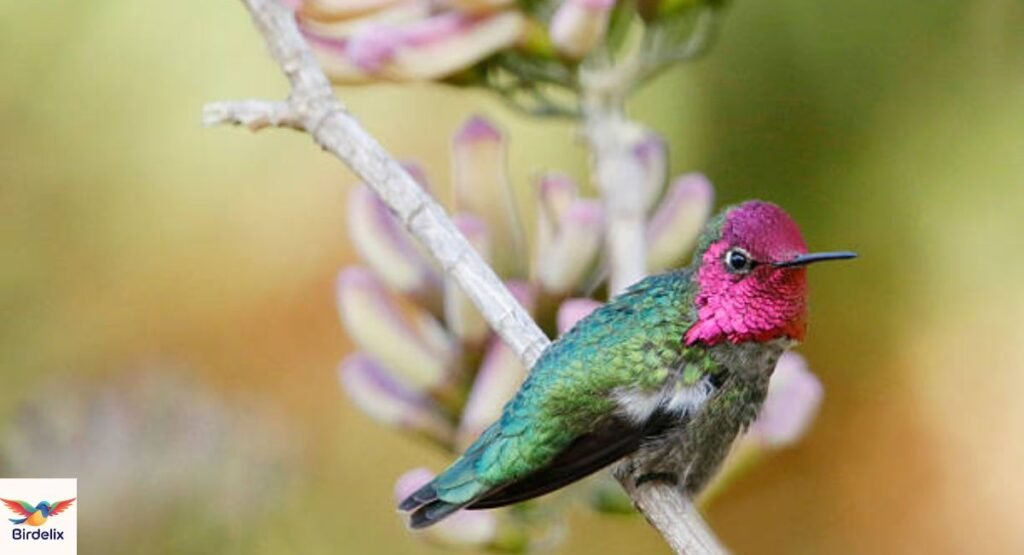
Anna’s Hummingbird proves that a small pink bird doesn’t need an entirely rosy body. Adult males carry a brilliant rose-pink throat and crown that can flash like polished metal in direct sunlight. Their compact bodies and straight bills give them the classic hummingbird profile.
These hummingbirds feed on nectar and small insects. Males also perform spectacular courtship displays, climbing high before diving sharply toward the ground. Females and immature males usually show green upperparts with only limited reddish-pink throat feathers.
4. Pink Robin
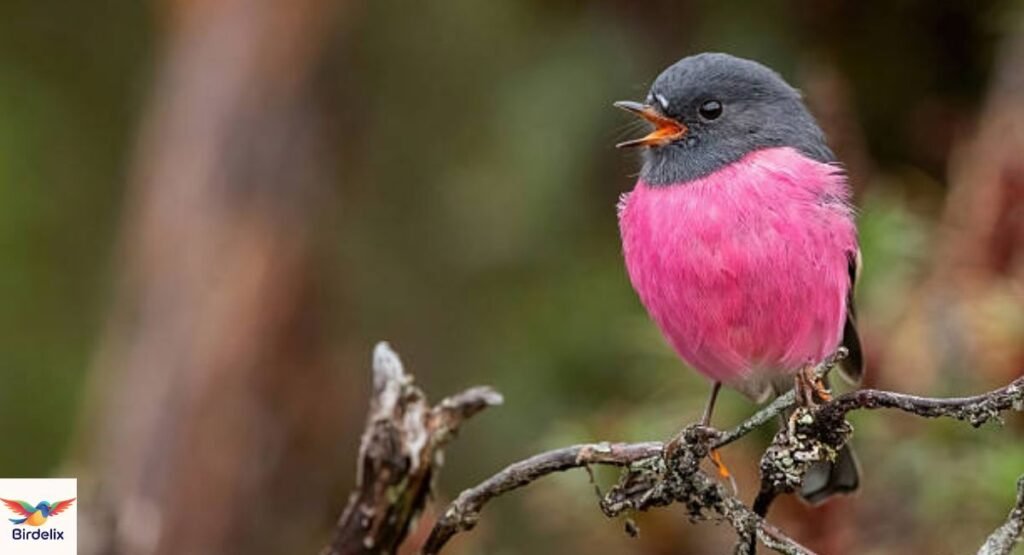
The Pink Robin is a compact Australian songbird famous for its striking rosy breast. Adult males show a vivid pink chest against darker upperparts, creating a sharp contrast that makes the species memorable.
It prefers cool forests and dense vegetation in southeastern Australia. Its quiet forest lifestyle can make it harder to spot than its bright color suggests. Females and young birds are much less colorful, so observers should check body shape and habitat before making an identification.
5. Pine Grosbeak
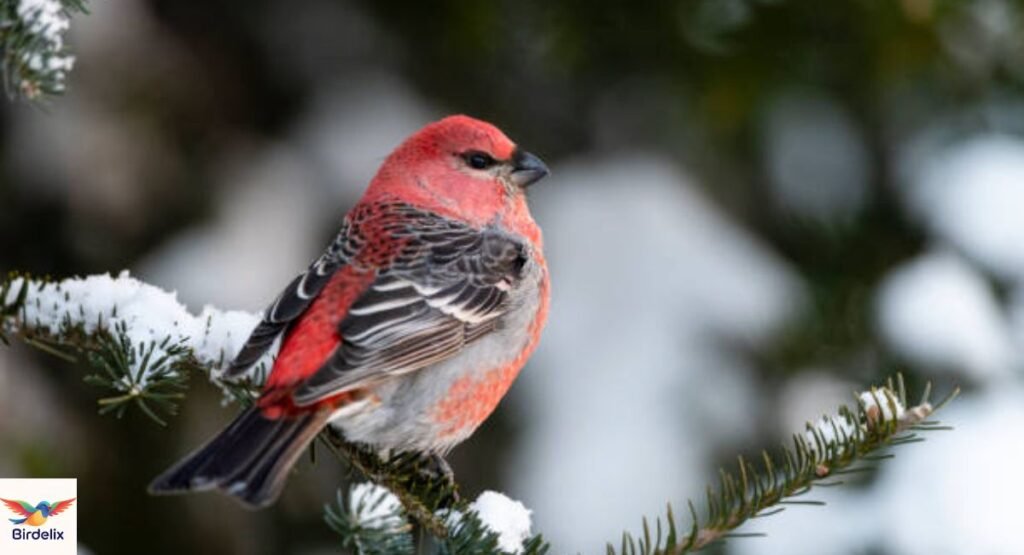
The Pine Grosbeak brings soft rose and pinkish-red feathers to northern coniferous landscapes. Adult males can show rich rosy coloration across much of the head and body. Females usually display yellowish or olive tones instead.
This large finch favors boreal forests and other conifer-rich habitats. Its diet includes seeds, fruits, buds, and other plant material. In winter, some populations move southward, allowing birdwatchers in northern U.S. regions to encounter this handsome finch.
6. Gray-crowned Rosy-Finch
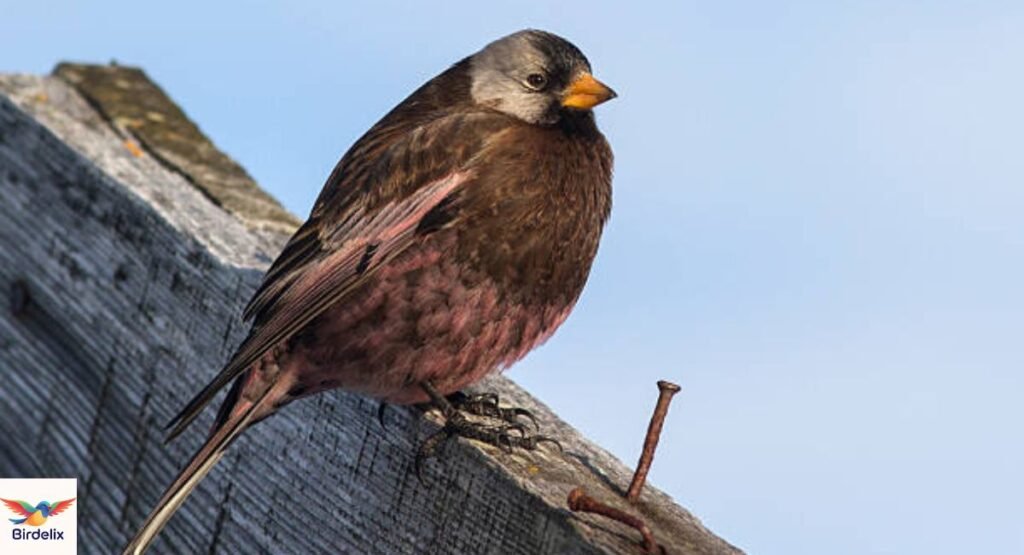
The Gray-crowned Rosy-Finch looks almost painted for a snowy mountain landscape. It combines a gray crown with dark plumage and conspicuous pink areas across the belly and wings. Its compact body helps it withstand harsh alpine conditions.
During breeding, these birds occupy high mountain environments where snow and exposed rock dominate the landscape. In winter, they can descend to lower elevations. Their specialized lifestyle makes them one of the most fascinating pink finches in North America.
7. Brown-capped Rosy-Finch
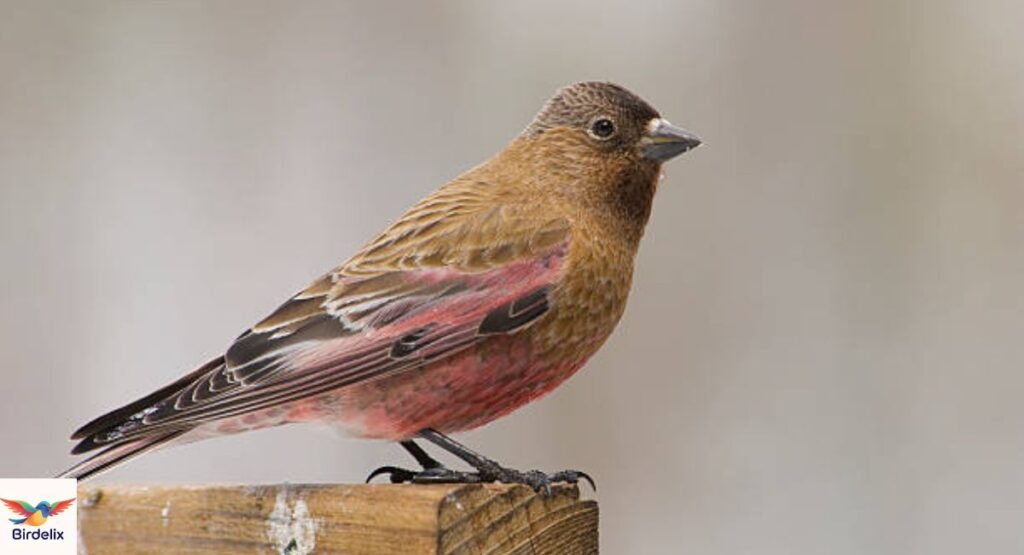
The Brown-capped Rosy-Finch carries warm brown, black, gray, and pink tones in a beautifully muted pattern. Its rosy belly and wing areas become especially noticeable when the bird moves across snow or rocky terrain.
This species breeds in high mountain habitats, particularly around alpine slopes and rocky areas. It often feeds on seeds and other available foods. During colder months, it may travel toward lower elevations where food becomes easier to find.
8. Black Rosy-Finch
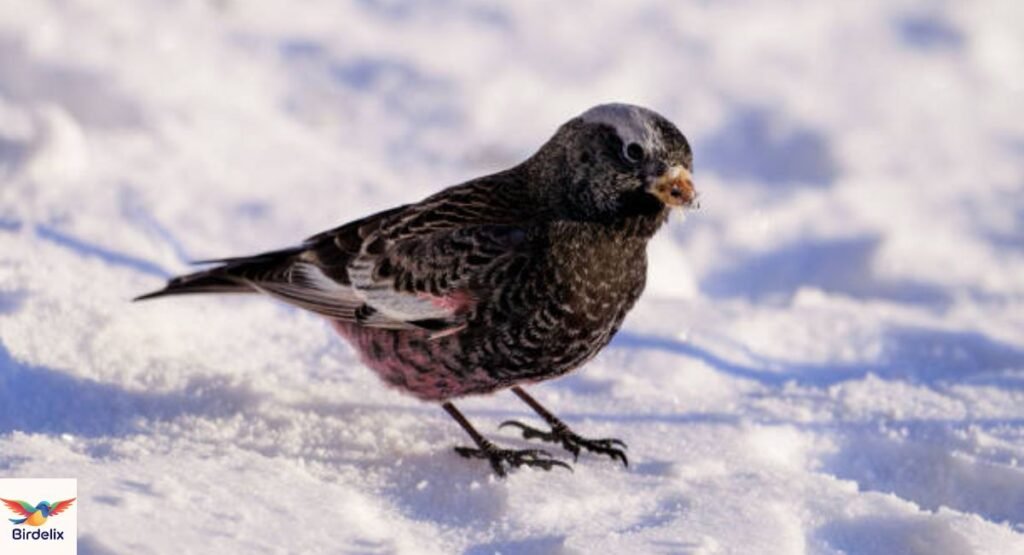
The Black Rosy-Finch is another mountain specialist with a striking combination of dark plumage and pinkish body markings. Its dark appearance can make its rosy belly and wing patches stand out sharply.
Finding one requires patience because its breeding habitat lies in remote, high-elevation environments. During winter, it may appear in more accessible locations. Watch carefully around rocky slopes and open mountain areas where flocks gather while searching for food.
9. Pink-headed Warbler
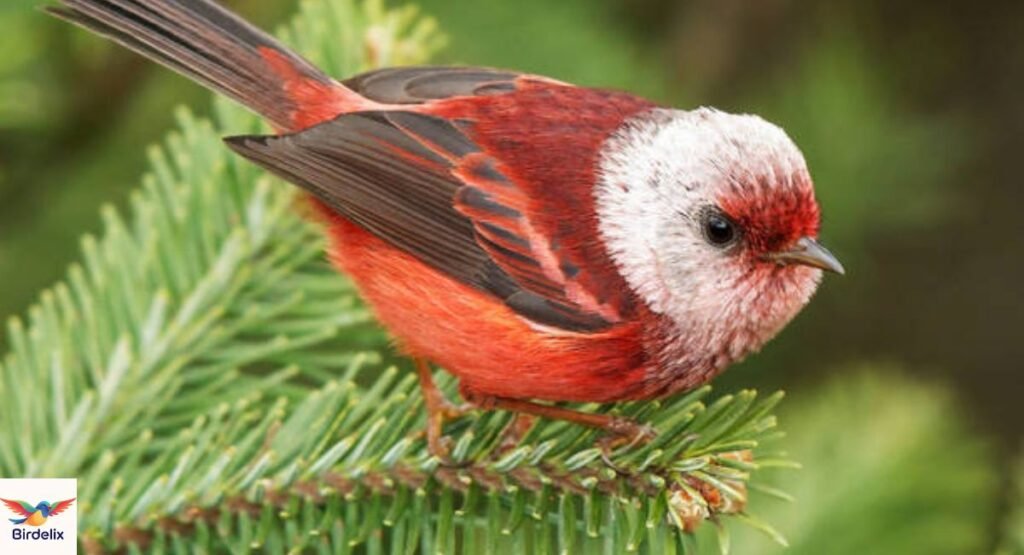
The Pink-headed Warbler is one of the most distinctive pink bird species in Central America. Its rosy-pink head contrasts with its darker body, creating an unmistakable field mark when you get a clear view.
It lives in high-elevation forests, particularly in parts of Guatemala and southern Mexico. Dense vegetation can make sightings brief. The species feeds largely on insects and other small prey while moving through forest foliage.
10. Himalayan White-browed Rosefinch
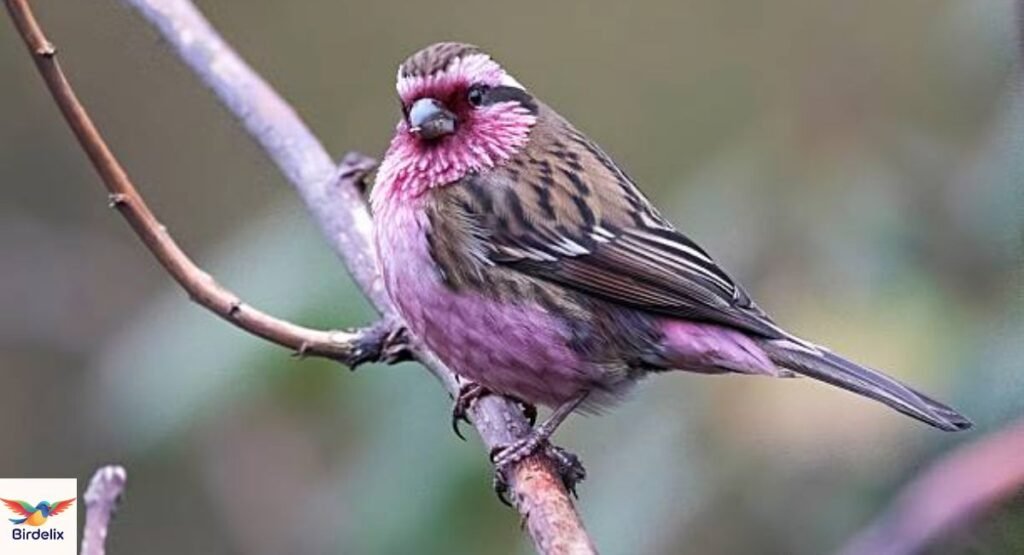
The Himalayan White-browed Rosefinch adds soft pink tones to the rugged scenery of the Himalayan region. Its pale brow and rosy plumage create a subtle but attractive contrast against rocky mountain habitats.
These birds occupy elevated landscapes where temperatures can drop sharply. They feed on seeds and plant material while moving through open mountain areas. Their mountain forests and high-elevation surroundings make them an exciting target for experienced birdwatchers.
11. Pink-headed Fruit Dove
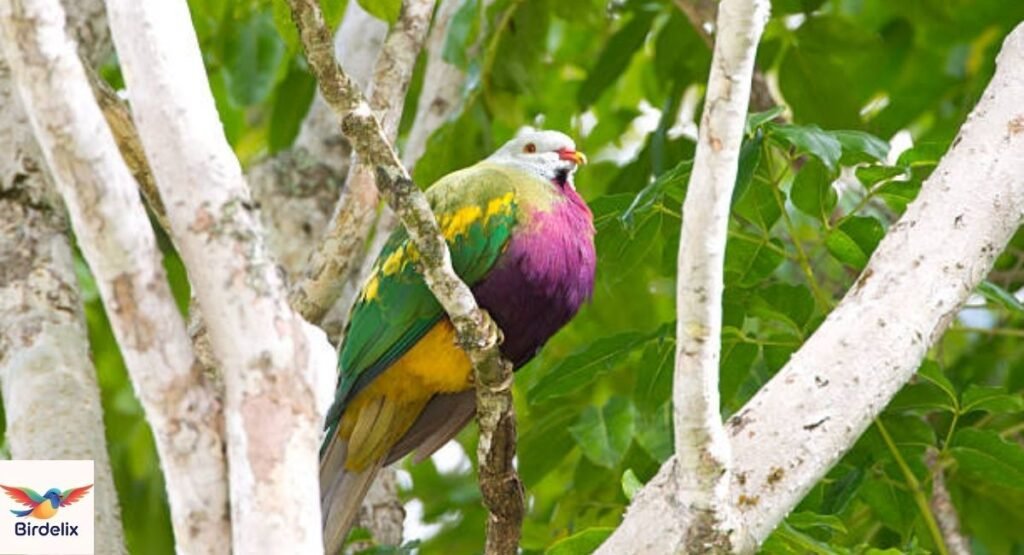
The Pink-headed Fruit Dove is a colorful forest bird from Southeast Asia. Its rosy head contrasts with greener body plumage, producing a subtle combination that works beautifully among leaves and branches.
Despite its vivid appearance, dense rainforest vegetation can conceal it remarkably well. It feeds primarily on fruit, making forest canopy structure and seasonal food availability important parts of its ecology. Its quiet habits can make observation a real challenge.
12. Bourke’s Parakeet
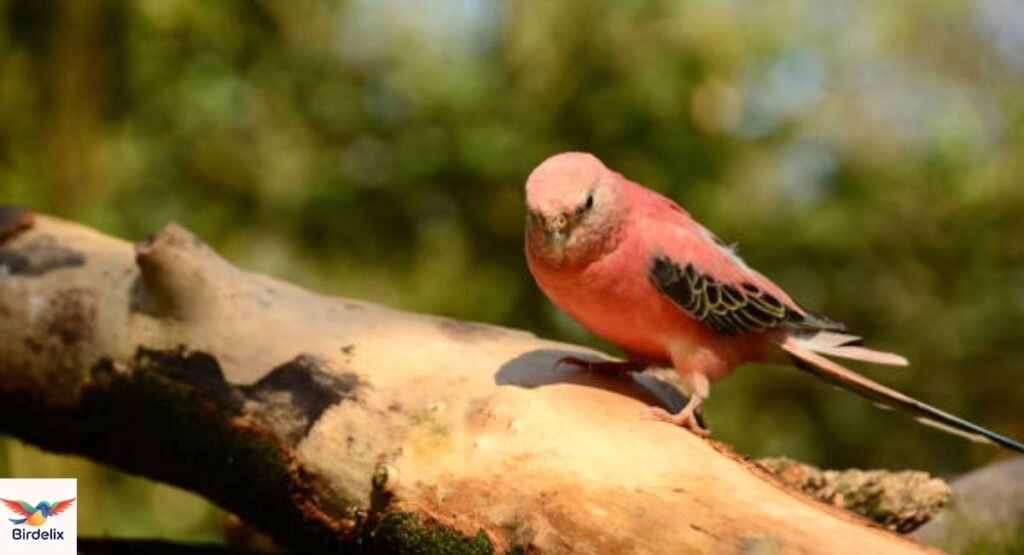
Bourke’s Parakeet has a soft, pastel appearance rather than the intense pink associated with flamingos. Its rosy chest and belly blend with brownish-gray body tones, creating an almost sunset-like pattern.
This Australian parakeet inhabits dry open country and grasslands. It feeds on seeds, grasses, and other plant material. Its subdued coloration can make it difficult to notice against dusty landscapes, especially when it rests quietly among vegetation.
13. Galah
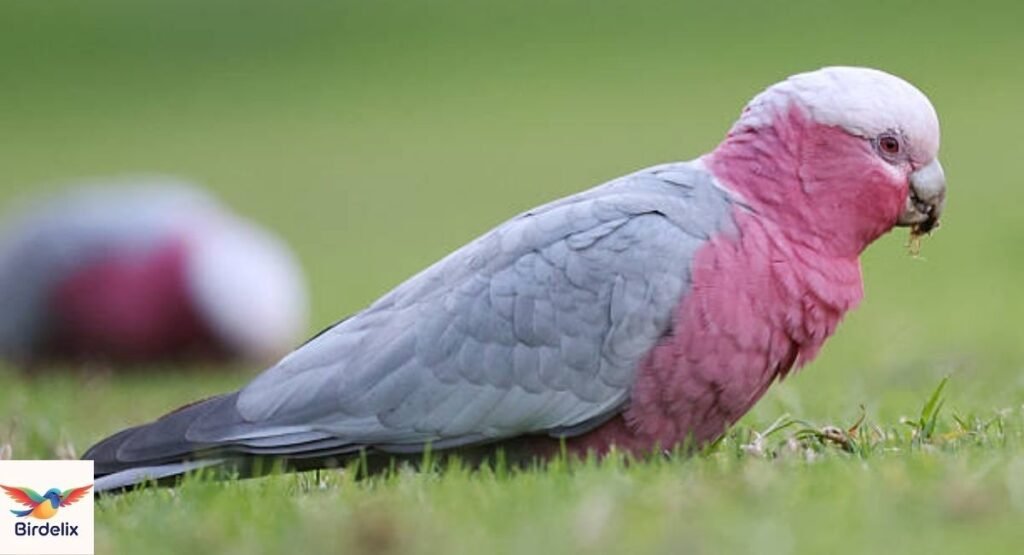
The Galah is one of Australia’s best-known pink-colored birds. Its rose-pink head, neck, and underparts contrast beautifully with gray wings and back. This combination gives the species a distinctive two-tone appearance.
Galahs are highly adaptable. They use woodlands, wetlands, coastal areas, farmland, and urban environments. They often gather in huge noisy flocks and roost communally. Their adaptability has helped them remain widespread across Australia.
14. Major Mitchell’s Cockatoo
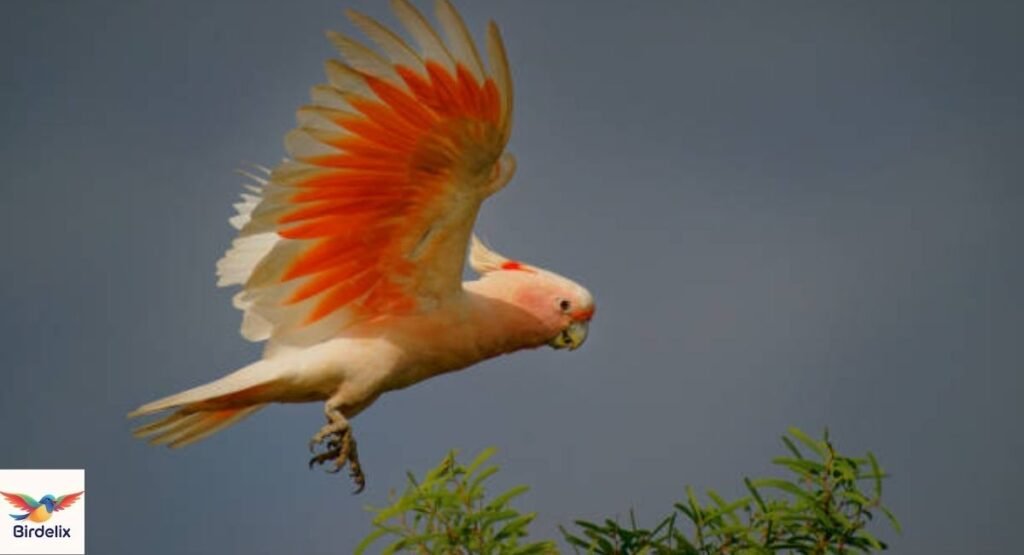
Major Mitchell’s Cockatoo, also called the Pink Cockatoo, has pale pink and white plumage with a spectacular red-and-yellow crest. When the crest rises, it creates one of the most dramatic displays among Australian cockatoos.
This species favors inland woodland and dry regions. Its pastel coloration separates it from the darker Galah. Unlike many birds with strong sexual differences, male and female Major Mitchell’s Cockatoos look remarkably similar.
15. Moluccan Cockatoo
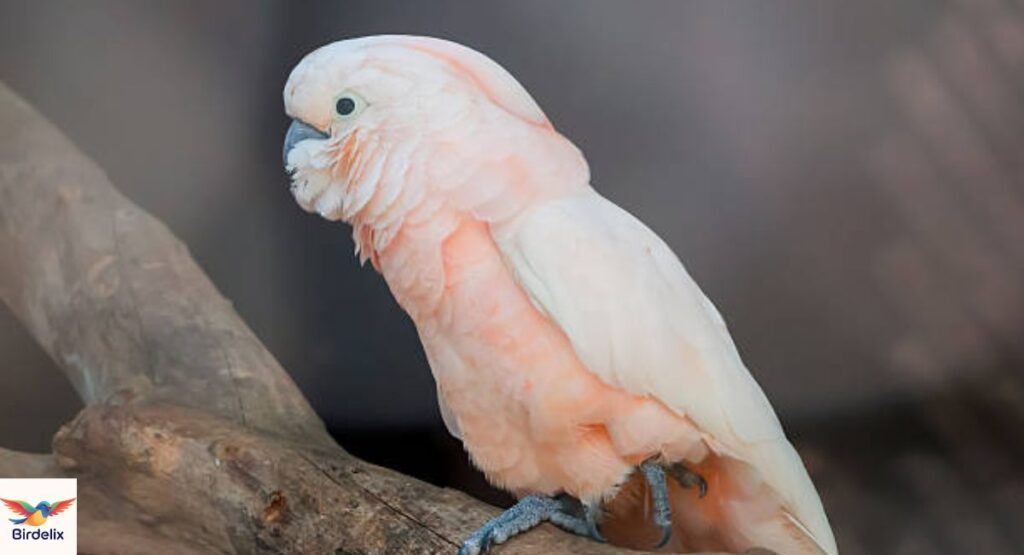
The Moluccan Cockatoo, sometimes called the Salmon-crested Cockatoo, is a large Indonesian parrot with soft pink coloration. Its pale rosy body becomes especially noticeable when its impressive crest rises.
It naturally occurs in forested environments of the Moluccan Islands. Its powerful bill handles seeds, fruits, nuts, and other foods. Large parrots also need substantial nesting trees, making mature forest habitat especially valuable.
16. White-winged Crossbill
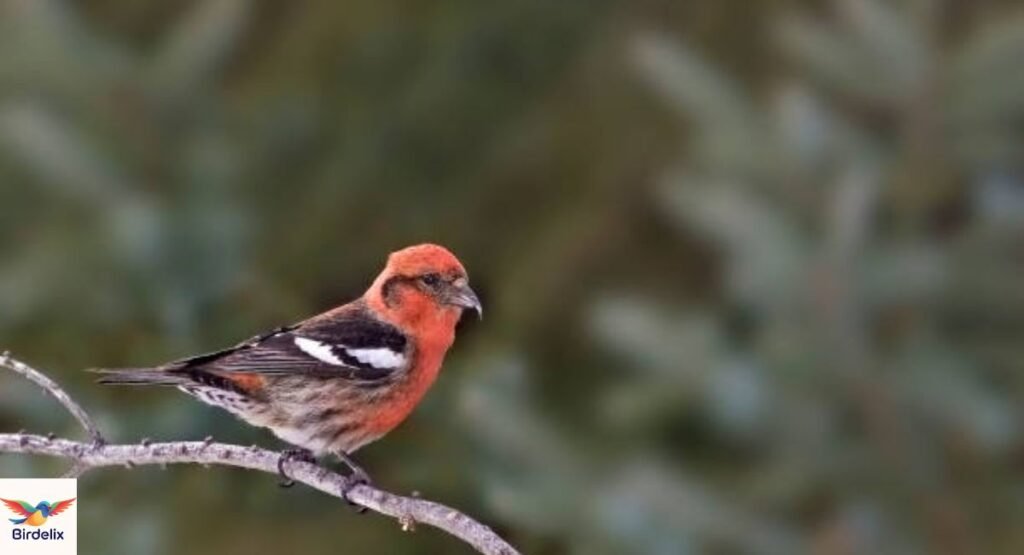
The White-winged Crossbill is not uniformly pink. Adult males can show striking reddish-pink or rosy tones across the body, combined with dark wings and distinctive white wing bars.
Its crossed bill is the real giveaway. The unusual bill tips cross over each other and help the bird pry seeds from conifer cones. This adaptation makes it especially suited to coniferous forests where spruce and other cone-bearing trees provide dependable food.
17. Hoopoe
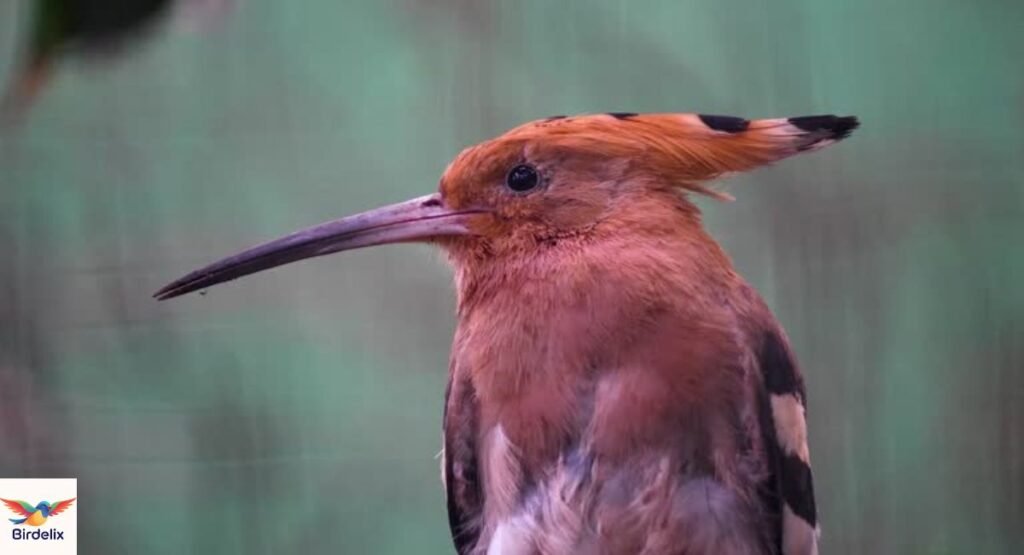
The Hoopoe has a warm pinkish-brown body rather than bright bubblegum pink feathers. Its black-and-white striped wings, long bill, and dramatic crest create a much more complex pattern.
Unlike spoonbills and flamingos, Hoopoes often feed on the ground. They probe soil for insects and small invertebrates. Their broad geographic distribution also means that habitat and location can quickly narrow down an identification.
18. Pink-throated Twinspot
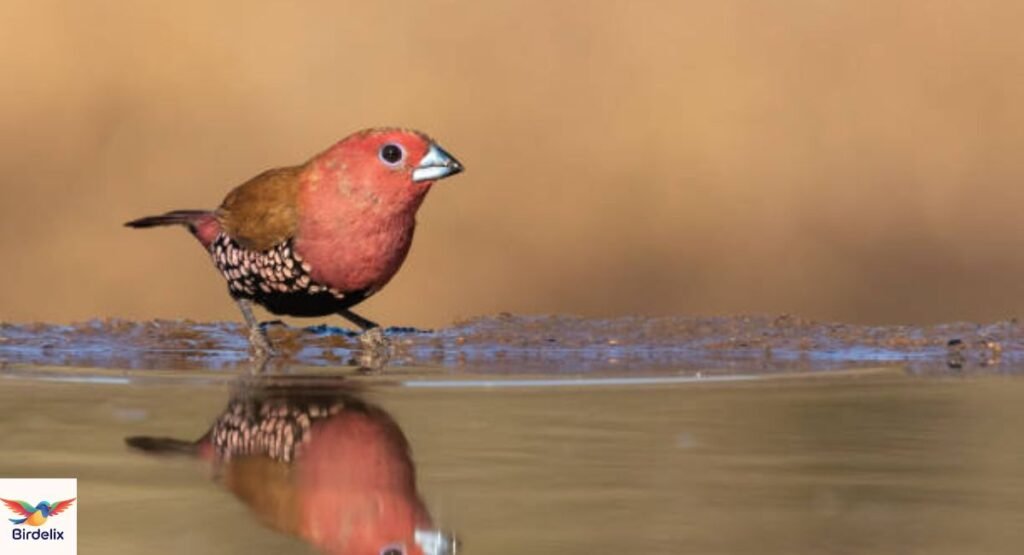
The Pink-throated Twinspot is a small African finch with a distinctive rosy-pink throat that contrasts with its darker body. It inhabits forest edges, dense vegetation, and areas with thick ground cover. You may spot it foraging quietly for seeds and other plant foods. Its subtle coloring makes it less obvious than larger, brighter pink species.
19. Crimson Finch
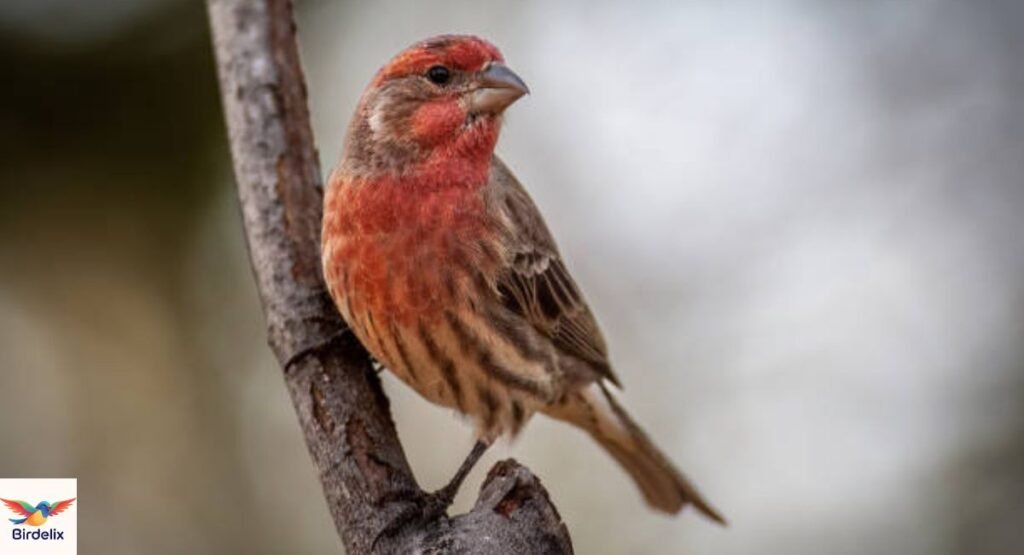
The Crimson Finch is a striking Australian bird with rich red to pinkish tones, especially across the head and underparts. It prefers wet grasslands, reed beds, and areas close to water. These small finches usually feed on seeds and grasses while moving through vegetation. Their compact size and vivid coloration make them interesting birds to watch.
20. Pink-billed Parrotfinch
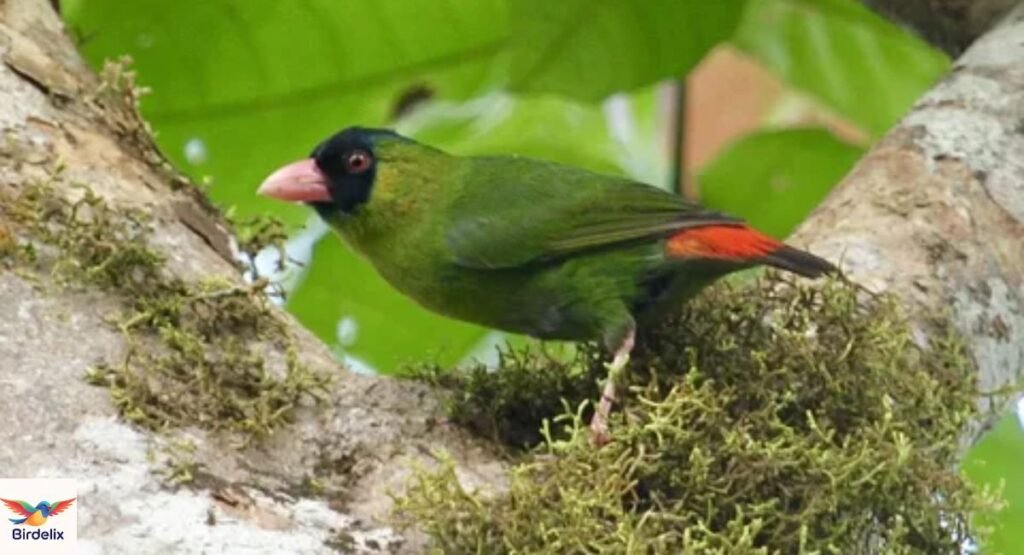
The Pink-billed Parrotfinch is a colorful small bird associated with tropical forests and forested mountain regions. Its bright plumage can include reddish, pinkish, and green tones, while its short bill is adapted for handling seeds. It typically stays among dense vegetation, where its vibrant colors can be surprisingly difficult to notice.
How to Identify a Pink Bird in the Wild
Seeing pink is only the first clue. Reliable bird identification requires several observations at once. Start with the bird’s size and shape, then examine its bill, wings, head pattern, habitat, and behavior.
A quick mental checklist can save you from a mistaken identification. Ask yourself where you saw the bird, what it was doing, and which body parts actually looked pink. Those details often reveal more than color alone.
Start With the Size and Body Shape
Size immediately narrows your choices. A tiny hummingbird has a completely different silhouette from a large flamingo or cockatoo. Notice the neck length, body depth, wing shape, and posture.
Then consider movement. A hovering bird suggests a hummingbird, while a tall wader points toward a spoonbill or flamingo. Shape often works like a fingerprint.
Look Closely at the Head and Throat
The head can reveal surprisingly precise clues. Check for a pink head, crown patch, eyebrow, crest, eye ring, or throat marking. Also note whether the bird has a bare face or fully feathered head.
Anna’s Hummingbird, for example, has a rose-pink crown and throat in adult males. Galahs show pink across the head and neck, while Major Mitchell’s Cockatoos combine pink with a dramatic crest.
Check the Bill, Wings, and Tail
Bills reveal feeding styles as well as species identity. The Roseate Spoonbill has a flattened spoon-shaped bill, while the White-winged Crossbill has a crossed bill. Flamingos use specialized bills for filtering small food from water.
Next, examine the wings and tail. White wing bars, black flight feathers, striped wings, or a colorful crest can separate similar-looking species. Take a second look when the bird flies.
Notice the Habitat and Location
Habitat can eliminate unlikely choices before you even study the feathers. A pink wader in a coastal marsh has a different shortlist from a pink finch on an alpine slope.
Location matters just as much. A species native to Australia shouldn’t be your first choice for an ordinary Texas backyard. Range maps and seasonal movements can turn a confusing sighting into a clear answer.
Compare Adult, Female, and Juvenile Plumage
Never assume every member of a species looks identical. Juvenile plumage can be much duller than adult feathers. Females may also lack the intense coloration found in males.
American Flamingos offer an excellent example. Young birds start out brown and white before developing their adult pink coloration. Anna’s Hummingbirds show a similar contrast between brilliant adult males and less colorful females or immature males.
Pink Birds by Their Main Color Pattern
Color combinations can make identification much easier. Instead of asking only, “Is this bird pink?” ask, “What other colors surround the pink?” That small change gives you a more useful field clue.
The following patterns also show why two species can look pink while belonging to completely different families. Pink plumage can pair with white, gray, blue, brown, or black, producing very different visual signatures.
Mostly Pink Birds
Some species carry pink across most of their visible body. Flamingos are the obvious example, while spoonbills also show extensive rosy coloration.
Their bright appearance often comes with specialized feeding adaptations. Wetland species may gain carotenoid pigments from aquatic foods, linking diet, habitat, and feather color in one fascinating ecological chain.
Pink and White Birds
Pink and white create a soft but powerful contrast. Major Mitchell’s Cockatoo is an excellent example, with pale pink body areas set against largely white plumage and a spectacular crest.
This pattern can make a bird look almost pastel from a distance. However, the strongest identification clues may appear in the wings, crest, face, or tail rather than the pink areas.
Pink and Blue Birds
Some birds combine rosy tones with blue or blue-gray feathering. These combinations can look especially vivid under strong sunlight.
Structural coloration can make blue shades appear more intense depending on viewing angle. Therefore, pay attention to changing light when you observe a colorful bird. A single photograph may not capture its full appearance.
Pink and Gray Birds
Pink and gray create one of the most recognizable Australian color combinations. The Galah is the classic example, with a rose-pink head and underparts contrasting against gray wings and back.
This palette works well in open landscapes because the gray areas provide a subdued backdrop. Galahs can also gather in enormous flocks, making their color pattern easy to notice from a distance.
Pink and Brown Birds
Brown and pink create softer, earthier combinations. Bourke’s Parakeet and Hoopoe show how warm body tones can make pink appear muted rather than vivid.
This pattern can provide useful camouflage. A bird living in dry grassland or woodland may benefit from colors that blend into dusty soil, bark, dry grass, and scattered vegetation.
Pink and Black Birds
Black makes pink look dramatically brighter. Several birds use this contrast through dark wings, backs, tails, or facial markings.
The White-winged Crossbill demonstrates how dark plumage can frame rosy body coloration. Its white wing bars add another layer of contrast, creating a pattern that is much more informative than pink alone.
Where You Can Find Pink Birds Around the World
These birds occupy an extraordinary range of environments. You can find rosy plumage beside shallow water, deep forests, alpine ridges, dry woodland, and even city parks.
Habitat also explains why some species look completely different. A wetland specialist may develop long legs and a specialized bill, while a mountain finch needs a compact body and hardy behavior. Color is only one piece of the ecological puzzle.
Wetlands and Shallow Water
Wetlands support some of the most spectacular species. American Flamingos and Roseate Spoonbills use shallow water where they can reach aquatic prey without swimming deeply.
Roseate Spoonbills sweep their bills through water to locate food. Flamingos use their specialized bills to filter small items from water. These feeding methods show how anatomy and habitat evolve together.
Forests and Mountain Habitats
Forests provide shelter, insects, fruits, seeds, and nesting sites. Pink Robins, Pink-headed Warblers, and fruit doves rely on wooded environments where dense vegetation can hide them.
Mountain habitats create a completely different challenge. Rosy-finches survive cold, exposed conditions at high elevations. Their ability to handle harsh alpine environments makes them especially unusual among colorful songbirds.
Grasslands and Open Landscapes
Open landscapes favor birds that forage on the ground or feed on grasses and seeds. Bourke’s Parakeets and Galahs are excellent examples from Australia.
These environments also make flocking useful. Groups can search broad areas for food while many individuals remain alert for predators. Water availability can further shape where flocks gather during dry periods.
Dry Regions and Australian Outback
Australia’s dry interior supports several remarkable rosy-plumaged parrots. Galahs and Major Mitchell’s Cockatoos demonstrate different strategies for surviving challenging landscapes.
Major Mitchell’s Cockatoo occurs in inland woodland and dry regions. Its pink-and-white body and colorful crest make it unmistakable, while its diet and nesting needs connect it closely with native woodland.
Gardens, Parks, and Urban Areas
You don’t always need to visit remote wilderness to see unusual coloration. Anna’s Hummingbirds can visit gardens with suitable flowering plants, while adaptable Australian species often use human-modified landscapes.
Urban habitats can provide food, water, trees, and shelter. Still, availability varies by season. A bird that thrives around people in one region may remain strictly associated with wild habitat elsewhere.
What Do Pink Birds Eat?
There’s no single “pink bird diet.” These species occupy different ecological niches, so their food choices vary widely. Some filter tiny aquatic organisms, while others crack seeds, catch insects, or consume fruit.
Food can also influence appearance. Carotenoid-rich diets can contribute to strong red and pink coloration in some birds. That makes feeding ecology especially interesting when studying colorful plumage.
Seeds, Grasses, and Plant Material
Parakeets, cockatoos, finches, and crossbills often depend heavily on plant foods. Their bills reflect their diets, with different shapes suited to cracking seeds or extracting them from cones.
White-winged Crossbills take this specialization further. Their crossed bill helps them access conifer seeds that many other birds struggle to reach. Food availability can therefore shape both anatomy and habitat choice.
Insects and Small Invertebrates
Insects provide concentrated protein and become especially valuable during breeding. Warblers, robins, hummingbirds, and ground-feeding species may consume insects even when their primary diet includes other foods.
Anna’s Hummingbirds, for instance, combine nectar feeding with small insects. That mixed diet supplies energy from sugar while adding important nutrients from animal prey.
Aquatic Prey and Shrimp
Wetland specialists have developed remarkable ways to locate aquatic food. Flamingos filter tiny organisms from water, while spoonbills sweep their bills through shallow areas.
Shrimp and other aquatic invertebrates can provide carotenoid pigments that contribute to pink coloration. This relationship between food and feathers is one reason flamingos and spoonbills become such vivid examples of dietary coloration.
Fruits and Other Natural Foods
Fruit-eating birds often live where seasonal crops appear in forest canopies. Fruit doves rely heavily on this resource, moving through trees while searching for ripe food.
Availability can change throughout the year. When fruit becomes scarce, birds may shift their movements or feeding areas. This explains why some colorful forest birds are easier to find during particular seasons.
How Pink Birds Change With Age and Season
Feathers are living evidence of a bird’s life stage. A young bird may look dull, while an adult displays vivid colors. Seasonal molt can also replace worn feathers and alter the bird’s appearance.
For that reason, field guides often show multiple plumages. Learning these differences can prevent you from mistaking a juvenile for a completely different species.
Juvenile Plumage
Young birds frequently lack the bold colors associated with adults. Their feathers may appear brown, gray, olive, or washed out, providing more subdued camouflage.
American Flamingos provide a striking example. Their first-year plumage is largely brown and white, and adult coloration develops over roughly two to three years.
Adult Plumage
Adult plumage usually provides the clearest species-level clues. Once birds reach maturity, distinctive color patches, wing patterns, crests, and body markings become easier to recognize.
However, adult males and females can still differ. Anna’s Hummingbird males have much stronger rose-pink throat coloration than females. Galahs show far less dramatic sexual variation in overall body color.
Breeding Season Changes
Breeding season can sharpen a bird’s appearance. Fresh feathers may look cleaner, brighter, and more saturated. Some species also display specific feathers during courtship.
Color can work like a visual signal. A vivid throat, crest, chest, or crown may help attract mates or communicate maturity. In iridescent birds, body position can make these displays even more dramatic.
Winter and Non-Breeding Appearance
Outside breeding periods, feather wear and seasonal molt can soften coloration. Some birds also move to different habitats where their behavior changes.
Winter can bring rosy-finches into more accessible areas. That seasonal movement gives birdwatchers opportunities to see species that spend warmer months in remote mountain habitats.
Are Pink Birds Rare?
Pink coloration itself isn’t necessarily rare. What can be uncommon is seeing a particular species in your region. Some species are widespread, while others occupy small geographic ranges or specialized habitats.
The American Flamingo, for example, is unmistakable but very local within the United States. Roseate Spoonbills have a broader presence along parts of the Gulf Coast and Florida.
Common Pink Birds You May Recognize
Some rosy-plumaged birds are surprisingly adaptable. Galahs can occupy woodlands, wetlands, coastal areas, and urban environments across Australia. Their adaptability contributes to frequent encounters.
In North America, Anna’s Hummingbird can also appear around gardens and developed areas. Its small size makes it easy to overlook until the male’s brilliant throat catches the light.
Less Common Pink Species
Other species are much more localized. High-elevation rosy-finches, specialized tropical birds, and restricted Australian cockatoos can be difficult to encounter outside suitable habitat.
Rarity often comes down to geography. A bird may have a healthy population yet remain practically invisible to you because it lives hundreds of miles away or occupies a remote mountain range.
Why Some Pink Birds Are Difficult to Spot
Bright colors don’t guarantee easy sightings. Forest birds can disappear into dense foliage, while mountain species may live above the tree line in rugged terrain.
Behavior matters too. Some birds feed quietly and remain hidden for long periods. Others move quickly through vegetation. A vivid bird can therefore be like a bright coin hidden under leaves.
Pink Birds in the United States
The United States supports several distinctive rosy-plumaged species. Their habitats range from Florida wetlands and Gulf Coast marshes to western gardens and high mountain environments.
Regional knowledge makes searching much easier. Instead of looking everywhere, match the bird’s appearance with the habitat and season. That simple strategy dramatically reduces the number of possible species.
Pink Birds in Florida
Florida is one of the most interesting places in the United States for pink-colored wading birds. Roseate Spoonbills occur in coastal and wetland areas, while American Flamingos are associated with southern Florida and nearby regions.
The spoonbill is easier to distinguish by its flat bill and pink body. A flamingo has much longer legs and neck, creating a taller, more elongated silhouette. Those structural clues matter more than color.
Pink Birds in Texas
Texas offers excellent wetland habitat for Roseate Spoonbills. Coastal marshes, shallow waters, and other wet environments provide feeding opportunities for these striking waders.
When searching Texas wetlands, focus on bill shape, body size, and feeding behavior. A bird sweeping a broad bill through shallow water is showing a clue that can be more reliable than its rosy feathers.
Other Regions Where Pink Birds Occur
Western states can offer Anna’s Hummingbirds, while northern mountain regions provide opportunities for rosy-finches. These species occupy completely different environments.
The lesson is simple. Don’t search for color alone. Search for the combination of color, habitat, season, and geography. That approach works far better for reliable identification.
Interesting Facts About Pink Birds
The world’s rosy-plumaged species contain some remarkable biological oddities. Some filter food through specialized bills, others survive above the tree line, and several gather in noisy flocks.
These facts also reveal an important theme. Pink coloration isn’t one evolutionary solution. Different bird families developed rosy tones alongside completely different feeding methods, habitats, and behaviors.
Which Pink Birds Have the Longest Bills?
American Flamingos have exceptionally long necks and substantial bills designed for filtering food. Roseate Spoonbills also have elongated bills, but their broad spoon-shaped tips create a very different feeding tool.
The contrast is fascinating. Both birds live around water, yet their bills work differently. Body structure often tells you more about ecology than color ever could.
Which Ones Have the Brightest Pink Plumage?
American Flamingos and Roseate Spoonbills can show intense pink coloration, while Galahs and cockatoos often display softer pastel shades. Lighting also changes how feathers appear.
Diet can contribute to the strongest colors in some species. Feather pigments can act like a biological paintbrush, with food providing some of the raw materials behind the finished shade.
Which Pink Birds Live at High Elevations?
Rosy-finches are among the best examples. Gray-crowned, Brown-capped, and Black Rosy-Finches occupy rugged mountain environments where cold, snow, and limited food create demanding conditions.
The Himalayan White-browed Rosefinch also lives in elevated Asian landscapes. These birds demonstrate that colorful plumage isn’t limited to warm tropical regions.
Which Pink Birds Form Large Flocks?
Galahs are famous for forming huge, noisy flocks. BirdLife Australia notes that they gather in large groups and roost together at night.
Flocking provides several advantages. More eyes can watch for predators, while individuals can share information about food and water. In dry environments, that social behavior can become especially valuable.
Conclusion
From towering flamingos to tiny hummingbirds, pink birds show how wonderfully diverse bird coloration can become. Some carry rosy feathers across most of their bodies, while others reveal pink only on a throat, chest, crown, wing, or belly. Their habitats are equally varied, stretching from wetlands and forests to alpine mountains and Australian grasslands.
When you spot one, don’t stop at its color. Look at the bill, body shape, wings, habitat, behavior, and age. Those clues turn a pretty sighting into genuine identification. Whether you’re exploring Florida wetlands or watching an Australian flock, every rosy feather tells part of a much bigger natural story.
FAQs
What is the most famous pink bird?
The American Flamingo is probably the most famous example because of its vivid pink plumage, long legs, and curved bill.
What is the smallest pink bird?
Tiny hummingbirds include some of the smallest birds with noticeable pink coloration, especially males with rosy throats.
What bird has a pink chest?
The Pink Robin has a striking pink breast, while Bourke’s Parakeet also shows soft pink across its chest and belly.
Are pink birds naturally pink?
Yes. Many species develop pink or rosy coloration naturally through pigments, genetics, feather structure, diet, or a combination of these factors.
Why do some birds have pink feathers?
Carotenoid pigments from food can contribute to pink and red feathers. Genetics and feather structure also influence how strongly those colors appear.

Welcome to Birdelix! I’m Anam Sattar, an AI-powered SEO Specialist and Content Writer with over 5 years of experience in creating high-quality, search-optimized content. I help businesses improve their search engine rankings, increase organic traffic, and build beautiful, user-friendly websites. My mission is to make SEO, content creation, and web design simple, effective, and accessible for everyone. Let’s grow your online presence and achieve success together!