


Texas is home to many beautiful birds with pink, rosy, and reddish feathers. Some have bright pink bodies, while others display colorful markings on their heads, breasts, or wings. From coastal wetlands to peaceful backyards, these birds make birdwatching exciting. Pink Birds in Texas include the stunning Roseate Spoonbill, colorful Painted Bunting, and bright Vermilion Flycatcher.
You may spot different species around Galveston, Houston, Rockport, and South Texas. Each bird has unique features, feeding habits, and preferred habitats. In this guide, you’ll discover coastal wetlands, Texas bird species, pink plumage, and seasonal migration while learning where to find these fascinating birds.
Pink Birds in Texas: What Makes These Birds Look Pink?
Pink feathers can come from natural pigments, food sources, and the way light reflects from a bird’s body. For example, Roseate Spoonbills get much of their color from carotenoid pigments found in their food. Other birds display red, coral, raspberry, or salmon-pink plumage instead of true pink.
Interestingly, not every bird on this list has an entirely pink body. Some have pink legs, reddish breasts, or small colored patches. Lighting can also change how feathers appear in photographs. Therefore, always check a bird’s bill, size, markings, and habitat before identifying it.
15 Pink Birds Found in Texas
1. Roseate Spoonbill
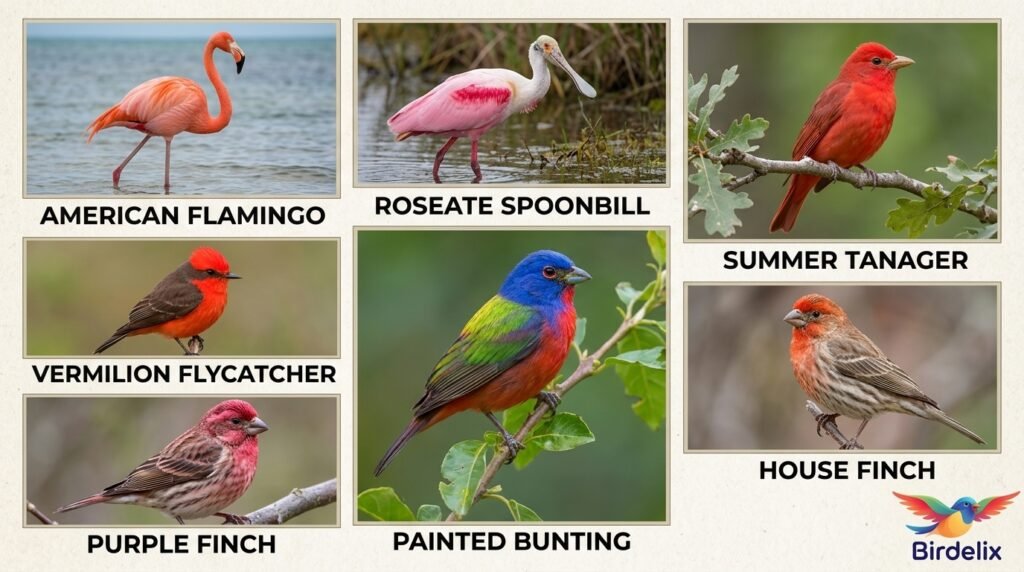
The Roseate Spoonbill (Platalea ajaja) is one of the most recognizable pink birds in Texas. Its bright pink wings, shoulders, and tail make it easy to notice in shallow wetlands. Its long, flat, spoon-shaped bill is another clear identifying feature. Adults also develop a pale greenish head. These birds feed by sweeping their bills through shallow water to catch shrimp, small fish, and aquatic insects. Their pink coloring comes partly from carotenoid pigments in crustaceans. Look for them around Galveston, Rockport, coastal marshes, and freshwater wetlands. Young spoonbills usually have paler feathers than adults.
2. American Flamingo
The American Flamingo (Phoenicopterus ruber) has striking reddish-pink feathers, long legs, and a curved bill with a black tip. It is much taller than most other Texas birds. Although flamingos are strongly associated with the Caribbean, occasional individuals have appeared along the Texas coast. However, they aren’t regular residents across the state. Their natural habitats include shallow saline lagoons and coastal flats. They feed by filtering tiny organisms, algae, and crustaceans from the water. If you spot one, observe it carefully and check reliable identification records before assuming it is a wild visitor.
3. House Finch
The House Finch (Haemorhous mexicanus) is a familiar backyard bird throughout much of Texas. Adult males have rosy-red coloring around their heads, throats, and upper breasts. Their backs and wings usually show brown streaks. Females lack the bright coloring and have mostly brown, streaked feathers. These small birds enjoy visiting feeders in residential neighborhoods, parks, and gardens. Their diet includes sunflower seeds, other seeds, and small fruits. Male coloration can vary depending on diet. Their cheerful, warbling songs also make them easy to notice around homes.
4. Purple Finch
The Purple Finch (Haemorhous purpureus) has a raspberry-red appearance that can look pink in good light. Males show reddish coloring across their heads, breasts, and backs. Females are brown and white with strong facial markings and streaked underparts. This species can be difficult to distinguish from the House Finch. One useful clue is the Purple Finch’s more extensive red coloring across its back. In Texas, it is an uncommon seasonal visitor rather than a widespread resident. Look for it around wooded areas and feeders, especially during suitable winter conditions.
5. Vermilion Flycatcher
The Vermilion Flycatcher (Pyrocephalus rubinus) is famous for its brilliant red appearance. Adult males have a vivid red crown, throat, and underside, with dark wings and back. In bright sunlight, these feathers may appear rosy or pinkish-red. Females look different and usually have gray-brown upperparts with lighter underparts. South Texas provides suitable habitats, especially open fields, brushlands, and areas near water. These birds often sit on exposed branches or fences while watching for insects. When they spot prey, they quickly fly out to catch it before returning to their perch.
6. Painted Bunting
The Painted Bunting (Passerina ciris) is among the most colorful songbirds found in Texas. Adult males have a blue head, green back, and reddish underparts. Their bright red breast can sometimes look pinkish in photographs. Females and young birds are mostly green, which helps them blend into thick vegetation. South Texas is an important breeding region for this species. You may find them near brushy fields, woodland edges, and native shrubs. They eat seeds and insects, especially during breeding season. Their striking appearance makes them a favorite among birdwatchers.
7. Summer Tanager
The Summer Tanager (Piranga rubra) is a beautiful red songbird that breeds in parts of Texas. Adult males have mostly red plumage, while females display yellow or yellow-green feathers. Depending on the light, male feathers may appear warm red or slightly rosy. These birds prefer wooded habitats, especially areas with mature trees. East Texas offers suitable forests and woodland edges where they can find food and nesting sites. Unlike many seed-eating songbirds, Summer Tanagers feed heavily on bees, wasps, and other insects. They often catch insects while flying between branches.
8. Scarlet Tanager
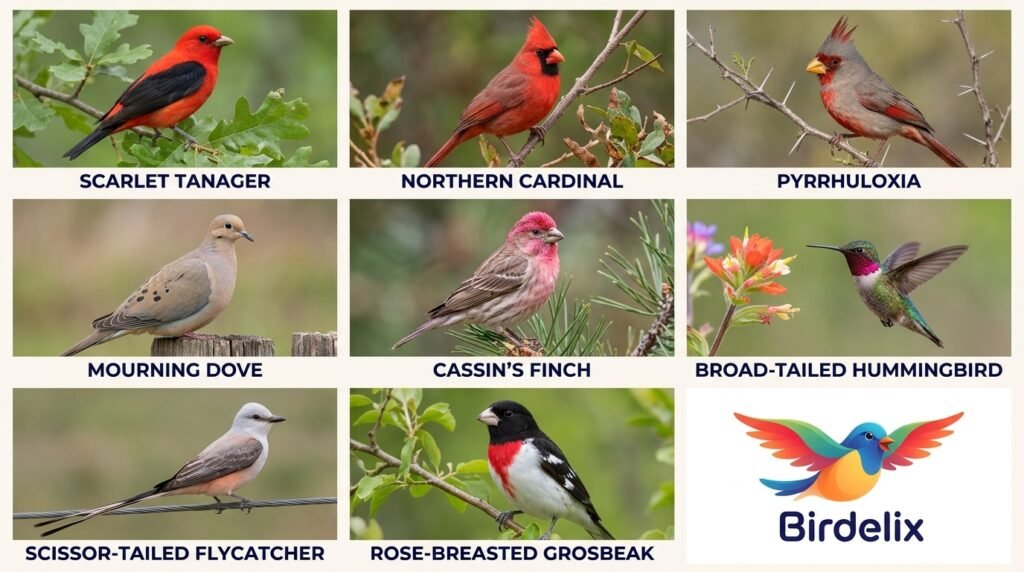
The Scarlet Tanager (Piranga olivacea) is known for its brilliant red body and contrasting black wings. Its bright color makes it stand out among green woodland leaves. However, it is mainly a migrant through Texas rather than a common year-round resident. Females and nonbreeding birds have more olive-yellow coloring. During migration, these birds may appear in wooded parks, forest edges, and tree-filled areas. They feed on insects, berries, and small fruits. Their red plumage makes them interesting to observe, although their Texas sightings depend heavily on migration timing.
9. Northern Cardinal
The Northern Cardinal (Cardinalis cardinalis) is one of the easiest birds to recognize in Texas. Adult males have bright red feathers, a pointed crest, and a black facial mask. Females are mostly warm brown with reddish highlights on their wings and tail. Their color is red rather than true pink, but certain lighting can create a softer appearance. Cardinals live in gardens, parks, woodlands, and suburban neighborhoods. They eat seeds, berries, and insects. Their clear whistles are familiar sounds in many Texas backyards, especially during the morning.
10. Pyrrhuloxia
The Pyrrhuloxia (Cardinalis sinuatus) is a distinctive bird associated with the dry brushlands of South Texas. It has a gray body, red facial markings, and a thick, curved bill. Males often show reddish coloring around their faces and breasts. Females are generally duller and have less red. This species prefers desert scrub, thorny shrubs, and open countryside. Its diet includes seeds, insects, and wild fruits. Although it resembles the Northern Cardinal, its unusual bill and gray body make identification easier. Look for it in brushy habitats rather than dense forests.
11. Mourning Dove
The Mourning Dove has soft grayish-brown feathers with a gentle pinkish tone. Its breast may appear rosy in certain lighting. This bird is common across Texas and often visits gardens, parks, and open fields. You can usually recognize it by its long, pointed tail and gentle cooing call.
12. Cassin’s Finch
The Cassin’s Finch is a colorful bird with rosy-red and pinkish feathers. Males usually show brighter colors on their heads, breasts, and backs. Females have brown and white streaked plumage instead. This finch is an uncommon visitor to Texas, so sightings are not guaranteed.
13. Broad-tailed Hummingbird
The Broad-tailed Hummingbird is a small bird with beautiful green feathers. Male birds have a bright rose-pink throat that shines in sunlight. They can appear in western Texas during migration, although sightings are uncommon. Their fast wingbeats and hovering flight make them exciting to watch.
14. Scissor-tailed Flycatcher
The Scissor-tailed Flycatcher has a pale salmon-pink color along its sides and belly. Its gray head, dark wings, and extremely long tail make identification easier. This bird is commonly seen in Texas, especially in open fields and grasslands. It often sits on fences while searching for flying insects.
15.Rose-breasted Grosbeak
The Rose-breasted Grosbeak is known for the bold rose-red patch on the male’s white breast. Its black head, wings, and back create a striking contrast. Females look different, with brown and streaked feathers. This bird passes through parts of Texas during migration, especially in spring and fall.
Pink Birds in Texas Coast: Where Are They Found?
The Texas coast supports an impressive variety of bird species. Its shallow bays, tidal flats, salt marshes, and wetlands provide food and shelter throughout the year. Roseate Spoonbills, pelicans, skimmers, and other waterbirds use these habitats for feeding, resting, and nesting. Coastal areas also attract migratory birds traveling between breeding and wintering grounds.
When searching for a pink bird in Texas coast, pay attention to the water’s edge and shallow marshes. Early morning often offers pleasant viewing conditions and active feeding behavior. Tides can also influence where birds gather. Some species prefer exposed mudflats, while others feed in deeper marsh channels. Galveston, Rockport, and nearby wildlife refuges offer several suitable places to explore.
Pink Birds in Galveston Texas
Galveston is an excellent starting point for coastal birdwatching. Its beaches, marshes, ponds, and tidal flats support many resident and migrating species. Roseate Spoonbills are among the most attractive birds to look for in suitable wetlands. You may also spot Brown Pelicans, Black Skimmers, and other coastal birds. However, American Flamingos remain rare visitors rather than dependable sightings.
Galveston Island State Park provides access to coastal habitats where bird activity changes with the season. Shallow water often attracts feeding wading birds, while open beaches support shorebirds. When searching for pink birds in Galveston Texas, bring binoculars and give wildlife plenty of space. Avoid approaching nesting colonies or walking through sensitive marsh vegetation. A quiet visit often gives you better views than moving too close.
Pink Birds in South Texas
South Texas has a remarkable mixture of subtropical landscapes, thornscrub, wetlands, and open fields. These habitats support colorful birds that may not occur regularly in other parts of the state. Vermilion Flycatchers, Painted Buntings, and Pyrrhuloxias are especially interesting species to watch. Their colors and feeding habits make them easy to appreciate once you learn their identifying features.
The Rio Grande Valley is a well-known birdwatching region because of its diverse habitats. Native shrubs provide shelter, berries, and nesting areas for many species. Wetlands attract waterbirds, while open brushlands support flycatchers and other small birds. If you’re looking for pink birds in South Texas, explore wildlife areas with native vegetation. Spring and fall can bring additional migrants through the region.
Pink Birds in Rockport Texas
Rockport sits along the Texas coast and offers access to bays, marshes, tidal flats, and coastal prairies. These environments support wading birds, shorebirds, and seabirds. Roseate Spoonbills are especially attractive because of their bright pink feathers and unusual bills. Brown Pelicans and Black Skimmers are also familiar coastal species in suitable areas.
The nearby Aransas National Wildlife Refuge region is important for coastal wildlife. Bird activity changes with water levels, weather, and seasonal food supplies. When searching for pink birds in Rockport Texas, check shallow water and open marsh edges first. A spotting scope can help you observe distant birds without disturbing them. Always stay on marked paths and respect wildlife viewing restrictions.
Pink Birds in Houston and Southeast Texas
Houston has more bird habitat than many visitors expect. Parks, wooded neighborhoods, ponds, and nearby wetlands support a wide range of species. House Finches and Northern Cardinals are familiar backyard visitors. Coastal wetlands outside the city offer opportunities to observe spoonbills, pelicans, and other waterbirds. The exact species you see depends on habitat and season.
For pink birds in Houston Texas, start with suitable parks and natural areas rather than busy streets. The wider southeast Texas region includes marshes, forests, and coastal habitats. These environments attract both resident birds and seasonal migrants. Backyard feeders can also bring finches closer to home. Native shrubs and clean water sources make gardens more welcoming to local wildlife.
Big Pink Birds in Texas
Large birds are often easier to spot because of their size, wingspan, and feeding behavior. The Roseate Spoonbill is the clearest example of a genuinely pink large bird in Texas. Other species have reddish or pinkish features rather than completely pink bodies. Comparing their sizes and habitats can help you identify them more confidently.
| Bird Name | Approximate Length | Color Features | Preferred Habitat |
| Roseate Spoonbill | 28–34 inches | Bright pink feathers | Marshes and wetlands |
| American Flamingo | 47–57 inches | Reddish-pink plumage | Saline lagoons |
| Brown Pelican | 48–54 inches | Mostly brown and gray | Coastal waters |
| Summer Tanager | 6.5–7.5 inches | Rich red plumage | Woodlands |
| Vermilion Flycatcher | 5–5.5 inches | Bright red underparts | Open fields and brushlands |
Small Pink Birds in Texas
Small birds can be harder to identify because their colors often appear subtle. Some have rosy breasts, while others show reddish heads or pinkish legs. Males and females may also look very different. Pay attention to body shape, bill structure, and behavior instead of relying on color alone.
| Bird Name | Approximate Length | Color Features | Habitat |
| House Finch | 5–6 inches | Rosy-red male head and breast | Backyards and parks |
| Purple Finch | 5–6 inches | Raspberry-red male plumage | Woodlands and feeders |
| Vermilion Flycatcher | 5–5.5 inches | Bright red underparts | Open fields |
| Common Ground Dove | 6–7 inches | Subtle pinkish-brown underparts | Brushy habitats |
| Mourning Dove | 9–13 inches | Pinkish legs and warm gray tones | Gardens and open spaces |
| Broad-tailed Hummingbird | 3–4 inches | Iridescent rosy-pink male throat | Mountain habitats |
Pink Birds in Texas by Habitat
Habitat is one of the most useful clues when identifying an unfamiliar bird. A large wading bird in a coastal marsh is likely different from a small finch at a backyard feeder. Weather, food supplies, and water levels also influence where birds gather. Learning these patterns can make your birdwatching trips more productive.
| Habitat | Birds You May See | Texas Regions |
| Coastal wetlands | Roseate Spoonbill, Brown Pelican | Galveston and Rockport |
| Salt marshes | Spoonbills, herons, shorebirds | Texas Coast |
| Woodlands | Summer Tanager, Scarlet Tanager | East Texas |
| Brushlands | Pyrrhuloxia, Vermilion Flycatcher | South Texas |
| Urban parks | House Finch, Northern Cardinal | Houston and other cities |
| Open fields | Scissor-tailed Flycatcher, Vermilion Flycatcher | Central and South Texas |
When Is the Best Time to See Pink Birds in Texas?
The best birdwatching season depends on the species you want to observe. Spring migration brings many traveling birds through Texas, while summer supports breeding activity. Winter can bring seasonal visitors to suitable habitats. Coastal waterbirds may remain visible throughout the year, although their numbers and locations can change.
Weather also plays an important role in bird activity. Mild mornings often provide comfortable viewing conditions, especially around wetlands and open fields. Rainfall can change water levels and food availability. During dry periods, birds may gather around reliable water sources. Check local conditions before visiting a wildlife area because seasonal access and habitat conditions can change.
| Season | What to Expect | Birdwatching Focus |
| Spring | Northbound migration and breeding activity | Songbirds and colorful migrants |
| Summer | Nesting and young birds | Spoonbills and resident species |
| Fall | Southbound migration | Migrating songbirds and shorebirds |
| Winter | Seasonal visitors | Finches and waterbirds |
How to Identify Pink Birds in Texas
Color is a helpful starting point, but it shouldn’t be your only identification clue. A reddish bird may look pink in bright sunlight, while a gray bird may have pink legs or subtle warm tones. Compare the bird’s size, bill, tail, and feather patterns. Its surroundings can also narrow down the possible species.
Listen carefully when you cannot see a bird clearly. Calls and songs often help distinguish similar-looking species. Feeding behavior can offer another clue. For example, spoonbills sweep their bills through shallow water, while flycatchers catch insects in flight. Photographing a bird from a safe distance can help you compare its markings later.
| Identification Feature | What to Observe | Why It Helps |
| Body color | Pink, red, coral, or salmon shades | Narrows down possible species |
| Bill shape | Spoon-shaped, curved, or pointed | Reveals feeding adaptations |
| Body size | Small, medium, or large | Separates similar species |
| Tail shape | Short, long, or forked | Provides a useful field mark |
| Habitat | Wetland, woodland, or backyard | Shows where a species usually lives |
| Behavior | Feeding, flying, or perching | Helps confirm identification |
Where to Go Birdwatching for Pink Birds in Texas
Texas has many places where you can observe colorful birds in natural surroundings. Coastal wildlife refuges offer excellent opportunities to see wading birds and shorebirds. South Texas provides a different experience with brushland species and subtropical habitats. Meanwhile, Houston parks and neighborhood gardens can introduce beginners to familiar backyard birds.
Galveston Island State Park, Anahuac National Wildlife Refuge, and the Aransas National Wildlife Refuge region are useful starting points. Laguna Atascosa National Wildlife Refuge also supports diverse South Texas wildlife. Choose locations based on the habitats and species you hope to see. Visit early when conditions are comfortable, carry binoculars, and remain on designated trails.
| Birdwatching Location | Region | Habitat Highlights |
| Galveston Island State Park | Galveston | Marshes, beaches, and coastal wetlands |
| Anahuac National Wildlife Refuge | Upper Texas Coast | Freshwater marshes and wetland birds |
| Aransas National Wildlife Refuge | Coastal Texas | Bays, marshes, and waterbirds |
| Laguna Atascosa National Wildlife Refuge | South Texas | Coastal wetlands and subtropical brush |
| Houston-area parks | Southeast Texas | Woodlands, ponds, and urban bird habitats |
Conclusion
Texas offers many opportunities to discover birds with pink, rosy, red, and salmon-colored features. The Roseate Spoonbill is the standout species, while finches, flycatchers, and other colorful birds add variety. Each species has its own appearance, feeding habits, and preferred habitat.
From Galveston and Rockport to Houston and South Texas, every region offers something different. Take your binoculars, explore natural habitats, and watch patiently. With careful observation, you’ll soon recognize the birds that make Texas such an exciting place for birdwatching.
FAQs
What is the most famous pink bird in Texas?
The Roseate Spoonbill is one of the most recognizable pink birds in Texas. Its bright feathers and unusual spoon-shaped bill make it stand out in wetlands.
Are pink flamingos found in Texas?
American Flamingos are rare visitors to Texas rather than common resident birds. Occasional coastal sightings can attract attention from birdwatchers.
Where can I see pink birds in Galveston?
Galveston Island State Park and nearby coastal wetlands offer suitable birdwatching habitats. Roseate Spoonbills, Brown Pelicans, and other waterbirds may appear in these areas.
What are the big pink birds in Texas?
The Roseate Spoonbill is the most obvious large bird with genuinely pink feathers. American Flamingos are much taller but extremely rare in Texas.
Are there small pink birds in Texas?
Yes, several small species show rosy or reddish features. Male House Finches have rosy-red heads and breasts. Purple Finches may show raspberry-colored plumage during seasonal visits.
Where can I find pink birds in South Texas?
The Rio Grande Valley and surrounding brushlands offer good opportunities to observe colorful birds. Vermilion Flycatchers, Painted Buntings, and Pyrrhuloxias are interesting species to look for.
Can I see pink birds near Houston?
Yes, although the species you see will depend on the habitat and season. House Finches and Northern Cardinals occur around residential areas and parks.

Welcome to Birdelix! I’m Anam Sattar, an AI-powered SEO Specialist and Content Writer with over 5 years of experience in creating high-quality, search-optimized content. I help businesses improve their search engine rankings, increase organic traffic, and build beautiful, user-friendly websites. My mission is to make SEO, content creation, and web design simple, effective, and accessible for everyone. Let’s grow your online presence and achieve success together!