

Birds That Start With H include some of the world’s most fascinating and diverse bird species, ranging from powerful birds of prey to colorful tropical birds and graceful water birds. Whether you’re a beginner or an experienced birdwatcher, exploring these remarkable birds is both fun and educational. In this guide, you’ll discover common, rare, exotic, and coastal species along with identification tips, habitats, diets, and interesting facts. You’ll also learn where these birds live and why they are important for healthy ecosystems.
From the majestic Harpy Eagle to the tiny Hummingbird, this complete collection of bird names that start with H, bird species that start with H, rare H birds, beach birds that start with H, and exotic birds that start with H will help you expand your bird knowledge with ease.
What Are Birds That Start With H?
Birds That Start With H are bird species whose common names begin with the letter “H.” They include birds of prey, colorful tropical birds, seabirds, songbirds, and wetland species found across every continent. Many of these birds play essential roles in nature by controlling pests, spreading seeds, pollinating flowers, and maintaining healthy ecosystems. Bird names that start with H range from familiar backyard visitors to some of the world’s rarest wildlife.
If you’re exploring bird species that start with H, you’ll notice an incredible variety in size, habitat, and behavior. Some, like the Hummingbird, are among the smallest birds on Earth, while others, such as the Harpy Eagle, rank among the most powerful raptors. This guide introduces common, rare, and exotic species with practical information that helps you identify them and better appreciate the diversity of Birds That Start With H.
50 Birds That Start With H (Complete List)
| No. | Bird Name | Scientific Name | Bird Type | Habitat | Diet |
| 1 | Heron | Ardea spp. | Wading Bird | Wetlands, lakes, rivers | Fish, frogs, insects |
| 2 | Hawk | Accipitridae | Bird of Prey | Forests, mountains, grasslands | Small mammals, birds |
| 3 | Hummingbird | Trochilidae | Nectar-feeding Bird | Gardens, forests | Nectar, insects |
| 4 | Hoopoe | Upupa epops | Ground Bird | Woodlands, grasslands | Insects, larvae |
| 5 | House Finch | Haemorhous mexicanus | Songbird | Urban areas, gardens | Seeds, fruits |
| 6 | Honeyeater | Meliphagidae | Songbird | Forests, woodlands | Nectar, insects |
| 7 | Himalayan Monal | Lophophorus impejanus | Pheasant | Himalayan forests | Roots, insects |
| 8 | Hawfinch | Coccothraustes coccothraustes | Finch | Deciduous forests | Seeds, berries |
| 9 | Hammerkop | Scopus umbretta | Wading Bird | Marshes, wetlands | Fish, frogs |
| 10 | Hornbill | Bucerotidae | Forest Bird | Tropical forests | Fruits, insects |
| 11 | Harrier | Circus spp. | Bird of Prey | Grasslands, marshes | Rodents, birds |
| 12 | House Martin | Delichon urbicum | Swallow | Towns, open countryside | Flying insects |
| 13 | Hairy Woodpecker | Dryobates villosus | Woodpecker | Forests | Insects, seeds |
| 14 | Hoopoe Lark | Alaemon alaudipes | Lark | Deserts | Insects, seeds |
| 15 | Hooded Crow | Corvus cornix | Crow | Forests, farmland | Omnivore |
| 16 | Harpy Eagle | Harpia harpyja | Eagle | Rainforests | Monkeys, sloths |
| 17 | Hawaiian Hawk | Buteo solitarius | Hawk | Hawaiian forests | Birds, rodents |
| 18 | Hooded Merganser | Lophodytes cucullatus | Duck | Lakes, rivers | Fish, crayfish |
| 19 | Horned Grebe | Podiceps auritus | Water Bird | Lakes, coastal waters | Fish, crustaceans |
| 20 | Harlequin Duck | Histrionicus histrionicus | Sea Duck | Rocky coasts, rivers | Aquatic insects, shellfish |
| 21 | Heermann’s Gull | Larus heermanni | Seabird | Pacific coast | Fish, marine animals |
| 22 | Hartlaub’s Gull | Chroicocephalus hartlaubii | Seabird | Southern African coasts | Fish, insects |
| 23 | Heuglin’s Gull | Larus heuglini | Seabird | Arctic coasts | Fish, carrion |
| 24 | Hooded Oriole | Icterus cucullatus | Songbird | Woodlands, gardens | Insects, nectar |
| 25 | Hooded Warbler | Setophaga citrina | Warbler | Deciduous forests | Insects |
| 26 | Hooded Pitta | Pitta sordida | Forest Bird | Tropical forests | Worms, insects |
| 27 | Henslow’s Sparrow | Centronyx henslowii | Sparrow | Grasslands | Seeds, insects |
| 28 | Harris’s Hawk | Parabuteo unicinctus | Bird of Prey | Deserts, scrublands | Rabbits, birds |
| 29 | Harris’s Sparrow | Zonotrichia querula | Sparrow | Shrubs, forests | Seeds, berries |
| 30 | Hill Myna | Gracula religiosa | Starling | Tropical forests | Fruits, insects |
| 31 | Himalayan Bulbul | Pycnonotus leucogenys | Songbird | Hills, forests | Fruits, insects |
| 32 | Himalayan Griffon | Gyps himalayensis | Vulture | Mountains | Carrion |
| 33 | Himalayan Swiftlet | Aerodramus brevirostris | Swift | Mountains | Flying insects |
| 34 | Himalayan Rubythroat | Calliope pectoralis | Songbird | Alpine forests | Insects |
| 35 | Himalayan Accentor | Prunella himalayana | Passerine | Rocky mountains | Seeds, insects |
| 36 | House Wren | Troglodytes aedon | Songbird | Gardens, forests | Insects |
| 37 | Horned Lark | Eremophila alpestris | Lark | Grasslands | Seeds, insects |
| 38 | Horned Puffin | Fratercula corniculata | Seabird | Coastal cliffs | Fish |
| 39 | Horned Sungem | Heliactin bilophus | Hummingbird | Savannas | Nectar, insects |
| 40 | Honey Buzzard | Pernis apivorus | Bird of Prey | Forests | Wasps, bees |
| 41 | Hawaiian Crow | Corvus hawaiiensis | Crow | Hawaiian forests | Fruits, insects |
| 42 | Hawaiian Honeycreeper | Drepanidinae | Songbird | Hawaiian forests | Nectar, insects |
| 43 | Helmeted Hornbill | Rhinoplax vigil | Hornbill | Rainforests | Fruits, figs |
| 44 | Hwamei | Garrulax canorus | Songbird | Forests, shrubs | Insects, berries |
| 45 | Hadada Ibis | Bostrychia hagedash | Wading Bird | Wetlands, grasslands | Worms, insects |
| 46 | Henderson’s Ground Jay | Podoces hendersoni | Ground Bird | Deserts | Insects, seeds |
| 47 | Hairy-breasted Barbet | Tricholaema hirsuta | Barbet | Tropical forests | Fruits, insects |
| 48 | Hill Blue Flycatcher | Cyornis banyumas | Flycatcher | Forests | Flying insects |
| 49 | Hermit Thrush | Catharus guttatus | Thrush | Forests | Insects, berries |
| 50 | Humboldt Penguin | Spheniscus humboldti | Penguin | Pacific coasts | Fish, squid |
50 Most Popular Birds That Start With H (Detailed Guide)
1. Heron
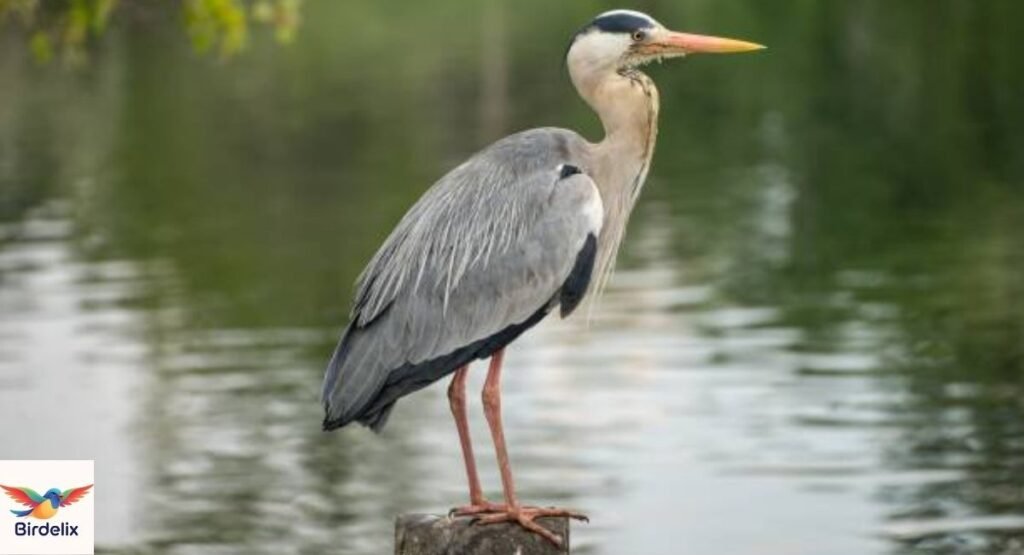
Scientific Name: Ardea spp.
Family: Ardeidae
The Heron is one of the most recognizable Birds That Start With H because of its long legs, graceful neck, and excellent fishing skills. It commonly lives around wetlands, lakes, rivers, marshes, and coastal shores across North America and many other regions. Herons mainly eat fish, frogs, insects, and small reptiles by standing perfectly still before striking with their sharp beaks. Most species grow between 35 and 55 inches long with wingspans reaching up to 79 inches. An interesting fact is that a Heron can remain motionless for several minutes while patiently waiting for prey.
2. Hawk
Scientific Name: Accipitridae
Family: Accipitridae
The Hawk is a powerful bird of prey known for its sharp eyesight, strong talons, and incredible hunting ability. Hawks are found in forests, mountains, grasslands, deserts, and even suburban areas throughout the United States. Their diet includes rabbits, squirrels, snakes, birds, and other small animals. Depending on the species, adults measure between 18 and 26 inches long with wingspans ranging from 40 to 55 inches. A fascinating fact is that Hawks can see prey nearly eight times better than humans.
3. Hummingbird
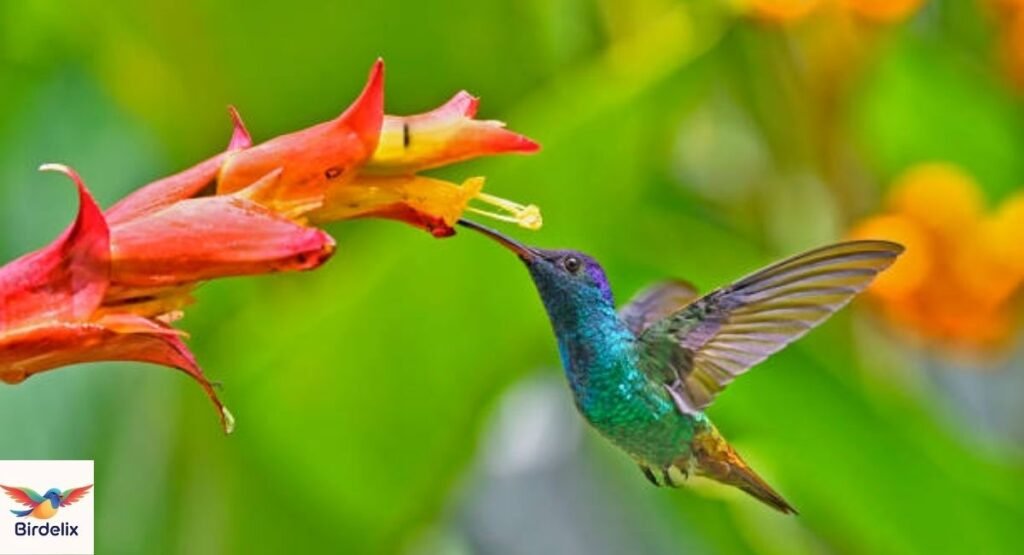
Scientific Name: Trochilidae
Family: Trochilidae
The Hummingbird is among the smallest and fastest bird species that start with H. Its colorful feathers and rapid wingbeats make it one of nature’s most amazing birds. Hummingbirds live in gardens, forests, meadows, and tropical habitats throughout the Americas. They survive mainly on flower nectar while also eating tiny insects for protein. Most species measure only 3 to 5 inches long with wingspans between 4 and 6 inches. An amazing fact is that Hummingbirds are the only birds capable of flying backward.
4. Hoopoe
Scientific Name: Upupa epops
Family: Upupidae
The Hoopoe easily stands out because of its beautiful orange crest decorated with black tips. This unique bird prefers open woodlands, grasslands, farms, and orchards across Europe, Asia, and Africa. It searches the ground for insects, worms, beetles, and larvae using its long curved bill. Adults usually grow about 10 to 12 inches long with wingspans of 17 to 19 inches. One remarkable fact is that the Hoopoe raises and lowers its crown-like crest whenever it feels excited or threatened.
5. House Finch
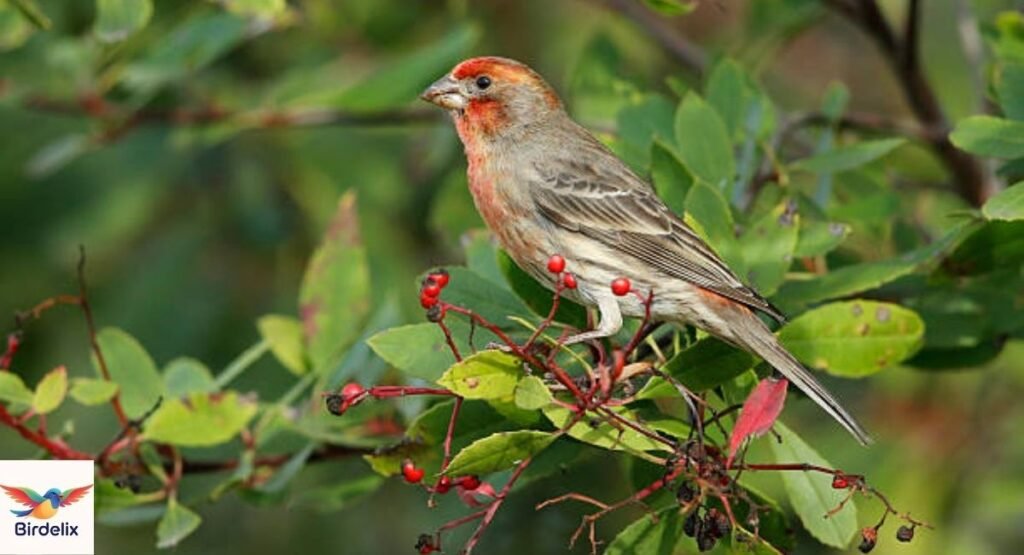
Scientific Name: Haemorhous mexicanus
Family: Fringillidae
The House Finch is a cheerful backyard bird that has adapted extremely well to cities and neighborhoods. Males display bright red feathers on the head and chest, while females have soft brown streaks. They feed on seeds, berries, buds, and small fruits found in gardens and parks. Most adults measure between 5 and 6 inches long with wingspans around 8 to 10 inches. A fun fact is that House Finches often visit bird feeders throughout the year.
6. Honeyeater
Scientific Name: Meliphagidae
Family: Meliphagidae
The Honeyeater is famous for its love of sweet flower nectar and its important role in pollination. These active birds live mainly in Australia, Papua New Guinea, and nearby islands where forests and flowering shrubs are abundant. Besides nectar, they also enjoy insects, spiders, and soft fruits. Depending on the species, they range from 4 to 14 inches in length. An interesting fact is that many native Australian plants depend on Honeyeaters for successful pollination.
7. Himalayan Monal
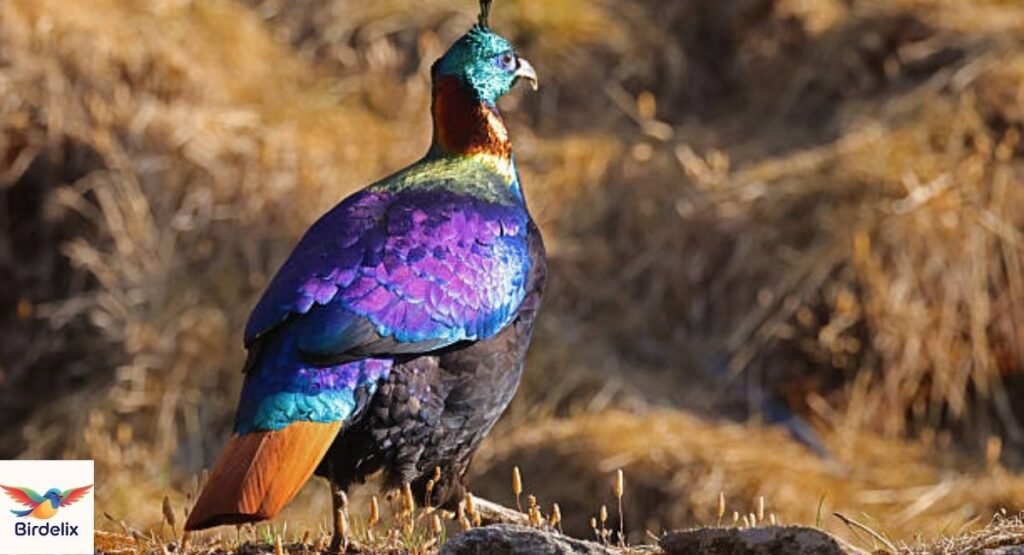
Scientific Name: Lophophorus impejanus
Family: Phasianidae
The Himalayan Monal is one of the world’s most colorful mountain birds with shimmering feathers that reflect brilliant shades of green, blue, purple, and copper. It inhabits high-altitude forests and alpine meadows across the Himalayas. This beautiful pheasant feeds on roots, seeds, berries, insects, and underground tubers. Adults measure around 27 to 30 inches long with broad rounded wings. An amazing fact is that the Himalayan Monal is the national bird of Nepal.
8. Hawfinch
Scientific Name: Coccothraustes coccothraustes
Family: Fringillidae
The Hawfinch is a stocky woodland bird recognized by its exceptionally large and powerful bill. It lives in deciduous forests, orchards, and wooded parks across Europe and Asia. Hawfinches mainly eat hard seeds, cherries, berries, and insects during warmer months. Adults typically grow between 6 and 7 inches long with wingspans reaching 12 inches. An incredible fact is that its beak is strong enough to crack hard cherry stones with ease.
9. Hammerkop
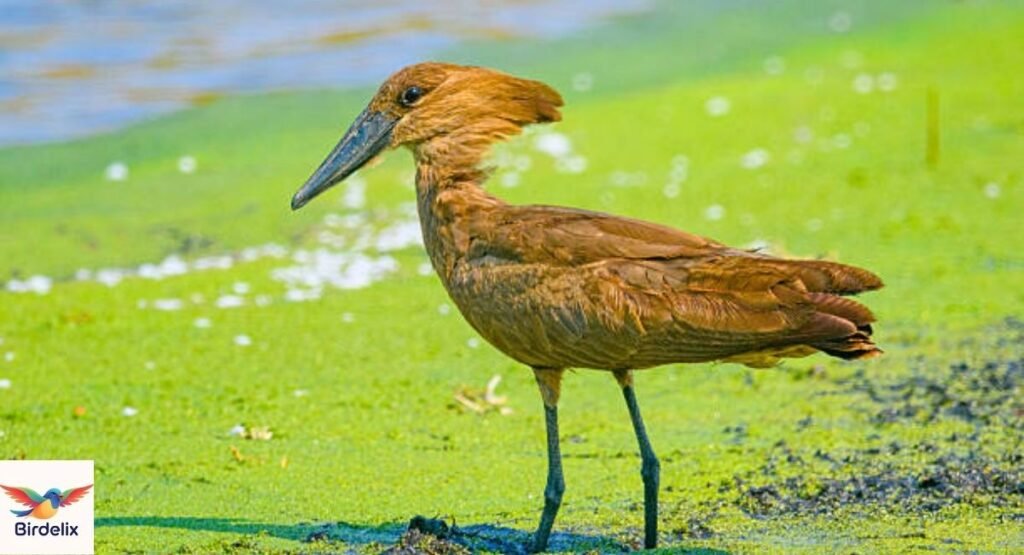
Scientific Name: Scopus umbretta
Family: Scopidae
The Hammerkop is an unusual wading bird named after its hammer-shaped head and long bill. It lives around African wetlands, rivers, lakes, marshes, and flooded grasslands where food is plentiful. Its diet includes fish, frogs, insects, crabs, and small reptiles. Most adults reach about 22 inches in length with wingspans close to 35 inches. One fascinating fact is that Hammerkops build enormous nests that can weigh more than 100 pounds.
10. Hornbill
Scientific Name: Bucerotidae
Family: Bucerotidae
The Hornbill is one of the most fascinating Birds That Start With H because of its huge colorful bill and distinctive casque that sits on top of its beak. These remarkable birds inhabit tropical forests across Africa and Asia where they feed on fruits, figs, insects, reptiles, and small mammals. Depending on the species, Hornbills range from 16 to over 50 inches long. A unique fact is that many female Hornbills seal themselves inside tree cavities while nesting, leaving only a narrow opening for the male to deliver food.
11. Harrier
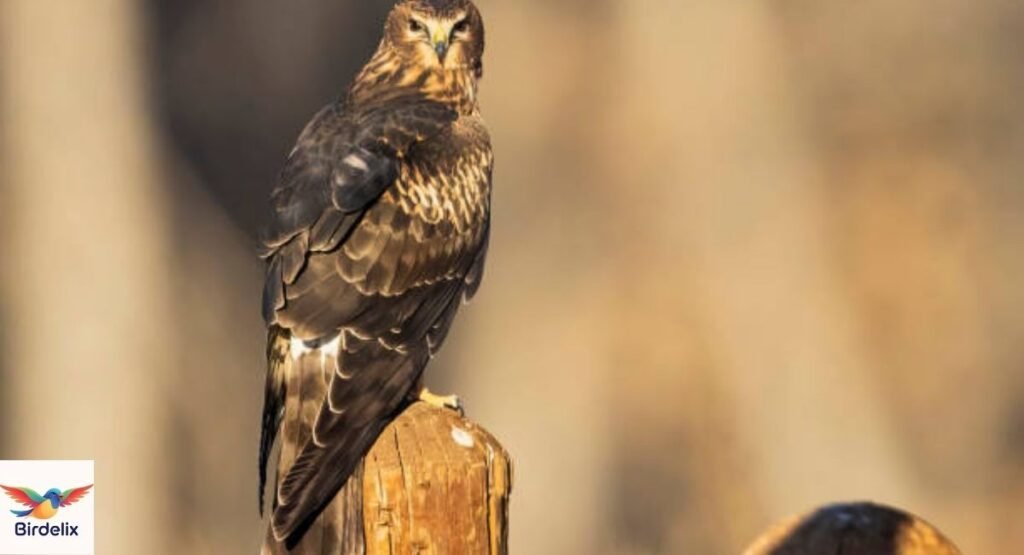
Scientific Name: Circus spp.
Family: Accipitridae
The Harrier is a graceful bird of prey known for its long wings and low, gliding flight over open fields. It lives in grasslands, marshes, wetlands, and coastal meadows across North America, Europe, Asia, and Africa. Harriers hunt rodents, small birds, frogs, and insects with remarkable precision. Most species measure between 16 and 24 inches long with wingspans reaching up to 48 inches. An interesting fact is that Harriers have an owl-like facial disk that helps them locate prey by sound.
12. House Martin
Scientific Name: Delichon urbicum
Family: Hirundinidae
The House Martin is a small migratory bird admired for its swift flight and impressive aerial hunting skills. It usually nests beneath rooftops, bridges, and cliffs near towns and villages. These birds feed almost entirely on flying insects captured while soaring through the air. Adults grow around 5 to 6 inches long with wingspans of approximately 10 to 12 inches. A fascinating fact is that House Martins often return to the same nesting site every breeding season.
13. Hairy Woodpecker
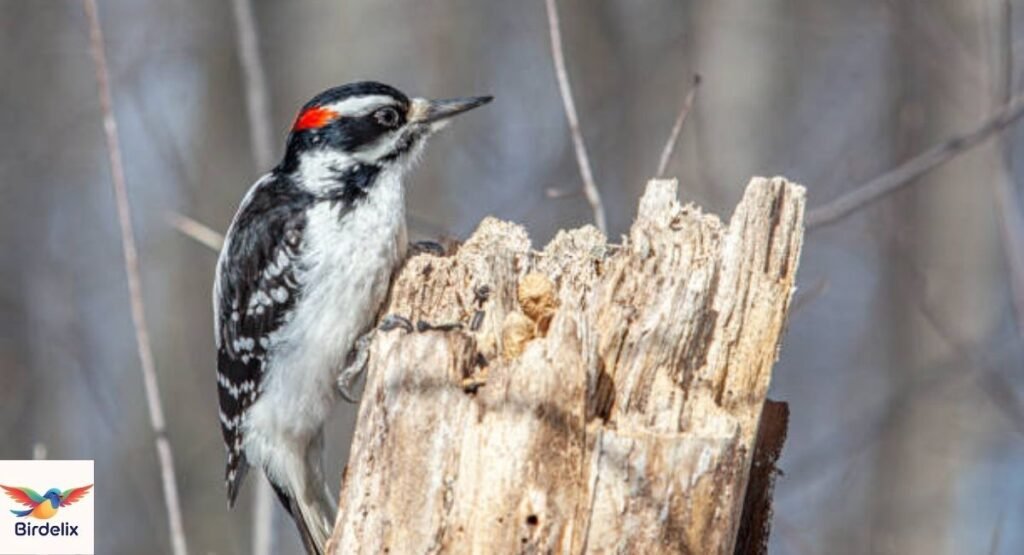
Scientific Name: Dryobates villosus
Family: Picidae
The Hairy Woodpecker is one of the most widespread Birds That Start With H in North America. It is easily recognized by its black-and-white feathers and strong chisel-shaped bill. This bird prefers mature forests, woodlands, parks, and suburban gardens where trees are plentiful. It feeds on beetles, ants, insect larvae, seeds, and berries. Adults measure between 7 and 10 inches long with wingspans of about 13 to 16 inches. An amazing fact is that its skull absorbs repeated pecking impacts without damaging the brain.
14. Hoopoe Lark
Scientific Name: Alaemon alaudipes
Family: Alaudidae
The Hoopoe Lark is a fascinating desert bird that combines the appearance of a lark with the curved bill of a Hoopoe. It thrives in sandy deserts and dry plains across North Africa and the Middle East. Its diet consists mainly of insects, beetles, seeds, and small reptiles found on the ground. Adults usually reach 7 to 8 inches in length with broad wings suited for long flights. An interesting fact is that Hoopoe Larks can survive extreme desert temperatures with remarkable efficiency.
15. Hooded Crow
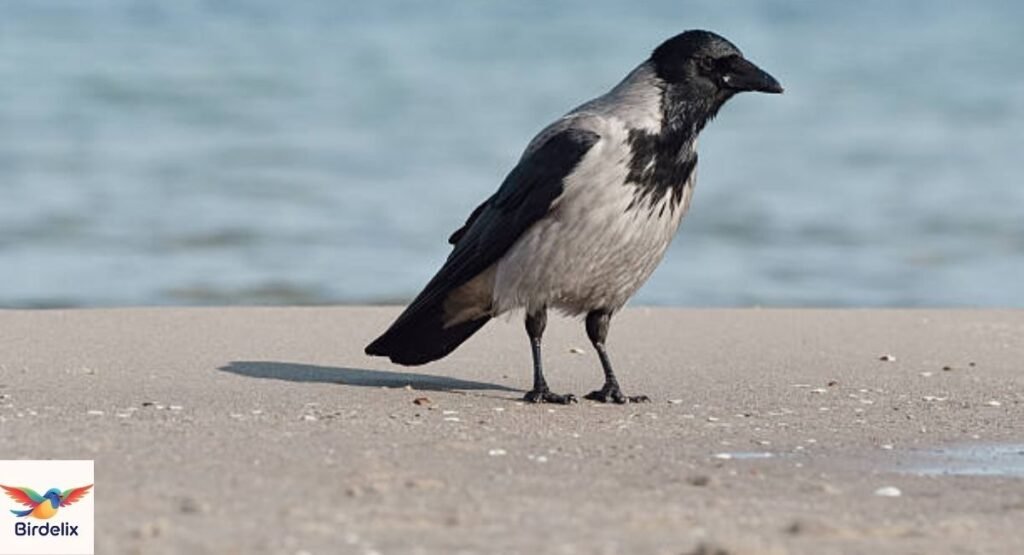
Scientific Name: Corvus cornix
Family: Corvidae
The Hooded Crow is a highly intelligent bird recognized by its gray body and glossy black head, wings, and tail. It inhabits forests, farmland, coastal regions, parks, and cities across Europe and parts of Asia. Hooded Crows eat insects, eggs, fruits, seeds, fish, and even small mammals. Adults grow between 18 and 22 inches long with wingspans reaching nearly 40 inches. A remarkable fact is that these clever birds can solve complex problems and even use simple tools.
16. Harpy Eagle
Scientific Name: Harpia harpyja
Family: Accipitridae
The Harpy Eagle is among the largest and strongest bird species that start with H. It lives in the dense tropical rainforests of Central and South America where it hunts monkeys, sloths, and large birds. Adults measure around 34 to 41 inches long with wingspans exceeding 7 feet. Their powerful talons are larger than a grizzly bear’s claws. An incredible fact is that the Harpy Eagle can lift prey weighing almost as much as itself.
17. Hawaiian Hawk
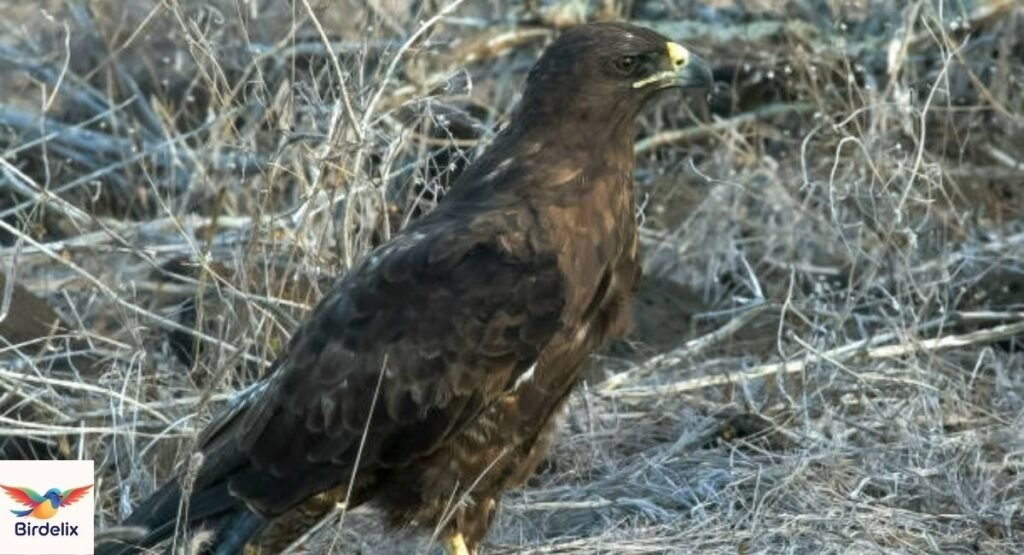
Scientific Name: Buteo solitarius
Family: Accipitridae
The Hawaiian Hawk, also called the ʻIo, is a rare bird of prey found only on Hawaii’s Big Island. It inhabits native forests, grasslands, and agricultural areas where it hunts rodents, insects, and small birds. Adults grow between 16 and 18 inches long with wingspans of approximately 35 to 40 inches. An interesting fact is that the Hawaiian Hawk is considered a sacred bird in traditional Hawaiian culture.
18. Hooded Merganser
Scientific Name: Lophodytes cucullatus
Family: Anatidae
The Hooded Merganser is a striking diving duck famous for its fan-shaped black-and-white crest. It lives in freshwater lakes, rivers, ponds, and wooded wetlands throughout North America. These birds feed mainly on fish, crayfish, aquatic insects, and small amphibians. Adults usually measure 16 to 19 inches long with wingspans reaching about 24 inches. A fascinating fact is that Hooded Mergansers can see clearly underwater while chasing fish.
19. Horned Grebe
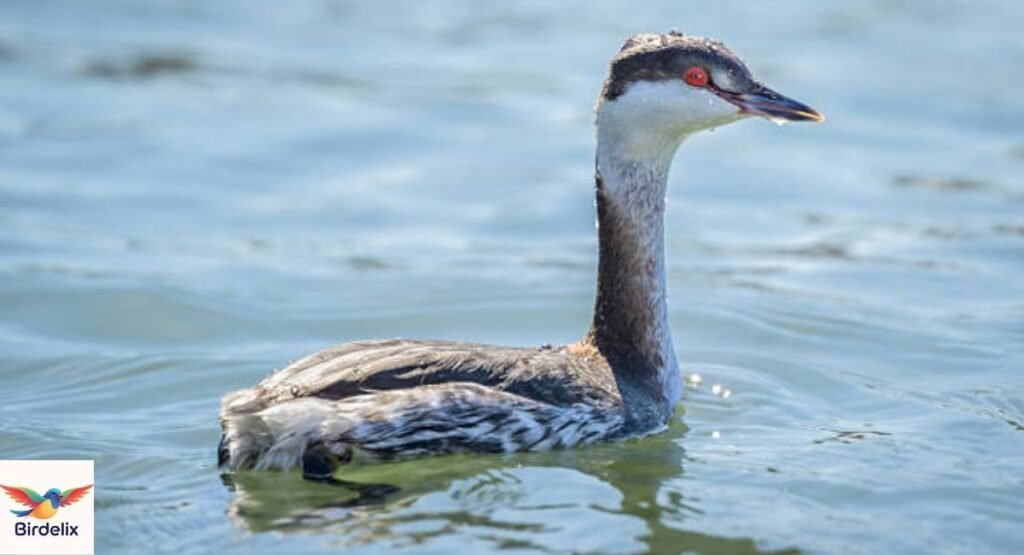
Scientific Name: Podiceps auritus
Family: Podicipedidae
The Horned Grebe is a beautiful water bird recognized by its golden feather tufts during the breeding season. It breeds on freshwater lakes before migrating to coastal waters in winter. Its diet includes fish, crustaceans, aquatic insects, and small mollusks. Adults grow between 12 and 15 inches long with wingspans of around 22 inches. An interesting fact is that Horned Grebes swallow some of their own feathers to help protect their stomach from sharp fish bones.
20. Harlequin Duck
Scientific Name: Histrionicus histrionicus
Family: Anatidae
The Harlequin Duck is one of the most colorful Birds That Start With H, displaying striking blue, chestnut, and white markings. It lives along fast-flowing mountain rivers during summer and rocky ocean coastlines throughout winter. These ducks feed on aquatic insects, shellfish, crabs, and small fish. Adults measure between 15 and 20 inches long with wingspans of about 26 to 30 inches. An impressive fact is that Harlequin Ducks easily swim through powerful rapids that few other water birds can handle.
21. Heermann’s Gull
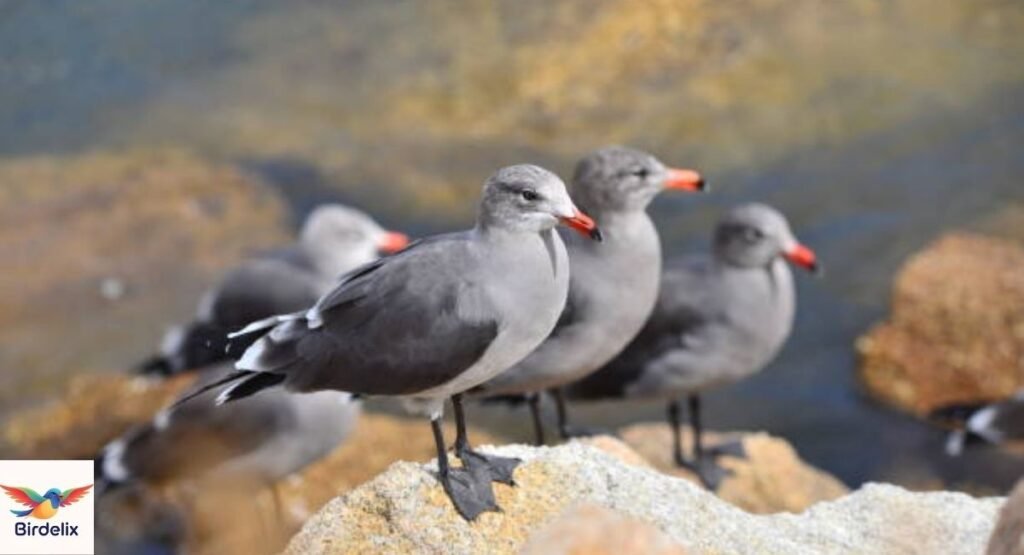
Scientific Name: Larus heermanni
Family: Laridae
The Heermann’s Gull is a striking coastal bird recognized by its smoky gray body, white head, and bright red bill. It lives mainly along the Pacific coast of Mexico and the western United States, especially near beaches, harbors, and rocky shorelines. These gulls feed on fish, squid, crabs, and marine invertebrates while often stealing food from other seabirds. Adults measure between 18 and 22 inches long with wingspans reaching about 55 inches. An interesting fact is that nearly the entire breeding population nests on Isla Rasa in the Gulf of California.
22. Hartlaub’s Gull
Scientific Name: Chroicocephalus hartlaubii
Family: Laridae
The Hartlaub’s Gull is a graceful seabird that spends most of its life along southern African coastlines. It prefers beaches, estuaries, fishing harbors, and coastal wetlands where food is abundant. This gull feeds on small fish, insects, crustaceans, and discarded seafood from fishing boats. Adults usually grow between 14 and 16 inches long with wingspans of about 38 to 41 inches. A fascinating fact is that Hartlaub’s Gulls often gather in large colonies during the breeding season.
23. Heuglin’s Gull
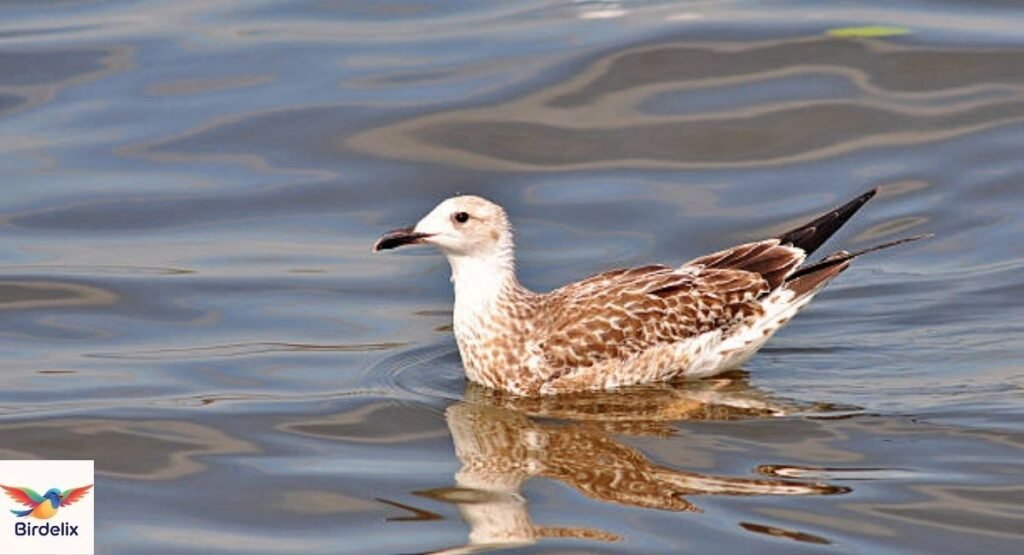
Scientific Name: Larus heuglini
Family: Laridae
The Heuglin’s Gull is a large migratory seabird found across northern Europe and Asia before traveling south during winter. It breeds near Arctic coastlines and spends colder months around beaches, estuaries, and coastal waters. Its diet includes fish, shellfish, insects, and carrion. Adults measure between 21 and 26 inches long with wingspans reaching nearly 60 inches. An amazing fact is that Heuglin’s Gulls travel thousands of miles every year during seasonal migration.
24. Hooded Oriole
Scientific Name: Icterus cucullatus
Family: Icteridae
The Hooded Oriole is one of the brightest Birds That Start With H, displaying brilliant orange-yellow feathers with contrasting black wings. It is commonly found in the southwestern United States and Mexico where it inhabits palm groves, gardens, woodlands, and desert landscapes. Hooded Orioles feed on nectar, insects, fruits, and berries throughout the year. Adults grow between 7 and 8 inches long with wingspans around 10 inches. An interesting fact is that they often weave hanging nests beneath palm leaves.
25. Hooded Warbler
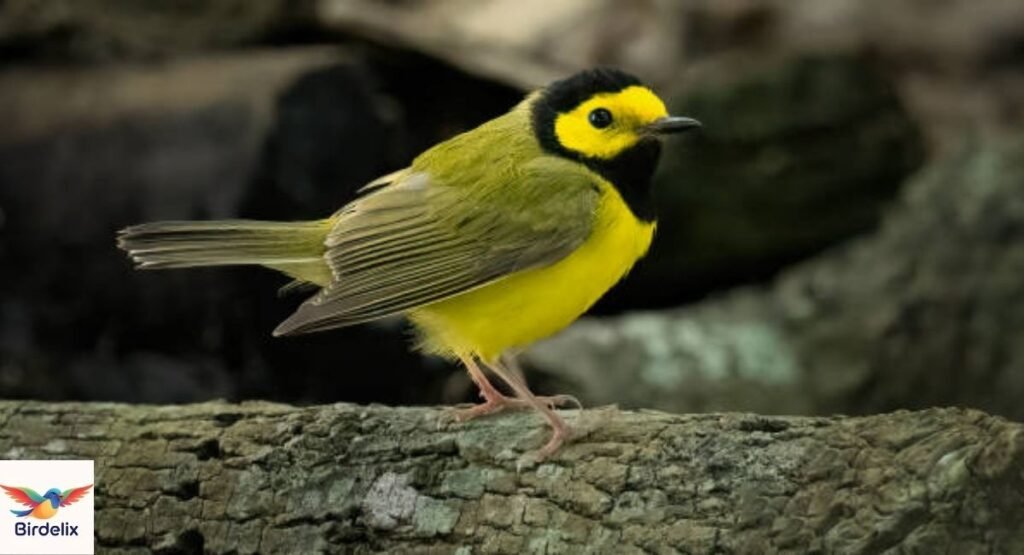
Scientific Name: Setophaga citrina
Family: Parulidae
The Hooded Warbler is a beautiful woodland songbird admired for its bright yellow body and bold black hood. It lives in deciduous forests with thick undergrowth throughout eastern North America. This active bird feeds mainly on caterpillars, spiders, beetles, and other small insects. Adults measure about 5 inches long with wingspans close to 8 inches. A remarkable fact is that Hooded Warblers constantly flick their tails while searching for hidden insects.
26. Hooded Pitta
Scientific Name: Pitta sordida
Family: Pittidae
The Hooded Pitta is a colorful tropical bird famous for its emerald-green wings, black head, and bright red belly. It inhabits dense rainforests, mangroves, and bamboo forests across Southeast Asia. Hooded Pittas feed on worms, insects, snails, spiders, and small reptiles found on the forest floor. Adults usually reach around 9 inches in length with compact rounded wings. An interesting fact is that these birds spend most of their time quietly hopping through thick vegetation.
27. Henslow’s Sparrow
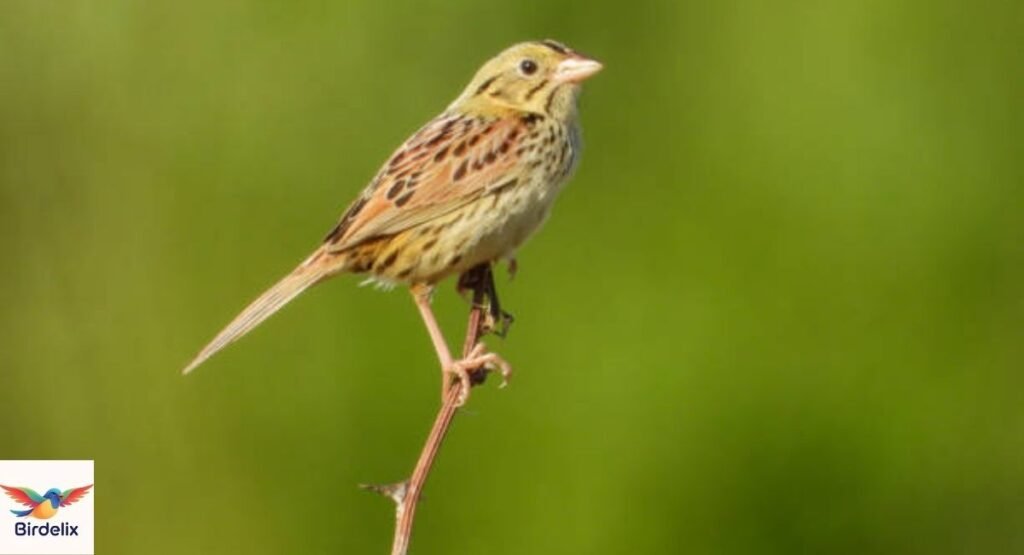
Scientific Name: Centronyx henslowii
Family: Passerellidae
The Henslow’s Sparrow is a shy grassland bird that blends perfectly into tall prairie grasses. It is mainly found in eastern and central North America where healthy native grasslands remain. This sparrow feeds on seeds during winter and insects throughout the breeding season. Adults measure between 5 and 6 inches long with wingspans around 8 inches. A fascinating fact is that Henslow’s Sparrow is considered a conservation priority because much of its natural habitat has disappeared.
28. Harris’s Hawk
Scientific Name: Parabuteo unicinctus
Family: Accipitridae
The Harris’s Hawk is unlike most birds of prey because it hunts in family groups instead of alone. It inhabits deserts, cactus forests, scrublands, and open woodlands across the southwestern United States and Central America. These intelligent hawks prey on rabbits, squirrels, reptiles, and birds. Adults grow between 18 and 24 inches long with wingspans reaching nearly 48 inches. An incredible fact is that Harris’s Hawks cooperate during hunts much like wolves.
29. Harris’s Sparrow
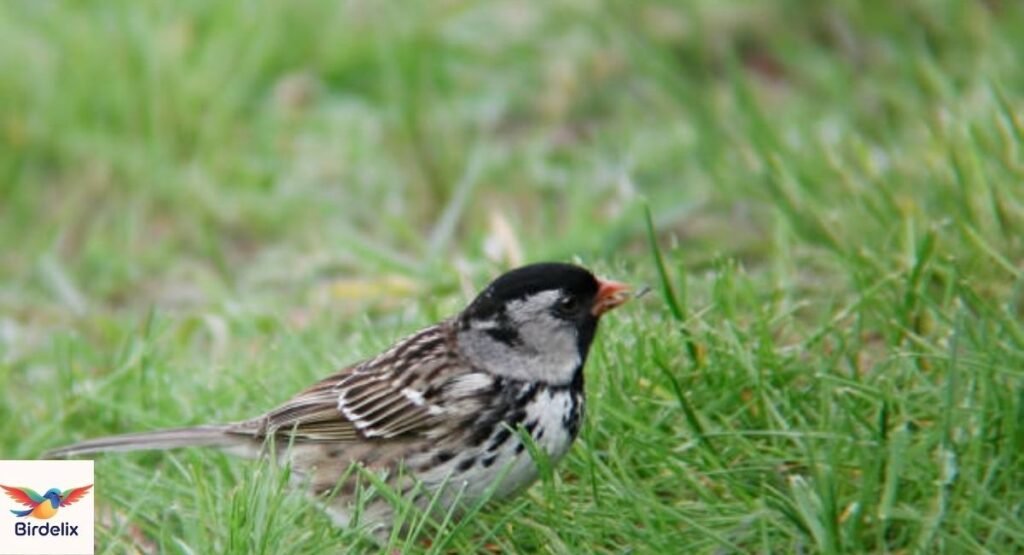
Scientific Name: Zonotrichia querula
Family: Passerellidae
The Harris’s Sparrow is the largest sparrow native to North America and is easily recognized by its black face and pink bill. It breeds in northern Canada before migrating to the central United States during winter. These birds feed on seeds, berries, buds, and insects depending on the season. Adults measure between 7 and 8 inches long with wingspans of about 11 inches. An interesting fact is that Harris’s Sparrow is the only bird species that breeds exclusively in Canada.
30. Hill Myna
Scientific Name: Gracula religiosa
Family: Sturnidae
The Hill Myna is one of the smartest bird species that start with H because it can imitate human speech with surprising clarity. This glossy black bird lives in tropical forests across South and Southeast Asia where it feeds on fruits, nectar, flowers, and insects. Adults usually grow between 10 and 12 inches long with wingspans around 17 inches. A remarkable fact is that the Hill Myna is often considered one of the world’s best talking birds, even outperforming many parrots.
31. Himalayan Bulbul
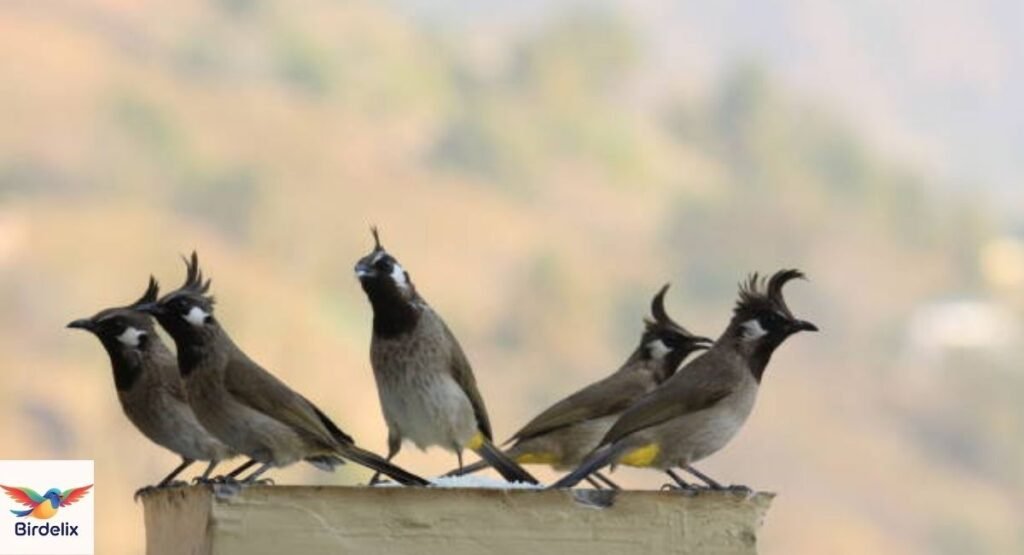
Scientific Name: Pycnonotus leucogenys
Family: Pycnonotidae
The Himalayan Bulbul is a charming songbird recognized by its pointed black crest, white cheek patches, and cheerful voice. It lives in forests, orchards, gardens, and mountain valleys across the Himalayas. This bird feeds on berries, fruits, flower nectar, and insects throughout the year. Adults usually measure between 7 and 8 inches long with wingspans around 11 inches. An interesting fact is that the Himalayan Bulbul often spreads seeds, helping new plants grow naturally.
32. Himalayan Griffon
Scientific Name: Gyps himalayensis
Family: Accipitridae
The Himalayan Griffon is one of the largest Birds That Start With H, famous for its enormous wings and effortless soaring flight. It inhabits high mountains, rocky cliffs, and alpine regions throughout the Himalayas. This giant vulture feeds mainly on animal carcasses, making it an important natural cleaner. Adults grow between 40 and 48 inches long with wingspans reaching nearly 10 feet. A remarkable fact is that Himalayan Griffons can soar above 20,000 feet while searching for food.
33. Himalayan Swiftlet
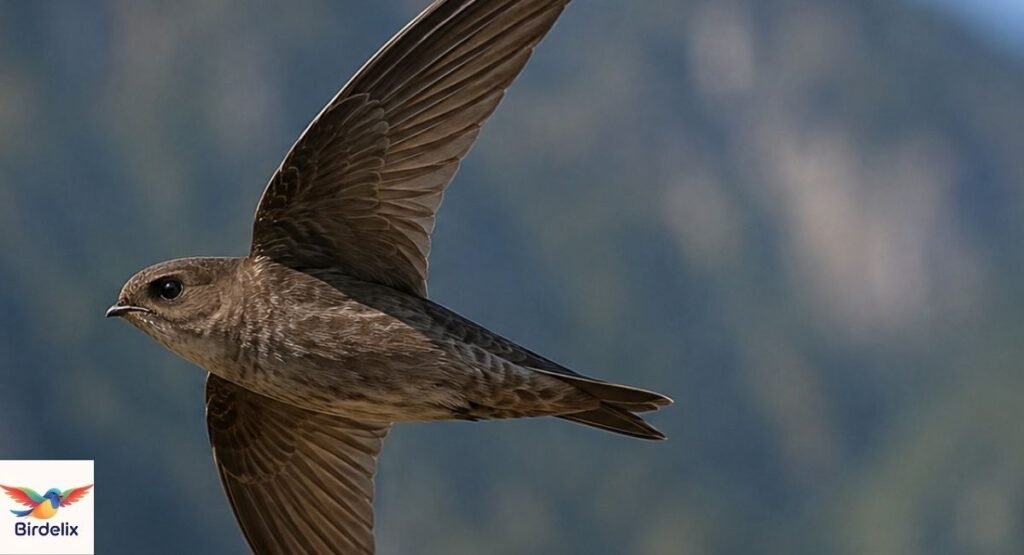
Scientific Name: Aerodramus brevirostris
Family: Apodidae
The Himalayan Swiftlet is a fast-flying bird that spends much of its life in the air. It prefers mountain forests, rocky cliffs, caves, and deep valleys across South Asia. These agile birds feed almost entirely on flying insects caught during flight. Adults measure around 5 inches long with wingspans close to 11 inches. A fascinating fact is that Himalayan Swiftlets can navigate dark caves using simple echolocation clicks.
34. Himalayan Rubythroat
Scientific Name: Calliope pectoralis
Family: Muscicapidae
The Himalayan Rubythroat is a colorful mountain songbird admired for the brilliant ruby-red patch on the male’s throat. It lives in alpine forests, shrubby hillsides, and mountain meadows across the Himalayas. This bird feeds mainly on insects, spiders, berries, and tiny seeds. Adults grow about 6 inches long with wingspans of approximately 9 inches. An interesting fact is that males sing loudly from high branches to defend their breeding territory.
35. Himalayan Accentor
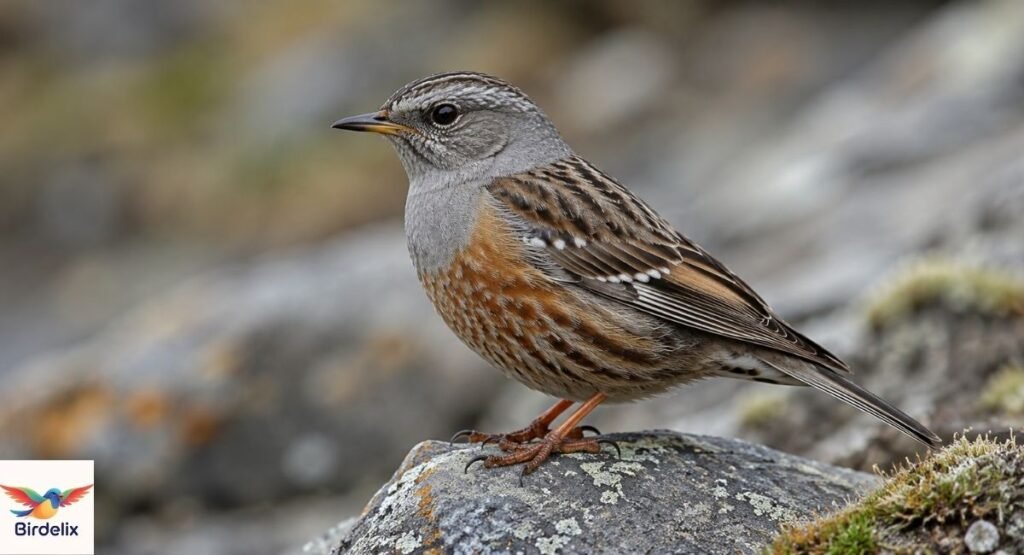
Scientific Name: Prunella himalayana
Family: Prunellidae
The Himalayan Accentor is a hardy little bird perfectly adapted to cold mountain environments. It inhabits rocky slopes, alpine grasslands, and snowy hills at high elevations throughout Central Asia. Its diet includes seeds, insects, and small invertebrates found among rocks and grasses. Adults usually measure between 6 and 7 inches long with compact wings. An amazing fact is that this bird can survive freezing temperatures where very few songbirds can live.
36. House Wren
Scientific Name: Troglodytes aedon
Family: Troglodytidae
The House Wren is a lively backyard bird known for its loud song despite its tiny size. It commonly lives in gardens, parks, forests, and suburban neighborhoods across North and South America. House Wrens eat beetles, caterpillars, spiders, grasshoppers, and other small insects. Adults measure around 4 to 5 inches long with wingspans close to 6 inches. A fun fact is that House Wrens often build nests inside birdhouses and other small cavities.
37. Horned Lark
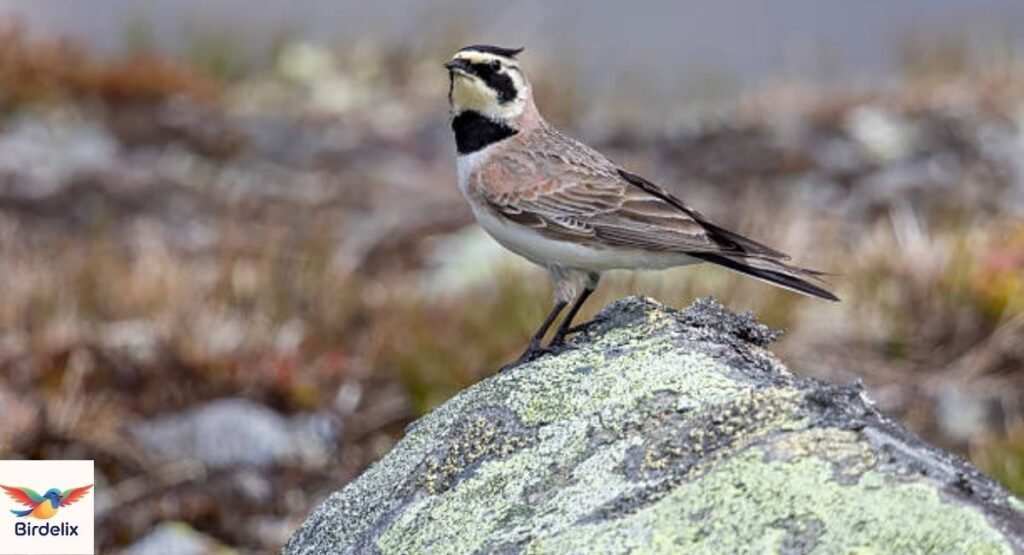
Scientific Name: Eremophila alpestris
Family: Alaudidae
The Horned Lark is an attractive ground bird recognized by the small black feather tufts that resemble tiny horns. It lives in open grasslands, farmlands, deserts, tundra, and coastal plains across North America. Its diet consists mainly of seeds during winter and insects during summer. Adults measure between 6 and 8 inches long with wingspans reaching 13 inches. An interesting fact is that Horned Larks often build their nests directly on the ground for protection.
38. Horned Puffin
Scientific Name: Fratercula corniculata
Family: Alcidae
The Horned Puffin is a colorful seabird famous for its bright orange bill and small fleshy horn above the eye during breeding season. It nests on rocky cliffs and coastal islands across the North Pacific Ocean. These birds feed mainly on fish, squid, and crustaceans caught by diving underwater. Adults grow between 13 and 15 inches long with wingspans around 23 inches. A remarkable fact is that Horned Puffins can carry several fish in their beaks at the same time.
39. Horned Sungem
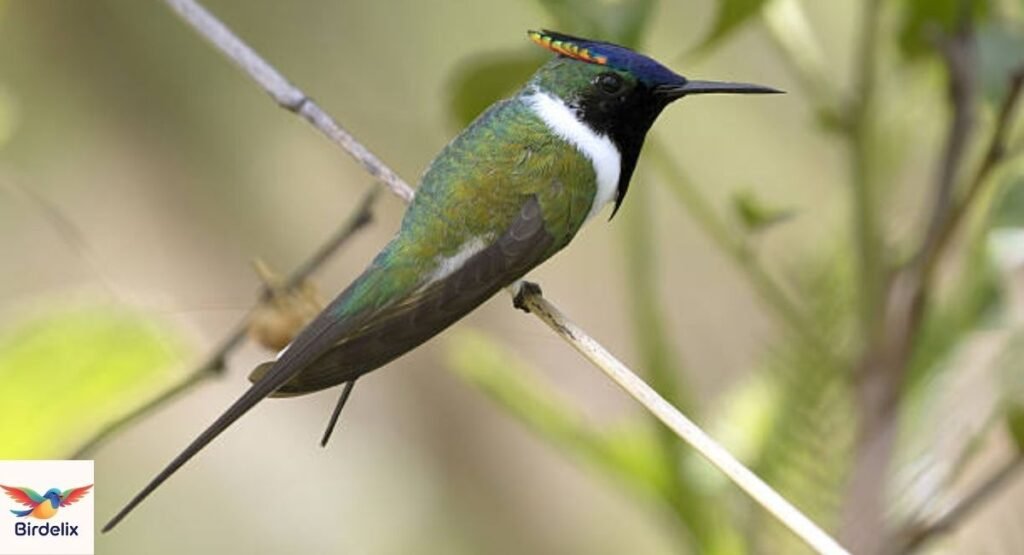
Scientific Name: Heliactin bilophus
Family: Trochilidae
The Horned Sungem is one of the most beautiful bird species that start with H, admired for its shimmering green feathers and tiny violet horn-like tufts. It lives in open savannas, grasslands, and flowering shrubs across central Brazil. This hummingbird feeds on flower nectar and tiny insects. Adults measure only about 4 inches long with delicate wings built for hovering. A fascinating fact is that males perform spectacular aerial displays to attract females during the breeding season.
40. Honey Buzzard
Scientific Name: Pernis apivorus
Family: Accipitridae
The Honey Buzzard is a unique bird of prey that specializes in feeding on wasps, bees, and their larvae. It inhabits forests, woodlands, and open countryside across Europe and western Asia before migrating to Africa during winter. Adults measure between 20 and 24 inches long with wingspans reaching about 55 inches. An incredible fact is that Honey Buzzards have thick facial feathers that protect them from painful bee and wasp stings while raiding nests.
41. Hawaiian Crow
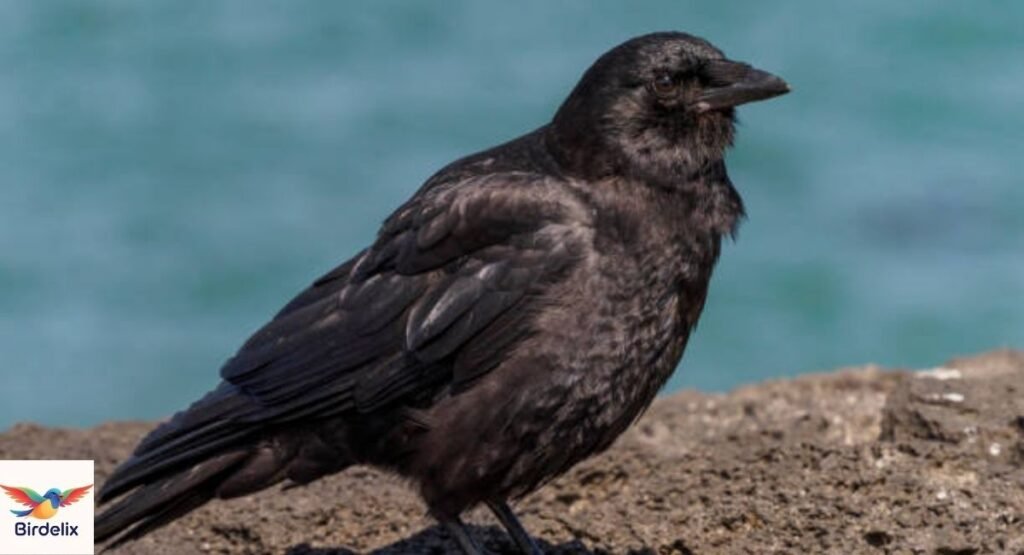
Scientific Name: Corvus hawaiiensis
Family: Corvidae
The Hawaiian Crow, also known as the ʻAlalā, is one of the rarest Birds That Start With H. It is native to Hawaii and once lived in dense native forests across the Big Island. These intelligent birds feed on fruits, seeds, flowers, insects, and small animals. Adults measure between 18 and 20 inches long with wingspans of about 36 inches. A remarkable fact is that the Hawaiian Crow is one of the few bird species known to use sticks as simple tools to reach hidden food.
42. Hawaiian Honeycreeper
Scientific Name: Drepanidinae
Family: Fringillidae
The Hawaiian Honeycreeper is a unique group of colorful birds found only on the Hawaiian Islands. Different species have evolved specialized beaks to feed on nectar, insects, seeds, or fruits. Most inhabit native mountain forests rich in flowering plants. Their size ranges from 4 to 8 inches depending on the species. An interesting fact is that Hawaiian Honeycreepers are among the world’s best examples of adaptive evolution, with dozens of species developing from a common ancestor.
43. Helmeted Hornbill
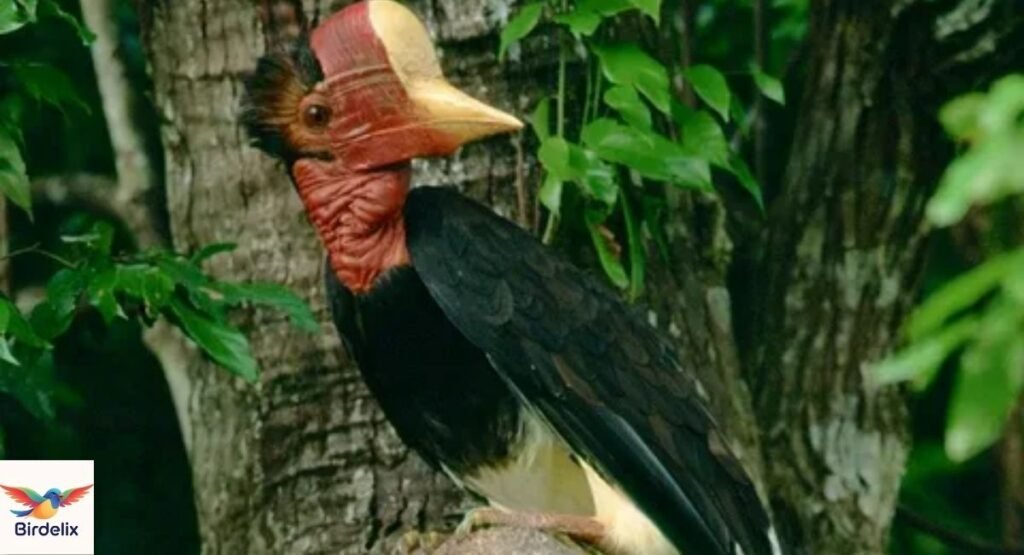
Scientific Name: Rhinoplax vigil
Family: Bucerotidae
The Helmeted Hornbill is a magnificent tropical bird recognized by its massive solid casque that covers the top of its bill. It inhabits rainforests across Southeast Asia where large fruiting trees are abundant. This bird mainly feeds on figs, fruits, insects, and small animals. Adults grow between 43 and 47 inches long with wingspans exceeding 60 inches. An alarming fact is that the Helmeted Hornbill is critically endangered because of illegal hunting for its valuable casque.
44. Hwamei
Scientific Name: Garrulax canorus
Family: Leiothrichidae
The Hwamei is a beautiful songbird admired for its loud, melodious voice and distinctive white eye stripe. It lives in forests, bamboo thickets, shrublands, and mountain foothills throughout China, Taiwan, and Southeast Asia. These birds feed on insects, berries, seeds, and small fruits. Adults usually measure around 9 inches long with medium-sized rounded wings. An interesting fact is that the Hwamei can learn complex songs and often sings for several minutes without stopping.
45. Hadada Ibis
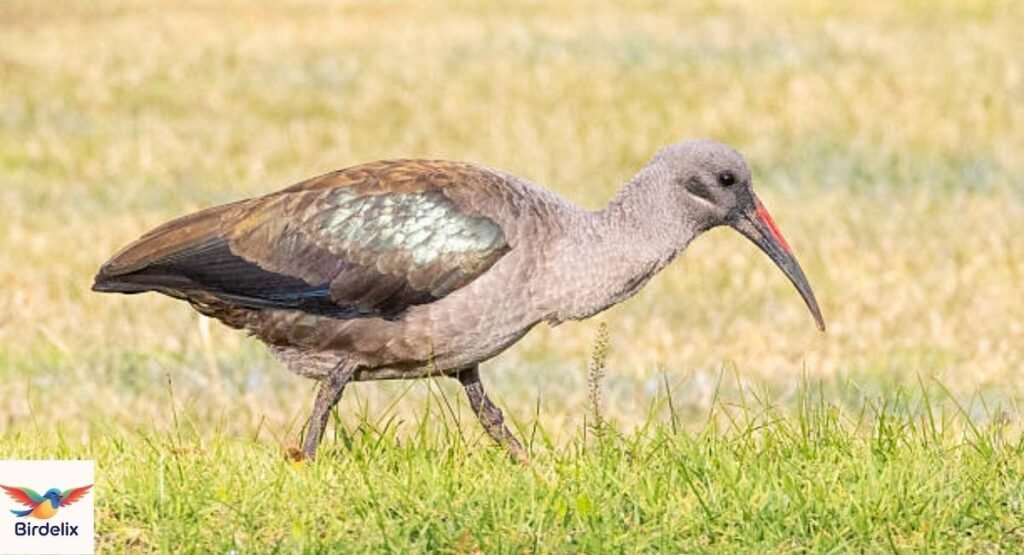
Scientific Name: Bostrychia hagedash
Family: Threskiornithidae
The Hadada Ibis is a large wading bird famous for its unmistakable loud “haa-haa-haa” call that echoes across wetlands and cities. It inhabits marshes, grasslands, rivers, parks, and suburban gardens throughout Africa. Its diet includes worms, insects, frogs, snails, and small reptiles found in soft soil. Adults measure between 25 and 30 inches long with wingspans reaching almost 50 inches. A fun fact is that its call is often heard before sunrise, making it a familiar sound in many African neighborhoods.
46. Henderson’s Ground Jay
Scientific Name: Podoces hendersoni
Family: Corvidae
Henderson’s Ground Jay is a hardy desert bird perfectly adapted to life in dry and sandy environments. It lives in the deserts of western China where vegetation is sparse and temperatures can become extreme. This bird feeds on insects, seeds, berries, and small reptiles. Adults usually grow between 11 and 12 inches long with strong legs built for running. A fascinating fact is that Henderson’s Ground Jay spends much more time running across the ground than flying.
47. Hairy-breasted Barbet
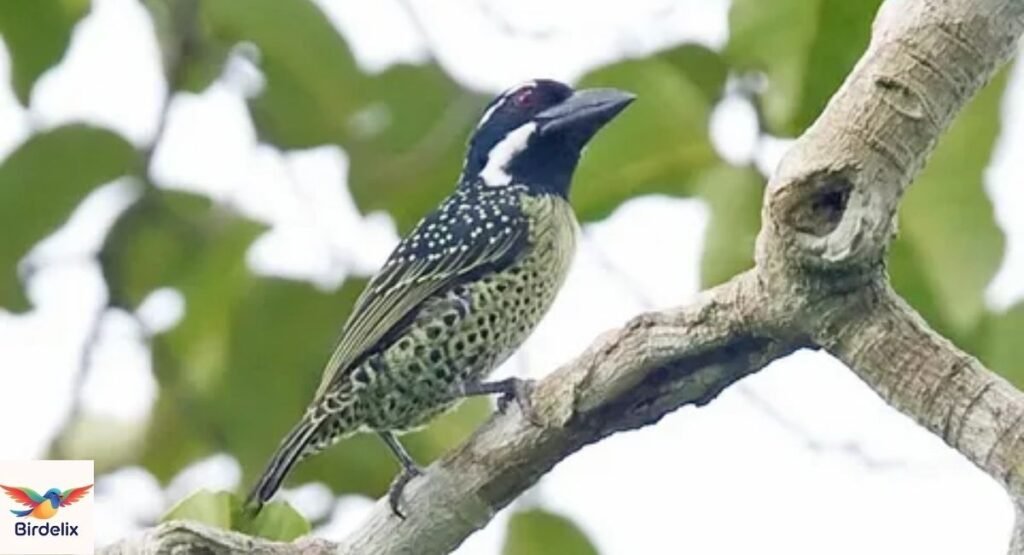
Scientific Name: Tricholaema hirsuta
Family: Lybiidae
The Hairy-breasted Barbet is a colorful African forest bird recognized by its spotted plumage and bristle-like feathers around the face. It inhabits tropical rainforests where fruit-bearing trees grow in abundance. This bird feeds mainly on figs, berries, insects, and caterpillars throughout the year. Adults measure around 7 inches long with compact bodies and strong beaks. An interesting fact is that Hairy-breasted Barbets help spread seeds across forests after eating fruit.
48. Hill Blue Flycatcher
Scientific Name: Cyornis banyumas
Family: Muscicapidae
The Hill Blue Flycatcher is a small woodland bird admired for the male’s brilliant blue feathers and rich orange throat. It lives in mountain forests, evergreen woodlands, and shaded valleys across South and Southeast Asia. Its diet consists mainly of flying insects, beetles, ants, and spiders. Adults measure between 6 and 7 inches long with graceful rounded wings. A remarkable fact is that this bird catches many insects in mid-air before returning to the same perch.
49. Hermit Thrush
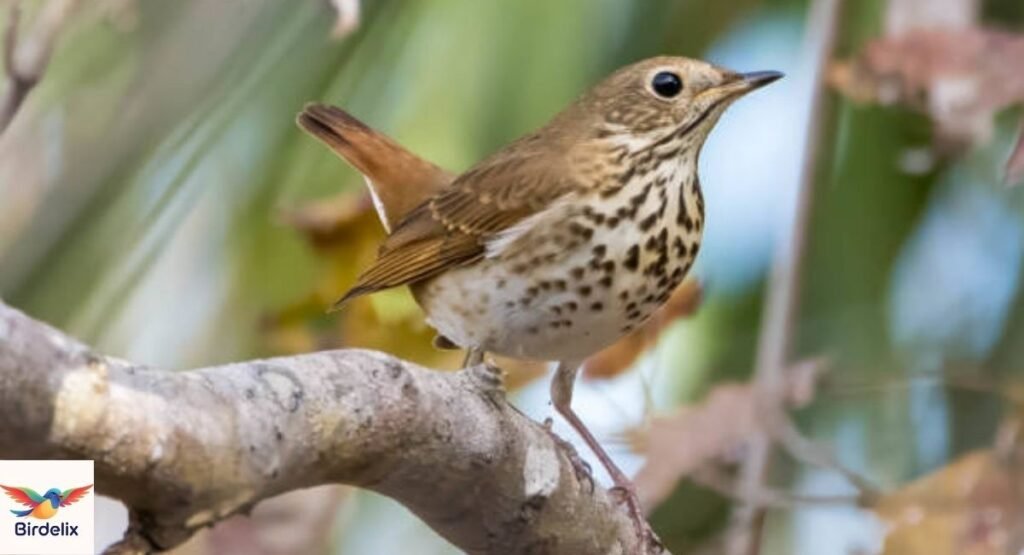
Scientific Name: Catharus guttatus
Family: Turdidae
The Hermit Thrush is one of North America’s finest singing birds and is known for its haunting, flute-like melody. It prefers mature forests, woodland edges, and mountain habitats where thick vegetation provides shelter. This bird feeds on insects, earthworms, berries, and wild fruits throughout the seasons. Adults usually measure about 6 to 7 inches long with wingspans close to 12 inches. An amazing fact is that many bird experts consider the Hermit Thrush to have one of the most beautiful songs in nature.
50. Humboldt Penguin
Scientific Name: Spheniscus humboldti
Family: Spheniscidae
The Humboldt Penguin is one of the most distinctive bird species that start with H, living along the cool Pacific coast of Peru and Chile instead of icy Antarctica. It inhabits rocky shores, islands, and coastal cliffs where nutrient-rich waters provide abundant food. Humboldt Penguins feed mainly on fish, squid, and crustaceans. Adults grow between 24 and 28 inches long with flipper-like wings adapted for swimming. An interesting fact is that these penguins can dive more than 150 feet underwater while hunting for fish.
Rare Birds That Start With H
Some Birds That Start With H are incredibly rare because they live in isolated habitats, have very small populations, or face serious threats from habitat destruction, climate change, and illegal hunting. Many of these remarkable birds are protected through conservation programs, yet they still require careful management to survive. Learning about these rare species helps people understand the importance of preserving forests, wetlands, and other natural ecosystems for future generations.
Several rare bird species that start with H stand out for their beauty, unique adaptations, and limited distribution. The Harpy Eagle rules tropical rainforests with unmatched strength, while the Hawaiian Crow exists only through dedicated breeding and reintroduction efforts. The Helmeted Hornbill faces critical threats from wildlife trafficking, and the colorful Himalayan Monal depends on healthy mountain forests. Meanwhile, Henslow’s Sparrow continues to decline as native grasslands disappear across North America.
| Rare Bird | Native Region | Why It’s Rare | Conservation Status |
| Harpy Eagle | Central & South America | Rainforest loss | Near Threatened |
| Hawaiian Crow | Hawaii, USA | Extremely small wild population | Extinct in the Wild (reintroduction efforts) |
| Helmeted Hornbill | Southeast Asia | Illegal hunting and habitat loss | Critically Endangered |
| Himalayan Monal | Himalayan Mountains | Habitat disturbance | Least Concern (locally threatened) |
| Henslow’s Sparrow | North America | Grassland habitat loss | Near Threatened |
Exotic Birds That Start With H
Many Birds That Start With H are considered exotic because of their brilliant colors, unusual features, and tropical habitats. These birds are found mainly in rainforests, mountain regions, and remote islands where warm climates support extraordinary biodiversity. Their striking feathers, specialized beaks, and fascinating behaviors make them favorites among birdwatchers and wildlife photographers around the world.
Among the most spectacular bird names that start with H are the magnificent Hornbill with its oversized casque, the elegant Hoopoe with its fan-shaped crest, and the shimmering Himalayan Monal whose feathers reflect rainbow-like colors. The intelligent Hill Myna is famous for copying human speech, while the tiny Horned Sungem dazzles with its metallic green plumage and incredible hovering ability. These exotic birds highlight the amazing diversity found within Birds That Start With H.
| Exotic Bird | Found In | Special Feature | Main Diet |
| Hornbill | Africa & Asia | Large colorful casque | Fruits, insects |
| Hoopoe | Europe, Asia & Africa | Fan-shaped crest | Insects |
| Himalayan Monal | Himalayas | Rainbow-colored feathers | Roots, insects |
| Hill Myna | South & Southeast Asia | Excellent voice mimic | Fruits, insects |
| Horned Sungem | Brazil | Metallic green plumage | Nectar, insects |
Beach Birds That Start With H
Many Birds That Start With H thrive along coastlines, sandy beaches, rocky shores, estuaries, and tidal wetlands where food is always available. These coastal birds have evolved special features such as waterproof feathers, webbed feet, long legs, or sharp bills that help them survive in marine environments. Some dive beneath the waves to catch fish, while others patiently search the shoreline for crabs, shellfish, and small marine animals.
Several beach birds that start with H are popular among birdwatchers because they are easy to spot along the coast. The elegant Heron quietly hunts in shallow water, while Heermann’s Gull glides over the Pacific shoreline searching for fish. Hartlaub’s Gull and Heuglin’s Gull spend much of their lives near beaches and harbors, whereas the Horned Grebe and Harlequin Duck are excellent swimmers that dive underwater with remarkable speed. Together, these coastal bird species that start with H play an important role in maintaining healthy marine ecosystems.
| Beach Bird | Found Near | Main Food | Special Feature |
| Heron | Wetlands, Beaches | Fish, Frogs | Excellent fishing skills |
| Heermann’s Gull | Pacific Coast | Fish, Squid | Red bill and gray body |
| Hartlaub’s Gull | African Coast | Fish, Insects | Coastal colony breeder |
| Heuglin’s Gull | Arctic Coast | Fish, Shellfish | Long-distance migrant |
| Horned Grebe | Lakes & Coastal Waters | Fish, Crustaceans | Expert underwater diver |
| Harlequin Duck | Rocky Coastlines | Shellfish, Insects | Strong swimmer in rough water |
Birds That Start With H by Bird Type
Birds That Start With H belong to many different bird families, making them one of the most diverse alphabetical groups in the bird world. Some are powerful hunters soaring high above mountains, while others sing from forest trees or quietly search wetlands for food. Their unique lifestyles, feeding habits, and habitats demonstrate how birds adapt to different environments across the globe.
The following categories help you identify bird names that start with H more easily. Whether you’re interested in raptors, songbirds, water birds, or seabirds, grouping these species by type makes bird identification much simpler for beginners and experienced birdwatchers alike.
| Bird Type | Examples |
| Birds of Prey | Hawk, Harpy Eagle, Harrier, Harris’s Hawk, Honey Buzzard, Hawaiian Hawk |
| Water Birds | Heron, Hooded Merganser, Horned Grebe, Hadada Ibis |
| Songbirds | House Finch, House Wren, Hermit Thrush, Hooded Warbler, Hawfinch, Hwamei |
| Shore Birds | Harlequin Duck, Heermann’s Gull, Hartlaub’s Gull, Heuglin’s Gull |
| Forest Birds | Hornbill, Hill Myna, Helmeted Hornbill, Hairy Woodpecker, Himalayan Bulbul |
| Wading Birds | Heron, Hammerkop, Hadada Ibis |
| Seabirds | Horned Puffin, Heermann’s Gull, Hartlaub’s Gull, Heuglin’s Gull, Humboldt Penguin |
Birds That Start With H by Habitat
Different Birds That Start With H have adapted to a wide range of habitats, from dense rainforests and snowy mountains to sandy beaches and busy city parks. Each environment provides unique food sources, nesting areas, and shelter that help these birds survive. Understanding where a species lives is one of the easiest ways to identify it in the wild and appreciate its role in nature.
Some bird species that start with H prefer freshwater wetlands where fish and frogs are plentiful, while others thrive in dry deserts, tropical forests, or high mountain ranges. Urban birds have learned to live alongside people, whereas seabirds depend on coastal ecosystems. The habitat below gives you a quick overview of where many Birds That Start With H can be found.
| Habitat | Birds |
| Forests | Hornbill, Hairy Woodpecker, Hill Myna, Hermit Thrush, Helmeted Hornbill, Hawaiian Crow |
| Wetlands | Heron, Hammerkop, Hooded Merganser, Horned Grebe, Hadada Ibis |
| Beaches | Heermann’s Gull, Hartlaub’s Gull, Heuglin’s Gull, Harlequin Duck, Humboldt Penguin |
| Mountains | Himalayan Monal, Himalayan Griffon, Himalayan Bulbul, Himalayan Rubythroat, Himalayan Accentor |
| Grasslands | Harrier, Henslow’s Sparrow, Horned Lark, Harris’s Sparrow |
| Deserts | Harris’s Hawk, Hoopoe Lark, Henderson’s Ground Jay |
| Urban Areas | House Finch, House Wren, Hooded Crow, Hooded Oriole |
Birds That Start With H by Continent
The world’s Birds That Start With H are spread across every major continent, although each region has its own unique species. North America is home to familiar backyard birds and powerful hawks, while Asia offers colorful forest birds and mountain specialists. Africa, Europe, Australia, and South America also support many remarkable H birds that have adapted to local climates and landscapes.
Knowing where bird names that start with H naturally occur makes birdwatching more rewarding and helps you understand global biodiversity. Some species remain in one country throughout the year, whereas others migrate thousands of miles between breeding and wintering grounds.
North America
North America is home to many well-known Birds That Start With H, including the Heron, Hawk, House Finch, House Wren, Hairy Woodpecker, Hooded Warbler, Harris’s Hawk, Henslow’s Sparrow, Horned Lark, Horned Grebe, Hooded Merganser, Harlequin Duck, Hermit Thrush, and Hawaiian Crow.
South America
South America features spectacular tropical birds such as the mighty Harpy Eagle, colorful Horned Sungem, and Humboldt Penguin. These birds occupy rainforests, savannas, coastal islands, and the Pacific shoreline, making the continent one of the richest regions for wildlife diversity.
Europe
Europe is home to the Hoopoe, Hawfinch, Honey Buzzard, House Martin, Hooded Crow, Harrier, and Heuglin’s Gull during parts of the year. Many of these birds migrate seasonally between Europe and Africa.
Asia
Asia supports one of the greatest varieties of bird species that start with H, including the Himalayan Monal, Himalayan Griffon, Himalayan Bulbul, Himalayan Rubythroat, Himalayan Accentor, Hill Myna, Hornbill, Helmeted Hornbill, Hwamei, and Hoopoe.
Africa
Africa is famous for birds such as the Hammerkop, Hadada Ibis, Hartlaub’s Gull, Hornbill, Hoopoe, Honey Buzzard, and Harrier. The continent’s wetlands, savannas, and tropical forests provide ideal habitats for these species.
Australia
Australia is best known for its diverse Honeyeater family, which includes dozens of nectar-feeding species. These birds are commonly found in eucalyptus forests, gardens, coastal woodlands, and flowering shrublands where they help pollinate native plants.
Biggest Birds That Start With H
Some Birds That Start With H are among the largest flying birds in the world. Their impressive size, enormous wingspans, and powerful bodies allow them to soar over forests, mountains, and coastlines with ease. While some are expert hunters, others survive by feeding on carrion or fish. Their strength and endurance make them some of nature’s most remarkable birds.
If you compare the largest bird species that start with H, you’ll notice each has evolved for a different lifestyle. The Harpy Eagle dominates tropical rainforests, while the Himalayan Griffon glides effortlessly over towering peaks. Large birds usually require vast territories, making habitat protection essential for their long-term survival.
| Bird | Average Length | Wingspan | Special Feature |
| Harpy Eagle | 34–41 in | Up to 7 ft | Powerful talons |
| Himalayan Griffon | 40–48 in | Up to 10 ft | Massive soaring wings |
| Helmeted Hornbill | 43–47 in | Up to 5 ft | Solid casque |
| Heron | 35–55 in | Up to 79 in | Excellent fisher |
| Hadada Ibis | 25–30 in | Up to 50 in | Loud distinctive call |
Small Birds That Start With H
Not all Birds That Start With H are large. Several tiny species survive through speed, agility, and clever behavior instead of strength. These birds easily move through flowers, shrubs, and tree branches while feeding on insects, nectar, and seeds. Their small size helps them escape predators and explore places larger birds cannot reach.
Many bird names that start with H belong to energetic songbirds and hummingbirds. Although they are lightweight, they play an important role in pollination, insect control, and seed dispersal. Their colorful feathers and cheerful songs also make them popular among backyard birdwatchers.
| Small Bird | Average Length | Diet |
| Hummingbird | 3–5 in | Nectar, insects |
| House Wren | 4–5 in | Insects |
| House Finch | 5–6 in | Seeds, berries |
| Hooded Warbler | 5 in | Insects |
| Horned Sungem | 4 in | Nectar, insects |
Colorful Birds That Start With H
Many Birds That Start With H display brilliant feathers that help them attract mates, blend into forests, or communicate with other birds. Bright reds, metallic greens, deep blues, and golden yellows make these species some of the most beautiful birds in the world. Their colorful plumage also makes them favorites among photographers and bird enthusiasts.
Some of the most striking bird species that start with H include the shimmering Himalayan Monal, vibrant Hooded Oriole, dazzling Horned Sungem, elegant Hoopoe, and tropical Hill Myna. Their spectacular colors prove that nature often creates its finest artwork through birds.
| Colorful Bird | Main Colors |
| Himalayan Monal | Rainbow metallic colors |
| Hooded Oriole | Bright orange and black |
| Horned Sungem | Metallic green and violet |
| Hoopoe | Orange, black, and white |
| Hill Myna | Glossy black with yellow wattles |
Birds That Start With H and Have 4 Letters
Only a few Birds That Start With H have four-letter names. The best-known example is the Hawk, a skilled bird of prey found across much of the world. Hawks are famous for their sharp vision, fast flight, and powerful hunting abilities, making them one of the easiest H birds to recognize.
| Bird | Bird Type | Habitat |
| Hawk | Bird of Prey | Forests, mountains, grasslands, deserts |
Birds That Start With H and Have 5 Letters
Several popular bird names that start with H contain exactly five letters. These birds belong to different families and occupy a variety of habitats, from wetlands to forests. Their short names make them common answers in word games, quizzes, and alphabetical bird lists.
| Bird | Bird Type | Habitat |
| Heron | Wading Bird | Wetlands, rivers, lakes |
| Hwamei | Songbird | Forests and shrublands |
Fun Facts About Birds That Start With H
The world of Birds That Start With H is full of surprising discoveries. Some species can imitate human voices, while others build enormous nests or fly thousands of miles during migration. Every bird has evolved unique abilities that help it survive in different environments around the world.
The Harpy Eagle has talons larger than a grizzly bear’s claws. Hummingbirds can fly backward and hover in place. Harris’s Hawks hunt cooperatively in family groups. Hammerkops build nests weighing over 100 pounds, while Hill Mynas are considered among the world’s best talking birds. These amazing facts make bird species that start with H especially fascinating.
Birdwatching Tips for Finding H Birds
Finding Birds That Start With H becomes much easier when you visit the right habitats during the appropriate season. Wetlands attract Herons and Grebes, forests shelter Woodpeckers and Thrushes, while beaches provide excellent opportunities to observe gulls, ducks, and seabirds. Early mornings usually offer the best bird activity and clearer views.
Carry quality binoculars, a field guide, and a notebook for recording sightings. Move quietly, wear neutral-colored clothing, and avoid disturbing nesting birds. Listening carefully to bird calls often helps identify hidden species before you actually see them.
Why Birds That Start With H Matter in Nature
Every one of the Birds That Start With H contributes to a healthy ecosystem. Some spread seeds that grow into new forests, others pollinate flowers, while birds of prey naturally control rodent populations. Scavengers remove dead animals, helping reduce disease and recycle nutrients back into nature.
Protecting bird species that start with H also protects forests, wetlands, mountains, and coastlines where countless other plants and animals live. Healthy bird populations are strong indicators of healthy ecosystems, making bird conservation an important part of protecting biodiversity for future generations.
Conclusion
Birds That Start With H showcase an amazing variety of species, from tiny hummingbirds and cheerful songbirds to powerful eagles and elegant water birds. Each bird has its own habitat, diet, and unique behavior that makes it special. Whether you enjoy birdwatching or simply love nature, learning about these birds helps you recognize their importance and appreciate the incredible diversity found across the world.
From rare and exotic species to beach birds and backyard favorites, every H bird plays a valuable role in keeping ecosystems healthy. They help control insects, spread seeds, pollinate plants, and maintain nature’s balance. We hope this guide has made it easier to discover and identify Birds That Start With H, inspiring you to continue exploring the fascinating world of birds and support their conservation for future generations.
FAQs
What is the most common bird that starts with H?
The House Finch, Hawk, Heron, and Hummingbird are among the most common Birds That Start With H, especially across North America.
Which bird that starts with H is the largest?
The Himalayan Griffon and Harpy Eagle are two of the largest bird species that start with H, both known for their impressive size and wingspan.
Are there endangered birds that start with H?
Yes. The Hawaiian Crow and Helmeted Hornbill are among the most threatened H birds due to habitat loss and illegal hunting.
Which H birds live near beaches?
Herons, Heermann’s Gull, Hartlaub’s Gull, Heuglin’s Gull, Horned Grebe, Harlequin Duck, and Humboldt Penguin commonly live near coastal habitats.
Which birds that start with H have 4 or 5 letters?
“Hawk” has four letters, while “Heron” and “Hwamei” are well-known H birds with five-letter names.

Welcome to Birdelix! I’m Anam Sattar, an AI-powered SEO Specialist and Content Writer with over 5 years of experience in creating high-quality, search-optimized content. I help businesses improve their search engine rankings, increase organic traffic, and build beautiful, user-friendly websites. My mission is to make SEO, content creation, and web design simple, effective, and accessible for everyone. Let’s grow your online presence and achieve success together!