

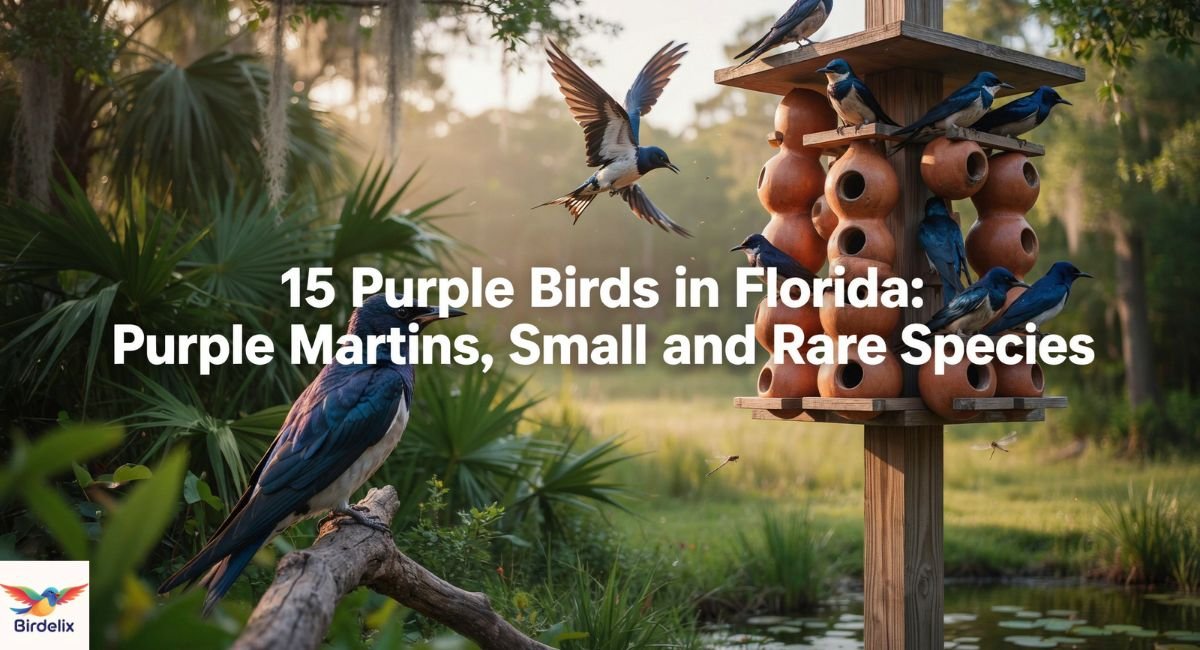
Florida is home to many beautiful birds with purple, blue, and violet shades. Some have naturally colorful feathers, while others display a glossy shine in bright sunlight. From the stunning Purple Martin to the colorful Purple Gallinule, you can find several purple birds in Florida across different habitats. Some species live near freshwater marshes, while others prefer coastal areas, parks, and open fields.
This guide explores types of purple birds, including small species, rare visitors, and birds with iridescent feathers. You will also learn about their appearance, habitats, and behavior. These Florida purple birds will help you identify colorful species during your next birdwatching trip.
15 Purple Birds in Florida: A Complete List
The birds below include species with purple plumage and others with a purple sheen. Some are common Florida residents. Others appear only in certain areas or seasons. A few are uncommon visitors, so their presence can depend on the location and time of year.
| Bird | Main color or feature | Where to look |
| Purple Martin | Glossy blue-purple male | Open areas near water |
| Purple Gallinule | Purple body and green back | Freshwater marshes |
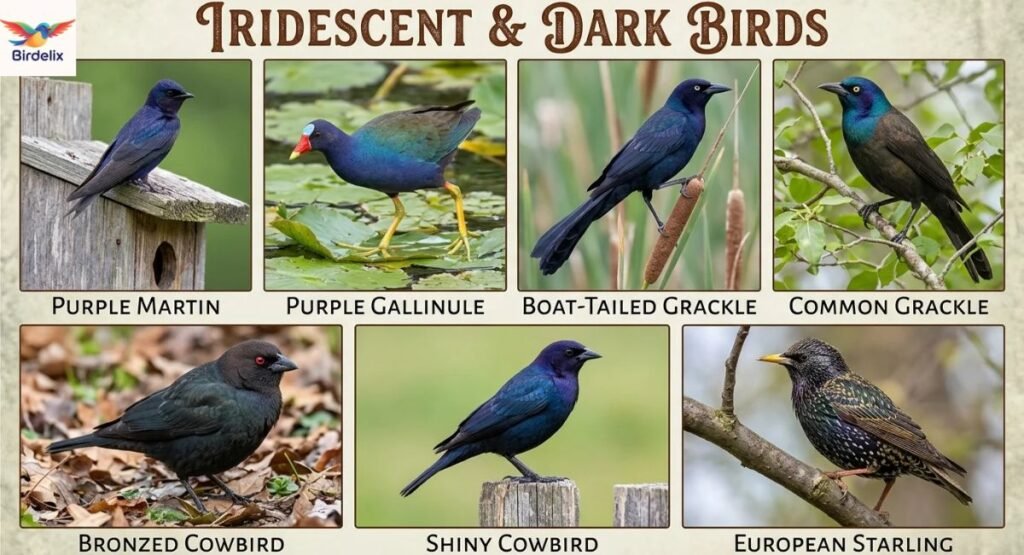
| Boat-tailed Grackle | Black feathers with purple sheen | Coastal marshes |
| Common Grackle | Glossy black with blue-purple shine | Parks and open areas |
| Bronzed Cowbird | Dark, bronzy-purple sheen | Open fields and pastures |
| Shiny Cowbird | Glossy purple-black male | Mainly southern Florida |
| European Starling | Purple and green iridescence | Lawns and urban areas |
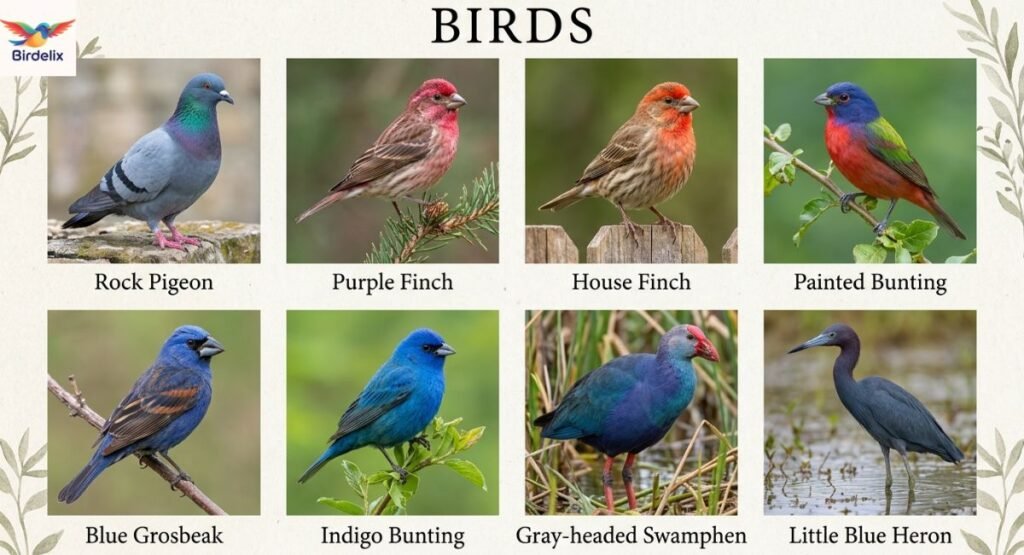
| Rock Pigeon | Purple neck feathers | Cities and parks |
| Purple Finch | Raspberry-red or purple tones | Uncommon Florida sightings |
| House Finch | Red or orange-red male markings | Towns and feeders |
| Painted Bunting | Blue, green, and red plumage | Brushy areas and feeders |
| Blue Grosbeak | Deep blue male with dark wings | Fields and roadsides |
| Indigo Bunting | Bright indigo-blue male | Woodland edges |
| Gray-headed Swamphen | Purple-blue body and red bill | South Florida wetlands |
| Little Blue Heron | Slate-blue body and maroon neck | Shallow wetlands |
1. Purple Martin
Scientific name: Progne subis
The Purple Martin is a large swallow with a glossy blue-black body. Adult males can look purple in strong sunlight. Females and young birds usually have grayer upperparts and lighter underparts. Their long, pointed wings help them catch flying insects while moving quickly through the air.
Purple Martins occur in Florida during the breeding season and migration. They often nest in specially designed birdhouses placed in open areas. You may see them near lakes, ponds, farms, and residential communities. They are long-distance migrants and spend much of winter in South America.
2. Purple Gallinule
Scientific name: Porphyrio martinica
The Purple Gallinule is one of Florida’s most colorful wetland birds. Its body has deep violet and purple shades, while its back and wings show green and blue colors. It also has a bright red and yellow bill, a pale blue forehead shield, and long yellow legs.
This bird lives around freshwater marshes, ponds, and wetlands with thick plants. Its long toes help it walk across floating leaves and water lilies. It eats aquatic plants, insects, snails, and other small animals. Both sexes look similar, so color alone usually cannot tell males and females apart.
3. Boat-tailed Grackle
Scientific name: Quiscalus major
The male Boat-tailed Grackle has glossy black feathers that can reflect purple, blue, or green light. Its long, keel-shaped tail makes it easy to recognize. Females look very different because they have brown feathers and are noticeably smaller than males.
These black and purple birds in Florida often live near coastal marshes, beaches, and waterfront neighborhoods. They also visit parking lots and public spaces where food is easy to find. Boat-tailed Grackles eat insects, seeds, small animals, and scraps. Their loud calls and bold behavior often make them noticeable.
4. Common Grackle
Scientific name: Quiscalus quiscula
The Common Grackle has dark feathers with a glossy blue, bronze, or purple shine. Its pale yellow eyes and long tail help separate it from many other blackbirds. The male often looks especially colorful when sunlight falls across its head and body.
Common Grackles feed in lawns, fields, parks, and open woodland edges. Their diet includes insects, seeds, grains, and fruit. They may gather in large flocks outside the breeding season. In Florida, compare the Common Grackle with the larger Boat-tailed Grackle. The Boat-tailed Grackle usually has a longer tail and is more closely associated with coastal habitats.
5. Bronzed Cowbird
Scientific name: Molothrus aeneus
The Bronzed Cowbird is a dark, stocky bird with a heavy bill. Its feathers can show a bronze, blue, or purple sheen in good light. Males are usually darker and more glossy than females. Its thick bill and compact shape help distinguish it from many other dark birds.
This species is not a bird that most Florida visitors should expect to see regularly. Cowbird sightings can be difficult to identify, especially when several dark species gather together. Look carefully at the bill, body shape, and feather shine before making an identification. Treat a Florida sighting as an uncommon record rather than assuming it is a common local bird.
6. Shiny Cowbird
Scientific name: Molothrus bonariensis
The male Shiny Cowbird has glossy black feathers that can reflect deep purple and blue shades. Females are generally brown and less colorful. Its short, strong bill and compact body give it the familiar shape of a small blackbird.
Shiny Cowbirds have been recorded in Florida, particularly in the southern part of the state. They are not as widespread as common backyard birds. This species is also a brood parasite, which means females lay eggs in the nests of other birds. If you see a glossy dark cowbird in South Florida, check its size, bill, and nearby birds before identifying it.
7. European Starling
Scientific name: Sturnus vulgaris
The European Starling looks mostly black from a distance. In bright light, its feathers show green and purple reflections. During fall and winter, small pale spots cover much of its body. Its short tail, pointed bill, and compact shape are useful identification clues.
European Starlings are nonnative birds that live in cities, parks, gardens, and open fields across Florida. Their bills often turn yellow during the breeding season. They eat insects, fruit, seeds, and food scraps. Watch them feeding on lawns or gathering in groups around buildings. Their glossy feathers can make them look like purple-colored birds under certain lighting conditions.
8. Rock Pigeon
Scientific name: Columba livia
The Rock Pigeon is familiar in Florida cities and towns. Most have gray bodies, two dark wing bars, and a shiny patch of green or purple feathers around the neck. This colorful neck patch becomes more noticeable when sunlight strikes it from the side.
Rock Pigeons live around buildings, bridges, parks, and busy public spaces. They eat seeds, grains, and food scraps. Their colors can vary because domestic pigeon breeds have influenced urban populations. Some have darker bodies or unusual markings. The purple shine around the neck is usually iridescence rather than solid purple plumage.
9. Purple Finch
Scientific name: Haemorhous purpureus
The male Purple Finch has a raspberry-red wash across its head, breast, and back. This color can appear purple from a distance. Females are brown and heavily streaked, without the male’s red coloring. Their thick, seed-eating bills help identify them as finches.
Purple Finches are not regular birds throughout Florida. A sighting in the state is less expected than one of a House Finch or Purple Martin. They can also be confused with male House Finches. Look at the overall color pattern: Purple Finches often have a more evenly spread raspberry tone, while House Finches usually show red around the head and chest.
10. House Finch
Scientific name: Haemorhous mexicanus
Male House Finches have red, orange, or yellow coloring around the face and chest. Their bodies are brown with streaked sides. Females lack the bright red markings and usually have brown, streaked feathers. Although they are not truly purple, some people include them when searching for small colorful birds.
House Finches can be found around homes, gardens, parks, and feeding stations. They eat seeds and often visit feeders containing sunflower seeds. Their cheerful calls can help you notice them before you see them. In Florida, they are more likely to be mistaken for Purple Finches than to be mistaken for a truly purple bird.
11. Painted Bunting
Scientific name: Passerina ciris
The male Painted Bunting is one of North America’s most colorful songbirds. It has a blue head, red underparts, and green back. These bright colors can create a purple-blue impression in certain light, although the bird is not mainly purple. Females and young birds are mostly yellow-green.
Painted Buntings use brushy habitats, woodland edges, and areas with thick shrubs. Some visit backyard feeders, especially where people offer suitable seeds. Florida has both breeding and wintering populations in different regions. Their bright colors make them popular with birdwatchers. Look for a small, finch-like bird with a thick bill and several distinct colors.
12. Blue Grosbeak
Scientific name: Passerina caerulea
The male Blue Grosbeak has deep blue feathers, dark wings, and two chestnut-colored wing bars. Its rich blue color may look violet or purple in some lighting. Females are mostly brown with warmer tones on their wings. Both sexes have a large, thick bill.
Blue Grosbeaks prefer open fields, brushy edges, and roadsides with scattered trees. They eat seeds and insects, often searching for food on the ground. Their strong bills help them crack seeds. Although they are not true purple birds, they belong in a broader guide to Florida birds that may appear blue-purple.
13. Indigo Bunting
Scientific name: Passerina cyanea
The male Indigo Bunting has vivid blue feathers that can look deep violet in low or changing light. Its wings and tail are darker than its body. Females and young birds are brown, which makes them much harder to recognize. The male’s bright breeding plumage is its most noticeable feature.
Indigo Buntings use woodland edges, overgrown fields, and brushy areas. They may visit feeders during migration, especially when seeds are available. Their seasonal movements mean that sightings can vary across Florida. When identifying one, look for a small bird with a short, thick bill and an overall blue appearance rather than expecting completely purple feathers.
14. Gray-headed Swamphen
Scientific name: Porphyrio poliocephalus
The Gray-headed Swamphen, sometimes called a Purple Swamphen, is a large wetland bird with a purple-blue body. Its head is often grayish or blue-gray. It has a thick red bill, a red forehead shield, and long reddish legs. Its size makes it much larger than a Purple Gallinule.
This bird is nonnative in Florida and has become established in parts of South Florida. It uses marshes, ponds, flooded fields, and grassy areas near water. Its diet includes aquatic plants, seeds, snails, insects, and small animals. Do not confuse it with the smaller Purple Gallinule, which has yellow legs and a different bill pattern.
15. Little Blue Heron
Scientific name: Egretta caerulea
The Little Blue Heron is not a true purple bird, but its dark slate-blue body can show purple or maroon tones around the head and neck. Adults have a two-toned appearance, while young birds are white during their first year. This difference can make juveniles look like a completely different species.
Little Blue Herons live around marshes, ponds, wetlands, and shallow coastal waters. They walk slowly through the water while searching for fish, frogs, and small aquatic animals. Their patient feeding style makes them easier to observe than many fast-moving birds. Look for a slender heron with a long neck and pointed bill.
Small Purple Birds in Florida
Several small birds in Florida have purple, blue, or reddish-purple shades. Some show these colors naturally, while others appear purple under certain lighting. The table below compares their size, appearance, and typical habitat.
| Bird name | Approximate length | Color and appearance | Habitat |
| Indigo Bunting | 4.5–5 inches | Bright indigo-blue male with violet tones | Woodland edges and open fields |
| Painted Bunting | 4.5–5.5 inches | Blue head, red chest, and green back | Shrubby areas and gardens |
| Purple Finch | 5–6 inches | Raspberry-red or purple-toned male | Woodlands and feeders |
| House Finch | 5–6 inches | Red or orange-red head and chest | Gardens, parks, and residential areas |
| Purple Martin | 7.5–8.5 inches | Glossy blue-black male with purple reflections | Open areas near water |
| European Starling | 7.5–9 inches | Dark feathers with purple and green shine | Lawns, parks, and urban areas |
Note: These birds do not all have true purple feathers. Indigo Buntings and Painted Buntings are mainly blue or multicolored, while finches show reddish shades. Purple Martins and European Starlings can display a purple sheen in bright sunlight.
Black and Purple Birds in Florida
Several Florida birds have dark bodies with purple or blue reflections. These colors are easiest to see when sunlight reaches their feathers at the right angle. European Starlings, Rock Pigeons, Boat-tailed Grackles, and Common Grackles are good examples.
These birds can look completely black in shade. Their appearance changes as they move or turn toward the light. This effect is called iridescence. It happens when the structure of a feather reflects light in different ways.
Birds With Black and Purple Feathers
The European Starling has green and purple gloss across its dark body. The Rock Pigeon often has purple-green neck feathers. Male Boat-tailed and Common Grackles can also show a glossy purple or blue shine. Compare the bird’s size, tail, bill, and habitat for a better identification.
Are There Purple Martin Birds in Florida?
Yes, Purple Martins occur in Florida. They are large swallows that breed in parts of the state and migrate through other areas. Adult males have glossy blue-black feathers that can look purple in bright sunlight. Females are usually paler underneath.
Purple Martins catch flying insects while moving through open air. They often nest in colonies where people provide suitable martin houses. These birds need open flight paths and safe nesting spaces. Their presence can vary by region and season.
When Do Purple Martins Arrive in Florida?
Purple Martins return to parts of the eastern United States early in the year. In southern states, some arrive around February, although timing varies by location and weather. Florida birdwatchers may see them during migration or the breeding season.
Purple Gallinule Male vs. Female
Male and female Purple Gallinules look very similar. Both have purple bodies, green backs, long yellow legs, and colorful bills. Their bright appearance makes them easy to recognize in Florida wetlands, but their plumage does not provide a simple way to tell the sexes apart.
These birds spend much of their time walking through marsh plants and floating vegetation. They use their long toes to move across lily pads and other leaves. Their diet includes plant material and small animals.
How to Identify a Male Purple Gallinule
A male Purple Gallinule has a rich purple-blue body, green wings, and a red-and-yellow bill. It also has a pale blue forehead shield and long yellow toes. These features help identify the species, but they do not reliably separate males from females.
How to Identify a Female Purple Gallinule
Female Purple Gallinules have nearly the same colorful appearance as males. Their purple body, green back, and yellow legs make them look very similar. Size and behavior may overlap, so field observers usually identify the species rather than its sex.
Rare and Beautiful Purple Birds in Florida
Some of the most striking birds in Florida are not common everywhere in the state. The Purple Gallinule is a colorful wetland species, while the Gray-headed Swamphen is a nonnative bird established in South Florida. Shiny Cowbirds and other less expected species require closer attention.
A bird’s rarity depends on its range, season, and local habitat. A species may be common in one county but unusual in another. Check recent local sightings before planning a birdwatching trip. This helps you avoid expecting uncommon species in places where they rarely occur.
Which Purple Birds Are Rare in Florida?
The Shiny Cowbird and Purple Finch are less predictable Florida sightings than European Starlings or Rock Pigeons. The Gray-headed Swamphen is established in South Florida but has a limited state distribution. Always check a current regional bird record before treating an unusual sighting as typical.
Why Do Some Birds Look Purple?
Birds can look purple because of pigment, feather structure, or reflected light. Some feathers contain colors that appear different as the bird moves. This effect creates iridescent feathers, which may shine purple, blue, or green. A bird can therefore look purple without having solid purple plumage.
How to Identify Purple Birds in Florida
Start by checking the bird’s overall size and body shape. Notice its bill, legs, tail, and wing pattern. Then look at the exact color and where it appears. A purple neck patch suggests a different species than a fully purple body.
Habitat can also help narrow down the possibilities. A bird walking on lily pads may be a Purple Gallinule. A glossy black bird near a coastal marsh could be a Boat-tailed Grackle. Combine several clues instead of relying on color alone.
Important Physical Features to Observe
Pay attention to the head, breast, back, and wings. Check whether the purple color covers the whole body or appears only as a shine. Also note the bill shape, leg color, tail length, and whether the bird has spots or streaks.
Where to Look for Purple Birds
Search freshwater marshes for Purple Gallinules and Gray-headed Swamphens. Check coastal marshes for Boat-tailed Grackles. Parks, lawns, and city buildings may attract starlings and pigeons. Open fields and brushy edges can offer chances to see buntings and other songbirds.
Conclusion
Florida is home to many beautiful birds with purple, blue, and violet shades. From the colorful Purple Gallinule to the glossy Purple Martin, each species has unique features and habits. Some birds have true purple feathers, while others show a purple shine in sunlight.
Whether you explore wetlands, gardens, parks, or coastal areas, you may discover fascinating purple birds in Florida. Pay attention to their size, colors, bills, and habitats. These simple clues will help you identify different species and enjoy birdwatching even more.
FAQs
Are There Purple Birds in Florida?
Yes. Florida has Purple Martins, Purple Gallinules, and other birds with purple feathers or iridescent coloring. Some species are common, while others are seasonal or uncommon.
What Is the Most Common Purple Bird in Florida?
European Starlings and Rock Pigeons are common birds that may show purple reflections. The Purple Gallinule is a more clearly purple species, especially in suitable wetlands.
What Is the Small Purple Bird in Florida?
There is no single small bird that is always purple across Florida. Indigo Buntings and Painted Buntings are small, colorful species, while Purple Finches are less expected in the state.
Are Purple Martins Found in Florida?
Yes. Purple Martins occur in Florida during migration and the breeding season. They often nest in specially designed houses and catch flying insects over open areas.
What Is the Difference Between a Purple Martin and a Purple Gallinule?
A Purple Martin is a flying swallow with pointed wings and a forked tail. A Purple Gallinule is a wetland bird with long yellow legs, long toes, and a colorful bill.
What Is the Rarest Purple Bird in Florida?
Rarity depends on the area and season. Shiny Cowbirds and some other unusual visitors are less predictable than common starlings or pigeons. Check recent local sightings to understand which species are currently being reported.
What Birds Are Pink in Florida?
Roseate Spoonbills are famous for their bright pink feathers. American Flamingos are also pink, although sightings and local populations vary. These birds are different from the purple-colored species covered in this guide.

Welcome to Birdelix! I’m Anam Sattar, an AI-powered SEO Specialist and Content Writer with over 5 years of experience in creating high-quality, search-optimized content. I help businesses improve their search engine rankings, increase organic traffic, and build beautiful, user-friendly websites. My mission is to make SEO, content creation, and web design simple, effective, and accessible for everyone. Let’s grow your online presence and achieve success together!