

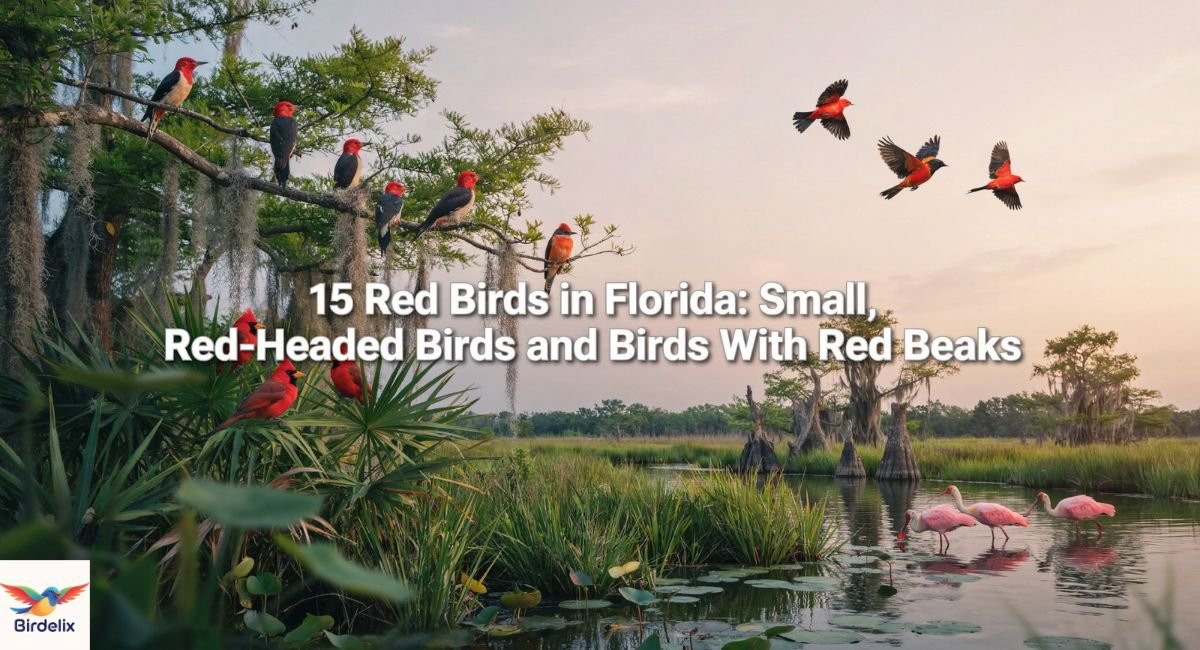
Red birds in Florida add bright colors to backyards, forests, wetlands, and coastal areas. From the familiar Northern Cardinal to colorful tanagers and woodpeckers, Florida offers many exciting birds to discover. Some species have completely red feathers, while others display red heads, wings, breasts, or bills. Learning their unique features makes birdwatching easier and more enjoyable. This guide explores red birds in Florida, including small red birds, red-headed birds, and birds with red beaks.
You’ll discover their sizes, habitats, and seasonal presence throughout the state. Whether you’re watching birds from home or exploring nature trails, these identification tips will help you recognize different species and appreciate Florida’s diverse birdlife.
Quick Guide to Red Birds in Florida
Florida’s red birds vary in size, appearance, and habitat. Some stay throughout the year, while others appear mainly during migration or winter.
| Bird Name | Main Identification Feature | Size | Presence in Florida |
| Northern Cardinal | Bright red body and crest | 8–9 inches | Year-round |
| House Finch | Red head and chest in males | 5–6 inches | Year-round |
| Summer Tanager | Mostly red body | 7–8 inches | Seasonal |
| Scarlet Tanager | Red body with black wings | 6–7 inches | Migration |
| Painted Bunting | Colorful male with red underparts | 5–6 inches | Seasonal |
| Vermilion Flycatcher | Bright red crown and underparts | 5–6 inches | Rare visitor |
| Red-Headed Woodpecker | Red head with black-and-white body | 7–9 inches | Local year-round |
| Red-Bellied Woodpecker | Red crown and nape | 9–10 inches | Year-round |
| Pileated Woodpecker | Large body and red crest | 16–19 inches | Year-round |
| Rose-Breasted Grosbeak | Red breast patch in males | 7–8 inches | Migration |
| Purple Finch | Raspberry-red coloring in males | 5–6 inches | Winter visitor |
| Red-Winged Blackbird | Red-and-yellow shoulder patches | 7–9 inches | Year-round |
| Ruby-Throated Hummingbird | Ruby-red throat in males | 3–4 inches | Seasonal |
| Reddish Egret | Reddish-brown feathers | 27–32 inches | Coastal year-round |
| American Oystercatcher | Long orange-red bill | 16–17 inches | Coastal year-round |
Sizes are approximate. Presence can vary by location, habitat, and season.
15 Red Birds in Florida You Should Know
1. Northern Cardinal
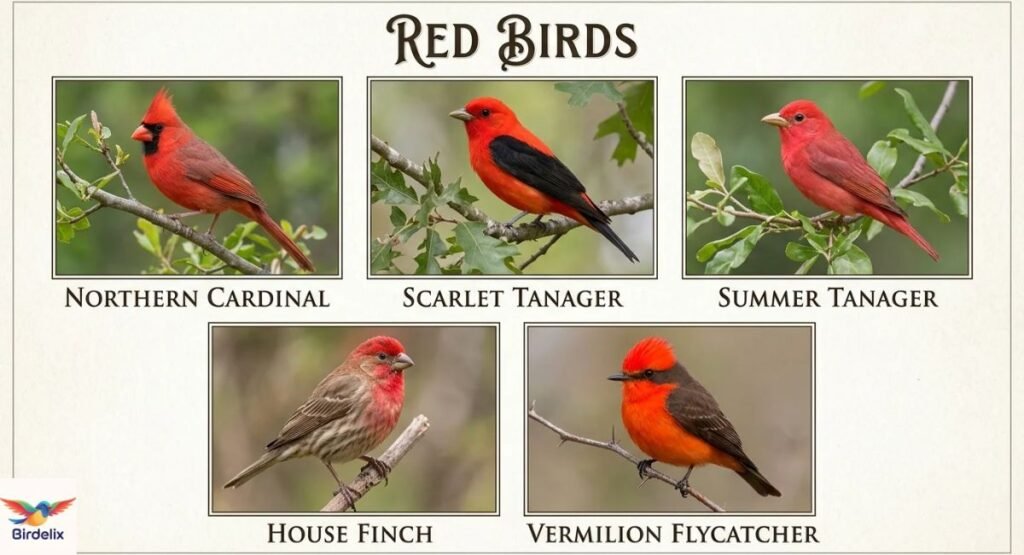
The Northern Cardinal is one of the most recognizable red birds in Florida. Males have bright red feathers, a pointed crest, and a black face around the bill. Females look different, with warm brown feathers and reddish accents on their wings and tail. You can often spot cardinals near backyard feeders, shrubs, woodland edges, and residential gardens. They eat seeds, berries, and insects, making them frequent visitors to bird-friendly yards.
2. House Finch
The House Finch is a small bird with red coloring around its forehead, face, and chest. Its remaining feathers are usually brown and streaked, helping distinguish it from the Northern Cardinal. Males often visit feeders containing sunflower seeds, while females have brown streaked plumage without the red coloring. Look for these small red birds around homes, parks, and shopping areas. Their cheerful, warbling songs can help you identify them even before you see them.
3. Summer Tanager
The Summer Tanager is a medium-sized songbird whose adult male has mostly red plumage. Females are generally yellowish or olive-colored, so they look very different. This species prefers wooded habitats, especially areas with mature trees. It feeds heavily on bees and wasps, catching them and removing their stingers before eating. During migration and the breeding season, watch tree canopies for this red songbird. Its solid red appearance makes it a memorable sight in Florida.
4. Scarlet Tanager
The Scarlet Tanager has striking red body feathers and contrasting black wings and tail during the breeding season. Males change to a greener, yellowish appearance outside that period, making identification more challenging. Florida birders may see this species during spring and fall migration, particularly in wooded areas. It feeds on insects and some fruit, usually searching among tree branches. If you notice a flash of red and black high in the canopy, this migrating red bird could be worth checking.
5. Painted Bunting
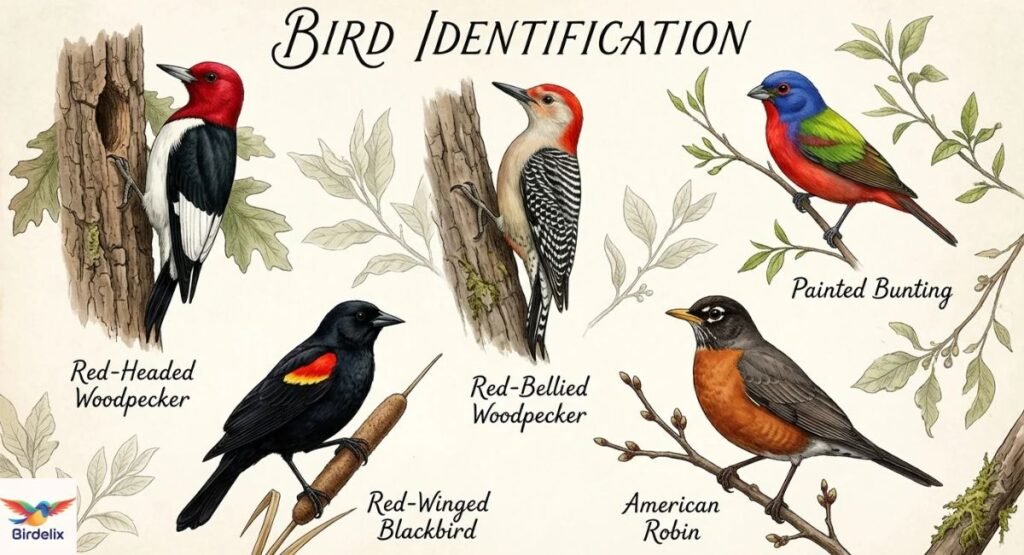
The male Painted Bunting is famous for its blue head, green back, and red underparts. Females and young birds look mostly green, which can make identification harder. Some Painted Buntings breed in northern Florida, while others occur in the state during winter. They prefer brushy habitats, field edges, and areas with suitable native vegetation. These colorful Florida birds often feed on seeds and insects. A seed feeder near dense shrubs may help you spot one without disturbing its natural habitat.
6. Vermilion Flycatcher
The Vermilion Flycatcher is a small bird with brilliant red coloring on its crown and underparts. Males also have dark brown wings and a dark mask, creating a sharp contrast. This species is not a regular bird throughout Florida, so sightings are unusual and may attract local birdwatchers. It hunts insects from exposed perches, quickly flying out to catch prey. If you spot a tiny bird with vivid red feathers and dark wings, check its markings carefully before identifying it.
7. Red-Headed Woodpecker
The Red-Headed Woodpecker has a completely red head, a white body, and large black-and-white wing patches. Its bold pattern makes it easier to identify than many other woodpeckers. In Florida, look for it in open woodlands, pine habitats, and areas with dead trees that provide nesting cavities. It eats insects, nuts, and seeds, sometimes storing food for later. This red-headed bird often perches upright on tree trunks or branches while searching for food.
8. Red-Bellied Woodpecker
The Red-Bellied Woodpecker is common in Florida’s forests, neighborhoods, and wooded parks. It has black-and-white barred feathers across its back and red coloring on its crown and nape. Despite its name, the reddish patch on its belly is often faint and difficult to see. This species regularly visits feeders for suet, peanuts, and sunflower seeds. Listen for its calls or watch tree trunks for a climbing bird. Its red crown is one of the best features to check.
9. Pileated Woodpecker
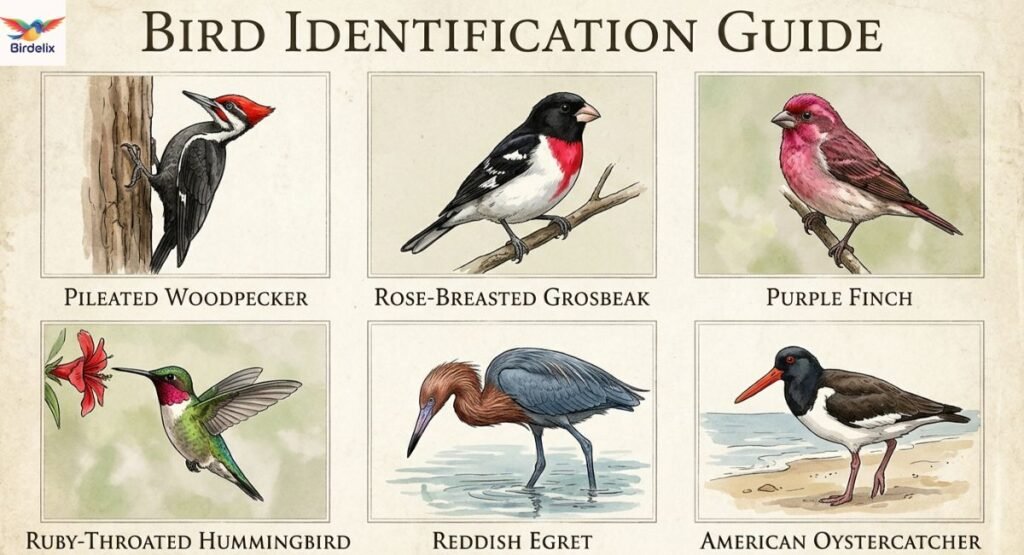
The Pileated Woodpecker is one of Florida’s largest woodpeckers. It has a mostly black body, bold white facial stripes, and a striking red crest. Its size and loud calls often reveal its presence before you see it. Look for this bird in mature forests, wooded wetlands, and areas with large trees. It searches for carpenter ants and other insects by excavating deep holes in wood. Although it is not entirely red, its bright crest makes it stand out among Florida woodpeckers.
10. Rose-Breasted Grosbeak
The male Rose-Breasted Grosbeak has a black head, a white body, and a distinctive triangular red patch on its chest. Females are brown and heavily streaked, resembling large sparrows. This species may pass through Florida during spring and fall migration, although sightings vary by location. It eats seeds, insects, and fruit, sometimes visiting feeders during migration. Look for it among leafy branches or near woodland edges. Its red breast patch is the clearest feature for identifying an adult male.
11. Purple Finch
The male Purple Finch has raspberry-red coloring across much of its head, chest, and back. Despite its name, it usually looks more reddish or pinkish than purple. Females are brown with strong facial markings and streaked underparts. Purple Finches are not consistently common throughout Florida, and their winter appearances can vary. They eat seeds, buds, and fruit, sometimes visiting feeders. Compare their rounded bodies and thick bills with House Finches to avoid confusing these red-toned finches.
12. Red-Winged Blackbird
The male Red-Winged Blackbird has a glossy black body with bright red shoulder patches edged in yellow. These colorful patches are especially noticeable when the bird displays its wings. Females look very different, with streaked brown feathers that provide camouflage among grasses. In Florida, this species frequents marshes, wetlands, ponds, and grassy areas. It eats seeds and insects and often gathers in flocks. Look for the male’s red and yellow wing patches when identifying this familiar wetland bird.
13. Ruby-Throated Hummingbird
The Ruby-Throated Hummingbird is one of the smallest birds you may see in Florida. Adult males have a shimmering red throat, green upperparts, and a slender bill. Females lack the bright red throat and usually show a pale throat and underside. Many hummingbirds visit Florida during migration or the breeding season, while some areas have winter sightings. Look for them around flowering plants and nectar feeders. Their rapid wingbeats and hovering flight make these tiny red-throated birds easy to notice.
14. Reddish Egret
The Reddish Egret is a large wading bird with a reddish-brown head and neck, a shaggy appearance, and a long bill. Its body is often blue-gray, although a white color form also exists. In Florida, it is associated with coastal flats, shallow lagoons, and saltwater wetlands. It often hunts by running, jumping, and spreading its wings to catch fish. Although it is not a bright red songbird, its rusty coloring makes it a distinctive coastal Florida bird.
15. American Oystercatcher
The American Oystercatcher has a black head, a dark upper body, a white underside, and a long orange-red bill. Its bright bill is often more noticeable than any red feathers. This coastal species feeds on shellfish and other marine invertebrates, using its bill to open or probe for prey. Look for it on sandy beaches, tidal flats, and oyster beds. Its red-orange beak and bold black-and-white plumage make it one of Florida’s easiest shorebirds to recognize.
Small Red Birds in Florida
| Bird Names |
| Northern Cardinal |
| House Finch |
| Purple Finch |
| Ruby-Throated Hummingbird |
Red-Headed Birds in Florida
| Bird Names |
| Red-Headed Woodpecker |
| Northern Cardinal |
| House Finch |
| Summer Tanager |
| Ruby-Throated Hummingbird |
| Pileated Woodpecker |
| Red-Bellied Woodpecker |
Birds With Red Beaks in Florida
| Bird Names |
| Northern Cardinal |
| American Oystercatcher |
Red Birds in Florida That Are Not Cardinals
| Bird Names |
| House Finch |
| Red-Headed Woodpecker |
| Red-Bellied Woodpecker |
| Painted Bunting |
Backyard Red Birds in Florida
| Bird Names |
| Northern Cardinal |
| House Finch |
| Painted Bunting |
Where and When to See Red Birds in Florida
Red Birds in North Florida
North Florida has forests, wetlands, open fields, and residential areas that support many bird species. Cardinals, Red-Bellied Woodpeckers, and Red-Winged Blackbirds can be seen throughout the year in suitable habitats. Migrating tanagers and grosbeaks may appear during spring and fall. Look near wooded trails, ponds, and natural edges to improve your chances of spotting red birds in North Florida.
Red Birds in Central Florida
Central Florida offers a mixture of neighborhoods, lakes, pine habitats, and conservation areas. Cardinals and Red-Bellied Woodpeckers are common possibilities, while hummingbirds may appear seasonally. Wetland areas can support Red-Winged Blackbirds and other water-associated species. Explore parks and wildlife areas early in the morning, when many birds are active. These Central Florida birds are easier to observe when you move slowly and listen carefully.
Red Birds in South Florida
South Florida’s coastal habitats, mangroves, wetlands, and gardens attract a varied bird community. Reddish Egrets and American Oystercatchers can be found in appropriate coastal areas, while cardinals occur in many inland habitats. Seasonal visitors may appear in parks and natural reserves. Bring binoculars when exploring shorelines and birding trails. Coastal flats and wetlands offer some of the best opportunities to see red-colored birds in South Florida.
Best Time to See Red Birds in Florida
Early morning is often a productive time for birdwatching because many birds feed and call actively. Spring and fall migration can bring species that do not stay in Florida year-round. Winter also brings seasonal visitors to some regions, although sightings vary by species and location. Check local bird reports before visiting a site. Knowing the best birdwatching season can help you plan a more rewarding trip.
How to Identify a Red Bird in Florida
Start by checking the bird’s size, shape, and main color pattern. Notice whether the red appears on its whole body, head, wings, breast, or bill. A crest may suggest a cardinal or woodpecker, while a long red-orange bill points toward certain coastal birds.
Next, consider the habitat and season. A bird near a beach may be a shorebird, while one clinging to a tree could be a woodpecker. Use several clues together rather than relying on one color. This simple method makes Florida bird identification more accurate.
Conclusion
Florida is home to many beautiful red birds, from the familiar Northern Cardinal to colorful woodpeckers, tanagers, and coastal species. Each bird has unique features that make identification easier. By checking their size, feather colors, beak shape, and habitat, you can recognize different species with more confidence.
Whether you enjoy watching birds in your backyard or exploring Florida’s natural areas, keep an eye out for these fascinating species. Providing clean water, native plants, and safe shelter can also attract more birds. With patience and regular observation, you’ll discover even more red birds in Florida throughout the year.
FAQs
What Is the Most Common Red Bird in Florida?
The Northern Cardinal is one of Florida’s most familiar red birds. It lives in many neighborhoods, gardens, parks, and wooded habitats throughout the year.
What Are the Small Red Birds in Florida?
The House Finch is a small bird with red coloring on the male’s face and chest. The Ruby-Throated Hummingbird is even smaller and has a red throat in adult males.
Which Birds in Florida Have Red Heads?
The Red-Headed Woodpecker has an entirely red head. Northern Cardinals, Red-Bellied Woodpeckers, and Pileated Woodpeckers also have noticeable red head markings.
Which Florida Birds Have Red Beaks?
The Northern Cardinal has a thick reddish-orange bill, while the American Oystercatcher has a long orange-red bill. Their body patterns and habitats help confirm their identities.
What Red Bird in Florida Is Not a Cardinal?
The House Finch, Summer Tanager, and Red-Headed Woodpecker are examples of red-colored birds that are not cardinals. Their sizes, feather patterns, and behaviors help tell them apart.

Welcome to Birdelix! I’m Anam Sattar, an AI-powered SEO Specialist and Content Writer with over 5 years of experience in creating high-quality, search-optimized content. I help businesses improve their search engine rankings, increase organic traffic, and build beautiful, user-friendly websites. My mission is to make SEO, content creation, and web design simple, effective, and accessible for everyone. Let’s grow your online presence and achieve success together!