

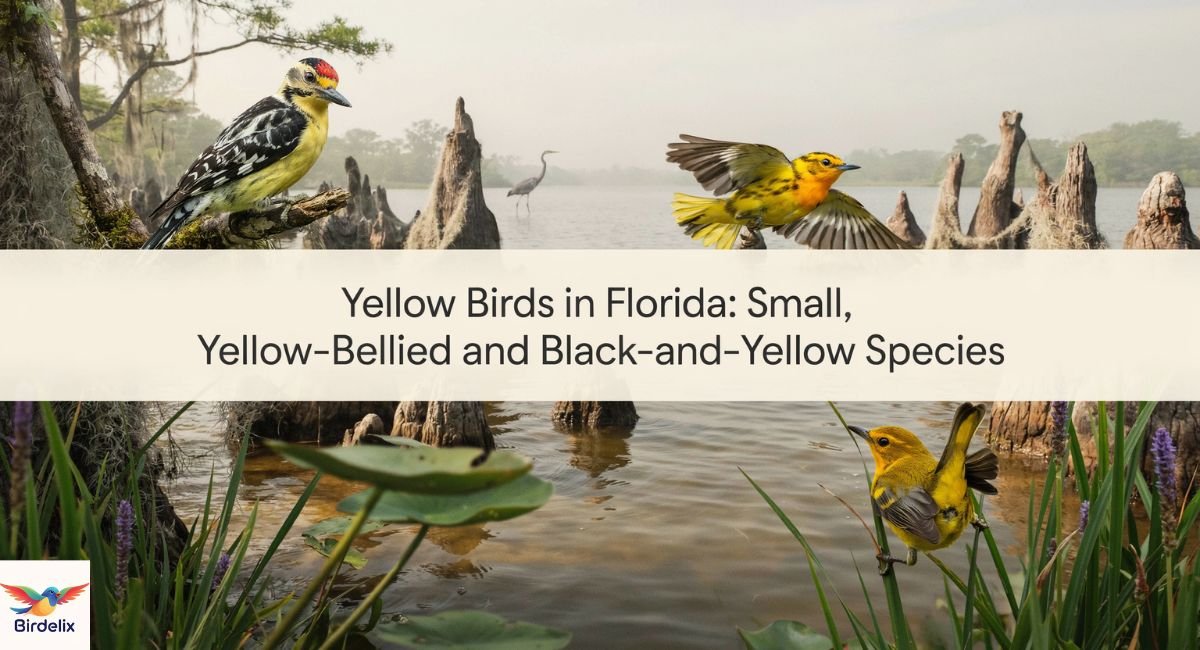
Yellow birds in Florida add bright colors to the state’s forests, wetlands, gardens, and backyards. From tiny songbirds to larger meadowlarks, these birds display different shades of yellow, black, olive, and brown. Some species stay throughout the year, while others appear during seasonal migration. If you’ve spotted a small yellow bird near your home, identifying its size, markings, and habitat can help you discover its name.
This guide explores common yellow birds in Florida, including yellow-bellied birds, yellow-breasted birds, and black-and-yellow birds. You’ll also learn where to spot these colorful species and how to recognize their key features across North, Central, and South Florida.
Quick Comparison of Yellow Birds in Florida
The following table summarizes key identification features for several species discussed in this guide.
| Bird species | Main yellow marking | Helpful identification clue | Typical habitat or timing |
| American Goldfinch | Bright yellow body in breeding males | Black wings and short, thick bill | Feeders and seed-bearing plants; often seen in cooler months |
| Common Yellowthroat | Yellow throat and upper breast | Black mask on adult males | Wetlands and dense vegetation |
| Pine Warbler | Yellowish underparts | Olive back and association with pine trees | Pine forests and wooded neighborhoods |
| Palm Warbler | Yellow undertail and sometimes yellow breast | Frequent tail-bobbing | Open areas, especially in winter |
| Yellow Warbler | Bright yellow body | Fine reddish breast streaks on many males | Mainly seasonal migrant |
| Eastern Meadowlark | Broad yellow chest | Bold black V-shaped marking | Pastures and open fields |
| Northern Parula | Yellow belly and breast | Blue-gray upperparts and white wing bars | Wooded habitats |
| Prairie Warbler | Yellow underside | Dark streaks along the sides | Scrub and brushy areas |
| Yellow-throated Warbler | Bright yellow throat | Black-and-white head pattern | Trees and wooded habitats |
| Great Crested Flycatcher | Yellow belly | Large bill and noticeable crest | Wooded areas |
| Red-winged Blackbird | Yellow border on red shoulder patches | Mostly black body in males | Marshes and wetlands |
| European Starling | Yellow bill in breeding season | Glossy dark plumage | Urban and suburban areas |
Common Yellow Birds in Florida You Should Know
Several Florida bird species show yellow feathers, but their patterns differ. Some have bright yellow bodies, while others have yellow underparts and olive or dark upperparts. The American Goldfinch, Common Yellowthroat, Pine Warbler, Palm Warbler, Yellow Warbler, and Eastern Meadowlark are useful starting points for anyone learning Florida bird identification.
The best identification clues are often small details. Look for a black cap, a dark facial mask, a bobbing tail, or a bold chest marking. Also consider where the bird appears. A bird in an open field may be an Eastern Meadowlark, while a tiny bird moving through thick marsh plants could be a Common Yellowthroat.
American Goldfinch
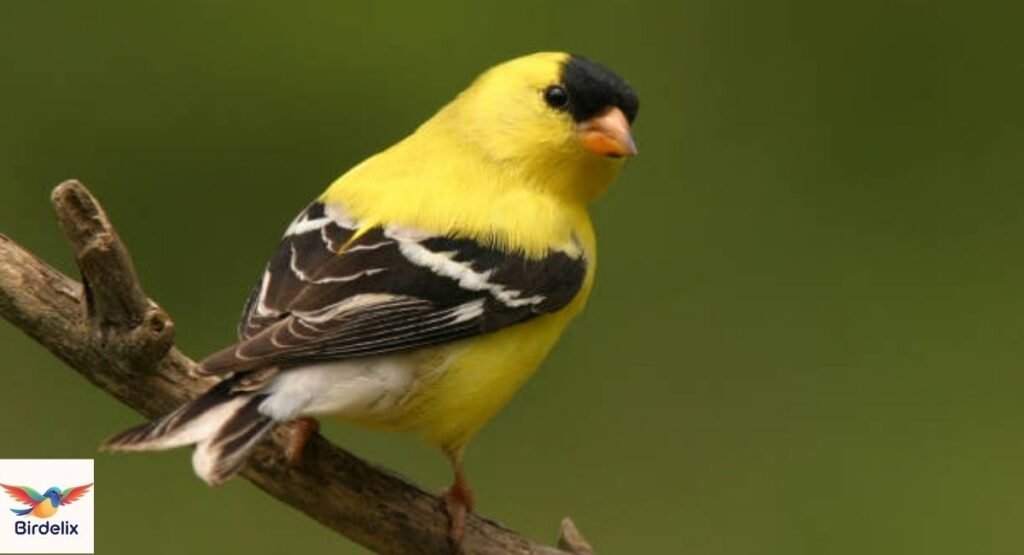
The American Goldfinch is one of the easiest yellow birds to recognize when the male has his bright breeding plumage. He has a vivid yellow body, black wings, a black forehead, and white markings on his wings. Females and winter birds look duller, with more olive or brownish coloring. These seasonal changes can make the same
species look like two different birds.
In Florida, American Goldfinches are mainly associated with the cooler months. You may see them in open fields, gardens, parks, and backyards with seed-bearing plants. They often visit feeders filled with sunflower or nyjer seed. Their short, conical bills are designed for cracking seeds, which helps distinguish them from insect-eating warblers.
Common Yellowthroat
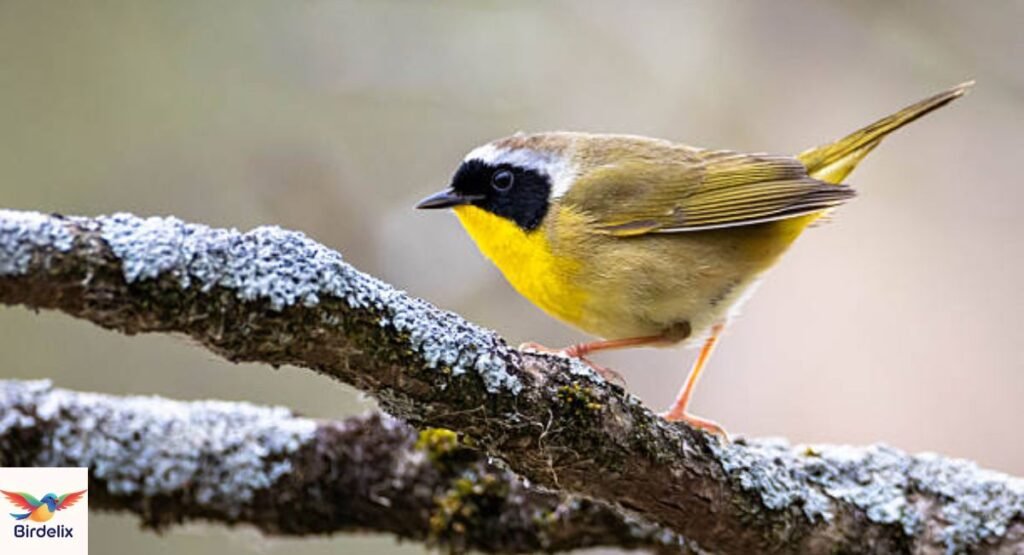
The Common Yellowthroat is a small songbird with an olive back, yellow throat, and yellow breast. Adult males have a bold black mask across the face that makes them easy to recognize. Females lack this strong mask and usually have softer olive and yellow coloring. Their small size and quick movements can make them difficult to observe for long.
Look for this bird around marshes, wet meadows, wetland edges, and dense vegetation. It often stays low in grasses and shrubs rather than sitting in the open. If you hear a short, repeated song coming from thick plants, watch the area carefully. The bird may appear briefly before disappearing into the cover again.
Pine Warbler
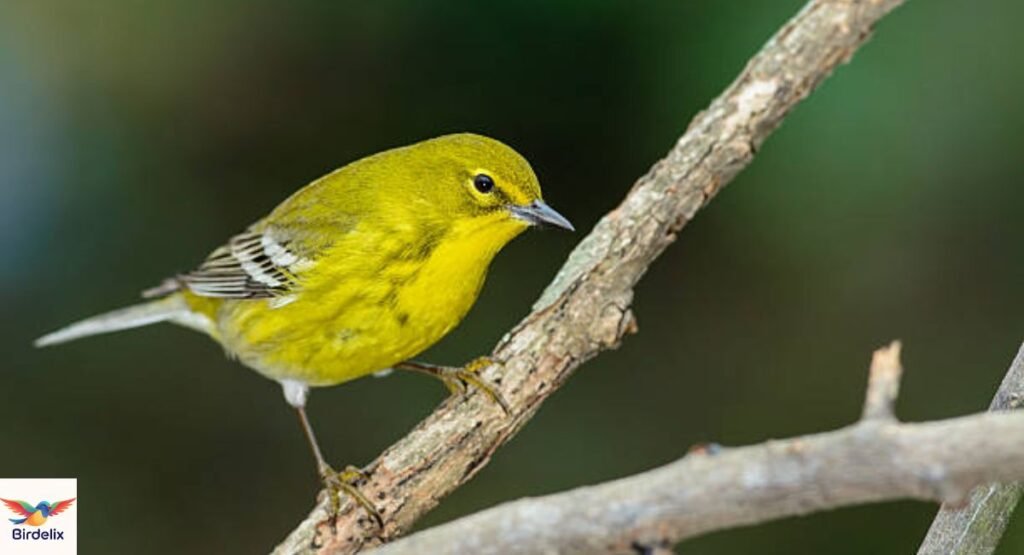
The Pine Warbler has yellowish underparts, an olive-green back, and a fairly sturdy bill. Its coloring is usually softer than the bright yellow of a breeding male American Goldfinch. Some individuals look more olive or grayish, so the overall body color may not be enough for identification. The bird’s shape, behavior, and habitat provide useful clues.
As its name suggests, this warbler is strongly linked to pine trees. In Florida, you may find it in pine forests, wooded parks, and residential areas with mature pines. It searches branches and bark for insects, but it may also visit feeders for seeds or suet. A yellowish bird feeding methodically among pine branches is worth checking for this species.
Palm Warbler

The Palm Warbler is known for its yellow undertail and frequent tail-bobbing behavior. Its breast may be yellowish or pale, often with dark streaks. The amount of yellow varies between individuals and plumage types. Some birds show a stronger yellow wash, while others look browner and less colorful.
Palm Warblers are most noticeable in Florida during the cooler months when many move south for winter. They often forage on the ground in open areas, lawns, pastures, and the edges of wetlands. Their repeated tail movements can help you identify them from a distance. If a small bird keeps flicking its tail while walking across the grass, take a closer look.
Yellow Warbler
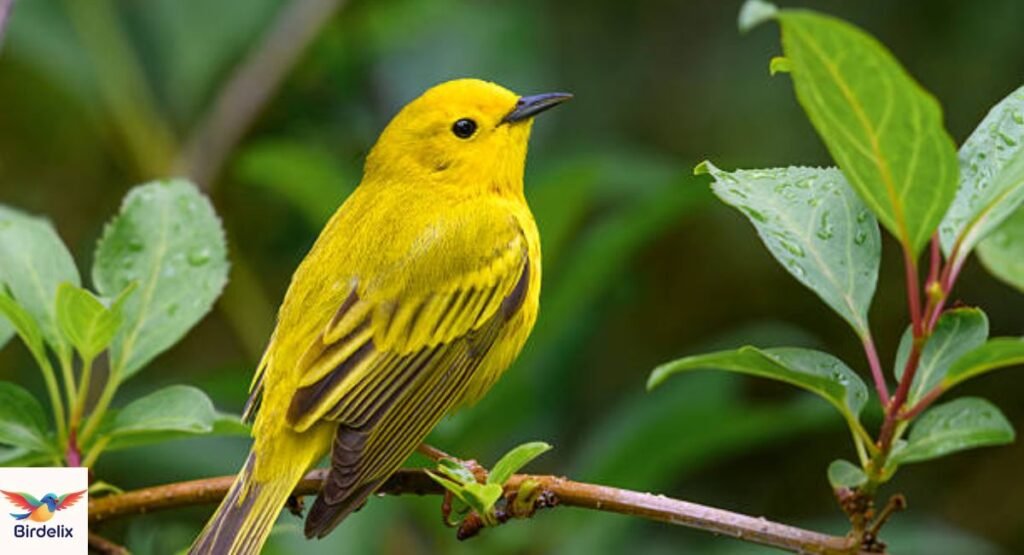
The Yellow Warbler has bright yellow plumage, and many adult males show fine reddish streaks on the breast. Females and younger birds may look more evenly yellow, with fewer obvious markings. This small songbird can resemble other yellow warblers, so its overall shape, subtle streaks, and seasonal presence are important clues.
In Florida, Yellow Warblers are mainly seen during migration rather than everywhere throughout the year. They use wooded areas, shrubs, and vegetation near water while moving between breeding and wintering grounds. Look for a small yellow bird moving quickly through leaves as it searches for insects. Because several warblers pass through Florida, a clear view of the face, breast, and wings can make identification more reliable.
Eastern Meadowlark
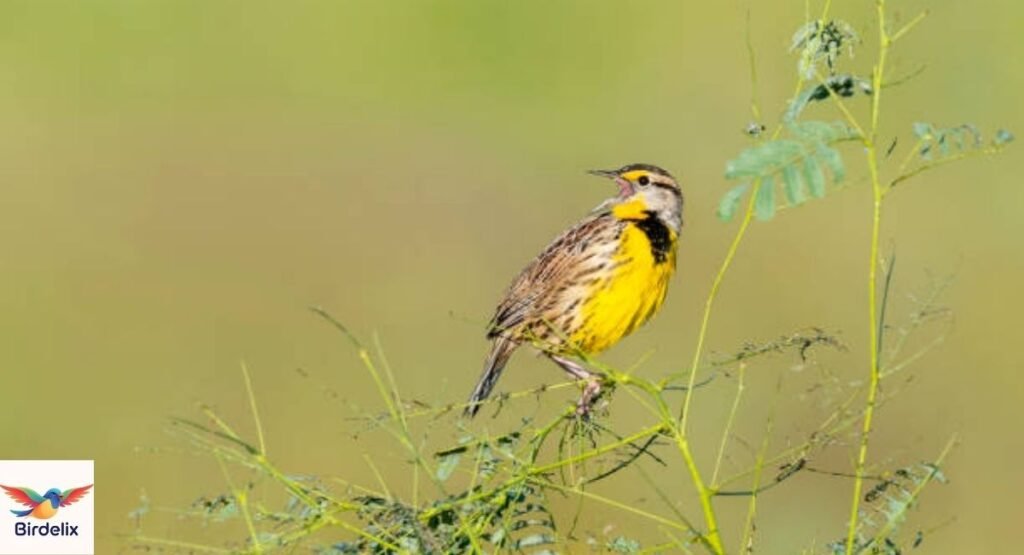
The Eastern Meadowlark is larger than most yellow songbirds. It has a bright yellow throat and breast with a bold black V-shaped mark across the chest. Its back is brown and patterned, helping it blend into grass and dry vegetation. This combination of a yellow chest and dark V makes it one of the more distinctive yellow-breasted birds in Florida.
You are most likely to find Eastern Meadowlarks in pastures, open fields, and grasslands. They often walk on the ground while searching for insects and other small food items. Unlike tiny warblers, they have a heavier body and a longer, pointed bill. When a large yellow-breasted bird stands in an open field, the meadowlark is a strong possibility.
Small Yellow Birds in Florida: Identification by Size and Color
Many small yellow birds in Florida are warblers or other insect-eating songbirds. They often have olive backs, yellow underparts, and narrow bills. Their colors may look similar at first, especially when they move quickly through trees or shrubs. To identify them, compare their head markings, body shape, breast color, and preferred habitat.
The terms little yellow birds in Florida and small yellow birds in Florida identification can describe several different species. Some have bright yellow throats, while others show blue-gray feathers or dark streaks. A close look at these details can help you separate similar birds without relying on color alone.
Northern Parula

The Northern Parula is a tiny warbler with blue-gray upperparts, yellow underparts, and noticeable white wing bars. Adult males often show blue and chestnut bands across the throat and breast. These markings may be difficult to see from far away, but they help distinguish the species from other small yellow birds. Females usually have less striking colors.
In Florida, Northern Parulas use wooded habitats, including forests with Spanish moss and other hanging vegetation. They search leaves and branches for small insects. Their compact bodies and quick movements can make them easy to overlook. If you see a small blue-gray bird with a yellow belly moving high through leafy trees, consider the Northern Parula.
Yellow-throated Warbler

The Yellow-throated Warbler has a bright yellow throat, black facial markings, white areas on the face, and patterned wings. Its back is usually gray or olive-gray rather than bright yellow. The contrast between its yellow throat and black-and-white head makes it easier to identify than some similarly sized warblers.
This species often searches for insects on tree trunks and branches. You may find it in pine woods, mature trees, and wooded residential areas. Unlike birds that spend much of their time on the ground, it frequently moves along branches while feeding. Look carefully at the face and throat because these features are more useful than the overall amount of yellow.
Prairie Warbler
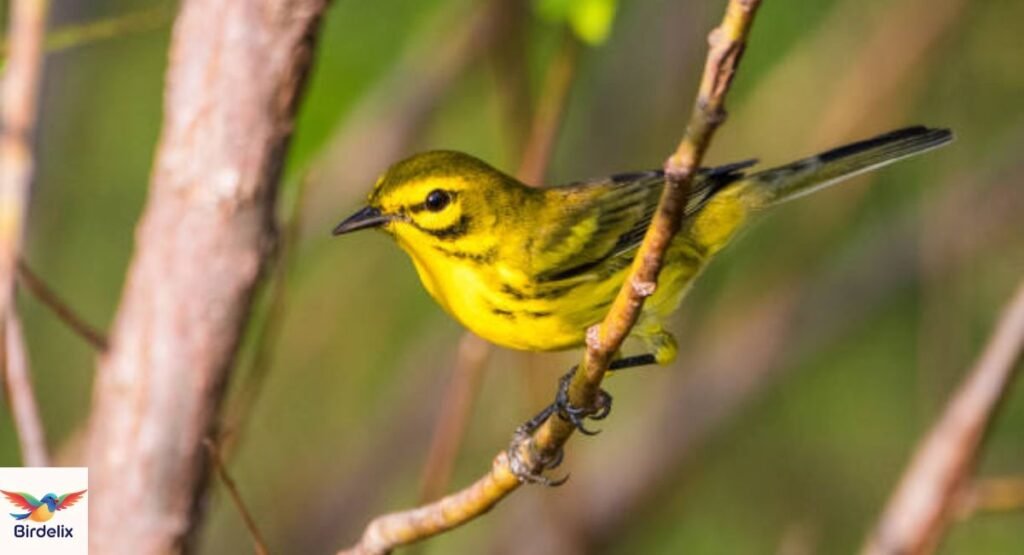
The Prairie Warbler is a small yellow bird with dark streaks along its sides and a yellow face. Its back often looks olive-green, and males may show dark markings near the eyes. These details help separate it from birds with plain yellow underparts. Despite its name, the Prairie Warbler is often associated with scrubby growth rather than wide, open grasslands.
In Florida, look for this warbler in scrub, young woodland, brushy edges, and areas with scattered trees. It moves actively through shrubs as it searches for insects. Its small size and streaked sides are useful identification clues. If you spot a yellow bird feeding low in thick brush, the Prairie Warbler may be worth comparing with other local warblers.
Yellow-breasted Chat

The Yellow-breasted Chat has a broad yellow throat and breast, olive-green upperparts, and a relatively large body for a warbler-like songbird. Its white markings near the eyes can help with identification. Compared with the Northern Parula or Prairie Warbler, it looks heavier and longer. Its yellow breast is usually one of its most noticeable features.
This species prefers dense shrubs, tangled vegetation, and brushy woodland edges. It may remain hidden inside thick plants for long periods before appearing briefly. That behavior can make it harder to observe than birds that sit in open branches. Listen for unusual songs and calls near dense cover, then look for a larger olive bird with a strong yellow breast.
White-eyed Vireo
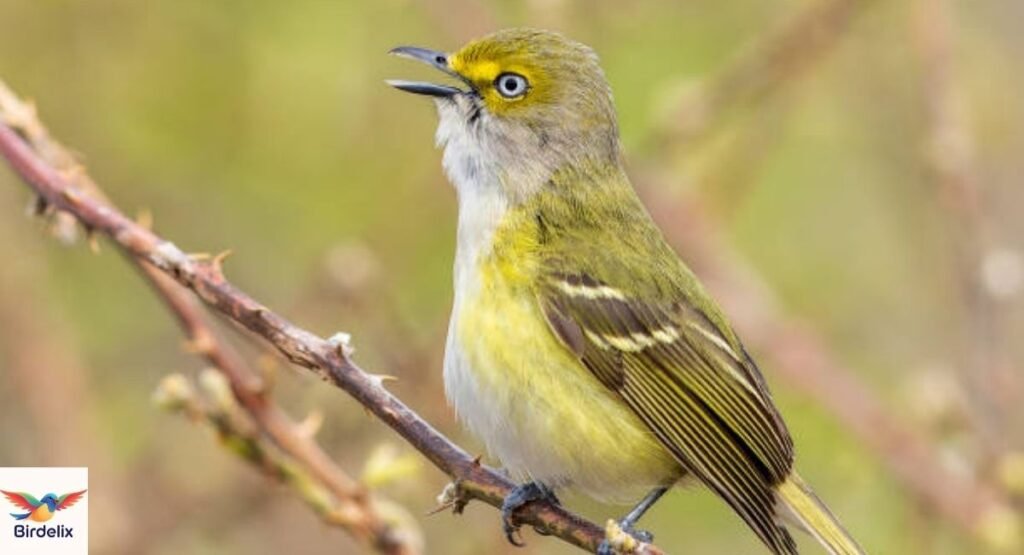
The White-eyed Vireo has olive upperparts, yellowish areas around the face and sides, and pale underparts. Adults have striking white irises, which can look especially noticeable at close range. Its plumage is not usually as bright as that of a Yellow Warbler or American Goldfinch. The white eye and sturdy bill are better clues than its yellow coloring.
White-eyed Vireos often live in dense shrubs, tangled woodland edges, and scrubby habitats. They search leaves and branches for insects and may sing repeatedly from concealed spots. Younger birds can have darker eyes, so the white eye is not always visible in every individual. Consider the bird’s body shape, face, behavior, and habitat before deciding which species you have seen.
Yellow-Bellied Birds in Florida
| Bird Name | Belly Color | Key Identification Features | Habitat |
| Common Yellowthroat | Yellow | Small body, olive back, black facial mask in males | Wetlands, marshes, dense vegetation |
| Palm Warbler | Yellowish | Yellow undertail, streaked breast, frequently bobbing tail | Grasslands, open fields, wetland edges |
| Yellow-rumped Warbler | White to yellowish, with yellow sides | Yellow rump, yellow side patches, gray or brown upperparts | Woodlands, parks, shrubs |
| Northern Parula | Yellow | Blue-gray upperparts, white wing bars, compact body | Forests, wooded areas |
| Great Crested Flycatcher | Bright yellow | Gray throat, large bill, noticeable crest | Woodlands, mature trees |
Yellow-Breasted Birds in Florida
| Bird Name | Breast Color | Key Identification Features | Habitat |
| Eastern Meadowlark | Bright yellow | Bold black V-shaped chest marking, large body | Pastures, grasslands, open fields |
| Common Yellowthroat | Yellow | Black facial mask in males, olive back, small body | Marshes, wet grass, thick vegetation |
| Yellow-breasted Chat | Bright yellow | Broad yellow breast, olive back, pale eye markings | Dense shrubs, brushy woodland edges |
| Yellow-throated Warbler | Yellow throat; paler breast | Black-and-white head markings, patterned wings | Pine forests, wooded areas |
| American Goldfinch | Bright yellow in breeding males | Black wings, black forehead, short seed-eating bill | Gardens, feeders, seed-bearing plants |
Black and Yellow Birds in Florida
| Bird Name | Black Markings | Yellow Markings | Key Identification Features |
| American Goldfinch | Black wings and cap in breeding males | Bright yellow body | Small finch with white wing markings |
| Common Yellowthroat | Black facial mask in males | Yellow throat and breast | Small bird often hidden in dense vegetation |
| Eastern Meadowlark | Black V-shaped chest marking | Bright yellow breast | Larger bird commonly found in open fields |
| Red-winged Blackbird | Mostly black body in adult males | Yellow border on red shoulder patches | Common around marshes and wetlands |
| Baltimore Oriole | Black head, back, and wings in males | Orange-yellow underparts | Slim body and pointed bill; seasonal visitor |
Black Birds With Yellow Beaks in Florida
| Bird Name | Body Color | Beak Color | Key Identification Features |
| European Starling | Glossy black or dark with speckles | Yellow during breeding season; darker in winter | Compact body, short tail, pointed bill |
| Common Myna | Brown body with a black head | Yellow | Yellow skin around the eyes; introduced species |
| Boat-tailed Grackle | Glossy black in males | Usually dark | Long tail and pale eyes; included for comparison, not a typical yellow-beaked bird |
Identification tip: A yellow belly, yellow breast, and yellow beak are different features. Check where the yellow appears, along with the bird’s size, face, wings, and habitat, before identifying it.
Yellow Birds in North Florida
| Bird Name | Key Identification Features | Typical Habitat | Seasonal Presence |
| American Goldfinch | Yellow body in breeding males, black wings, white wing markings | Backyards, gardens, seed feeders | Mainly cooler months |
| Common Yellowthroat | Yellow throat and breast, black facial mask in males | Marshes, wetlands, dense vegetation | Year-round in some areas; seasonal patterns vary |
| Pine Warbler | Yellowish underparts, olive back, sturdy bill | Pine forests, wooded neighborhoods | Often present year-round |
| Palm Warbler | Yellow undertail, streaked breast, bobbing tail | Open fields, grassy areas, wetland edges | Mainly fall and winter |
| Eastern Meadowlark | Bright yellow breast, bold black V-shaped marking | Pastures, grasslands, open fields | Generally year-round where suitable habitat exists |
Yellow Birds in South and Central Florida
| Bird Name | Key Identification Features | Typical Habitat | Seasonal Presence |
| Yellow Warbler | Bright yellow plumage; many males have reddish breast streaks | Trees, shrubs, wooded areas | Mainly during migration |
| Prairie Warbler | Yellow underside, dark side streaks, olive upperparts | Scrubland, brushy edges, young woodland | Seasonal; timing varies by location |
| Yellow-throated Warbler | Yellow throat, black-and-white head markings | Pine forests, mature trees, wooded neighborhoods | Present in Florida in varying seasonal patterns |
| American Goldfinch | Yellow body in breeding males, black wings; duller winter plumage | Gardens, feeders, seed-bearing plants | Mainly cooler months |
| Common Yellowthroat | Yellow throat and upper breast; black facial mask in males | Wetlands, grassy areas, thick vegetation | Year-round in some areas; seasonal patterns vary |
Tip: North Florida’s pine forests and open grasslands favor species such as Pine Warblers and Eastern Meadowlarks. South and Central Florida also offer scrub, wetlands, mangroves, and coastal habitats. Bird sightings vary with season, local habitat, and migration.
How to Identify Yellow Birds in Florida by Appearance
When you spot an unfamiliar bird, start with its overall size and the location of the yellow feathers. A bright yellow body with black wings suggests a different species from a brown bird with a yellow undertail. Florida bird identification becomes easier when you combine color with body shape, bill structure, markings, behavior, and habitat.
Avoid making an identification from a single feature. Light can make olive feathers look yellow, and seasonal plumage can change a bird’s appearance. A useful approach is to compare several clues at once, then check a trusted field guide or bird identification resource. Even a short note about the bird’s location and behavior can help.
Identify Birds by Belly and Breast Color
A yellow belly is not the same as a yellow breast or yellow throat. The Common Yellowthroat has yellow around its throat and upper breast, while the Eastern Meadowlark shows a broad yellow front with a black V. The Palm Warbler is known for its yellow undertail, which may be more noticeable than its belly.
Look at the bird from several angles if possible. Yellow feathers may appear brighter when the bird turns toward the light. A bird with a yellow throat but pale belly could be a Yellow-throated Warbler. If the yellow covers most of the body and the wings are black, compare it with an American Goldfinch.
Check the Bird’s Size and Shape
Size can help separate tiny warblers from larger birds. The Northern Parula and Common Yellowthroat are small, compact songbirds, while the Eastern Meadowlark has a heavier body and longer shape. The Great Crested Flycatcher has a larger head and bill than most yellow warblers.
Compare the bird’s bill, tail, posture, and body proportions. Finches usually have short, strong bills for seeds, while warblers have narrower bills suited to catching insects. Flycatchers often have broader bills and perch while watching for prey. These differences are useful when several species have similar yellow coloring.
Look at the Beak, Wings, and Face
Facial markings can be especially helpful. A male Common Yellowthroat has a black mask, while a Yellow-throated Warbler has a yellow throat and black-and-white head pattern. The American Goldfinch has black wings with white markings, and the European Starling can have a yellow bill during the breeding season.
Look for wing bars, streaks, eye rings, and patches of color. Also consider the bill’s shape and shade. A short, thick bill suggests a seed-eating bird, while a slender bill often belongs to an insect-eating species. If the bird has a dark body and yellow bill, do not assume its feathers must also be yellow.
Consider Habitat and Season
Habitat provides important clues. Pine Warblers are closely linked to pine trees, Common Yellowthroats favor thick vegetation near wetlands, and Eastern Meadowlarks use open fields. American Goldfinches are often noticed around seed-bearing plants and feeders during the cooler months.
Season matters because many birds migrate through Florida or spend only part of the year there. A bird seen in winter may have duller plumage than the same species during breeding season. Keep a simple record of the date, location, habitat, and behavior. These details can help confirm an identification later.
Conclusion
Florida’s yellow birds range from tiny warblers to bright finches and large meadowlarks. Some have yellow bellies, while others show yellow throats, black wings, or distinctive facial markings. Looking at a bird’s size, behavior, habitat, and season can help you identify it more accurately.
The next time you spot a yellow bird, note where it was and what it was doing. Compare its markings with a trusted bird guide before deciding which species you saw. With practice, you will find it easier to recognize the many yellow birds in Florida and enjoy the state’s rich birdlife.
FAQs
What are the most common yellow birds in Florida?
Recognizable examples include the American Goldfinch, Common Yellowthroat, Pine Warbler, Palm Warbler, and Eastern Meadowlark. Their abundance varies with season and habitat. Some are most noticeable around feeders or pine trees, while others prefer wetlands or open fields.
What small yellow birds can you see in Florida?
Small yellow birds in Florida include the Common Yellowthroat, Northern Parula, Prairie Warbler, and American Goldfinch. The Yellow-throated Warbler is another useful species to compare. Look at the face, wing markings, bill, and habitat because several small birds have similar yellow coloring.
Which Florida birds have yellow bellies?
Birds with yellow bellies in Florida include the Common Yellowthroat, Northern Parula, Yellow-rumped Warbler, and Great Crested Flycatcher. The Palm Warbler also shows yellow underparts, particularly around the undertail. The amount of yellow varies with species, sex, age, and season.
What bird in Florida has a yellow breast and black markings?
The Eastern Meadowlark is a strong match because it has a bright yellow breast with a bold black V. A male Common Yellowthroat has a black facial mask and yellow throat, while a breeding male American Goldfinch has black wings and a yellow body. Check where the black markings appear to tell them apart.
Are there bright yellow birds in Florida all year?
Some yellowish birds remain in Florida year-round, while others appear mainly during winter or migration. The American Goldfinch is often more noticeable in Florida during cooler months, and the Yellow Warbler is primarily a seasonal visitor. Plumage also changes, so some birds look brighter during breeding season than at other times.
What are the black birds with yellow beaks in Florida?
The European Starling is a familiar dark bird with a yellow bill during much of the breeding season. The Common Myna also has a yellow bill and yellow skin around the eyes, although it is an introduced species. Boat-tailed Grackles are dark birds too, but their bills are typically dark rather than yellow.
Which yellow birds are found in North Florida?
North Florida can host American Goldfinches, Common Yellowthroats, Pine Warblers, Palm Warblers, and Eastern Meadowlarks. Which species you see depends on the season and local habitat. Pine woods, wetlands, open fields, and backyards each offer different opportunities for birdwatching.
Where can I find pictures of yellow birds in Florida?
You can compare bird photographs and identification details through Cornell Lab of Ornithology’s All About Birds and Audubon Florida. Look for several photographs of each species because males, females, young birds, and winter plumage can look different. Comparing the bird’s face, wings, belly, and bill will give you a better chance of making a correct identification.

Welcome to Birdelix! I’m Anam Sattar, an AI-powered SEO Specialist and Content Writer with over 5 years of experience in creating high-quality, search-optimized content. I help businesses improve their search engine rankings, increase organic traffic, and build beautiful, user-friendly websites. My mission is to make SEO, content creation, and web design simple, effective, and accessible for everyone. Let’s grow your online presence and achieve success together!