

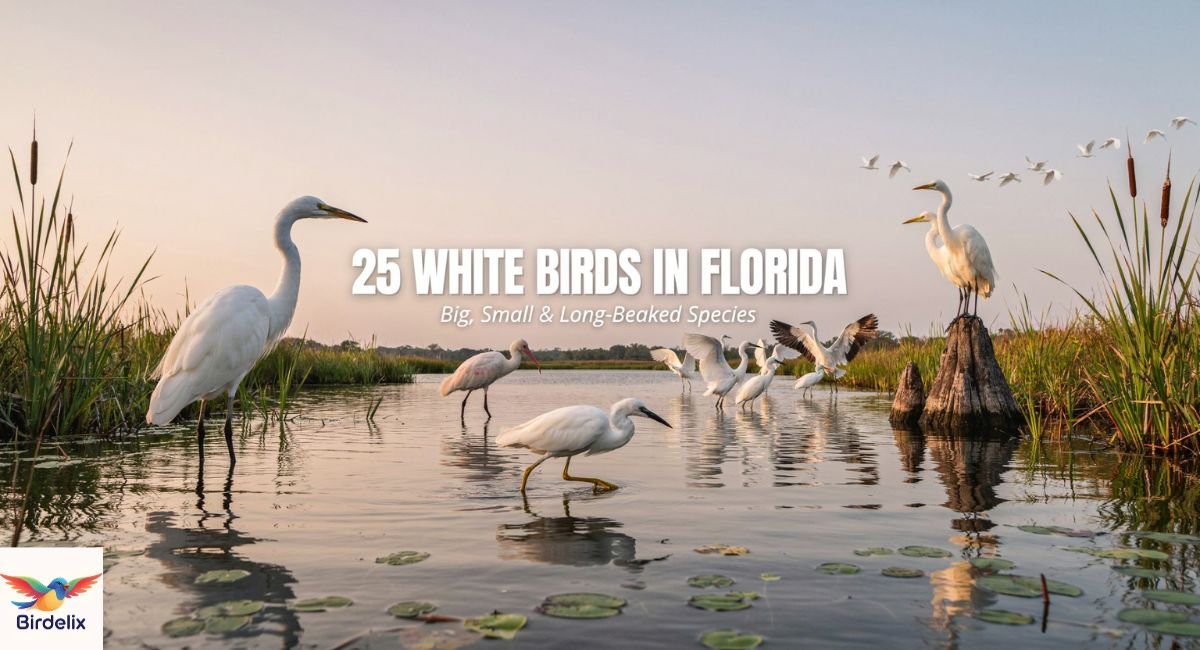
Florida is home to an impressive variety of white birds in Florida, from elegant wading birds to coastal species and winter visitors. You may spot a snowy egret stalking fish in shallow water or a white ibis probing muddy ground with its curved bill. Some species are surprisingly large, while others are small and quick around ponds, lawns, and marshes. Big white birds in Florida often stand out because of their height, broad wings, or long necks.
Meanwhile, small white birds can be harder to identify at a glance. In this guide, you’ll discover long-beaked white birds, tall species, coastal birds, and backyard visitors, along with simple identification tips to help you tell them apart.
25 White Birds in Florida
Florida’s white birds come in many shapes and sizes. Some spend their lives around freshwater wetlands. Others prefer beaches, mangroves, pastures, or open coastal water. The species below include completely white birds, mostly white birds, white juveniles, and birds that people commonly describe as white because of their prominent pale plumage.
1. American White Ibis
Scientific Name: Eudocimus albus
Family: Threskiornithidae
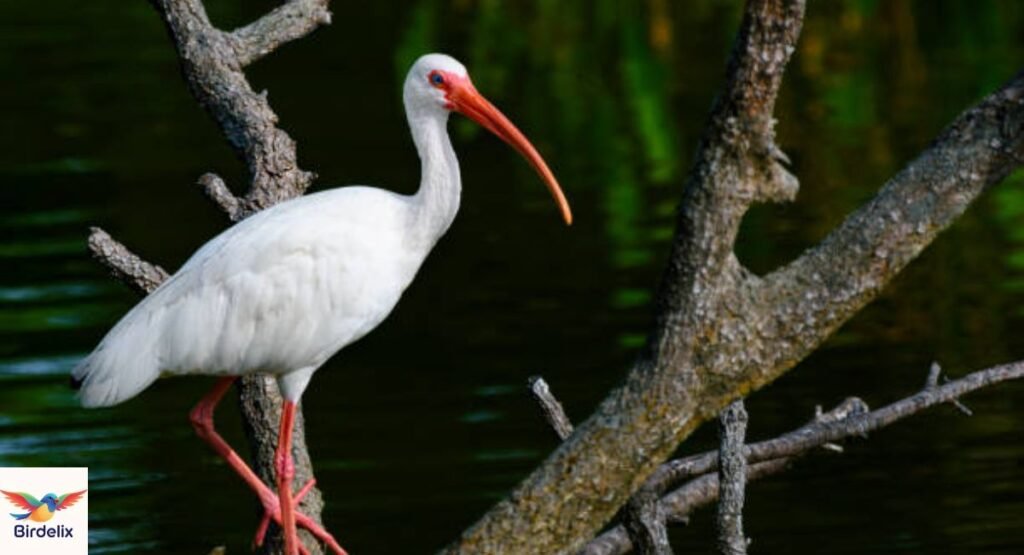
The American White Ibis is one of the most recognizable white birds in Florida. Adults have bright white bodies, red faces, red legs, black wingtips, and a long pinkish-red bill that curves downward. That unusual bill is its biggest identification clue. The ibis uses it to probe mud and shallow soil for food.
These birds eat crayfish, crabs, fish, frogs, snakes, insects, and other small prey. They often gather in large groups around wetlands, lawns, flooded fields, mangroves, and shallow ponds. Cornell describes them as large wading birds with football-shaped bodies and long curved bills. Florida wildlife officials also note their importance in wetland habitats.
2. Great Egret
Scientific Name: Ardea alba
Family: Ardeidae
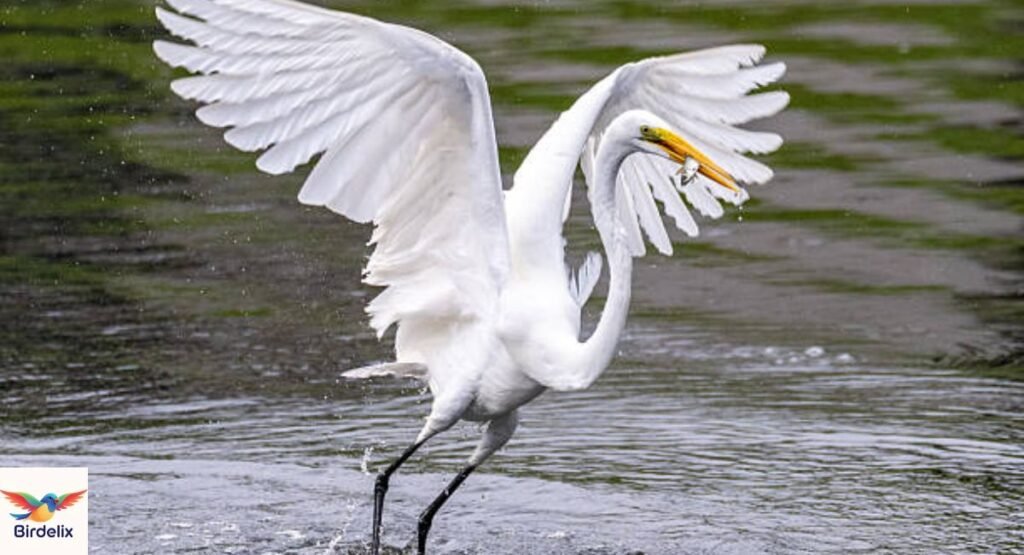
The Great Egret is a tall, graceful bird with a completely white body, long black legs, and a long yellow bill. Its neck forms an elegant S-shaped curve when relaxed. When hunting, it stretches that neck forward and strikes small fish, frogs, insects, and other aquatic prey with remarkable speed.
This species often stands almost motionless beside ponds and lakes. That stillness makes it easy to miss until it suddenly moves. Its combination of long legs, white plumage, yellow bill, and tall body makes it one of the easiest large wading birds to recognize.
3. Snowy Egret
Scientific Name: Egretta thula
Family: Ardeidae
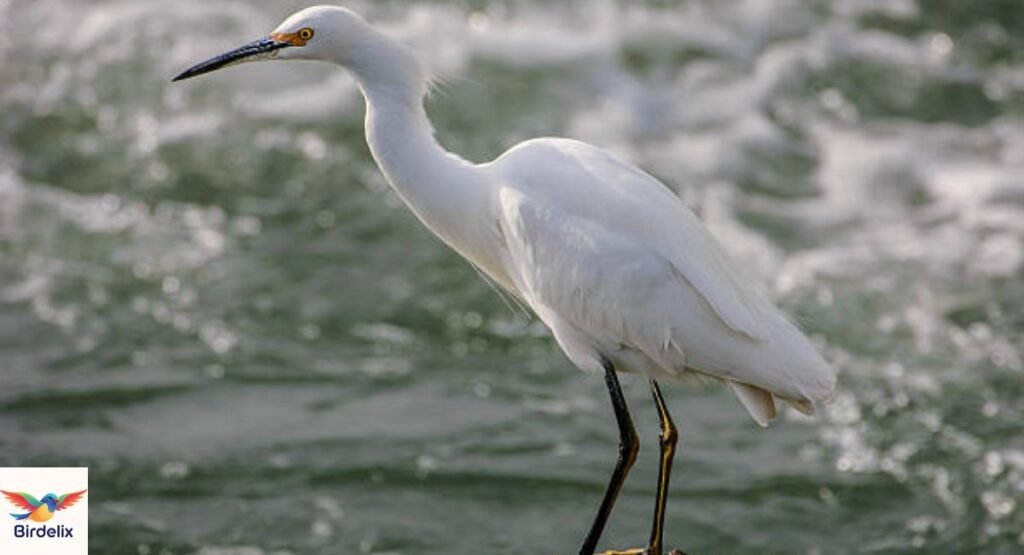
The Snowy Egret is smaller and more active than the Great Egret. It has a white body, black legs, bright yellow feet, and a slender black bill. Those yellow feet are especially useful when you’re trying to separate it from other small white birds in Florida.
Unlike a patient Great Egret, a Snowy Egret often runs through shallow water, moves its feet, spreads its wings, or darts after prey. It feeds on shrimp, small fish, and other invertebrates. Florida’s shallow bays, mangroves, tidal channels, marsh pools, and other wetlands provide excellent habitat for this species.
4. Cattle Egret
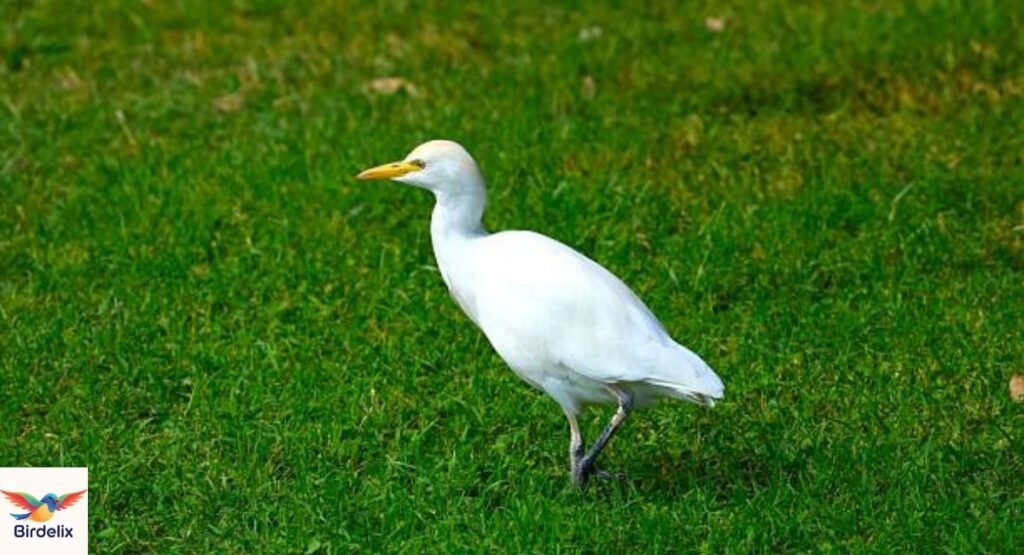
Scientific Name: Bubulcus ibis
Family: Ardeidae
The Cattle Egret is a compact white heron that often spends more time on land than people expect. It commonly appears in pastures, fields, lawns, roadsides, and areas around livestock. Its shorter yellow bill and relatively short legs give it a stockier appearance than the Great Egret.
During breeding season, adults can develop warm golden or orange feathers around the head, chest, and back. This seasonal change can make identification slightly tricky. Away from breeding colors, its small body and terrestrial behavior are useful clues.
5. Wood Stork
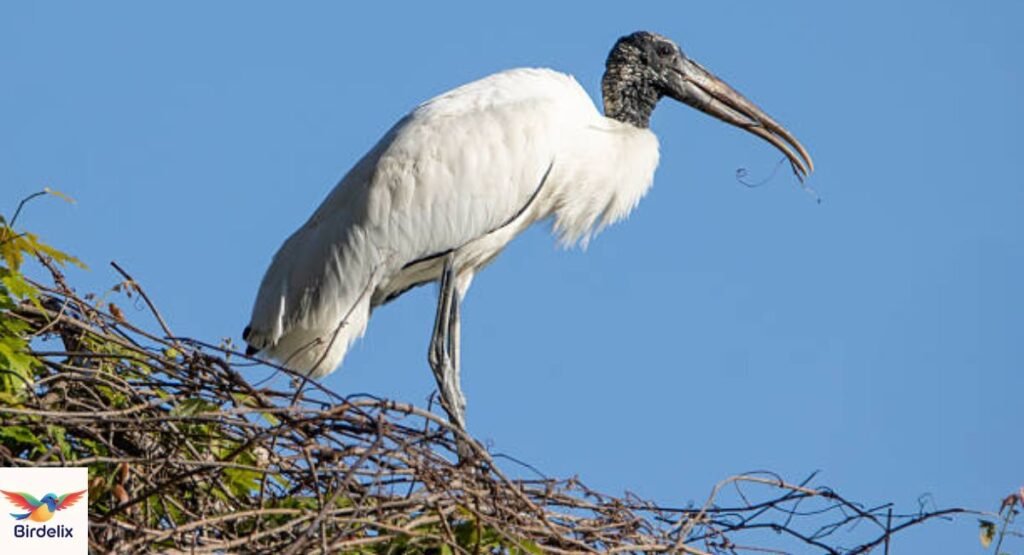
Scientific Name: Mycteria americana
Family: Ciconiidae
The Wood Stork is a large white wading bird with black flight feathers, a dark featherless head, and a long slightly curved bill. It looks unusual compared with egrets because its body is heavier and its head has almost no feathers. Florida supports the largest nesting population of Wood Storks in the United States.
Its feeding method is especially fascinating. Instead of relying only on sight, the stork can use its sensitive bill to detect prey in shallow water. It feeds on fish and other aquatic animals when water conditions concentrate prey. The species was reclassified from Endangered to Threatened in 2014 after conservation progress.
6. Great White Heron
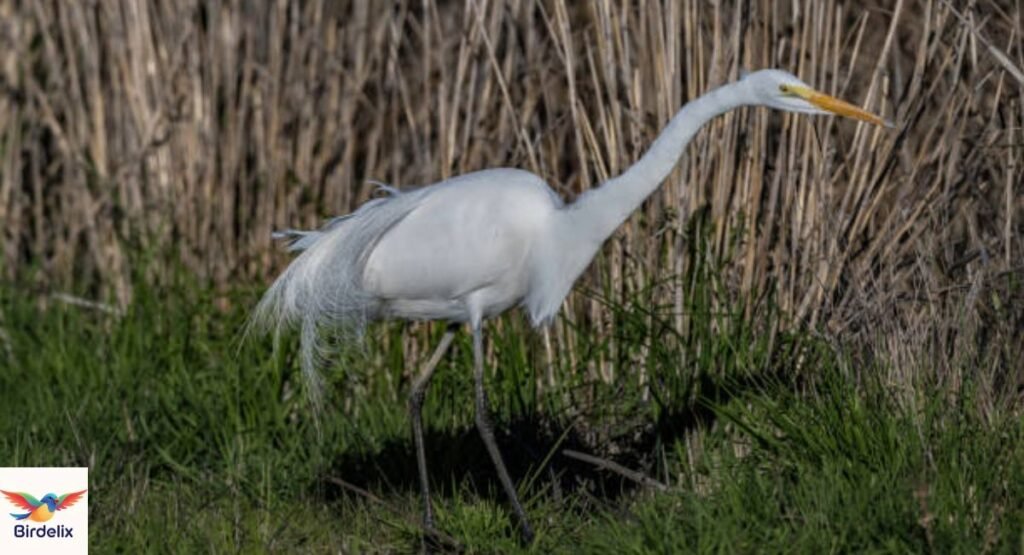
Scientific Name: Ardea herodias
Family: Ardeidae
The Great White Heron is the striking white form of the Great Blue Heron and is strongly associated with South Florida and the Florida Keys. It has a large body, long legs, a long neck, and a heavy bill. Its overall shape can resemble a Great Egret from a distance.
Size and bill structure provide useful clues. The Great White Heron generally looks heavier and more powerful than a Great Egret. Its thicker bill and broader body are especially helpful when the two birds appear in the same wetland.
7. American White Pelican
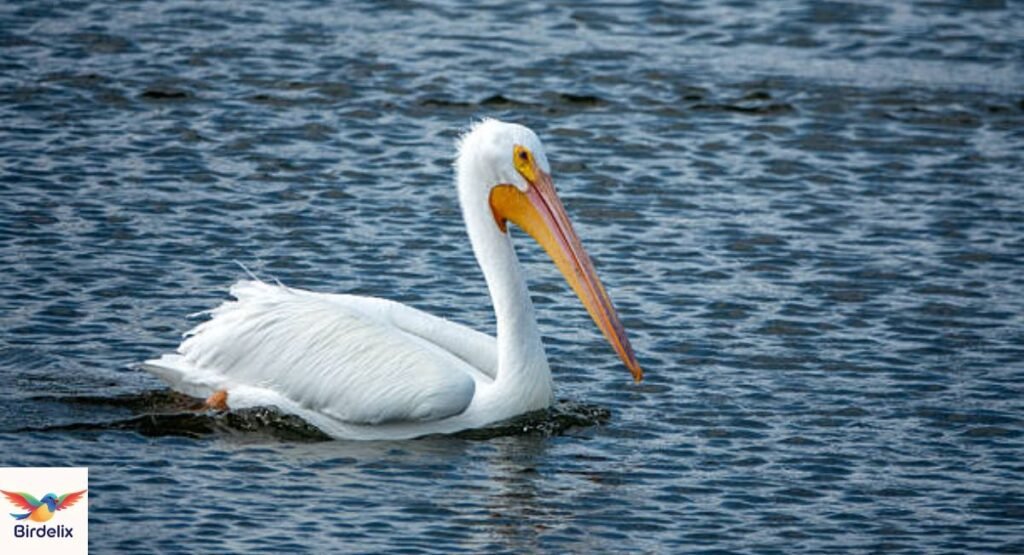
Scientific Name: Pelecanus erythrorhynchos
Family: Pelecanidae
The American White Pelican is one of the most impressive big white birds in Florida. Its snowy body contrasts with black flight feathers that become obvious when it spreads its enormous wings. It also has a large orange-yellow bill and expandable throat pouch.
Unlike the Brown Pelican, it often prefers inland lakes and larger freshwater areas. Florida commonly sees these birds during the cooler months. They may gather in large groups and sometimes feed cooperatively by moving fish toward shallow water. University of Florida sources describe them as winter residents that can gather in substantial numbers around Florida lakes and ponds.
8. Brown Pelican
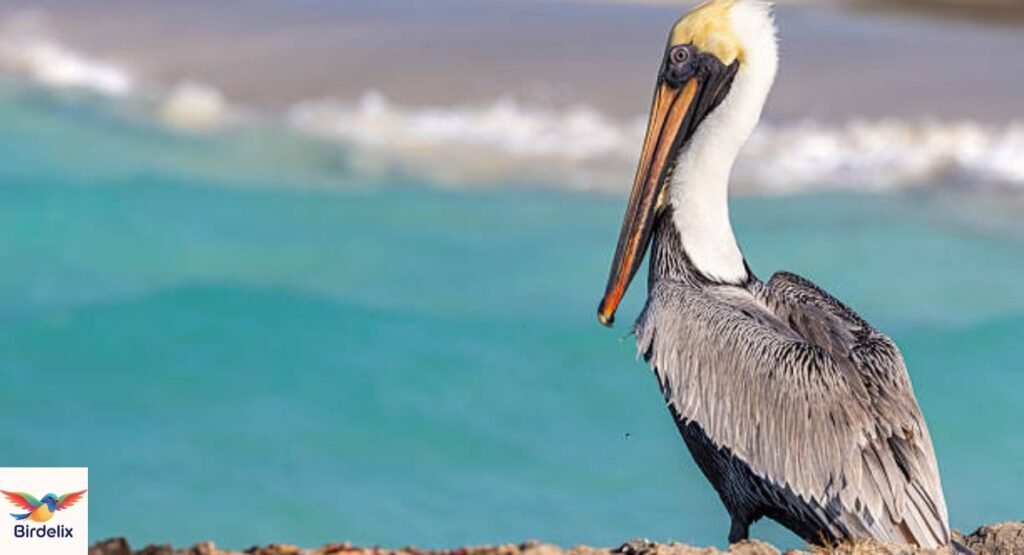
Scientific Name: Pelecanus occidentalis
Family: Pelecanidae
The Brown Pelican isn’t an all-white bird, but its white head and neck can make it appear mostly white from certain angles. The rest of its body is brown or gray-brown. It is especially common along Florida’s coastlines, bays, beaches, islands, and estuaries.
Its large pouch and coastal behavior separate it from the American White Pelican. Brown Pelicans also have a distinctive habit of diving into the water to catch fish. When you see a large pelican near the ocean, its body color is the quickest clue to its identity.
9. Little Blue Heron
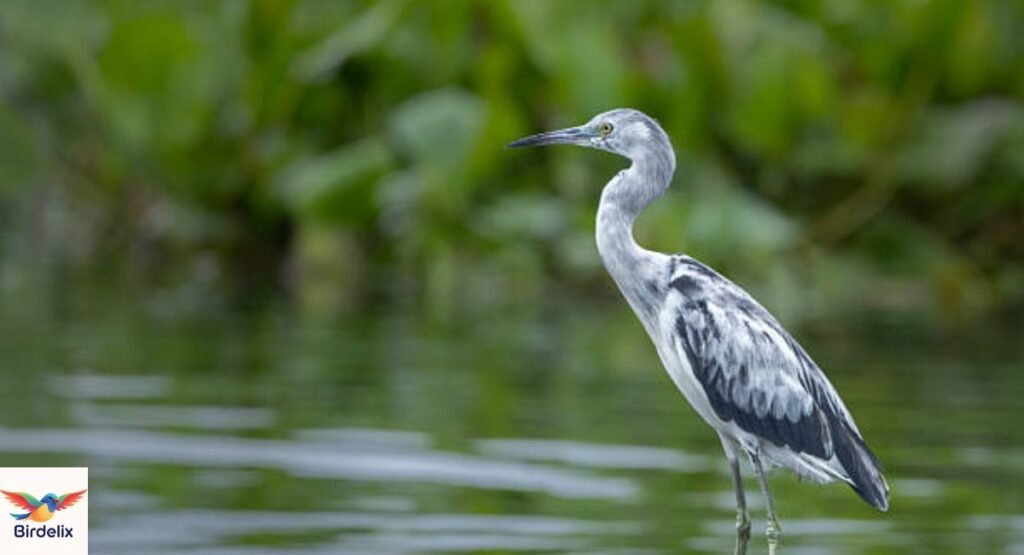
Scientific Name: Egretta caerulea
Family: Ardeidae
The Little Blue Heron creates one of the most interesting identification problems among white birds in Florida. Adult birds are blue-gray rather than white. Young birds, however, have mostly white plumage before gradually changing toward adult coloration.
This temporary white appearance can cause confusion with Snowy Egrets and other small wading birds. Look closely at the bill and legs, then consider the bird’s size and body shape. A juvenile Little Blue Heron can look completely different from the adult it will eventually become.
10. Black-Crowned Night Heron
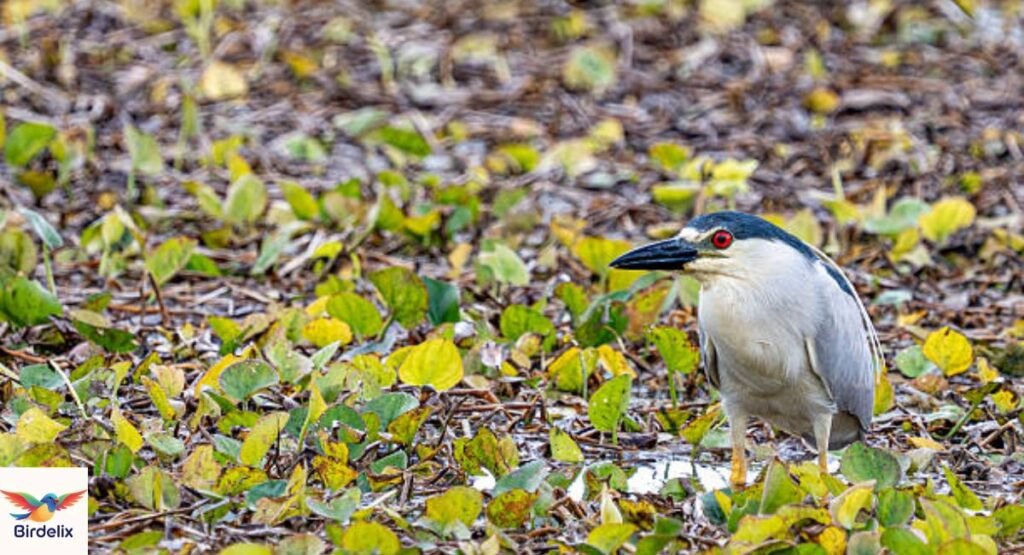
Scientific Name: Nycticorax nycticorax
Family: Ardeidae
The Black-Crowned Night Heron has a pale body with a dark crown and back. Adults also have striking red eyes and a thick bill. Its stocky shape makes it look quite different from the slender Great Egret.
As its name suggests, this bird often becomes active around dusk and at night. It may hunt fish, frogs, insects, and other aquatic animals around wetlands and shallow water. During daylight, it may rest quietly in dense vegetation.
11. Yellow-Crowned Night Heron
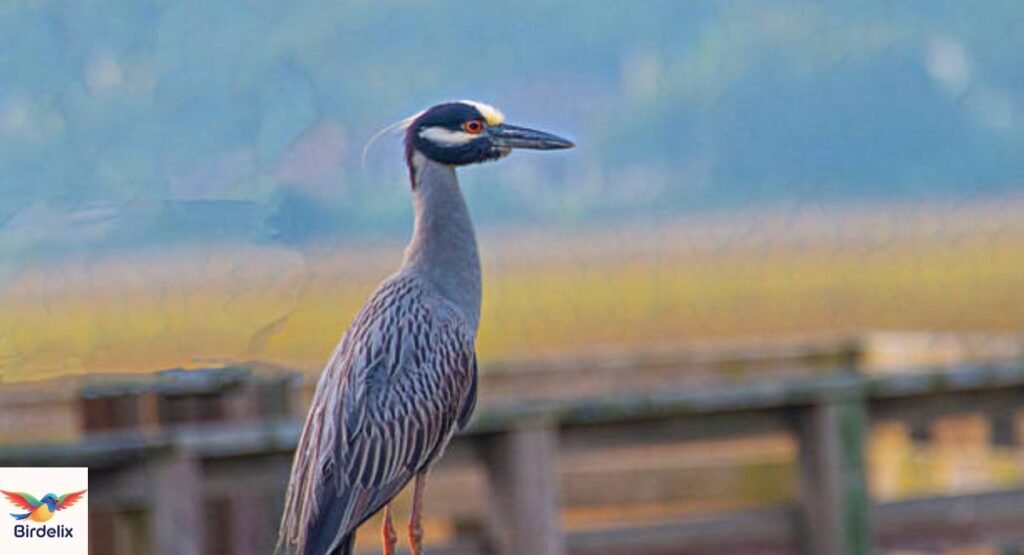
Scientific Name: Nyctanassa violacea
Family: Ardeidae
The Yellow-Crowned Night Heron has a pale gray or white body with a dark head and a noticeable yellowish crown. Its thick bill and relatively stocky shape are useful identification clues. It often lives around wetlands, ponds, marshes, and coastal areas.
Crabs and other crustaceans are important foods for this species. Its powerful bill is well suited to handling hard-shelled prey. If you see a pale heron with a dark head and heavy bill near shallow coastal water, this species deserves consideration.
12. Reddish Egret
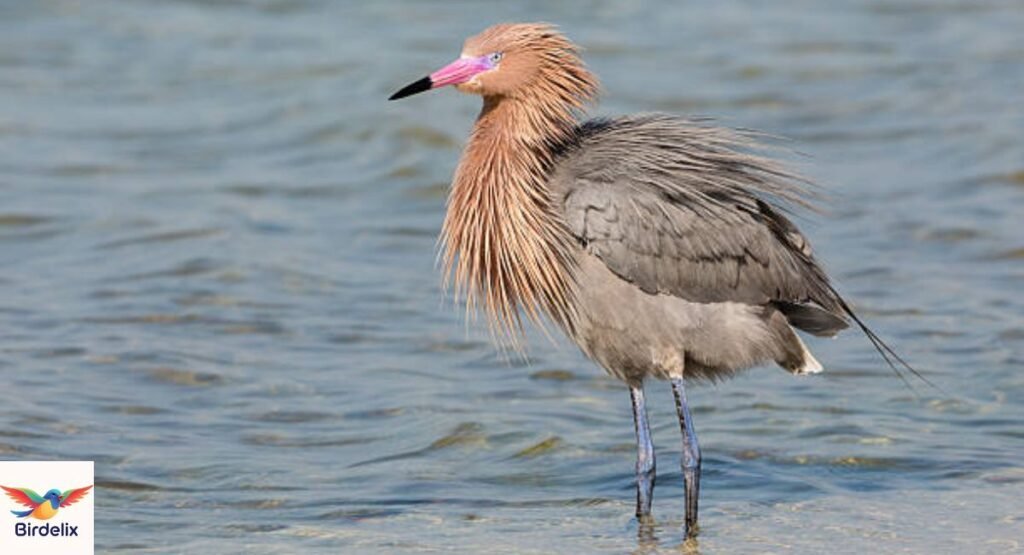
Scientific Name: Egretta rufescens
Family: Ardeidae
The Reddish Egret is unusual because it has both dark and white color forms. The white morph has mostly white plumage and can therefore appear among white birds with long beaks in Florida. Its slender body, long bill, and coastal habitat help narrow down the identification.
Its hunting style is perhaps its best clue. Reddish Egrets often run, jump, spin, and spread their wings while chasing prey in shallow water. Florida wildlife officials report that the species favors mangroves and shallow saltwater environments along the coast.
13. White-Crowned Pigeon
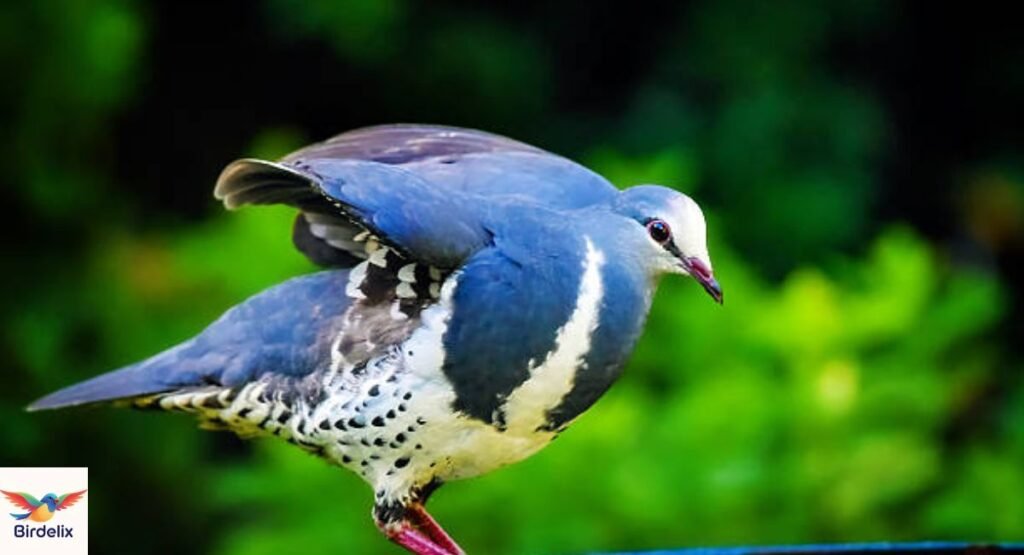
Scientific Name: Patagioenas leucocephala
Family: Columbidae
The White-Crowned Pigeon is not an all-white bird. Its body is dark gray to black, while its head has a bright white crown. That crown creates a strong contrast and makes the species easy to recognize once you know what to look for.
It is strongly associated with tropical and subtropical environments in South Florida. It feeds heavily on fruits and seeds and can be found around forests, mangroves, and areas with suitable vegetation.
14. Snow Goose
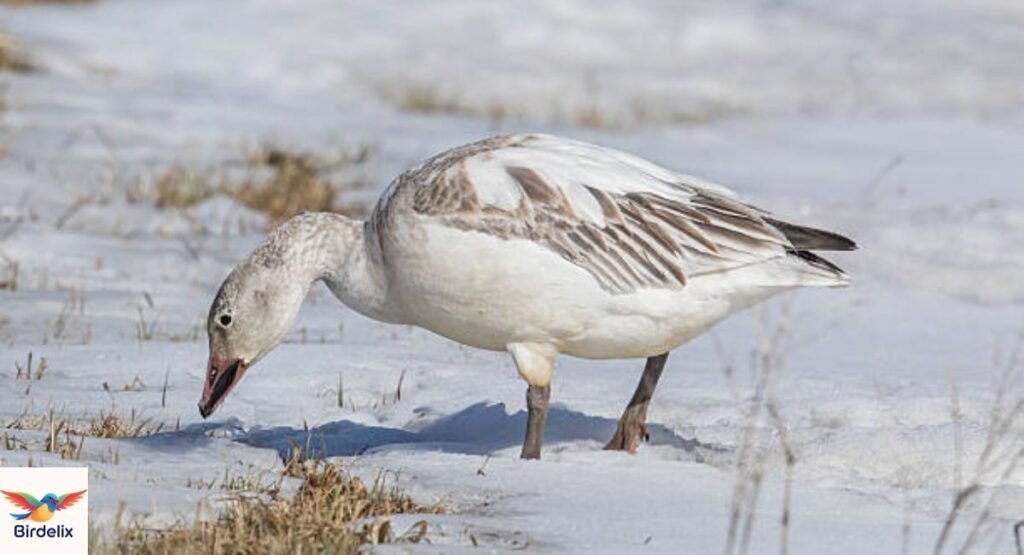
Scientific Name: Anser caerulescens
Family: Anatidae
The Snow Goose has a brilliant white adult body with black wingtips and a pinkish bill. It is primarily a northern breeding species and is not one of Florida’s everyday resident birds. However, seasonal movements can bring individuals or groups farther south.
Its combination of white plumage and black wing edges makes it easy to notice in flight. If you see a goose-sized white bird in Florida, check the bill, body shape, and flock behavior before assuming it is a local wading bird.
15. Whooping Crane
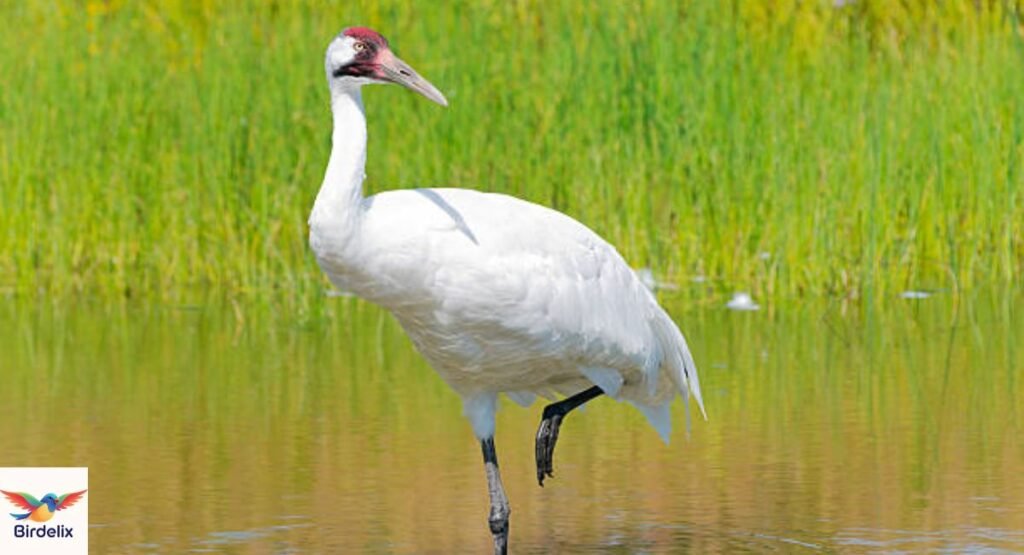
Scientific Name: Grus americana
Family: Gruidae
The Whooping Crane is among the most spectacular tall white birds in Florida. Adults are primarily white with black wing feathers, a red crown, dark facial markings, and long dark legs. They stand about five feet tall with a wingspan exceeding seven feet.
Florida has a nonmigratory population of Whooping Cranes associated with conservation efforts. Their height, long straight bill, extended neck, and crane-like posture make them easier to separate from egrets and herons. Juveniles begin with reddish-cinnamon plumage before developing their adult white appearance.
16. Laughing Gull
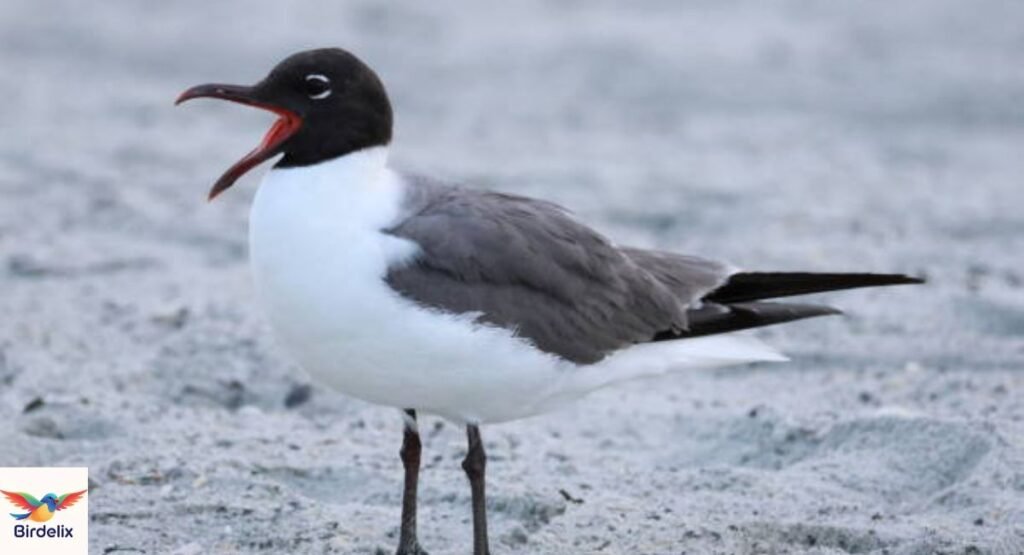
Scientific Name: Leucophaeus atricilla
Family: Laridae
The Laughing Gull has a white body, gray wings, and a darker head during breeding season. Its red bill adds another strong identification clue. Outside breeding season, the head becomes much paler, which can change its overall appearance.
This adaptable gull is common around Florida’s coast. Beaches, marinas, bays, parking areas, docks, and waterfront communities can all attract it. Its medium size and typical gull shape help separate it from slender terns.
17. Ring-Billed Gull
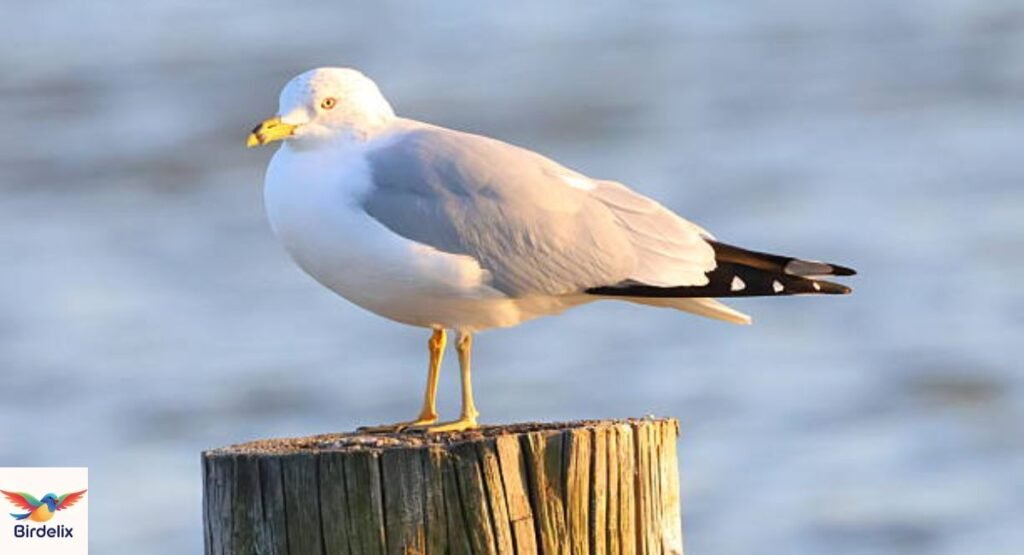
Scientific Name: Larus delawarensis
Family: Laridae
The Ring-Billed Gull has a white body, gray wings, yellow legs, and a yellow bill marked by a dark ring near the tip. That ring is the feature that gives this gull its common name.
Florida can attract Ring-Billed Gulls during the cooler part of the year. When identifying one, don’t focus only on its white feathers. The bill pattern, body proportions, wing color, and location provide much stronger evidence.
18. Royal Tern
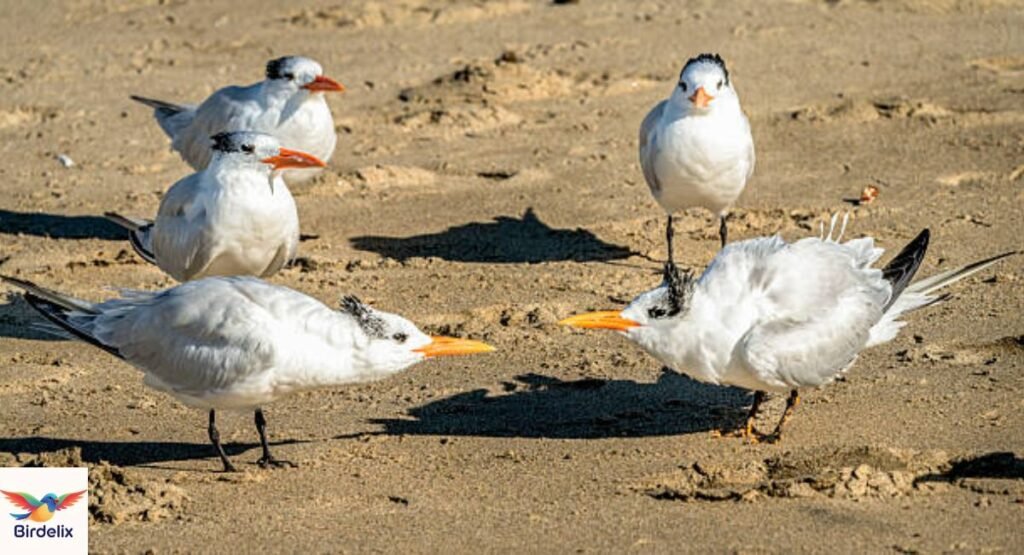
Scientific Name: Thalasseus maximus
Family: Laridae
The Royal Tern is a large coastal tern with a white body, gray wings, black crown, and strong orange bill. Its long pointed wings make it look sleek while flying over beaches and coastal water.
Its size is particularly useful because it is much larger than many other terns. Watch for birds flying close to beaches, sandbars, estuaries, and shallow coastal water. Their pointed wings and direct flight often stand out against the sky.
19. Sandwich Tern
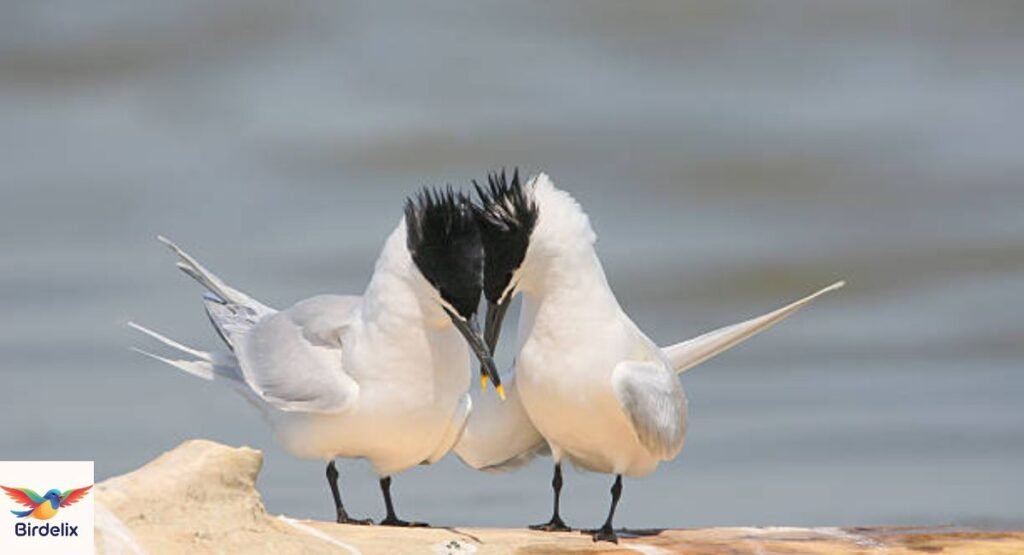
Scientific Name: Thalasseus sandvicensis
Family: Laridae
The Sandwich Tern has a white body, gray wings, black cap, and dark bill with a yellow tip. That bill pattern is one of its most useful identification marks.
It often feeds over coastal water by diving after small fish. Compared with a Royal Tern, it is slimmer and has a more distinctive dark-and-yellow bill. Its coastal habits make beaches and estuaries good places to search.
20. Caspian Tern
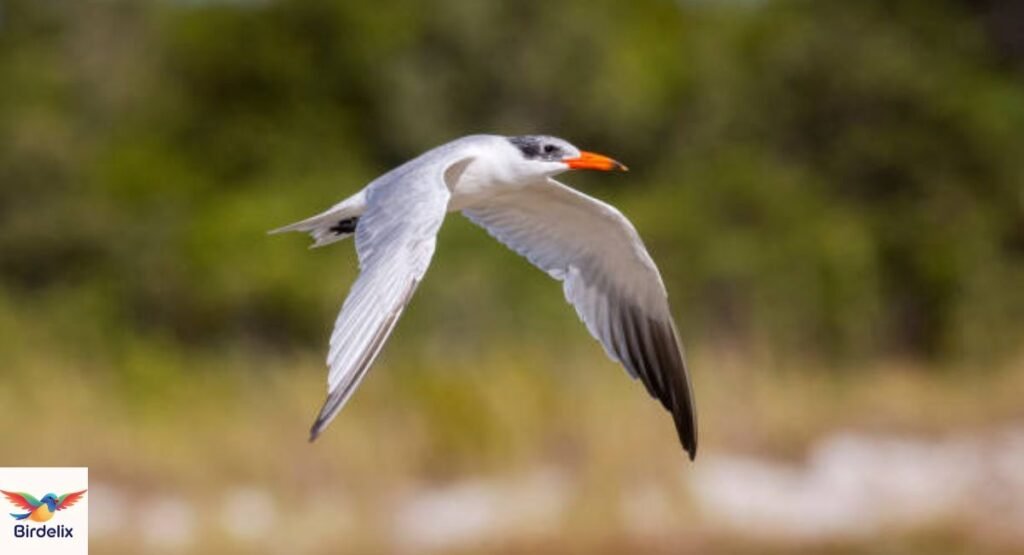
Scientific Name: Hydroprogne caspia
Family: Laridae
The Caspian Tern is the largest tern in the world. It has a white body, gray wings, black cap, and a large red-orange bill. Its heavy bill makes it look more powerful than most other terns.
This species can occur around both freshwater and coastal environments. If you see a very large tern with a thick red bill, you may be looking at a Caspian Tern rather than a Royal or Sandwich Tern.
21. Common Tern
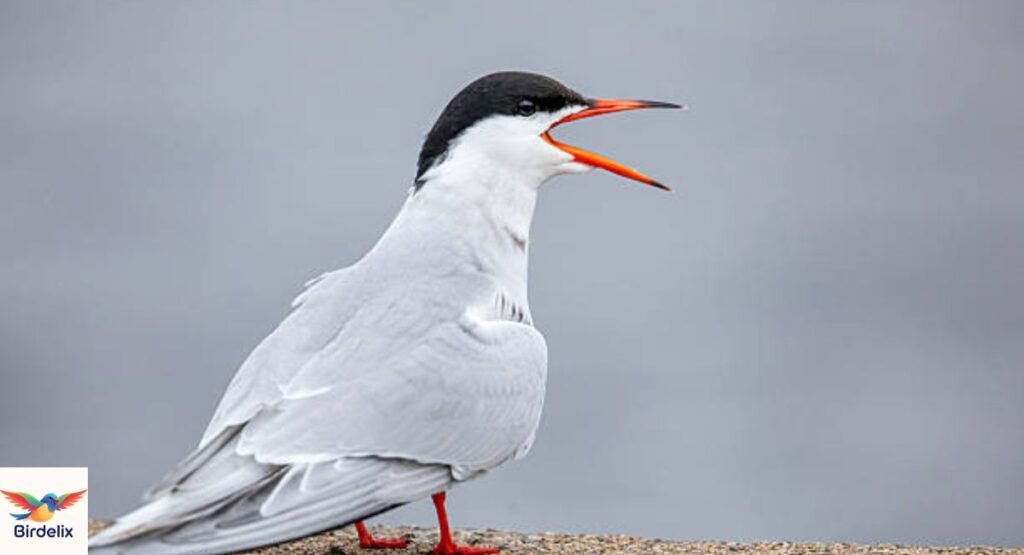
Scientific Name: Sterna hirundo
Family: Laridae
The Common Tern has a pale body, silver-gray wings, dark cap, and red bill. Its body is much slimmer than that of a large gull or pelican. It is also an agile flyer that can change direction quickly while searching for fish.
Florida may see Common Terns during seasonal movements. Their slender wings and forked tail create a distinctive silhouette. When the bird is far away, flight shape can be more useful than plumage.
22. Forster’s Tern
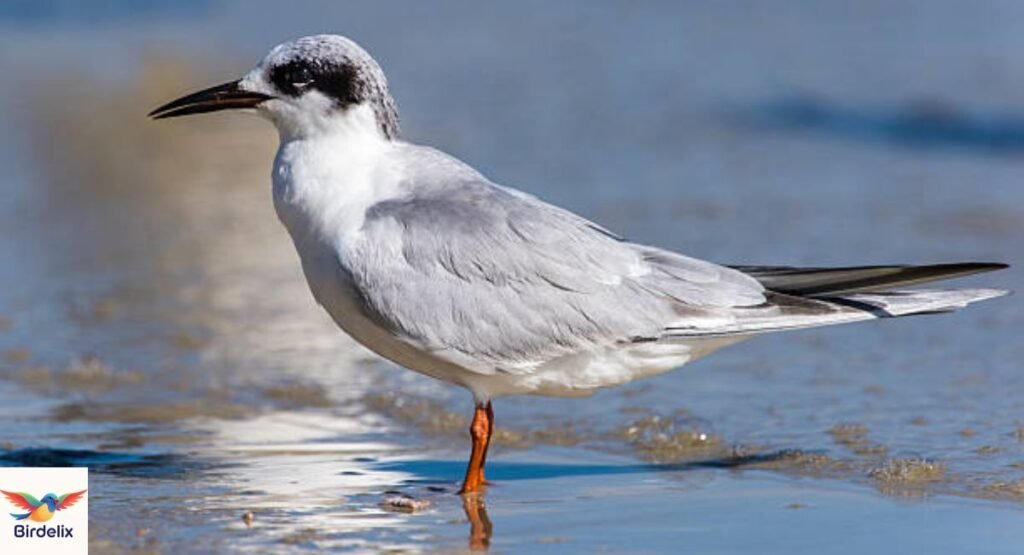
Scientific Name: Sterna forsteri
Family: Laridae
The Forster’s Tern is a slender white and gray bird with long pointed wings and a deeply forked tail. Its breeding plumage includes a darker cap and reddish bill markings. Winter plumage looks paler around the head.
This species can use coastal areas, marshes, ponds, and other wetlands. Its slim build and elegant flight distinguish it from heavier birds such as gulls and pelicans.
23. Magnificent Frigatebird
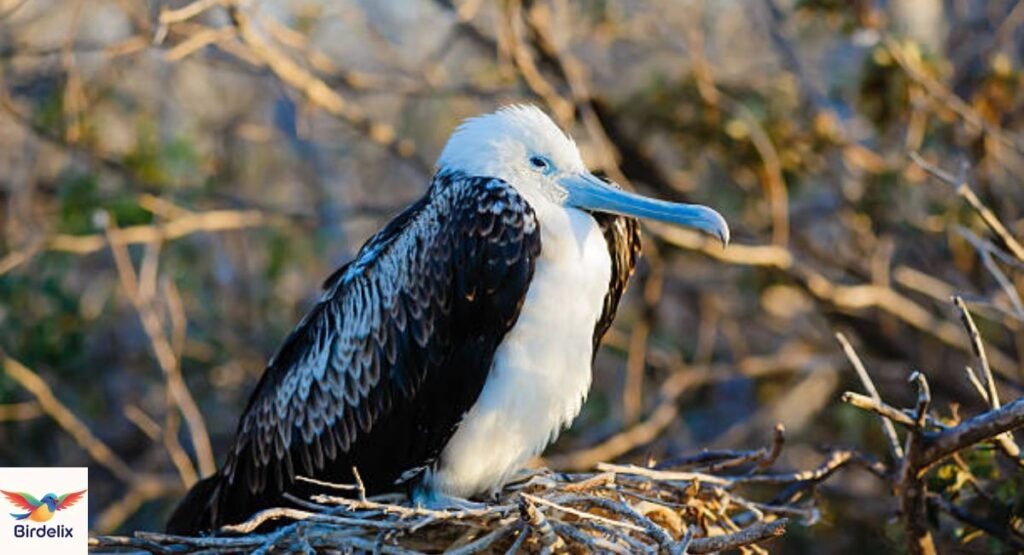
Scientific Name: Fregata magnificens
Family: Fregatidae
The Magnificent Frigatebird has an unusual black-and-white appearance. Males are mostly black with a red throat pouch, while females have black bodies with a contrasting white chest. From below or at a distance, the pale areas can make the bird appear partly white.
Its enormous wings and deeply forked tail are excellent identification clues. It often soars over Florida’s coastal waters without flapping much. This species spends much of its time riding warm air currents while searching for food.
24. White Ibis Juvenile
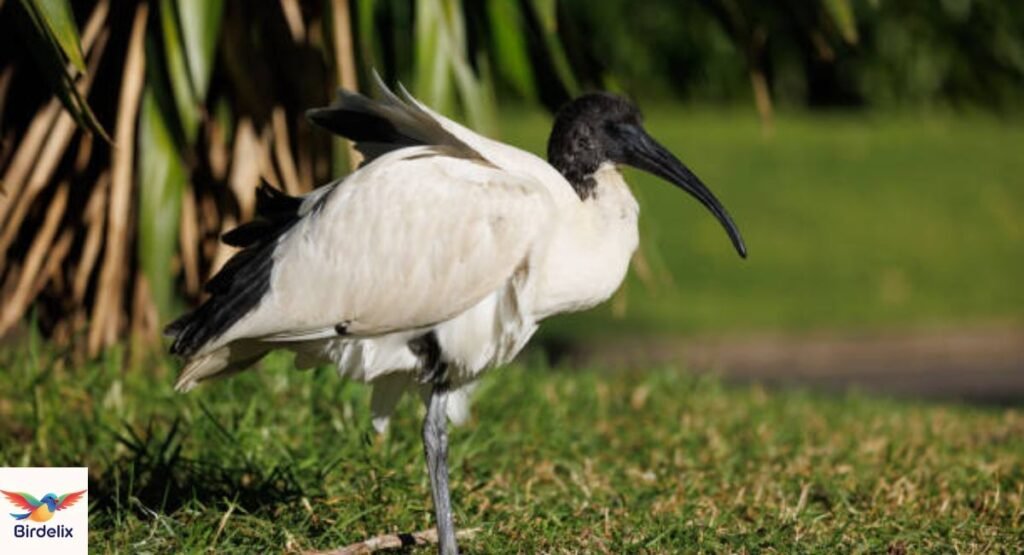
A young White Ibis looks surprisingly different from an adult. Instead of having a bright white body, juveniles are brown above and white below. Their plumage gradually becomes whiter as they mature.
This color change can make young ibises difficult to identify. Their body shape and long bill still provide important clues. If a brown-and-white bird is feeding in a group of adult White Ibises, there is a good chance you’re seeing a juvenile rather than a different species.
25. White-Faced Whistling-Duck
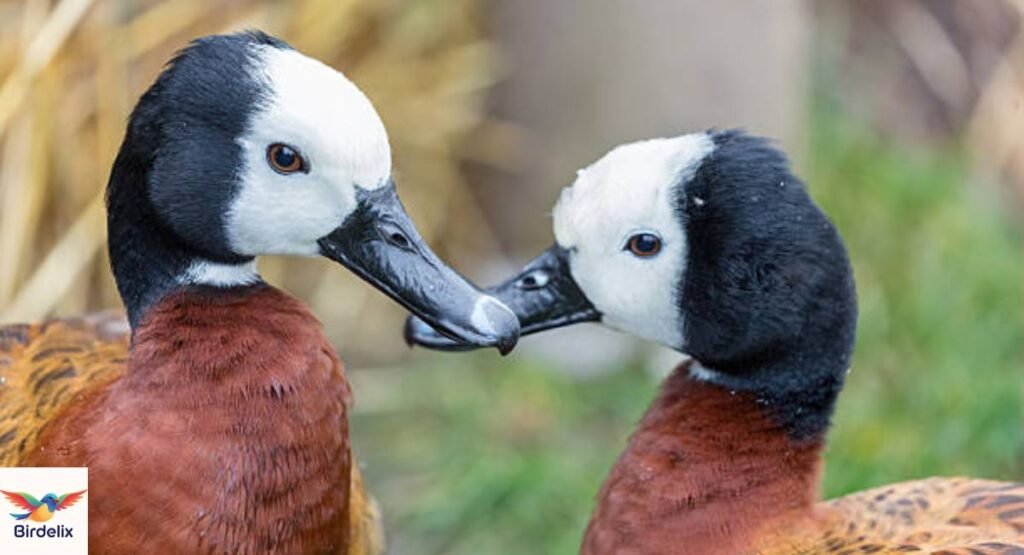
Scientific Name: Dendrocygna viduata
Family: Anatidae
The White-Faced Whistling-Duck has a dark body with a highly contrasting pale face. It does not resemble the classic all-white wading birds of Florida. Its inclusion is useful for readers searching broadly for white birds in Florida because strong white facial markings can create confusion.
Its duck-like body and waterfowl behavior are important identification clues. Look for the shorter legs, rounded body, and swimming behavior rather than the long-legged silhouette of an egret or ibis.
Big White Birds in Florida
Florida’s largest pale birds create some of the most memorable sightings. The American White Pelican dominates in overall bulk and wingspan. The Great Egret looks taller and more slender. The Wood Stork has a heavier body, while the Great White Heron has a powerful heron-like profile. The Whooping Crane stands out because of its exceptional height. These differences matter when identifying large white birds in Florida.
Size can be deceptive when a bird is far away. A Great Egret may look enormous beside a small pond. A pelican may look smaller in the sky because there is nothing nearby for comparison. For a better estimate, compare the bird with familiar objects such as trees, fence posts, or other birds.
| Bird | Approx. Height | Wingspan | Bill | Habitat |
| Great Egret | Up to about 3.3 ft | About 4.3 ft | Long, pointed, yellow | Ponds, lakes, marshes |
| Wood Stork | About 3–3.5 ft | About 5 ft | Long, slightly curved | Wetlands, marshes |
| Great White Heron | About 4 ft | About 6 ft | Long, heavy | South Florida, Keys, wetlands |
| American White Pelican | About 5 ft long | About 9+ ft | Huge, broad | Lakes, estuaries, bays |
| Whooping Crane | About 5 ft standing | 7+ ft | Long, straight | Wetlands, open habitats |
Small White Birds in Florida
Not every white bird in Florida is a towering wader. Smaller species can be found around marshes, lawns, ponds, beaches, and coastal water. Snowy Egrets and Cattle Egrets are particularly useful comparisons because both have white bodies but very different shapes and behaviors.
The juvenile Little Blue Heron can also create confusion. Terns add another layer because their long wings make them appear larger in flight than they really are. Looking at the entire silhouette is therefore more reliable than judging body length alone.
| Bird | General Size | Main Clue | Typical Habitat |
| Snowy Egret | Small | Black legs and yellow feet | Wetlands, marshes |
| Cattle Egret | Small | Compact body and short bill | Pastures, lawns |
| Juvenile Little Blue Heron | Small-medium | White juvenile plumage | Wetlands |
| Forster’s Tern | Small-medium | Slim body and pointed wings | Marshes, coasts |
| Common Tern | Small-medium | Forked tail and dark cap | Coastal areas |
Tall White Birds in Florida
Tall birds often reveal themselves through their legs and necks before you can see their finer markings. The Great Egret has long black legs and an S-shaped neck. The Great White Heron looks heavier. The Wood Stork has a thick body and unusual bare head. The Whooping Crane has an exceptionally tall upright posture.
The White Ibis is shorter than these giants but still looks tall because of its long legs and neck. This is why tall white birds in Florida should be identified by proportions rather than height alone.
| Bird | Legs | Neck | Body Shape | Key Clue |
| Great Egret | Long, black | Long, S-shaped | Slim | Yellow bill |
| Great White Heron | Long | Long | Heavy | Thick bill |
| Wood Stork | Long, dark | Long | Heavy | Bare dark head |
| Whooping Crane | Very long | Very long | Slender | Red-and-black head |
| White Ibis | Long, red | Medium-long | Rounded | Curved red bill |
White Birds in Florida With Long Beaks
A long bill is one of the most valuable clues when identifying an unfamiliar white bird. Yet long bills come in different shapes. The White Ibis has a strongly curved bill. The Wood Stork has a long bill that is slightly downcurved. The Great Egret has a straight pointed bill. The American White Pelican has a massive bill designed for scooping and holding fish.
Snowy Egrets have slender black bills. Their smaller size and yellow feet make them easier to distinguish from other white birds with long beaks in Florida.
| Bird | Bill Shape | Bill Color | Main Feeding Method |
| American White Ibis | Long and curved | Pink-red | Probing mud and soil |
| Wood Stork | Long and slightly curved | Dark | Tactile feeding in shallow water |
| Great Egret | Long and straight | Yellow | Spearing prey |
| Snowy Egret | Slender and straight | Black | Chasing aquatic prey |
| American White Pelican | Huge and broad | Orange-yellow | Scooping and cooperative feeding |
White Birds in Florida With Long Curved Beaks
The classic white bird with a long curved beak in Florida is the American White Ibis. Its bill curves downward like a narrow hook. The bird uses that shape to probe soft mud, shallow water, and soil for hidden prey. This behavior makes the ibis easy to recognize once you’ve seen it a few times.
The Wood Stork also has a slightly curved bill, but it looks thicker and more powerful. The Great Egret is different because its bill remains mostly straight and pointed. Understanding these subtle shapes can solve many confusing bird-identification moments.
| Bill Type | Example | What It Looks Like |
| Curved | American White Ibis | Long and strongly downcurved |
| Slightly curved | Wood Stork | Long and gently downcurved |
| Straight | Great Egret | Long, narrow, pointed |
| Slender | Snowy Egret | Thin and pointed |
| Thick | Great White Heron | Broad and powerful |
White Birds in Florida With Long Necks
Long necks help birds reach prey without moving their entire bodies. Egrets often fold the neck into an S shape while standing. They then extend it rapidly when striking. Cranes usually carry their necks differently, especially while walking or flying.
The Wood Stork has a long neck but a much heavier body. The Great White Heron also looks more massive than the Great Egret. Snowy Egrets are smaller and more delicate. These differences make white birds with long necks in Florida easier to identify when you consider the whole silhouette.
| Bird | Neck Shape | Identification Clue |
| Great Egret | S-shaped | Slim body and yellow bill |
| Great White Heron | Long and powerful | Heavy body |
| Wood Stork | Long | Bare dark head |
| Whooping Crane | Long and straight | Very tall body |
| Snowy Egret | Long but slender | Yellow feet |
White Birds Commonly Seen Around Florida Ponds and Lakes
Freshwater ponds and lakes provide shallow water, small fish, insects, frogs, crayfish, and other prey. That combination makes them excellent feeding areas. White Ibises may walk across wet grass. Great Egrets may stand silently at the shoreline. Snowy Egrets often move quickly through shallow water.
Wood Storks need suitable water conditions that concentrate prey. American White Pelicans may gather on larger lakes, particularly during the cooler season. Florida’s freshwater habitats therefore support a remarkable variety of white birds in Florida.
| Bird | Typical Pond or Lake Behavior |
| American White Ibis | Walks and probes |
| Great Egret | Stands and strikes |
| Snowy Egret | Runs and chases prey |
| Wood Stork | Feeds in shallow water |
| American White Pelican | Swims and feeds cooperatively |
White Birds Found Around Florida Beaches and Coasts
Florida’s coastline adds another group of pale birds. Beaches, bays, estuaries, mangroves, tidal flats, and shallow coastal waters attract pelicans, gulls, and terns. These species often look similar from a distance because white and gray plumage dominates many coastal birds.
The easiest solution is to watch behavior. Pelicans have enormous bodies and broad wings. Terns have narrow pointed wings. Gulls have heavier bodies and broader wings. Frigatebirds have long angular wings and deeply forked tails.
| Bird | Coastal Identification Clue |
| American White Pelican | Huge white body and black wing edges |
| Brown Pelican | Brown body and white head |
| Royal Tern | Large body and orange bill |
| Sandwich Tern | Dark bill with yellow tip |
| Laughing Gull | Gray wings and changing dark head |
| Ring-Billed Gull | Dark ring on yellow bill |
| Magnificent Frigatebird | Huge wings and forked tail |
Small White Birds in Florida Backyards
A white bird walking across a Florida lawn may not be a typical backyard songbird. White Ibises often visit lawns while searching for food. Cattle Egrets can also appear in grassy areas, especially where insects are plentiful. Nearby ponds, canals, drainage areas, and wetlands can increase the chances of seeing wading birds around residential neighborhoods.
When identifying a small white bird in Florida, first check whether it is actually small or simply far away. Then look at its legs, bill, and walking style. A bird probing the grass with a curved red bill is likely an ibis. A compact bird with shorter legs may be a Cattle Egret.
How to Identify a White Bird in Florida
The fastest way to identify an unfamiliar bird is to combine several clues. Color alone isn’t enough because many species have white plumage during only part of their lives. Juveniles can also look completely different from adults.
A useful identification habit is to ask yourself five questions: How large is it? What does its bill look like? What color are its legs? How does it hold its neck? Where did you see it? These clues can narrow down the possibilities surprisingly quickly.
Start With Its Size
Size gives you the first useful filter. A tiny tern should not be confused with a five-foot crane. A Snowy Egret is much smaller and more delicate than a Great Egret. An American White Pelican is much broader and heavier than either bird. Compare the mystery bird with nearby objects or other known birds whenever possible.
Check the Beak
The bill often tells you what a bird eats and which group it belongs to. A long curved bill points strongly toward an ibis. A thick bill suggests a different feeding strategy. A straight dagger-like bill fits an egret. A huge pouch-bearing bill identifies a pelican. This makes white bird identification much easier.
Look at the Legs and Feet
Leg color can separate species that otherwise look remarkably similar. Snowy Egrets have black legs with bright yellow feet. Great Egrets have black legs and feet. White Ibises have reddish legs. Cattle Egrets have shorter yellowish legs. A quick look downward can sometimes solve the mystery immediately.
Examine the Neck
A long neck is common among Florida wading birds. However, the way a bird holds it matters. Egrets and herons often create an S-shaped curve. Cranes usually appear more upright. A stork has a heavier overall profile. Look at both the neck and body rather than judging neck length by itself.
Check the Wings
Wing patterns become especially useful when a bird takes flight. American White Pelicans reveal black flight feathers. White Ibises show black wingtips. Whooping Cranes have black primary feathers. Magnificent Frigatebirds have a completely different dark-winged silhouette. Flight can therefore reveal details that aren’t obvious when a bird is standing.
Consider the Habitat
Location can reduce the possibilities dramatically. A white bird in a pasture may be a Cattle Egret. A curved-billed bird on a lawn may be a White Ibis. A giant white bird on a large lake may be an American White Pelican. A bird over a beach may be a tern, gull, pelican, or frigatebird.
White Birds in Florida by Habitat
Habitat is one of the strongest clues in Florida bird identification. A bird’s preferred food and hunting method usually determine where it spends time. Shallow water favors wading birds. Open coastal water attracts pelicans and terns. Grasslands can attract Cattle Egrets and White Ibises.
The same species can sometimes use several habitats. White Ibises, for example, may move between marshes, flooded fields, mangroves, and lawns. Florida’s mixture of natural and human-managed water bodies gives many species surprisingly flexible feeding opportunities.
| Habitat | White Birds You May See |
| Freshwater ponds | Great Egret, White Ibis, Snowy Egret |
| Lakes | Great Egret, American White Pelican, Wood Stork |
| Marshes | White Ibis, Egrets, Wood Stork |
| Beaches | Terns, Gulls, Pelicans |
| Mangroves | White Ibis, Egrets, Herons |
| Pastures | Cattle Egret |
| Lawns | White Ibis, Cattle Egret |
When Is the Best Time to See White Birds in Florida?
Florida offers opportunities throughout the year. Resident species can be seen during every season. Migratory species add extra variety during seasonal movements. Winter can be especially interesting because some northern birds spend the colder months farther south.
Early morning is often an excellent time to look for birds. Temperatures are cooler, light is softer, and many species actively feed after sunrise. During breeding season, some wading birds also become more noticeable because adults travel frequently between feeding areas and nesting colonies.
Why Are So Many Florida Birds White?
White plumage is common among several groups of Florida wading birds. The color can make a bird highly visible in open wetlands. Bright feathers may also help members of a social species recognize one another. However, there isn’t one simple reason that explains every white bird.
Habitat, ancestry, feeding behavior, seasonal plumage, and natural selection all influence bird coloration. Some species are mostly white throughout adulthood. Others have black wing feathers or colored heads that create contrast. Juveniles can also display completely different patterns before reaching adult plumage.
Are White Birds a Sign of a Healthy Florida Ecosystem?
Seeing white wading birds can tell you something useful about a wetland. These birds depend on prey such as fish, insects, frogs, crayfish, and other aquatic animals. They also need suitable water depth and feeding areas. Florida wildlife agencies note that many wading birds use shallow wetlands, mudflats, mangrove pools, tidal areas, and impoundments.
Still, one bird sighting doesn’t prove that an ecosystem is healthy. Bird numbers change with weather, water levels, migration, breeding cycles, and food availability. A better approach is to consider the wider habitat. Clean water, native vegetation, suitable shallow areas, and abundant prey create conditions that can support diverse bird communities.
White Birds vs. Wading Birds vs. Shorebirds
| Group | Typical Features | Common Florida Examples |
| Wading birds | Long legs and shallow-water feeding | Egrets, herons, ibises, storks |
| Shorebirds | Smaller bodies and coastal foraging | Sandpipers, plovers, sanderlings |
| Waterbirds | Swimming or water-based behavior | Pelicans, ducks, some terns |
Conclusion
Florida’s remarkable variety of wetlands and coastal habitats makes it a fantastic place to see white birds in Florida. From the curved red bill of the American White Ibis to the towering shape of the Great Egret and the enormous wings of the American White Pelican, each species has its own visual signature.
When you spot an unfamiliar bird, don’t rely on color alone. Check its size, bill, legs, neck, wings, behavior, and habitat. Those simple clues can quickly separate a Snowy Egret from a Great Egret or an ibis from a stork. With practice, even a brief Florida bird sighting can become an exciting identification moment.
FAQs
What is the most common white bird in Florida?
The American White Ibis is one of the most frequently encountered white wading birds in Florida. It commonly appears in wetlands, flooded areas, lawns, and shallow water.
What is the big white bird in Florida?
The American White Pelican is the standout large white bird because of its huge body and enormous wingspan. Great Egrets, Wood Storks, and Great White Herons are also large Florida species.
What white bird in Florida has a long curved beak?
The American White Ibis is the classic example. Its long red bill curves downward and helps it probe mud and shallow ground for prey.
What are the tall white birds in Florida?
Great Egrets, Great White Herons, Wood Storks, and Whooping Cranes are among the most notable tall white birds. Their leg length, neck shape, and body proportions help separate them.
What are the small white birds in Florida?
Snowy Egrets, Cattle Egrets, some juvenile Little Blue Herons, and smaller terns can appear relatively small. The Snowy Egret is especially easy to recognize by its black legs and bright yellow feet.
What is the largest white bird you can see in Florida?
The American White Pelican is the most obvious answer when considering overall size and wingspan. Its wings can stretch more than nine feet across.
What white birds can be seen around Florida beaches?
American White Pelicans, Brown Pelicans, Royal Terns, Sandwich Terns, Laughing Gulls, Ring-Billed Gulls, and Magnificent Frigatebirds can all occur around Florida’s coastal environments.

Welcome to Birdelix! I’m Anam Sattar, an AI-powered SEO Specialist and Content Writer with over 5 years of experience in creating high-quality, search-optimized content. I help businesses improve their search engine rankings, increase organic traffic, and build beautiful, user-friendly websites. My mission is to make SEO, content creation, and web design simple, effective, and accessible for everyone. Let’s grow your online presence and achieve success together!