


Birds That Start With M include an exciting mix of colorful parrots, powerful raptors, tiny songbirds, and unusual waterbirds. From the striking Military Macaw to the secretive Mexican Whip-poor-will, each species has unique traits worth discovering. This guide explores M bird names, habitats, colors, sizes, and fascinating behaviors in simple terms. You’ll also find useful details about short and long bird names, pet bird names, and birds grouped by color and type.
Whether you’re a birdwatcher, student, nature lover, or simply searching for birds beginning with M, this collection makes identification easier. Get ready to discover 50 fascinating M birds from around the world and learn what makes each one special.
What Birds Start With M?
So, what birds begin with M? The answer reaches far beyond common names. You’ll find bird species from Madagascar, Mexico, Australia, India, Southeast Asia, South America, and many islands. Some live in forests while others favor wetlands, mountains, grasslands, beaches, or open country.
Interestingly, M names also represent very different bird types. Penguins, parrots, hornbills, hummingbirds, owls, shorebirds, pigeons, wrens, and raptors all appear in this group. That variety makes the letter M a fascinating doorway into global bird diversity.
50 Birds That Start With M: Complete List
The table below gives you a quick snapshot of 50 fresh species. It includes scientific names, bird types, colors, habitats, and memorable facts. Several names describe geography or appearance, which makes them easier to understand. For example, “Mountain” often signals highland habitat while “Maroon” usually hints at plumage color.
| No. | Bird Name | Scientific Name | Bird Type | Main Color | Habitat | Fun Fact |
| 1 | Macaroni Penguin | Eudyptes chrysolophus | Penguin | Black, white, yellow | Sub-Antarctic islands | Has a striking yellow crest |
| 2 | Madagascar Cuckoo | Cuculus rochii | Cuckoo | Gray, brown | Forests | Native to Madagascar |
| 3 | Madagascar Fish Eagle | Ichthyophaga vociferoides | Eagle | Brown, white | Wetlands, coasts | Specializes in catching fish |
| 4 | Madagascar Kestrel | Falco newtoni | Falcon | Brown, gray | Open habitats | Hunts small prey |
| 5 | Madagascar Owl | Asio madagascariensis | Owl | Brown | Forests | Hunts mainly at night |
| 6 | Madagascar Pochard | Aythya innotata | Diving duck | Brown | Freshwater lakes | One of the world’s rarest ducks |
| 7 | Madagascar Pratincole | Glareola ocularis | Shorebird | Brown, white | Open country | Catches insects in flight |
| 8 | Madagascar Sandgrouse | Pterocles personatus | Ground bird | Brown | Dry areas | Adapted to arid conditions |
| 9 | Madagascar White-eye | Zosterops maderaspatanus | Songbird | Green, yellow | Woodlands | Has a distinctive eye-ring |
| 10 | Malabar Barbet | Psilopogon malabaricus | Barbet | Green, red | Forests | Eats many fruits |
| 11 | Malabar Grey Hornbill | Ocyceros griseus | Hornbill | Gray | Forests | Helps spread seeds |
| 12 | Malabar Pied Hornbill | Anthracoceros coronatus | Hornbill | Black, white | Woodlands | Has a large casque |
| 13 | Malabar Whistling Thrush | Myophonus horsfieldii | Thrush | Blue-black | Forest streams | Famous for its whistle |
| 14 | Malayan Banded Pitta | Hydrornis irena | Pitta | Blue, orange | Tropical forest | Displays vivid plumage |
| 15 | Malaysian Blue-banded Kingfisher | Alcedo peninsulae | Kingfisher | Blue, orange | Forest waterways | Hunts aquatic prey |
| 16 | Malayan Laughingthrush | Trochalopteron peninsulae | Songbird | Brown, gray | Mountain forests | Has a varied voice |
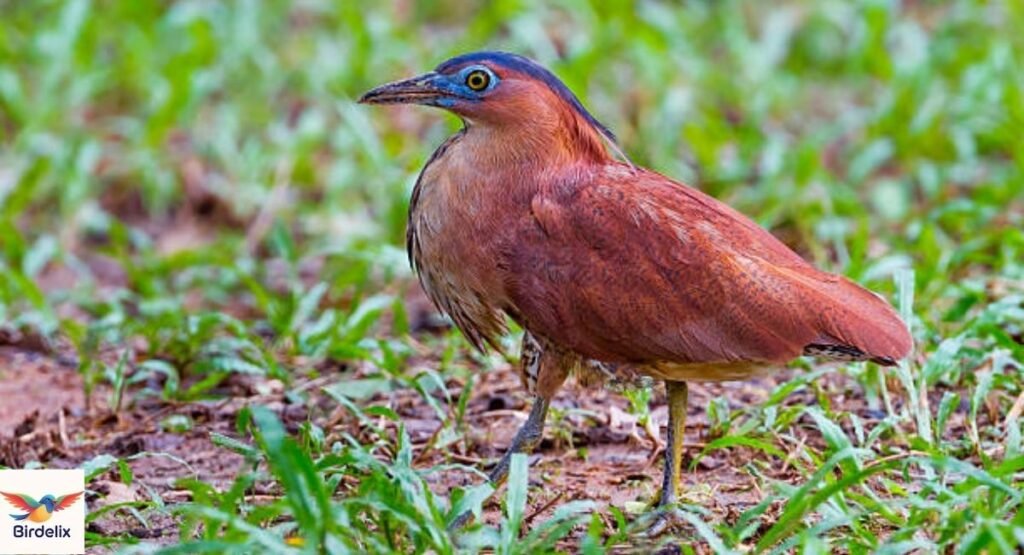
| 17 | Malayan Night Heron | Gorsachius melanolophus | Heron | Brown | Wetlands | Often feeds after dark |
| 18 | Malayan Plover | Charadrius peronii | Shorebird | Brown, white | Sandy beaches | Nests near coastal shores |
| 19 | Malayan Whistling Thrush | Myophonus robinsoni | Thrush | Dark blue | Mountain streams | Lives around forested waterways |
| 20 | Mallee Emu-wren | Stipiturus mallee | Wren | Brown, blue | Mallee scrub | Has a delicate filament-like tail |
| 21 | Malleefowl | Leipoa ocellata | Megapode | Brown, gray | Australian scrub | Builds huge nesting mounds |
| 22 | Mangrove Blue Flycatcher | Cyornis rufigastra | Flycatcher | Blue, orange | Mangroves | Snatches insects from perches |
| 23 | Many-colored Rush Tyrant | Tachuris rubrigastra | Tyrant flycatcher | Multicolored | Marshes | Has unusually vivid plumage |
| 24 | Maroon-bellied Parakeet | Pyrrhura frontalis | Parakeet | Green, maroon | Forests | Often travels in flocks |
| 25 | Maroon-naped Sunbird | Aethopyga guimarasensis | Sunbird | Green, maroon | Forests | Feeds on nectar |
| 26 | Maroon-fronted Parrot | Rhynchopsitta terrisi | Parrot | Green, maroon | Mountain forests | Has a restricted Mexican range |
| 27 | Marsh Seedeater | Sporophila palustris | Seedeater | Brown, black | Wet grasslands | Feeds largely on seeds |
| 28 | Marsh Tchagra | Bocagia minuta | Bushshrike | Brown, gray | Marshy habitats | Hunts insects |
| 29 | Marsh Tit | Poecile palustris | Tit | Brown, black | Woodlands | Stores food for later |
| 30 | Marsh Warbler | Acrocephalus palustris | Warbler | Brown, cream | Wet meadows | Mimics many bird sounds |
| 31 | Masked Cardinal | Paroaria nigrogenis | Cardinal | Red, black, gray | Woodlands | Has a dark facial mask |
| 32 | Masked Flowerpiercer | Diglossa cyanea | Flowerpiercer | Blue, black | Mountain forests | Uses its bill to access flowers |
| 33 | Masked Tityra | Tityra semifasciata | Tityra | Gray, black | Tropical forests | Often eats fruit |
| 34 | Masked Water Tyrant | Fluvicola nengeta | Flycatcher | White, black | Wetlands | Forages around water |
| 35 | Masked Yellowthroat | Geothlypis aequinoctialis | Warbler | Yellow, olive | Marshes | Males have a dark mask |
| 36 | Matsudaira’s Storm Petrel | Hydrobates matsudairae | Seabird | Black, white | Open ocean | Spends much of its life at sea |
| 37 | Mexican Chickadee | Poecile sclateri | Chickadee | Gray, black | Mountain forests | Often joins mixed feeding groups |
| 38 | Mexican Jay | Aphelocoma wollweberi | Jay | Blue, gray | Woodlands | Forms active family groups |
| 39 | Mexican Parrotlet | Forpus cyanopygius | Parrotlet | Green, blue | Forest edges | One of the smaller parrots |
| 40 | Mexican Whip-poor-will | Antrostomus arizonae | Nightjar | Brown | Forests | Most active at night |
| 41 | Mexican Woodnymph | Eupherusa ridgwayi | Hummingbird | Green | Mountain forests | Feeds from flowers |
| 42 | Military Macaw | Ara militaris | Macaw | Green, red | Forests | Travels in noisy groups |
| 43 | Mindoro Hornbill | Penelopides mindorensis | Hornbill | Black, white | Philippine forests | Restricted to Mindoro |
| 44 | Mindoro Imperial-Pigeon | Ducula mindorensis | Pigeon | Green, gray | Forests | An island endemic |
| 45 | Moluccan Eclectus | Eclectus roratus | Parrot | Green, red | Tropical forests | Sexes look dramatically different |
| 46 | Mountain Bamboo Partridge | Bambusicola fytchii | Partridge | Brown | Hills, forests | Often stays close to cover |
| 47 | Mountain Hawk-Eagle | Nisaetus nipalensis | Eagle | Brown, white | Mountain forests | Has powerful talons |
| 48 | Mountain Imperial-Pigeon | Ducula badia | Pigeon | Brown, green | Forests | Eats fruits and seeds |
| 49 | Mountain Tailorbird | Phyllergates cucullatus | Songbird | Green, yellow | Mountain forests | Has a sharp, high call |
| 50 | Moustached Wren | Pheugopedius genibarbis | Wren | Brown, white | Tropical forests | Shows bold facial markings |
50 Birds That Start With M: Detailed Guide
The profiles below turn the quick list into a practical bird identification guide. Each species receives attention for appearance, range, habitat, feeding habits, or behavior. That approach helps you understand more than just a name. It also makes the list useful for birdwatchers and students.
1. Macaroni Penguin
Scientific Name: Eudyptes chrysolophus
Family: Spheniscidae
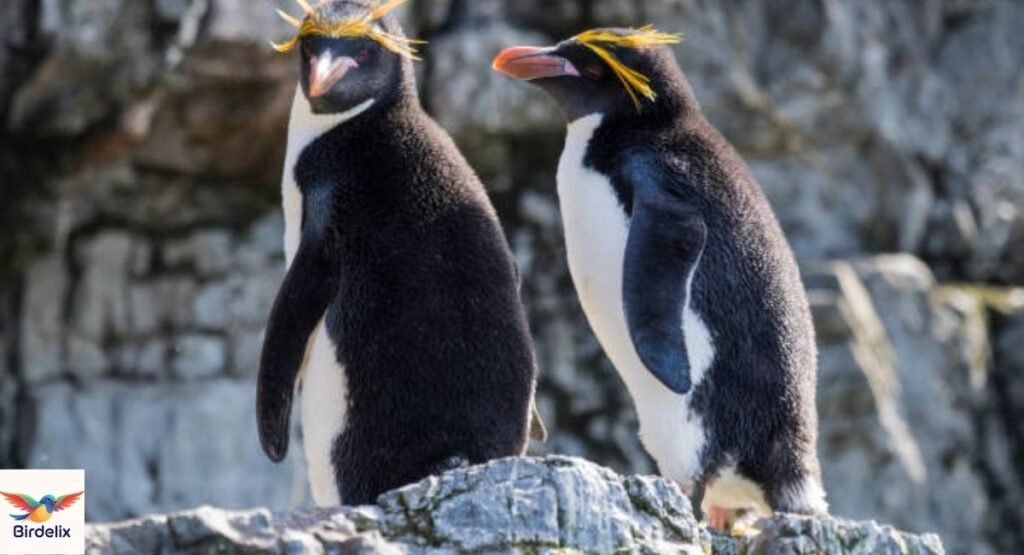
The Macaroni Penguin is one of the most distinctive Birds That Start With M because of its bright yellow-orange crest and bold black-and-white body. This remarkable penguin lives mainly on sub-Antarctic islands and spends much of its time feeding in cold ocean waters. It mainly eats krill, fish, squid, and other small marine animals. Adults usually grow around 28 inches long and have strong flippers that help them swim quickly underwater. An interesting fact is that its name comes from the colorful “macaroni” fashion style once popular in 18th-century Europe.
2. Madagascar Cuckoo
Scientific Name: Cuculus rochii
Family: Cuculidae
The Madagascar Cuckoo is an intriguing Bird That Starts With M because it is native to the island of Madagascar. This medium-sized cuckoo lives in forests, woodland areas, scrub, and other habitats where it can search for insects and small prey. Its soft brown and gray coloring helps it blend into branches and leaves. The bird mainly feeds on insects, caterpillars, and other small creatures. Unlike many brightly colored tropical birds, its appearance is fairly subtle. One fascinating fact is that this species is endemic to Madagascar, making the island especially important for its survival.
3. Madagascar Fish Eagle
Scientific Name: Ichthyophaga vociferoides
Family: Accipitridae
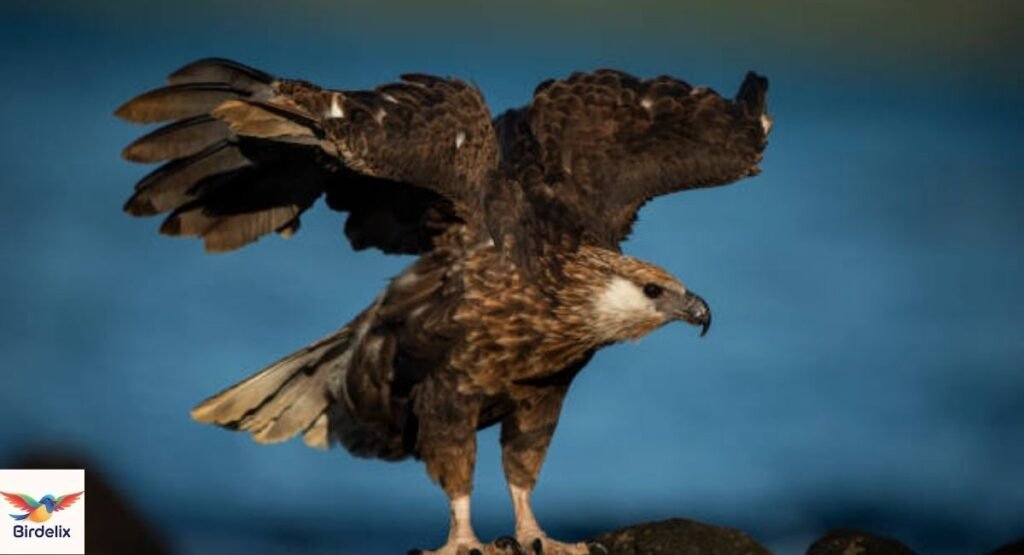
The Madagascar Fish Eagle is one of the most impressive Birds That Start With M because of its powerful hunting ability and strong connection to freshwater habitats. This large eagle lives around rivers, lakes, wetlands, and coastal areas of Madagascar. Fish make up much of its diet, although it may also take other aquatic prey when available. It has a dark brown body, a pale head, and a powerful hooked bill designed for tearing food. An amazing fact is that this eagle is one of Madagascar’s most threatened birds because suitable wetland habitat has declined.
4. Madagascar Kestrel
Scientific Name: Falco newtoni
Family: Falconidae
The Madagascar Kestrel is a small but skilled Bird That Starts With M known for its quick flight and sharp hunting abilities. It occurs across Madagascar in open woodland, grasslands, agricultural areas, and other open landscapes. This compact falcon feeds mainly on insects, small reptiles, rodents, and other tiny animals. Its brownish plumage provides useful camouflage while it waits on exposed branches or posts. Like other kestrels, it has excellent eyesight for spotting prey from a distance. A fascinating fact is that it can adapt to several human-altered habitats when suitable food remains available.
5. Madagascar Owl
Scientific Name: Asio madagascariensis
Family: Strigidae
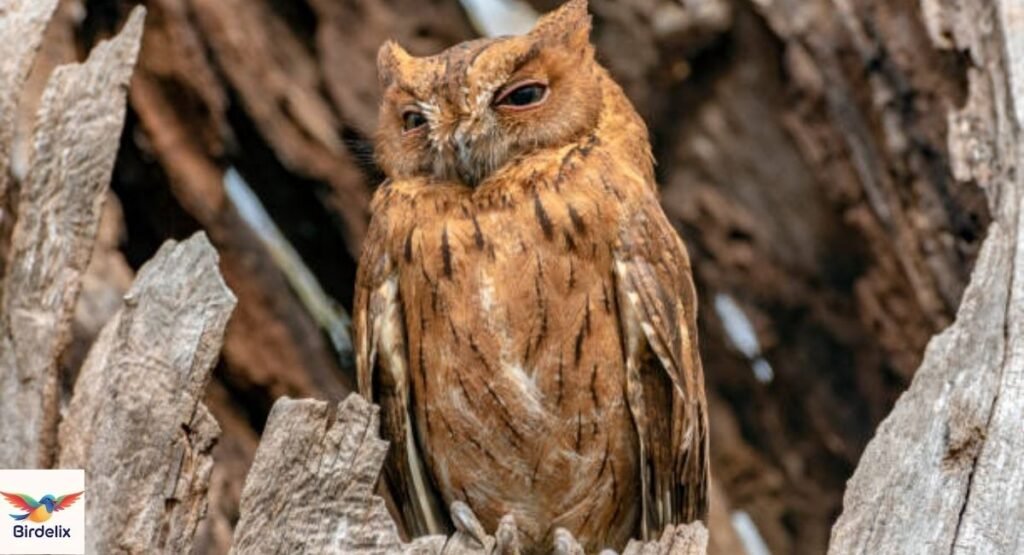
The Madagascar Owl is a fascinating Bird That Starts With M that becomes most active after sunset. This nocturnal owl lives mainly in forests and wooded areas across Madagascar. Its brown plumage provides excellent camouflage against tree trunks and shaded branches. It hunts small mammals, birds, insects, and other creatures during nighttime hours. Large eyes help it see in low light while its sensitive hearing assists with locating hidden prey. An interesting fact is that its island distribution makes Madagascar especially important for protecting this unusual owl and the forest habitats it depends on.
6. Madagascar Pochard
Scientific Name: Aythya innotata
Family: Anatidae
The Madagascar Pochard is one of the rarest Birds That Start With M and one of the most interesting diving ducks in the world. This medium-sized duck has dark brown plumage and lives around freshwater lakes and wetlands in Madagascar. It dives underwater to find aquatic plants, insects, and other food. The species once came extremely close to disappearing from the wild because of habitat loss and other pressures. Conservation programs have helped increase its numbers. A remarkable fact is that the Madagascar Pochard became a major symbol of international waterbird conservation.
7. Madagascar Pratincole
Scientific Name: Glareola ocularis
Family: Glareolidae
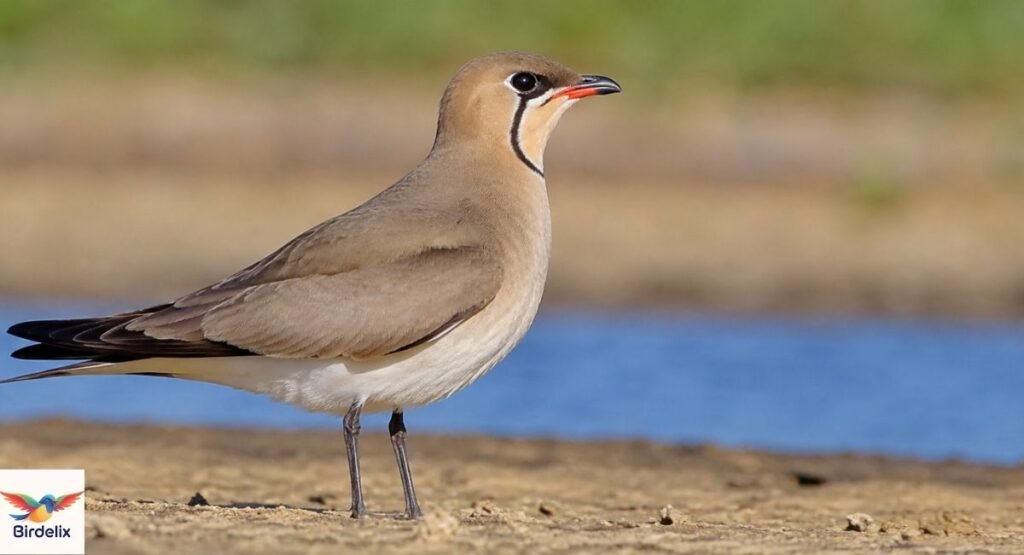
The Madagascar Pratincole is a graceful Bird That Starts With M with long pointed wings and a streamlined body. It lives in open areas, grasslands, wetlands, and other habitats where flying insects are plentiful. Unlike many shorebirds that search directly through mud, this species often catches insects while flying. Its brown upperparts and pale underside provide useful camouflage when resting on the ground. The bird has an agile flight style that helps it chase insects through open air. One interesting fact is that its hunting behavior makes it look more like an aerial insect hunter than a typical shorebird.
8. Madagascar Sandgrouse
Scientific Name: Pterocles personatus
Family: Pteroclidae
The Madagascar Sandgrouse is a hardy Bird That Starts With M adapted to dry and open environments. Its earthy brown plumage helps it disappear against sandy ground, dry vegetation, and rocky surroundings. The bird mainly eats seeds and other plant material while moving across the ground in search of food. Its compact body and strong legs suit its terrestrial lifestyle. Sandgrouse are famous for their adaptations to environments where water can be scarce. An interesting fact is that this species represents Madagascar’s unique contribution to the sandgrouse group.
9. Madagascar White-eye
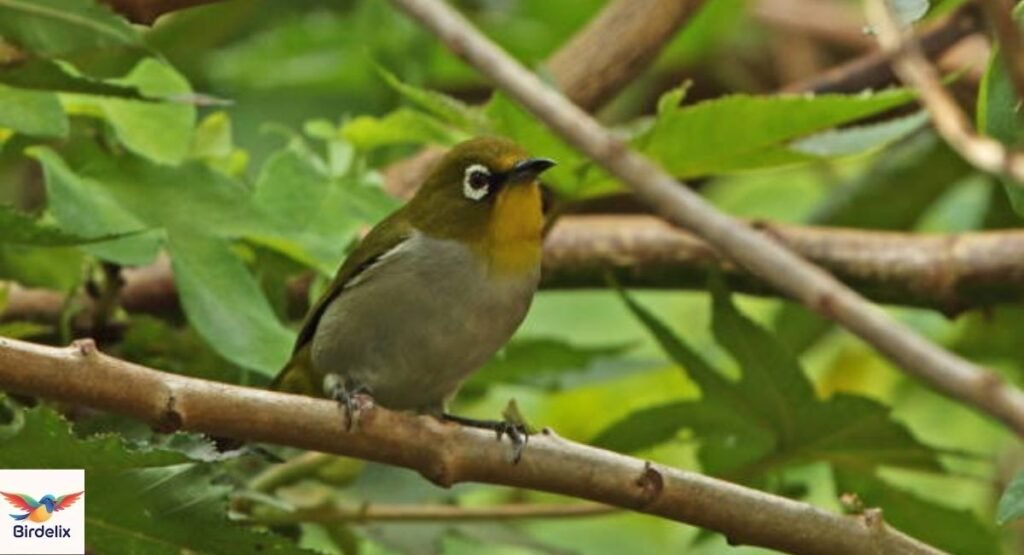
Scientific Name: Zosterops maderaspatanus
Family: Zosteropidae
The Madagascar White-eye is a small and lively Bird That Starts With M recognized by its greenish body and conspicuous pale eye-ring. It occurs in forests, gardens, woodland, and other areas containing suitable vegetation across Madagascar. The bird feeds on insects, fruits, nectar, and other small food sources. Its short bill allows it to move quickly between flowers and branches. The bright eye-ring is one of its easiest identification features. A fascinating fact is that white-eyes are highly adaptable birds that can occupy both natural forests and modified habitats.
10. Malabar Barbet
Scientific Name: Psilopogon malabaricus
Family: Megalaimidae
The Malabar Barbet is one of the most colorful Birds That Start With M because of its bright green body and contrasting facial markings. This forest species occurs in parts of southwestern India where dense trees provide fruit, insects, and nesting sites. It spends much of its time in the canopy searching for food. Fruits form an important part of its diet and help connect the bird with forest seed dispersal. Its thick bill is well suited to eating fruit. One fascinating fact is that its strong beak also helps it create nesting cavities in suitable trees.
11. Malabar Grey Hornbill
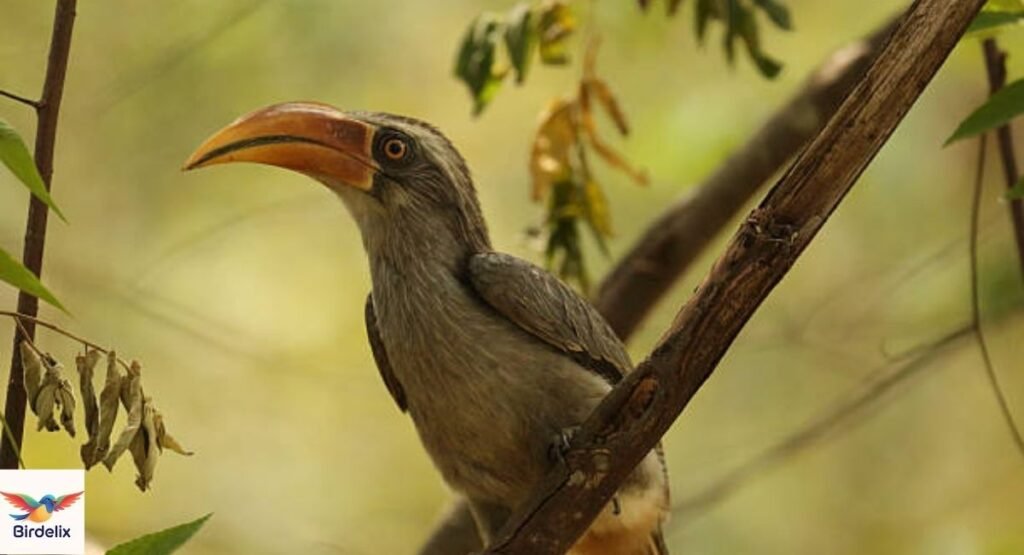
Scientific Name: Ocyceros griseus
Family: Bucerotidae
The Malabar Grey Hornbill is a distinctive Bird That Starts With M with gray plumage, a large curved bill, and a long tail. It lives mainly in forests, plantations, gardens, and wooded landscapes of southwestern India. Fruits make up a large portion of its diet although insects and other small prey may also be eaten. Its strong bill helps it handle different foods with ease. Hornbills can also play an important role in spreading seeds through forests. An interesting fact is that its loud calls can travel surprisingly far through dense woodland.
12. Malabar Pied Hornbill
Scientific Name: Anthracoceros coronatus
Family: Bucerotidae
The Malabar Pied Hornbill is one of the most recognizable Birds That Start With M because of its black-and-white body and large casque-topped bill. It occurs in forests, open woodland, plantations, and other tree-rich habitats across parts of South Asia. The bird eats fruits, insects, reptiles, and other small animals depending on what is available. Its powerful bill makes it well suited to handling hard fruits. A remarkable fact is that its casque adds to its impressive appearance while also playing a role in communication between hornbills.
13. Malabar Whistling Thrush
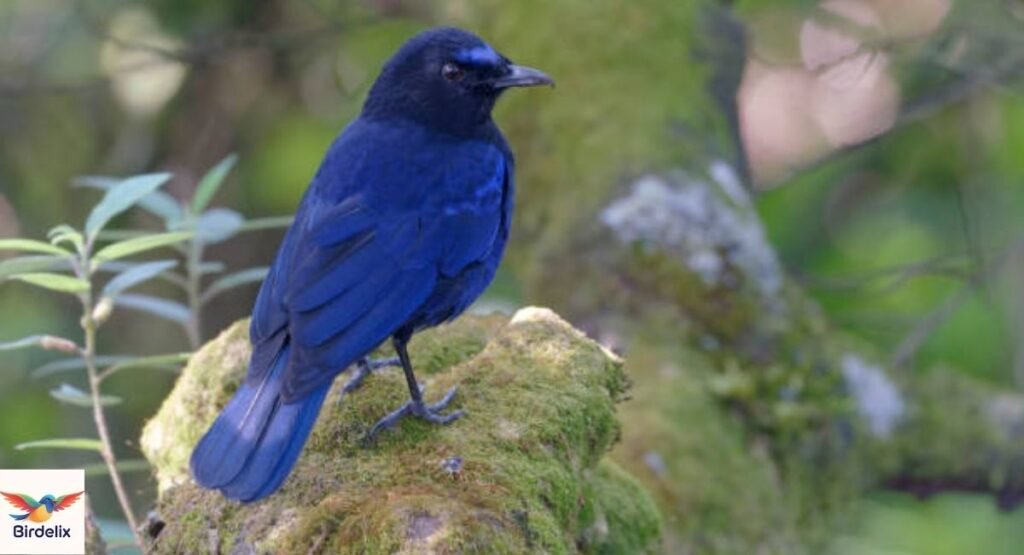
Scientific Name: Myophonus horsfieldii
Family: Muscicapidae
The Malabar Whistling Thrush is a beautiful Bird That Starts With M famous for its rich blue-black plumage and musical calls. It lives around shaded forests, streams, rocky slopes, and moist woodland in southwestern India. The bird searches the ground and stream edges for insects, small animals, berries, and other food. Its bright blue patches can become more noticeable when sunlight strikes its feathers. Birdwatchers often hear it before seeing it. One fascinating fact is that its clear whistle can sound surprisingly musical as it echoes through forest valleys.
14. Malayan Banded Pitta
Scientific Name: Hydrornis irena
Family: Pittidae
The Malayan Banded Pitta is one of the most striking Birds That Start With M because it combines several vivid colors across its compact body. This tropical forest bird lives mainly on the Malay Peninsula and nearby regions. It spends much of its time close to the forest floor where it searches for insects, worms, and other small creatures. Dense vegetation provides excellent protection from predators. Its short wings are better suited to quick movements through thick forest than long-distance flight. An amazing fact is that its colorful plumage can remain surprisingly difficult to spot inside dense tropical vegetation.
15. Malaysian Blue-banded Kingfisher
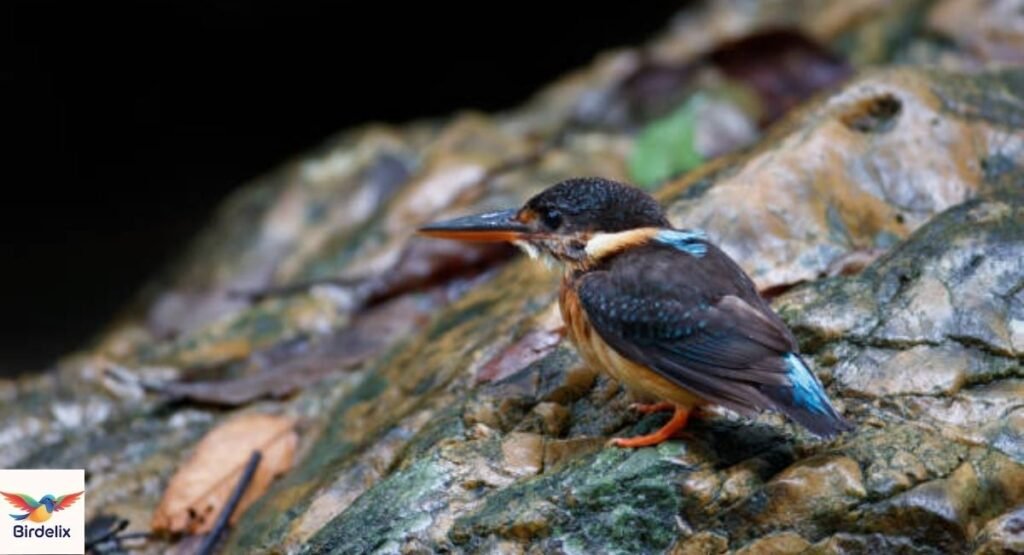
Scientific Name: Alcedo peninsulae
Family: Alcedinidae
The Malaysian Blue-banded Kingfisher is an attractive Bird That Starts With M known for its blue markings and compact body. It lives around forest streams, rivers, and other freshwater habitats where it can hunt aquatic prey. The bird often waits quietly on a branch before making a sudden dive toward its target. Fish and aquatic insects can form important parts of its diet. Its streamlined shape helps it move quickly through the air and water. One interesting fact is that patient observation near forest waterways can reveal this secretive kingfisher.
16. Malayan Laughingthrush
Scientific Name: Trochalopteron peninsulae
Family: Leiothrichidae
The Malayan Laughingthrush is a social Bird That Starts With M that lives mainly in forested mountain habitats. Its brown and gray plumage blends well with branches and thick vegetation. These birds often move in groups while searching for insects, fruit, seeds, and other food. Their calls can be lively and varied, especially when several birds communicate together. Dense forests provide shelter and feeding opportunities throughout the year. A fascinating fact is that its vocal behavior can make a group seem much larger than it actually is.
17. Malayan Night Heron
Scientific Name: Gorsachius melanolophus
Family: Ardeidae
The Malayan Night Heron is an unusual Bird That Starts With M that prefers quiet wetlands and forest waterways. As its name suggests, it becomes particularly active around dusk and nighttime. Its brown plumage provides excellent camouflage while it waits patiently for prey. It feeds on fish, frogs, insects, crustaceans, and other small aquatic animals. Instead of chasing prey constantly, it often remains still before making a sudden strike. An interesting fact is that daytime sightings can be difficult because this secretive heron often rests in dense vegetation.
18. Malayan Plover
Scientific Name: Charadrius peronii
Family: Charadriidae
The Malayan Plover is a small coastal Bird That Starts With M that depends heavily on sandy beaches and shoreline habitats. Its brown-and-white coloring helps it blend into sand, shells, and coastal vegetation. It searches along the ground for insects, worms, and other tiny invertebrates. The species often nests directly on open sandy areas where disturbance can become a serious problem. Coastal development and heavy human activity can reduce suitable habitat. One fascinating fact is that this small shorebird can survive in harsh coastal environments despite its delicate appearance.
19. Mountain Plover
Scientific Name: Charadrius montanus
Family: Charadriidae
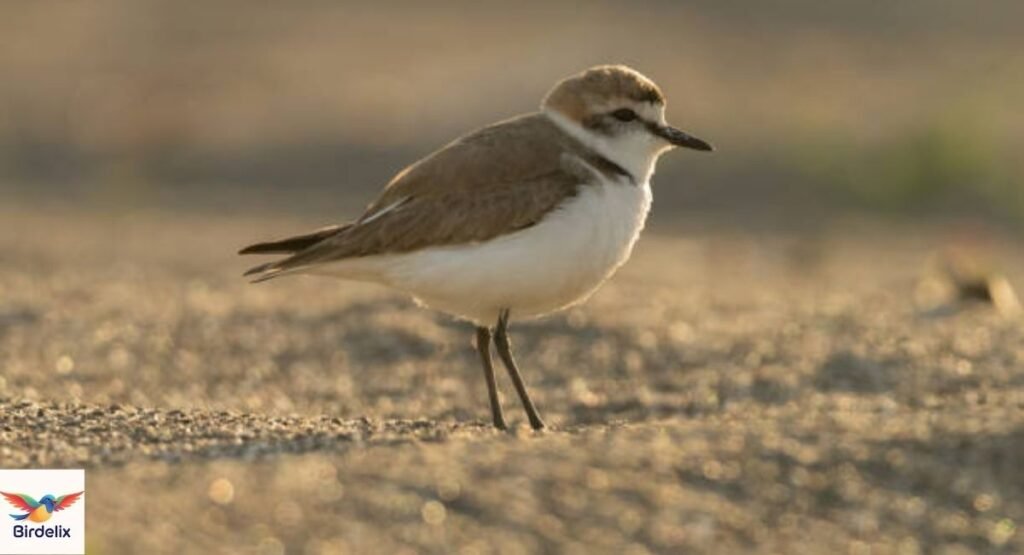
The Mountain Plover is a distinctive Bird That Starts With M found mainly in open grasslands and prairies of North America. Despite its name, it usually lives on flat or gently rolling plains rather than mountains. Its sandy-brown plumage provides excellent camouflage in dry grasslands. It feeds mainly on insects and other small invertebrates. An interesting fact is that this shorebird often nests directly on the ground, where its eggs blend remarkably well with the surrounding soil.
20. Mallee Emu-wren
Scientific Name: Stipiturus mallee
Family: Maluridae
The Mallee Emu-wren is a tiny Bird That Starts With M famous for its remarkably fine tail feathers. It lives in dense mallee scrub across parts of southeastern Australia where thick vegetation offers protection. Small insects and other invertebrates provide much of its food. The bird moves quickly through shrubs and can be difficult to observe in open view. Its small size makes dense vegetation especially important for survival. One fascinating fact is that its tail resembles the delicate feathers of an emu, which explains its unusual common name.
21. Malleefowl
Scientific Name: Leipoa ocellata
Family: Megapodiidae
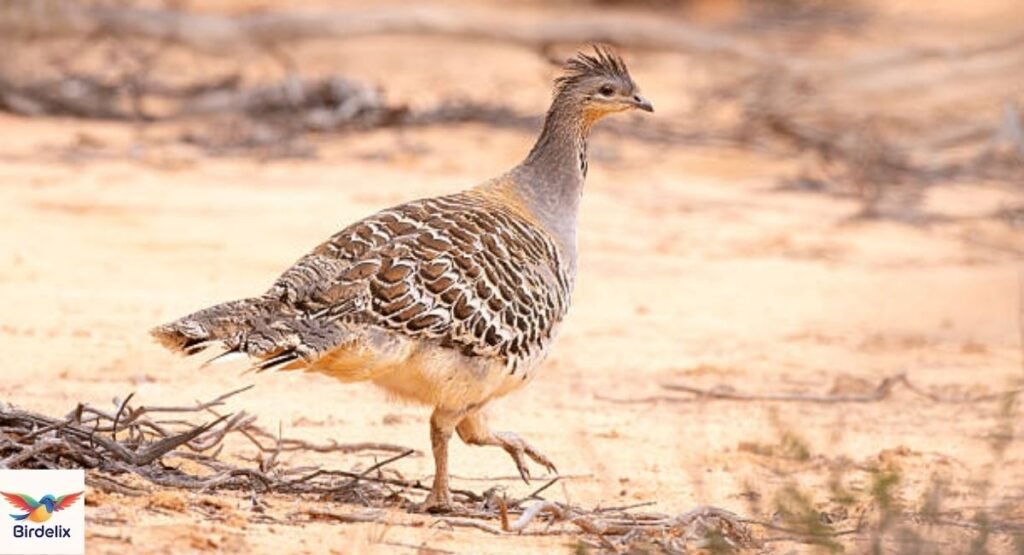
The Malleefowl is one of the most unusual Birds That Start With M because it builds enormous nesting mounds instead of simply sitting on its eggs. This large ground-dwelling bird lives in dry forests, scrublands, and mallee vegetation of Australia. It feeds on seeds, fruits, insects, and other food found on the ground. The male carefully manages the mound to help maintain a suitable temperature for the eggs. An amazing fact is that the mound can function like a natural incubator using heat produced by decomposing vegetation.
22. Mangrove Blue Flycatcher
Scientific Name: Cyornis rufigastra
Family: Muscicapidae
The Mangrove Blue Flycatcher is an interesting Bird That Starts With M that thrives around mangroves, coastal forests, and other tropical habitats. Its blue upperparts contrast beautifully with warmer colors on the lower body. This small flycatcher usually waits quietly on a branch before making a quick flight to catch insects. It may also return to the same perch after feeding. Dense mangrove vegetation gives it useful shelter while providing plenty of insects. A fascinating fact is that healthy mangrove ecosystems can support this bird by offering both feeding areas and safe nesting cover.
23. Many-colored Rush Tyrant
Scientific Name: Tachuris rubrigastra
Family: Tyrannidae
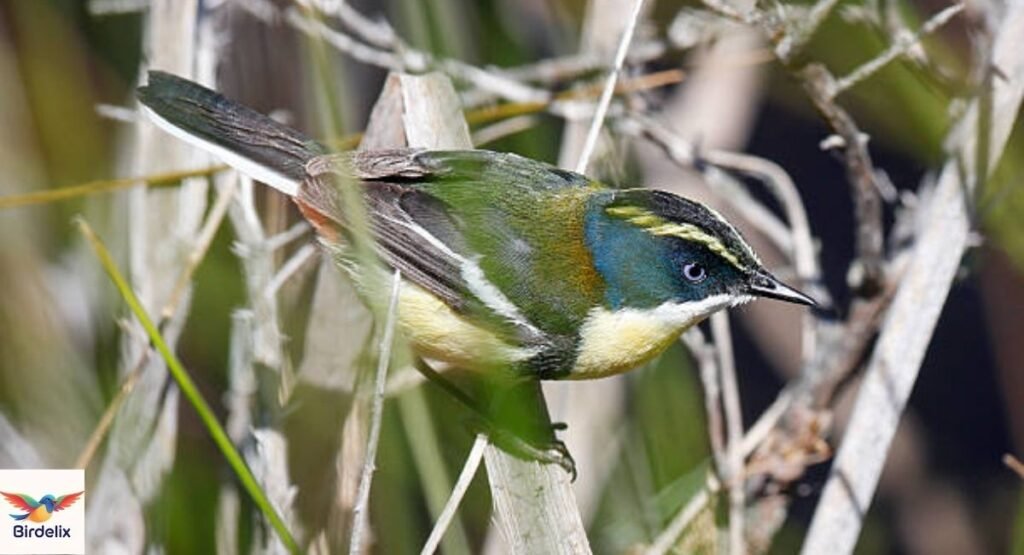
The Many-colored Rush Tyrant is one of the most colorful Birds That Start With M because its tiny body displays several bright shades at once. This small South American bird lives mainly in marshes, reed beds, and wetland vegetation. It searches among stems and leaves for insects and other tiny prey. Its compact body allows it to move easily through dense rushes. The bright plumage makes it especially attractive to birdwatchers. An amazing fact is that this species is so closely linked with wetlands that protecting healthy marsh vegetation is essential for maintaining its habitat.
24. Maroon-bellied Parakeet
Scientific Name: Pyrrhura frontalis
Family: Psittacidae
The Maroon-bellied Parakeet is a lively Bird That Starts With M recognized by its mostly green body and distinctive maroon-colored belly. It lives in forests, woodland edges, plantations, and other tree-rich habitats across parts of South America. These social parrots often travel in noisy groups while searching for fruits, seeds, flowers, and other plant foods. Their strong curved bills help them break open tough food items. A fascinating fact is that a quiet forest can suddenly become noisy when a flock of these energetic parakeets moves overhead.
25. Maroon-naped Sunbird
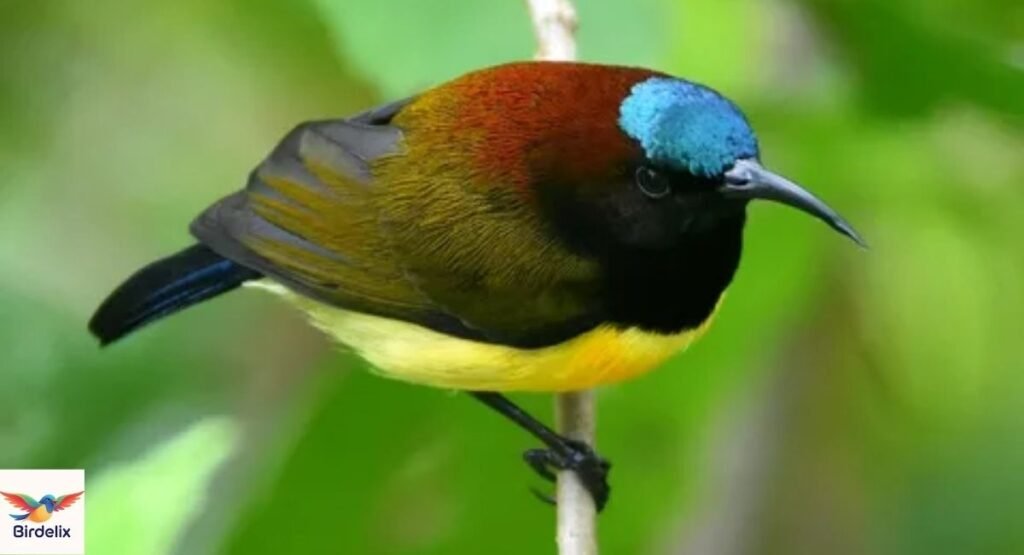
Scientific Name: Aethopyga guimarasensis
Family: Nectariniidae
The Maroon-naped Sunbird is a beautiful Bird That Starts With M named for the rich maroon coloring around its nape. It lives in forest habitats where flowering plants provide an important source of nectar. Its small body and slender bill help it reach into flowers while feeding. Insects may also provide valuable protein, especially during breeding. As it visits flowers, pollen can stick to its body and move between plants. An interesting fact is that this tiny sunbird can contribute to pollination while simply searching for its next meal.
26. Maroon-fronted Parrot
Scientific Name: Rhynchopsitta terrisi
Family: Psittacidae
The Maroon-fronted Parrot is a striking Bird That Starts With M found in the mountainous forests of northeastern Mexico. Its mainly green body is complemented by a noticeable maroon patch on the forehead. These parrots use their powerful bills to handle seeds, fruits, and other plant foods. They often travel in groups and produce loud calls that help members remain in contact. Mature mountain forests are particularly valuable because trees provide food and nesting opportunities. One fascinating fact is that this parrot has a very restricted natural range, making habitat protection especially important.
27. Marsh Seedeater
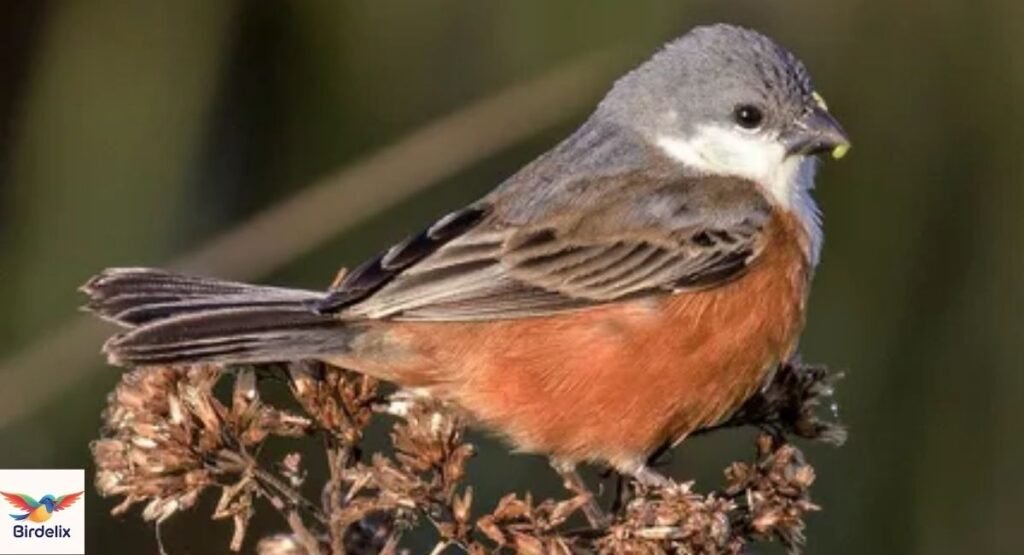
Scientific Name: Sporophila palustris
Family: Thraupidae
The Marsh Seedeater is a small Bird That Starts With M closely associated with wet grasslands and marshy environments. Its diet centers heavily on grass seeds, which it collects from vegetation in its habitat. The bird’s compact body allows it to move easily through reeds and tall grasses. Depending on the season, insects can also supplement its diet. Wetland destruction can remove both feeding areas and nesting cover. A remarkable fact is that specialized seed-eating birds can depend on particular native grasses, making habitat management extremely important for their survival.
28. Marsh Tchagra
Scientific Name: Bocagia minuta
Family: Malaconotidae
The Marsh Tchagra is an intriguing Bird That Starts With M associated with wet and grassy habitats in parts of Africa. Its earthy brown and gray appearance provides useful camouflage among reeds, grasses, and shrubs. It searches through vegetation for insects and other small prey. Rather than constantly flying around, it often waits patiently before making a quick move toward food. This hunting strategy saves energy while keeping the bird concealed. An interesting fact is that its muted colors help it remain almost invisible when it stays motionless among dense marsh vegetation.
29. Marsh Tit
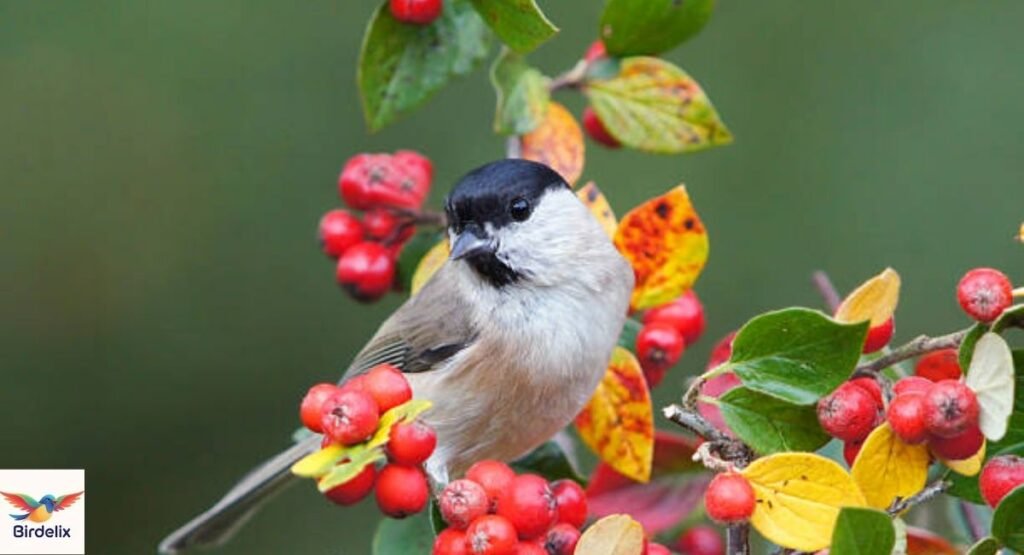
Scientific Name: Poecile palustris
Family: Paridae
The Marsh Tit is a small and active Bird That Starts With M recognized by its black cap, pale cheeks, and brownish-gray body. Despite its name, it isn’t restricted to marshes and can also live in mature woodlands, forests, and wooded parks. It feeds on insects, seeds, and other small food items. During difficult seasons, it may hide food for later use. Its compact body helps it move quickly among branches. One fascinating fact is that this tiny bird can remember hidden food locations, demonstrating impressive survival skills.
30. Marsh Warbler
Scientific Name: Acrocephalus palustris
Family: Acrocephalidae
The Marsh Warbler is one of the most remarkable Birds That Start With M because of its extraordinary vocal abilities. It usually lives in wet meadows, reed beds, marsh edges, and areas filled with tall vegetation. Its brownish plumage may look plain, but its song is remarkably complex. The bird can imitate sounds from many other species and incorporate them into its own vocal performance. It mainly feeds on insects and other small invertebrates. An amazing fact is that its impressive song can contain imitations of birds it encountered during migration.
31. Masked Cardinal
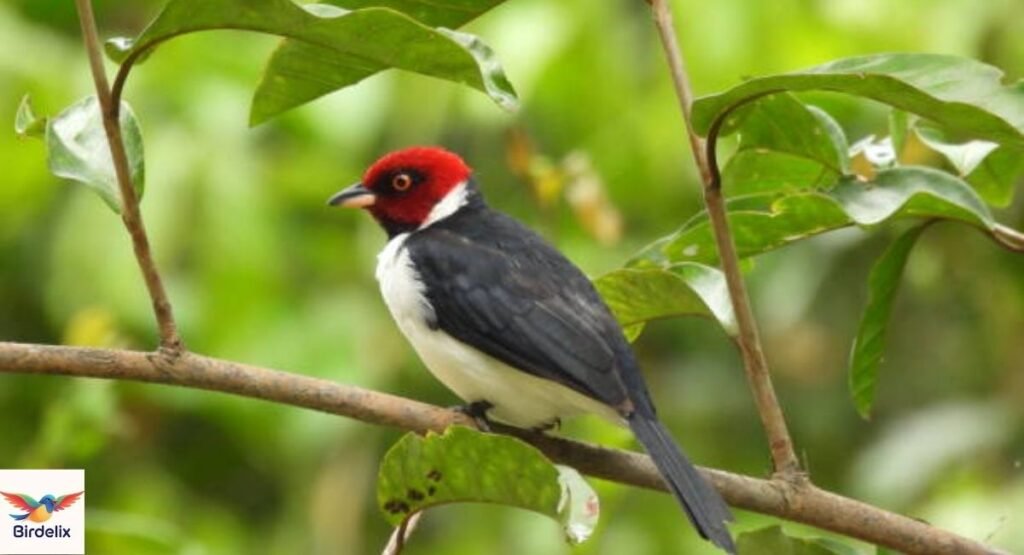
Scientific Name: Paroaria nigrogenis
Family: Thraupidae
The Masked Cardinal is an attractive Bird That Starts With M named for its dark facial markings. Its contrasting red, black, gray, and white coloring gives it a distinctive appearance. This bird lives in woodland, scrub, open areas, and other habitats where seeds, fruits, and insects are available. It often moves through vegetation while searching for food. Its strong social behavior can make groups easier to notice than individual birds. A fascinating fact is that the dark facial pattern creates a natural “mask” that makes this cardinal-like species easy to recognize.
32. Masked Flowerpiercer
Scientific Name: Diglossa cyanea
Family: Thraupidae
The Masked Flowerpiercer is a clever Bird That Starts With M with a specialized bill designed for reaching nectar. Instead of always entering flowers normally, it can pierce the base of a flower and access its contents from the side. This unusual feeding technique helps the bird obtain food efficiently. It lives mainly in mountain forests and highland vegetation of South America. Its dark blue body and black facial area add to its striking appearance. An interesting fact is that its unusual bill shape is an excellent example of adaptation to a specialized food source.
33. Masked Tityra
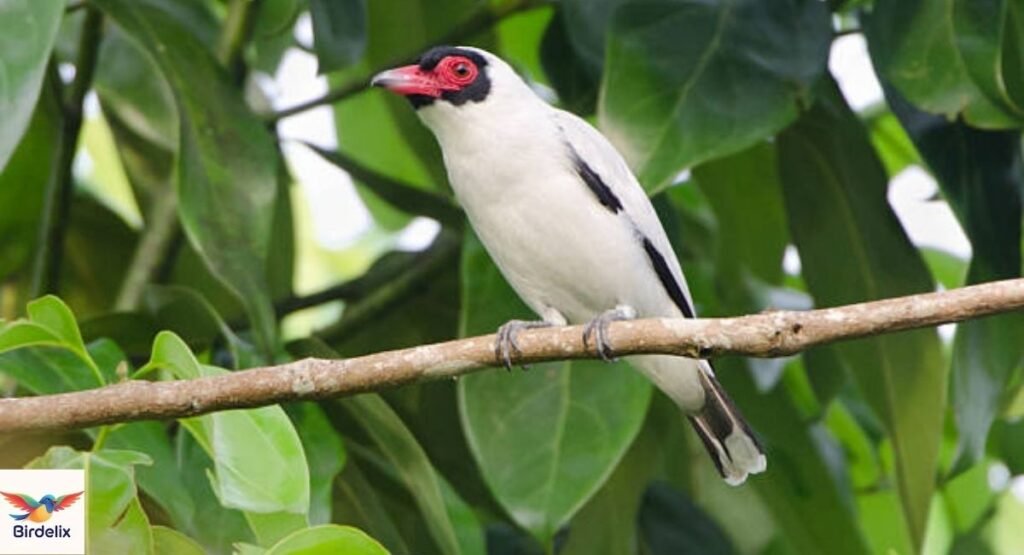
Scientific Name: Tityra semifasciata
Family: Tityridae
The Masked Tityra is a medium-sized Bird That Starts With M found across tropical forests and woodland habitats in the Americas. Its pale gray body contrasts with darker facial and wing markings, creating a distinctive masked appearance. It often feeds on fruit but may also catch insects and other small prey. The bird spends considerable time in the canopy where food is abundant. Its fruit-eating behavior can help transport seeds through the forest. A fascinating fact is that this species may use natural tree cavities for nesting.
34. Masked Water Tyrant
Scientific Name: Fluvicola nengeta
Family: Tyrannidae
The Masked Water Tyrant is an active Bird That Starts With M commonly associated with wetlands, streams, ponds, and open areas near water. Its black-and-white plumage and dark facial markings make identification fairly easy. It runs and hops across wet ground while searching for insects and other small prey. Rather than remaining high in trees, it often stays close to the water’s edge. An interesting fact is that its behavior around streams can make it easier to observe than many forest-dwelling flycatchers.
35. Masked Yellowthroat
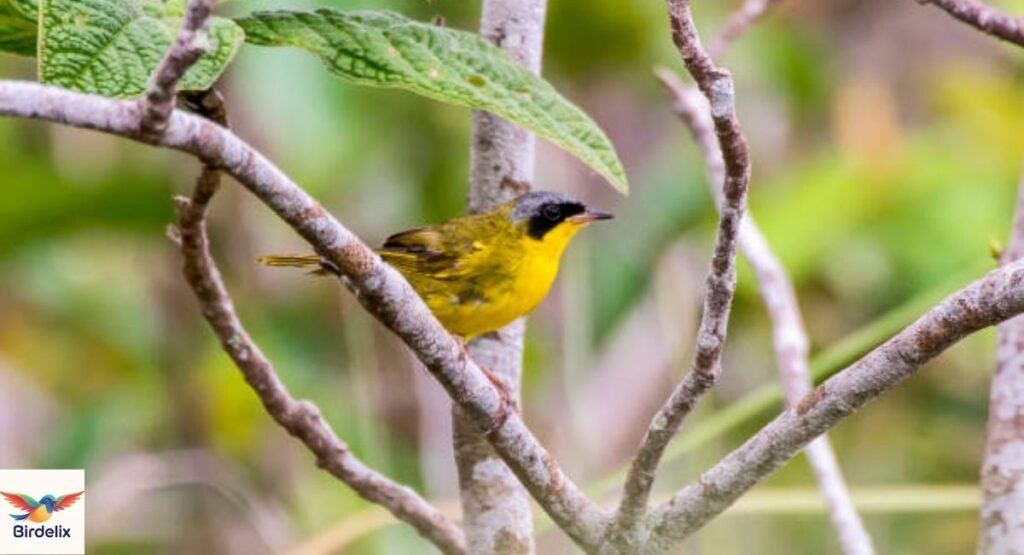
Scientific Name: Geothlypis aequinoctialis
Family: Parulidae
The Masked Yellowthroat is a colorful Bird That Starts With M recognized by its bright yellow plumage and bold dark facial mask. It usually lives around marshes, grasslands, wetlands, and dense vegetation where insects are plentiful. Its short, rounded wings allow quick movement through thick plants. The bird often remains hidden while feeding, so patience helps when watching it. Its yellow body can become surprisingly vivid in sunlight. A fascinating fact is that the dark mask is particularly prominent in males and gives the species its memorable name.
36. Matsudaira’s Storm Petrel
Scientific Name: Hydrobates matsudairae
Family: Hydrobatidae
Matsudaira’s Storm Petrel is a fascinating Bird That Starts With M that spends most of its life over the open ocean. Its small body and long wings are specially suited to life above moving waves. It feeds on tiny marine organisms, fish scraps, and other food available near the ocean surface. Breeding takes place on remote islands where nesting colonies remain relatively protected. An amazing fact is that storm petrels can appear almost weightless as they skim and glide just above waves, using ocean winds to travel efficiently.
37. Mexican Chickadee
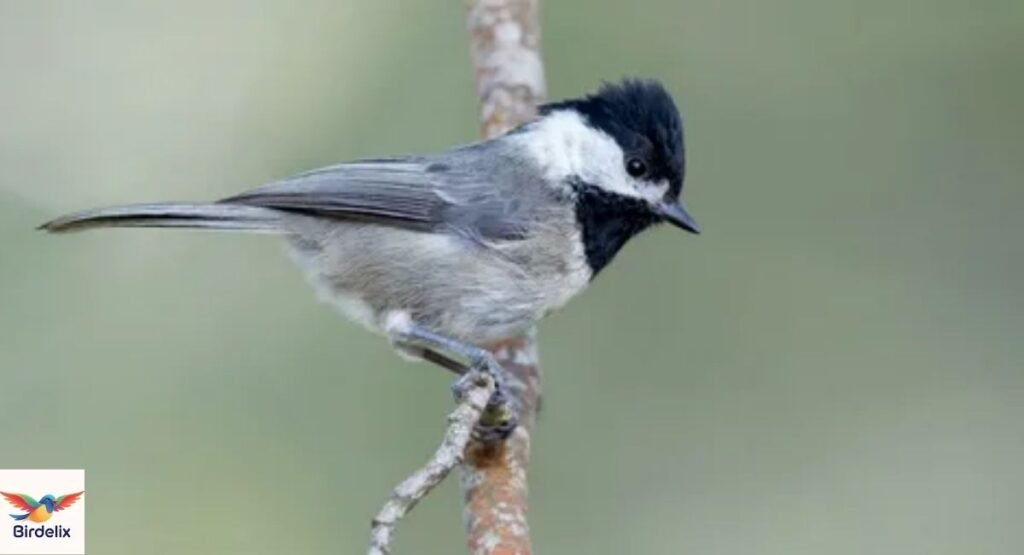
Scientific Name: Poecile sclateri
Family: Paridae
The Mexican Chickadee is a small Bird That Starts With M associated with mountain forests in Mexico and parts of the southwestern United States. Its gray body, dark cap, and pale facial areas give it the familiar chickadee appearance. It searches branches and bark for insects, seeds, and other food. These birds may join mixed feeding groups with other small woodland species. Their compact bodies and active movements make them entertaining to watch. A fascinating fact is that they often remain busy even during cooler mountain weather.
38. Mexican Jay
Scientific Name: Aphelocoma wollweberi
Family: Corvidae
The Mexican Jay is one of the most recognizable Birds That Start With M in the southwestern United States and Mexico. Its blue-gray plumage, strong bill, and long tail give it a classic jay appearance. It lives mainly in oak and pine-oak woodlands where acorns, fruits, insects, and seeds provide food. Mexican Jays are highly social and often move in family groups. Their loud calls can reveal their presence before you see them. An interesting fact is that family members may cooperate while searching for food and watching for predators.
39. Mexican Parrotlet
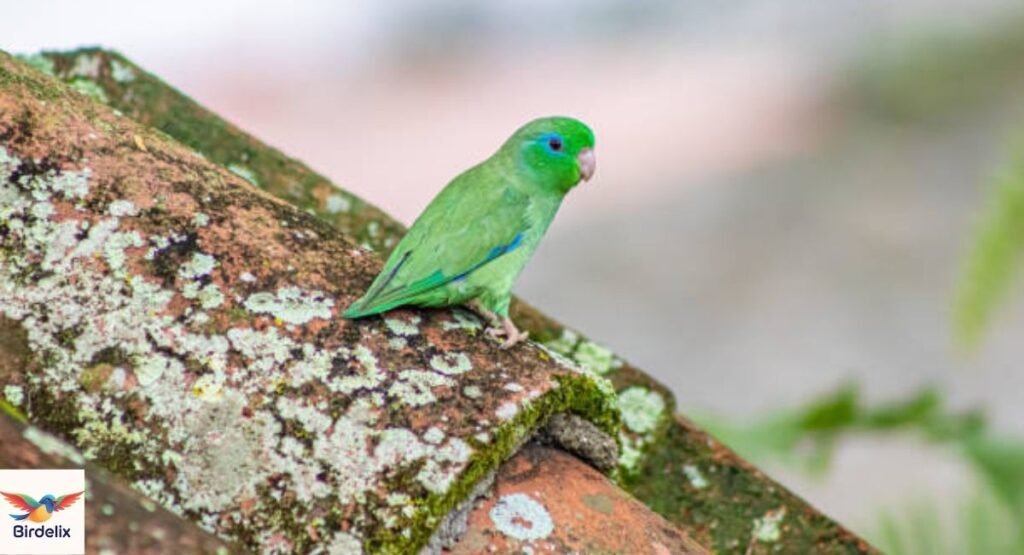
Scientific Name: Forpus cyanopygius
Family: Psittacidae
The Mexican Parrotlet is a tiny Bird That Starts With M with a bright green body and energetic personality. It lives in forests, woodland edges, scrub, and agricultural landscapes across parts of western Mexico. Seeds, fruits, flowers, and other plant material make up much of its diet. Despite its small size, it has a strong curved bill typical of parrots. These birds often travel in groups and communicate with sharp calls. A fascinating fact is that its compact body makes it one of the smaller members of the parrot family.
40. Mexican Whip-poor-will
Scientific Name: Antrostomus arizonae
Family: Caprimulgidae
The Mexican Whip-poor-will is a secretive Bird That Starts With M that becomes active mainly after sunset. Its mottled brown, gray, and black plumage provides excellent camouflage against rocks, soil, and leaf litter. It feeds mostly on flying insects caught during nighttime flights. Rather than building an obvious nest, it often lays eggs directly on the ground. Its distinctive call can travel through quiet forests at night. An amazing fact is that birdwatchers may hear this species repeatedly before they ever manage to see it.
41. Mexican Woodnymph
Scientific Name: Eupherusa ridgwayi
Family: Trochilidae
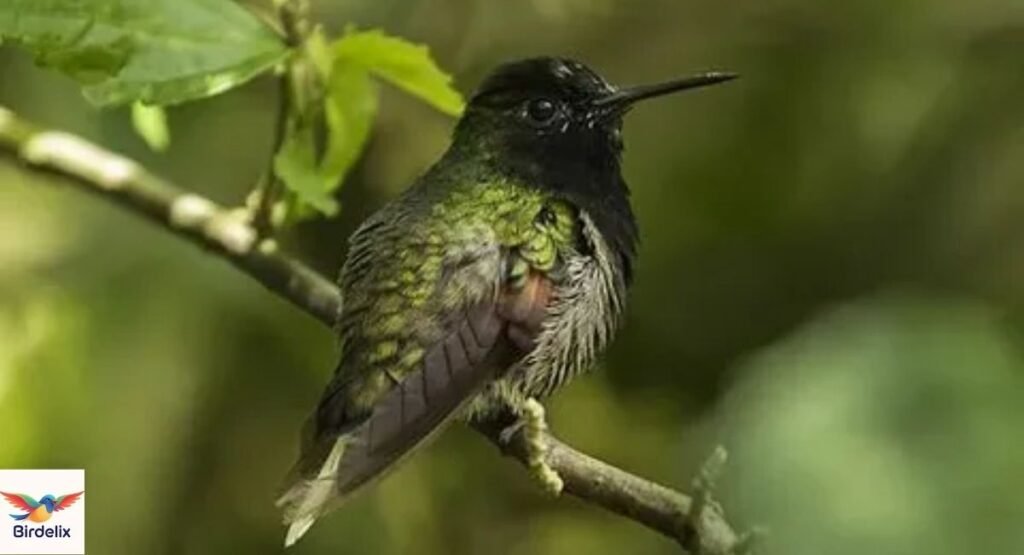
The Mexican Woodnymph is a small and graceful Bird That Starts With M belonging to the hummingbird family. It lives in forested mountain habitats where flowering plants provide valuable nectar. Its compact wings allow rapid hovering while feeding from flowers. Small insects can also provide essential protein. The bird’s green plumage helps it blend into leafy surroundings when it isn’t moving. An interesting fact is that protecting mountain forests also protects the flowering plants that supply this hummingbird with energy.
42. Military Macaw
Scientific Name: Ara militaris
Family: Psittacidae
The Military Macaw is one of the largest and most impressive Birds That Start With M because of its powerful bill, long tail, and vivid green plumage. It lives in forests, woodland, and rocky canyon habitats across parts of Mexico and South America. Fruits, seeds, nuts, and other plant foods make up much of its diet. Its strong bill can crack hard food that smaller birds cannot handle. Military Macaws often travel in noisy groups. A fascinating fact is that their loud calls can carry across large forested valleys.
43. Mindoro Hornbill
Scientific Name: Penelopides mindorensis
Family: Bucerotidae
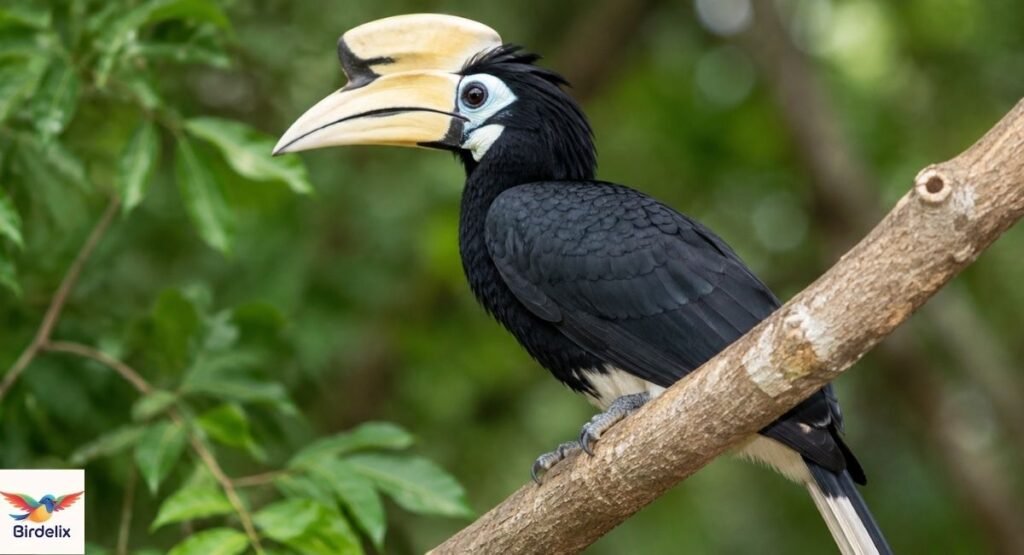
The Mindoro Hornbill is a distinctive Bird That Starts With M found only on the Philippine island of Mindoro. Its black-and-white body and large bill give it the unmistakable appearance associated with hornbills. It lives mainly in forest habitats where fruits, insects, and other food are available. Mature trees can provide important nesting sites as well. Because its natural range is limited to one island, habitat loss can create serious risks. An interesting fact is that island-endemic birds can become vulnerable very quickly when their small habitats disappear.
44. Mindoro Imperial-Pigeon
Scientific Name: Ducula mindorensis
Family: Columbidae
The Mindoro Imperial-Pigeon is a large Bird That Starts With M associated with forest habitats on Mindoro in the Philippines. Its substantial body and broad wings distinguish it from many smaller pigeons. Fruits and seeds form important parts of its diet, especially those produced by native forest trees. By eating fruit and moving between trees, it can help transport seeds across the landscape. Its restricted island range makes habitat protection essential. A fascinating fact is that this species represents one of the specialized birds that evolved within the unique ecosystems of the Philippine islands.
45. Moluccan Eclectus
Scientific Name: Eclectus roratus
Family: Psittacidae
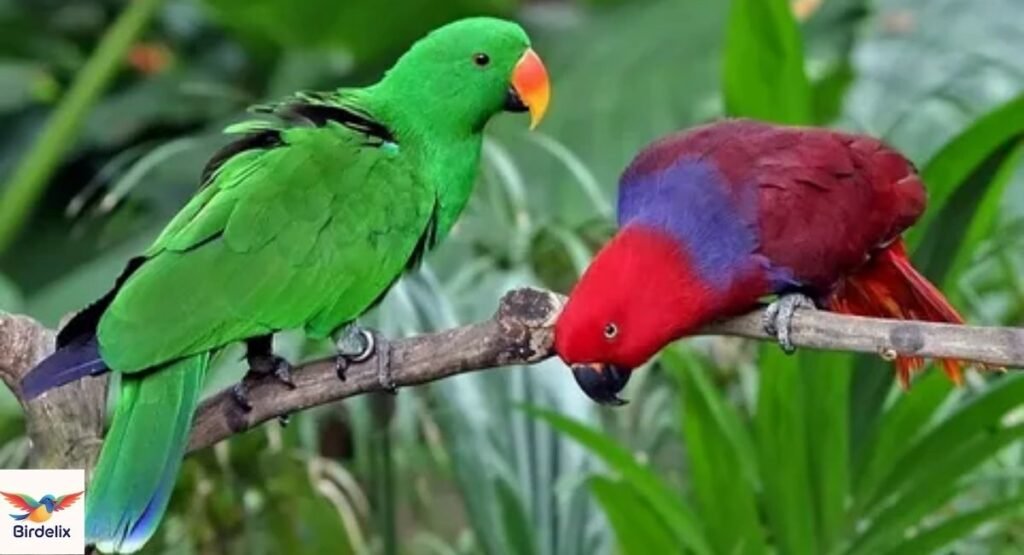
The Moluccan Eclectus is one of the most visually remarkable Birds That Start With M because males and females have dramatically different plumage. Males are mainly brilliant green while females display vivid red and purple coloring. These parrots live in tropical forests and feed on fruits, seeds, flowers, and other plant foods. Their strong feet and curved bills help them climb and handle food. This dramatic difference between the sexes is called sexual dimorphism. An amazing fact is that early scientists once thought the two sexes were separate bird species because they looked so different.
46. Mountain Bamboo Partridge
Scientific Name: Bambusicola fytchii
Family: Phasianidae
The Mountain Bamboo Partridge is a ground-dwelling Bird That Starts With M that prefers hilly forests, bamboo areas, and dense vegetation. Its brown and patterned feathers provide excellent camouflage against the forest floor. It feeds on seeds, grains, plants, insects, and other small food items. Rather than flying long distances, it usually stays close to cover and uses short bursts of flight when necessary. Its cautious nature can make it difficult to spot. A fascinating fact is that dense bamboo and understory vegetation can provide both food and protection from predators.
47. Mountain Hawk-Eagle
Scientific Name: Nisaetus nipalensis
Family: Accipitridae
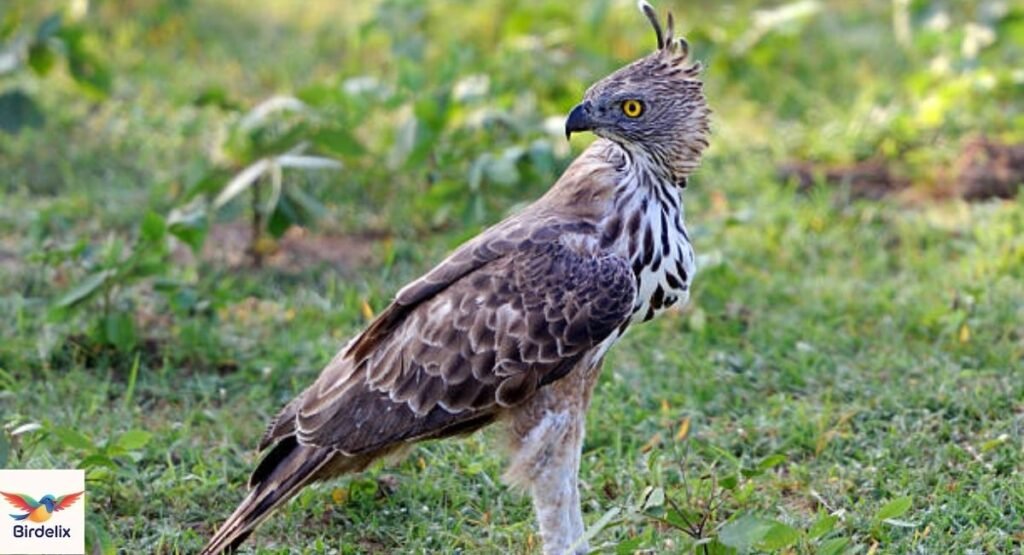
The Mountain Hawk-Eagle is a powerful Bird That Starts With M adapted to forested mountain landscapes. It has broad wings, strong legs, sharp talons, and a hooked bill that help it hunt effectively. The bird can capture mammals, birds, and reptiles while moving through rugged terrain. It often uses soaring flight to survey large areas before beginning a hunting approach. Its long wings also help it navigate mountain valleys. An interesting fact is that intact mountain forests provide both nesting trees and hunting grounds for this impressive raptor.
48. Mountain Imperial-Pigeon
Scientific Name: Ducula badia
Family: Columbidae
The Mountain Imperial-Pigeon is a large Bird That Starts With M found in forested regions of South and Southeast Asia. Its brownish and greenish plumage helps it blend into the canopy while it searches for fruit. It has a strong body and broad wings that allow it to travel between feeding areas. Fruits and seeds form a major part of its diet. Like many fruit-eating birds, it can contribute to seed dispersal across forests. A fascinating fact is that fruiting trees can influence where groups of these pigeons gather.
49. Mountain Tailorbird
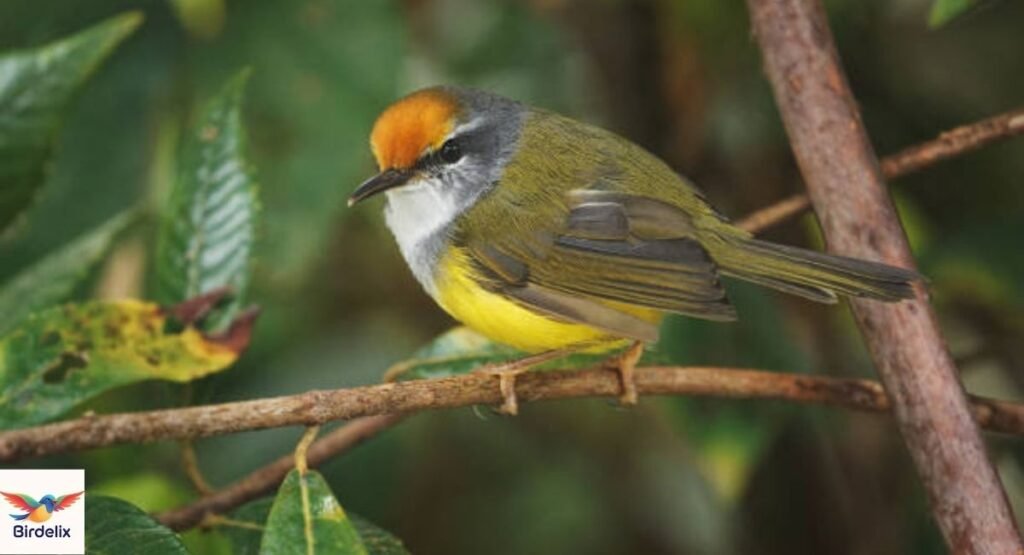
Scientific Name: Phyllergates cucullatus
Family: Cettiidae
The Mountain Tailorbird is a small Bird That Starts With M that lives in forested mountain areas across parts of Asia. Its greenish and yellowish plumage provides useful camouflage among leaves and mossy vegetation. It feeds mainly on insects and other tiny invertebrates while moving quickly through dense foliage. Its sharp calls can help birdwatchers locate it before seeing its body. Despite its small size, it is an active and persistent forager. An interesting fact is that its close association with mountain vegetation makes it particularly sensitive to changes in highland forest habitats.
50. Moustached Wren
Scientific Name: Pheugopedius genibarbis
Family: Troglodytidae
The Moustached Wren is a lively Bird That Starts With M recognized by the distinctive pale markings around its face that resemble a tiny mustache. It lives in tropical forests, woodland edges, and dense vegetation across parts of South America. The bird searches through leaves and branches for insects, spiders, and other small prey. Its energetic calls can reveal its location even when thick vegetation hides it from view. The species has a compact body and upright tail typical of many wrens. A fascinating fact is that its unusual facial pattern makes it one of the more memorable M-named wrens.
Birds That Start With M by Letter Length
Letter-count searches look simple, yet they can become surprisingly tricky. A bird name may contain spaces, hyphens, or multiple words. For consistency, count alphabetic letters rather than punctuation. This approach gives readers a clearer answer when they search for short bird names or specific name lengths.
Different search phrases also reveal different intentions. Someone searching “5 letter bird names starting with M” may be solving a puzzle, while another reader may be learning vocabulary. Therefore, exact spelling matters more here than simply collecting random short words.
4-Letter Birds That Start With M
| Bird Name | Letters | Bird Type | Main Color | Extra Information |
| Myna | 4 | Songbird | Brown and black | Mynas are adaptable birds often seen around towns, gardens, farms, and open areas. They’re also known for their strong vocal abilities. |
5-Letter Bird Names Starting With M
| Bird Name | Letters | Bird Type | Main Color | Extra Information |
| Macaw | 5 | Parrot | Green, blue, red, or yellow | Macaws are large, colorful parrots with powerful curved bills. Many species are highly social and communicate with loud calls. |
Birds That Start With M With 6 Letters
| Bird Name | Letters | Bird Type | Main Color | Extra Information |
| Merlin | 6 | Falcon | Gray and brown | The Merlin is a small, fast-flying falcon that catches birds in midair. It can be found across much of North America. |
7-Letter Bird Names Starting With M
| Bird Name | Letters | Bird Type | Main Color | Extra Information |
| Magpies | 7 | Songbird | Black and white | Magpies are intelligent birds recognized for their bold behavior and striking plumage. They belong to the crow family. |
Longer Bird Names Starting With M
| Bird Name | Letter Length | Bird Type | Main Color | Extra Information |
| Macaroni Penguin | 15* | Penguin | Black, white, and yellow | This penguin is famous for its bright yellow-orange crest. It breeds on sub-Antarctic islands and feeds mainly in the ocean. |
| Madagascar Owl | 14* | Owl | Brown | This nocturnal owl is native to Madagascar. Its earthy plumage helps it blend into forest surroundings while hunting at night. |
| Mexican Jay | 10* | Songbird | Blue and gray | The Mexican Jay lives mainly in mountain woodlands. It often travels in social groups and feeds on seeds, fruits, and insects. |
| Military Macaw | 13* | Parrot | Green | The Military Macaw is a large green parrot with a powerful bill. It occurs in forests and rocky canyon habitats. |
| Mountain Hawk-Eagle | 18* | Bird of Prey | Brown and white | This powerful raptor lives in forested mountain regions. It uses sharp talons and excellent eyesight to hunt birds and mammals. |
Pet Bird Names That Start With M
Not every search for M bird names means a wild species. Some readers simply want pet bird names that start with M. Names such as Milo, Mango, Mochi, Misty, Moon, Max, and Merlin can suit different personalities. The best choice is usually short, cheerful, and easy for everyone in the household to pronounce.
Popular M Names for Pet Birds
Popular M names often sound friendly and energetic. Milo works well for a playful bird while Misty suits a quieter personality. Mango feels natural for a colorful parrot. Mochi sounds cute for a small companion. For children, simple names with clear sounds are usually easier to remember and repeat.
Cute Pet Bird Names
Cute names can reflect a bird’s color, behavior, size, or personality. Moon suits a calm bird while Mango fits a bright one. Mochi feels playful and soft. Meanwhile, Max has a crisp sound that birds may learn to recognize. Choose something you’ll enjoy saying every day because pet names quickly become household words.
Birds That Start With M by Color
Color can make bird identification much easier when several species share similar habitats. Still, plumage can vary between males, females, juveniles, and seasons. Lighting also changes how feathers appear. So, treat color as one clue rather than the entire identification process. Shape, location, behavior, and calls can confirm your observation.
A useful approach is to notice the dominant color first. Then check smaller details such as facial patches, wing bars, tail patterns, or throat markings. This method works especially well with striking M birds because several species have colorful names or plumage.
Blue Birds
Blue M birds range from deep blue-gray species to birds with only a few blue patches. The Malayan Whistling Thrush and Mexican Jay provide useful examples. Blue feathers can appear darker in shade or brighter under direct sunlight. Always compare the bird’s entire pattern instead of judging one feathered area.
Black Birds
Black plumage can occur across the whole body or only around the head and wings. Several M birds use dark markings as visual contrast. The Masked Tityra and Masked Yellowthroat show how black facial areas can become important identification clues. A dark bird seen in poor light may also appear completely black.
Blue and White Birds
Blue-and-white combinations often create an immediately noticeable pattern. Some species show blue backs with pale underparts while others use white facial or wing markings. When searching for a blue and white bird, pay attention to exactly where each color appears. That detail can separate similar species quickly.
Black, White, and Blue Birds
Birds displaying black, white, and blue can look especially dramatic. The combination may appear across the head, wings, back, or breast. Yet colors alone rarely provide complete identification. Look for bill shape, body size, habitat, and behavior too. Those extra clues turn a guess into a stronger field observation.
Red Birds
Red and maroon tones appear in several M bird names. The Maroon-bellied Parakeet and Maroon-fronted Parrot offer obvious examples. Red may appear only on the belly, forehead, throat, or face. That placement matters. A small red patch can be more useful for identification than the bird’s overall body color.
Green Birds
Green plumage is common among tropical parrots because it blends well with foliage. The Military Macaw and Mexican Parrotlet demonstrate this beautifully. The Moluccan Eclectus adds another fascinating example. Green feathers can range from bright emerald to muted olive, so surrounding vegetation can affect how vivid the bird appears.
Yellow Birds
Yellow can occur across the breast, belly, face, or wings. The Masked Yellowthroat provides an excellent example of a bird where yellow combines with a dark facial mask. When identifying yellow species, check whether the color looks lemon, golden, olive-yellow, or pale. Those subtle differences can narrow the possibilities.
Brown Birds
Brown plumage may sound ordinary, yet it serves a valuable purpose. It often helps birds disappear among branches, leaf litter, bark, and dry grass. Species such as the Malleefowl demonstrate this camouflage beautifully. Brown birds can be difficult to notice until they move, call, or reveal a distinctive shape.
Multicolored Birds
Some M birds look almost painted. The Many-colored Rush Tyrant combines several bright shades across a tiny body. The Malayan Banded Pitta also creates a vivid visual impression with contrasting colors. These species show how colorful birds can use bright plumage while still surviving effectively in dense or complex habitats.
Types of Birds That Start With M
M names occur across a remarkably broad range of ecological groups. That diversity gives this section more value than a simple alphabetical list. You can find hunters, nectar feeders, seed eaters, fruit specialists, waterbirds, forest species, and ocean travelers. Their body shapes often reveal how each group survives.
Songbirds
Songbirds beginning with M include small species adapted for communication through complex calls and songs. Marsh Warblers can produce impressive vocal imitations while Marsh Tits use short calls to maintain contact. Many songbirds rely on sound because dense vegetation makes visual communication difficult. Their voices can therefore reveal location before their bodies appear.
Birds of Prey
Raptors such as the Madagascar Fish Eagle, Madagascar Kestrel, and Mountain Hawk-Eagle demonstrate different hunting strategies. Eagles often use strength while kestrels rely heavily on agility. Their sharp vision, curved bills, and strong talons reflect a predatory lifestyle. Habitat loss can therefore affect these birds of prey by reducing hunting grounds.
Owls
M-named owls are usually nocturnal hunters with specialized senses. The Madagascar Owl provides a striking example. Large eyes collect limited nighttime light while quiet flight helps reduce detection. Owls also use hearing to locate prey. These adaptations allow them to hunt successfully when many daytime bird species have already settled for the night.
Parrots and Parakeets
The Maroon-bellied Parakeet, Maroon-fronted Parrot, Mexican Parrotlet, Military Macaw, and Moluccan Eclectus show how varied parrots can be. Some are tiny while others are large enough to need powerful bills. Their diets often include fruit, seeds, flowers, or nuts. Strong feet also help them manipulate food while climbing.
Waterbirds
Water-associated M birds include ducks, herons, and other species that depend on lakes, streams, marshes, or coastal habitats. Their body shapes often reveal their lifestyle. Diving birds use specialized swimming abilities while wading birds rely on long legs. Healthy wetlands therefore support a surprisingly broad collection of waterbirds.
Shorebirds
Shorebirds such as the Malayan Plover occupy the narrow zone between land and sea. They search sand or mud for insects, worms, crustaceans, and other small prey. Coastal development can quickly reduce suitable habitat. Protecting undisturbed beaches therefore matters greatly for specialized shorebirds with limited nesting space.
Seabirds
Seabirds spend much of their lives around saltwater. The Macaroni Penguin and Matsudaira’s Storm Petrel demonstrate very different marine strategies. Penguins swim rather than fly while storm petrels travel across open ocean. Their lives depend on productive seas, safe breeding colonies, and enough food beneath the waves.
Wading Birds
Wading species such as the Malayan Night Heron often hunt around shallow water. Long legs can help birds move through wet ground without soaking the entire body. Patient stalking is another useful adaptation. Instead of chasing prey constantly, these birds often wait for the right moment before making a quick strike.
Forest Birds
Forests support many M birds because trees provide food, nesting cavities, shelter, and complex layers for movement. Hornbills, barbets, parrots, pittas, and small songbirds all exploit different parts of the same ecosystem. This variety shows why mature forests can support far more bird diversity than simplified landscapes.
Ground-Dwelling Birds
Ground-dwelling M birds include unusual species such as the Malleefowl and Mountain Bamboo Partridge. These birds often use camouflage rather than constant flight to avoid danger. Their feet, body shape, and feeding habits suit life near the forest floor. Dense vegetation becomes both a pantry and a protective curtain.
Tropical Birds That Start With M
Tropical regions produce an impressive variety of M birds because warm climates support year-round food supplies and complex habitats. Fruit, nectar, insects, and seeds remain available across different seasons. Tropical forests also create multiple feeding layers. A single tree can therefore support birds at the canopy, trunk, branch, and ground levels.
Tropical Forest Birds
Tropical forest M birds include pittas, parrots, barbets, tityras, and sunbirds. Many use different feeding niches, which reduces competition. Some search flowers while others eat fruit or insects. This separation allows numerous species to share the same forest. Dense foliage also gives colorful birds useful protection from predators.
Tropical Island Birds
Island birds often develop unusual traits because oceans isolate populations from mainland relatives. Madagascar and Philippine M birds show this pattern clearly. Restricted ranges can also increase conservation risk. If a species depends on one island forest, habitat destruction has nowhere else to go. Island protection therefore becomes especially important.
Tropical Coastal Birds
Coastal tropical habitats include mangroves, beaches, lagoons, and forest edges. Birds living there must cope with tides, salt, heat, and shifting food supplies. The Mangrove Blue Flycatcher demonstrates how specialized these environments can become. Protecting coastal vegetation helps preserve nesting cover and feeding areas at the same time.
North American Birds That Start With M
For USA readers, North American M birds offer excellent real-world opportunities for birdwatching. The Mexican Jay is particularly relevant in the Southwest. Other species may occur only in specific regions or seasons. Always check local range information before planning a birding trip because distributions can change with season and habitat.
Birds That Start With M Found in the United States
The Mexican Jay is one of the clearest examples for U.S. birdwatchers. It occurs in parts of Arizona, New Mexico, and Texas. The Mexican Whip-poor-will also reaches the United States, where nighttime listening can be more effective than daytime searching. Regional field guides can help confirm local sightings.
Birds That Start With M Found in Canada
Canadian records require more careful attention because many M species have southern or tropical distributions. Migratory birds can appear outside their normal breeding areas, while accidental visitors occasionally turn up far from expected ranges. For this reason, use current regional bird databases when checking Canadian occurrence rather than relying on a generic list.
Rare and Unusual Birds That Start With M
Some M birds stand apart because they have tiny ranges, unusual adaptations, or serious conservation concerns. These species can make an alphabetical article much more memorable. They also show why bird conservation matters. A name on a list represents a living population with specific habitat needs, not merely another vocabulary word.
Rare M Birds
The Madagascar Pochard, Madagascar Fish Eagle, Mindoro Hornbill, and Maroon-fronted Parrot illustrate different forms of rarity. Some have restricted geographic ranges while others face habitat pressures. Their situations aren’t identical. Still, each shows why protecting wetlands, forests, and mountain ecosystems can have consequences far beyond one individual species.
Unusual M Birds
The Malleefowl stands out because of its remarkable nesting mound. The Mallee Emu-wren is unusual for its delicate tail. The Many-colored Rush Tyrant impresses through its tiny multicolored body. These examples show that “unusual” doesn’t mean strange for the sake of strangeness. Each trait serves a biological purpose.
M Birds With Unique Behaviors
Bird behavior can be more fascinating than appearance. Malleefowl manage nesting mounds while Marsh Warblers imitate sounds. Flowerpiercers use specialized bills to reach floral food. These behaviors reveal how evolution solves everyday problems. Food, temperature, communication, and reproduction all push birds toward remarkable survival strategies.
Small Birds That Start With M
| Bird Name | Approx. Size | Bird Type | Main Color | Habitat | Notable Feature |
|---|---|---|---|---|---|
| Marsh Tit | 11–12 cm | Songbird | Black, gray, and white | Woodlands | Small, active, and highly adaptable |
| Mexican Parrotlet | 13–14 cm | Parrot | Green | Forests and scrublands | Tiny parrot with a powerful bill |
| Mountain Tailorbird | 13–14 cm | Songbird | Green and yellow | Mountain forests | Quick movements through dense foliage |
| Mallee Emu-wren | 14–16 cm | Wren | Brown and gray | Mallee scrub | Extremely fine, emu-like tail |
| Many-colored Rush Tyrant | 11–12 cm | Flycatcher | Yellow, red, green, and black | Marshes | One of the most colorful tiny M birds |
| Marsh Warbler | 13–14 cm | Warbler | Brown and olive | Wet meadows and marshes | Famous for complex song mimicry |
| Malabar Whistling Thrush | 25–28 cm | Thrush | Deep blue and black | Forest streams | Beautiful whistling song |
| Masked Yellowthroat | 12–13 cm | Warbler | Yellow and olive | Wetlands and dense vegetation | Distinctive dark facial mask |
Large Birds That Start With M
| Bird Name | Approx. Size | Bird Type | Main Color | Habitat | Notable Feature |
|---|---|---|---|---|---|
| Military Macaw | 70–85 cm | Parrot | Green | Forests and canyons | Large, powerful hooked bill |
| Macaroni Penguin | 70–75 cm | Penguin | Black, white, and yellow | Sub-Antarctic islands | Bright yellow-orange crest |
| Madagascar Fish Eagle | 60–70 cm | Bird of Prey | Brown and white | Lakes and wetlands | Specialist fish hunter |
| Malleefowl | 55–60 cm | Ground Bird | Brown and gray | Dry woodland | Builds huge incubation mounds |
| Mountain Hawk-Eagle | 65–75 cm | Raptor | Brown and white | Mountain forests | Powerful talons and broad wings |
| Malabar Pied Hornbill | 60–65 cm | Hornbill | Black and white | Tropical forests | Large bill with prominent casque |
| Mindoro Imperial-Pigeon | 40–45 cm | Pigeon | Gray and green | Philippine forests | Large fruit-eating pigeon |
| Mountain Imperial-Pigeon | 40–45 cm | Pigeon | Brown and green | Asian forests | Feeds heavily on forest fruits |
| Maroon-fronted Parrot | 40–45 cm | Parrot | Green with maroon forehead | Mountain forests | Restricted to northeastern Mexico |
| Macaw | 30–90 cm | Parrot | Blue, red, green, or yellow | Tropical forests | Strong bill and long tail |
Birds That Start With M by Habitat
Habitat often provides the fastest clue when you’re identifying an unfamiliar bird. A colorful species beside a mangrove deserves a different search than a brown bird on a mountain slope. The table below connects major habitats with representative M species from the article.
| Habitat | M Birds |
| Tropical Forests | Malabar Barbet, Malayan Banded Pitta, Mindoro Hornbill |
| Rainforests | Mexican Parrotlet, Maroon-naped Sunbird, Masked Tityra |
| Wetlands | Marsh Seedeater, Marsh Warbler, Malayan Night Heron |
| Grasslands | Mallee Emu-wren, Madagascar Sandgrouse |
| Mountains | Mountain Hawk-Eagle, Mountain Tailorbird, Mindoro Imperial-Pigeon |
| Coastal Areas | Malayan Plover, Macaroni Penguin, Matsudaira’s Storm Petrel |
| Woodlands | Mexican Jay, Marsh Tit, Malleefowl |
| Islands | Madagascar Pochard, Mindoro Hornbill, Moluccan Eclectus |
| Open Country | Madagascar Pratincole, Masked Water Tyrant, Malleefowl |
How to Identify Birds That Start With M
Good identification rarely depends on one feature. Start with size and shape, then examine plumage, beak, tail, and habitat. Next, consider behavior and flight. Finally, listen to the bird call. This layered approach works better than guessing from color alone, especially when several species look broadly similar.
Size → Shape → Plumage → Beak → Tail → Habitat → Behavior → Flight Pattern → Bird Call
Field guides and regional birding apps can help confirm your observation. However, your location matters enormously. A bird common in Mexico may be unlikely in Pennsylvania. Geographic range therefore works like a filter that quickly narrows the possibilities.
Fun Facts About Birds That Start With M
The most memorable bird facts usually reveal something unexpected. A penguin can have a colorful crest. A ground bird can build a giant incubator-like mound. A tiny warbler can imitate numerous sounds. These details make birdwatching more rewarding because every unusual feature becomes a clue to the species’ survival strategy.
| Fun Fact Category | Bird | Interesting Fact |
|---|---|---|
| Most Colorful M Bird | Many-colored Rush Tyrant | This tiny wetland bird displays several vivid colors, including yellow, green, red, and black. |
| Smallest M Bird | Mexican Parrotlet | This tiny parrot is only around 13–14 cm long yet has a strong curved bill. |
| Largest M Bird | Military Macaw | This large green parrot can reach around 85 cm in length, including its long tail. |
| Rarest M Bird | Madagascar Pochard | This diving duck became one of the world’s rarest waterbirds because of its extremely limited population. |
| Most Unusual M Bird | Malleefowl | Instead of relying on body warmth alone, it uses a huge nesting mound to help incubate its eggs. |
| Most Interesting Behavior | Marsh Warbler | It can imitate sounds from many other birds and weave those sounds into its complex song. |
| Best M Bird Swimmer | Macaroni Penguin | It uses powerful flippers and streamlined movements to chase prey beneath cold ocean waters. |
| Most Powerful M Bird | Mountain Hawk-Eagle | Its sharp talons and strong hooked bill help it capture birds, mammals, and reptiles. |
| Most Distinctive Crest | Macaroni Penguin | Its bright yellow-orange crest makes this penguin instantly recognizable among other penguin species. |
| Most Colorful Parrot | Military Macaw | Its vivid green plumage, long tail, and powerful bill give it an unmistakable appearance. |
Conclusion
From tiny songbirds to powerful raptors, Birds That Start With M offer remarkable variety in size, color, habitat, and behavior. Species such as the Mexican Jay, Military Macaw, Malleefowl, and Macaroni Penguin show how different M birds can be. Their unique diets, calls, plumage, and survival skills make them fascinating to explore.
The letter-length, color, pet-name, and habitat sections also make this guide useful for quick searches. Whether you’re a birdwatcher, student, or nature lover, these fascinating M birds offer plenty to discover. Each species has its own story, making the world of M birds truly worth exploring.
FAQs
What is a bird that starts with M?
Many species begin with M, including the Macaroni Penguin, Malleefowl, Military Macaw, Mexican Jay, and Mountain Hawk-Eagle. The group includes songbirds, parrots, raptors, seabirds, waterbirds, and forest species.
What are some 4-letter birds that start with M?
Exact four-letter M bird names are uncommon among widely recognized species. For accuracy, letter-count lists should use verified common names rather than abbreviations, nicknames, or invented shortened forms.
What are some 5-letter bird names starting with M?
Five-letter M bird names can be useful for word games and vocabulary searches. However, each name should be checked carefully because some short terms describe groups rather than individual bird species.
What birds start with M and have 6 letters?
Several short M bird names may fit a six-letter search depending on the naming standard used. Count alphabetic characters only and exclude spaces, hyphens, and punctuation for consistent results.
What are some pet bird names that start with M?
Milo, Mango, Mochi, Misty, Moon, Max, and Merlin are friendly choices. For a colorful parrot, Mango sounds playful. For a quieter companion, Misty or Moon may feel more fitting.

Welcome to Birdelix! I’m Anam Sattar, an AI-powered SEO Specialist and Content Writer with over 5 years of experience in creating high-quality, search-optimized content. I help businesses improve their search engine rankings, increase organic traffic, and build beautiful, user-friendly websites. My mission is to make SEO, content creation, and web design simple, effective, and accessible for everyone. Let’s grow your online presence and achieve success together!