


Yellow birds bring bright colors and beauty to gardens, forests, and backyards. From the familiar American Goldfinch to the striking Yellow Warbler, many species display beautiful yellow feathers and unique markings. Learning about different types of yellow birds helps you recognize them more easily during birdwatching. Some have entirely yellow bodies, while others feature yellow and black feathers or subtle golden patterns. You may also discover small yellow birds visiting feeders or nesting in nearby trees.
Whether you are exploring yellow birds in the USA or learning about species found in Britain, this guide covers their appearance, habitats, diets, and identifying features to help you appreciate these colorful birds.
25 Types of Yellow Birds and How to Identify Them
There are many types of yellow birds, and each has its own identifying features. Some are bright yellow from head to tail, while others have olive feathers or contrasting black markings. Looking at several features together will help you identify a bird more accurately.
The species below include birds from North America, Europe, and other regions. Since this article targets readers in the USA, the descriptions explain which birds you are more likely to encounter locally and which are mainly found elsewhere.

1. American Goldfinch
The American Goldfinch is one of the best-known yellow birds in the USA. Breeding males have bright yellow bodies, black foreheads, and black wings with white markings. Females look more olive-yellow, while winter birds become much duller. Their short, conical bills help them crack seeds. You can often find them around thistles, open fields, and backyard feeders. They eat mainly seeds, including sunflower and nyjer. Cornell Lab of Ornithology provides identification details and seasonal plumage information.
2. Yellow Warbler
The Yellow Warbler is a small songbird with bright yellow feathers across much of its body. Adult males often have fine reddish streaks on their breasts, while females usually have less noticeable markings. These birds live in shrubs, woodland edges, and areas near water. They feed mainly on insects and caterpillars, so you are more likely to spot them searching through leaves than visiting seed feeders. Their yellow face and body help distinguish them from more heavily patterned warblers.
3. Yellowhammer
The Yellowhammer is a European bird best known for its yellow head and underparts. Adult males also have a brown back with dark streaks and a chestnut-colored rump. They often perch on hedges and bushes in farmland and open countryside. Their diet includes seeds and grains, while young birds need insects and spiders. Yellowhammers are found in parts of Britain, although their numbers have declined. The RSPB lists the species as a conservation concern in the UK. Read the RSPB’s Yellowhammer guide.
4. European Goldfinch
The European Goldfinch is a colorful finch with a red face, black-and-white head, brown body, and bright yellow wing stripe. It is not entirely yellow, but its wing markings make it one of the most recognizable yellow-marked birds in Europe. European Goldfinches live in gardens, parks, orchards, and open woodland. They use their fine bills to collect seeds from thistles and teasels. This species is especially relevant to UK birdwatchers rather than most people observing birds in the USA.
5. Eurasian Siskin
The Eurasian Siskin is a small finch with yellow patches on its wings and tail. Males often have darker markings on the head, while females show more streaking and muted colors. These birds commonly inhabit coniferous forests and mixed woodland across Europe and parts of Asia. They feed on seeds from conifers, alder, and other trees. In suitable areas, they may visit garden feeders. Their streaked bodies and yellow wing markings help separate them from American Goldfinches.
6. Grey Wagtail
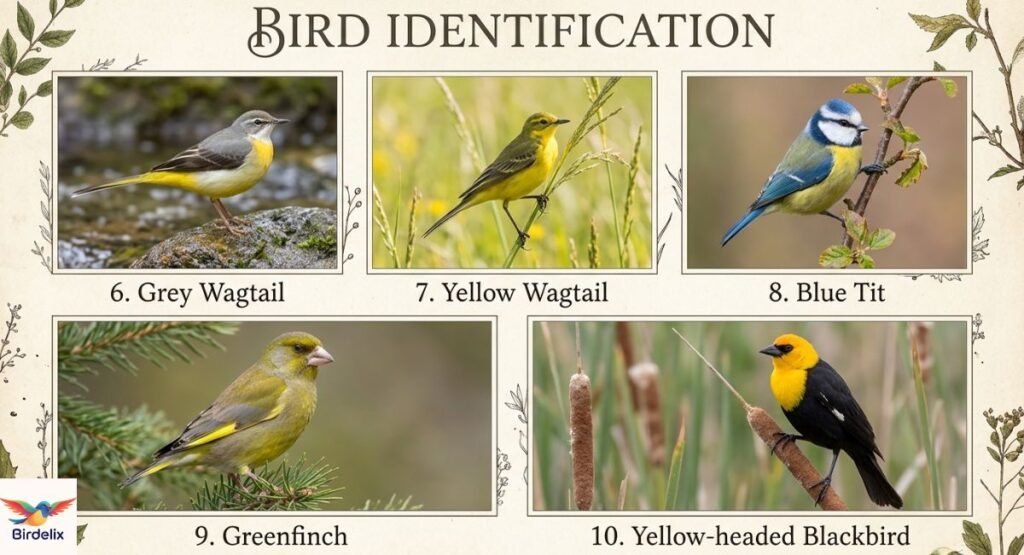
The Grey Wagtail has grey upperparts, bright yellow underparts, and a long tail that frequently bobs up and down. Despite its name, the yellow underside is often the first feature people notice. It is commonly found near streams, rivers, and other flowing water in Britain. Its diet consists mainly of insects and small invertebrates gathered around water. Look for its slender body and long tail when identifying it. It is a UK and European species, not a typical backyard bird across the USA.
7. Yellow Wagtail
The Yellow Wagtail is a slender bird with yellow underparts and a relatively long tail. Its head markings can vary among different subspecies, which may make identification more challenging. It favors open countryside, wet meadows, and agricultural fields where insects are plentiful. Unlike the Grey Wagtail, it is more associated with open grassland than fast-flowing streams. When identifying one, check its head pattern, back color, location, and habitat instead of relying on its yellow underside alone.
8. Blue Tit
The Blue Tit is a small European songbird with a blue cap, blue wings, white cheeks, and yellow underparts. Its mix of colors makes it easy to recognize, even though it is not a fully yellow bird. Blue Tits visit gardens, parks, hedges, and woodland. They feed on insects, caterpillars, seeds, and other small food items. In Britain, they frequently visit garden feeders. Their blue-and-yellow pattern distinguishes them from birds that have plain yellow bodies.
9. Greenfinch
The Greenfinch is a sturdy finch with greenish-yellow plumage and brighter yellow patches on its wings and tail. Its thick bill is well suited to cracking seeds. Greenfinches occur in parts of Europe and are often seen in gardens, farmland, parks, and woodland edges. They feed mainly on seeds and other plant material. Their olive-green color can make them look less yellow than American Goldfinches. Look for their stocky shape and flashes of yellow when they fly.
10. Yellow-headed Blackbird
The Yellow-headed Blackbird is a striking North American bird. Breeding males have a bright yellow head and chest, a black body, and noticeable white patches on their wings. Females are generally browner and less vivid. The species favors marshes and wetlands, especially in western and prairie regions of North America. It feeds on insects and seeds, often foraging near water or on the ground. Its large size and black body make it easy to distinguish from small yellow finches. Cornell Lab’s species guide offers further identification information.
11. Western Tanager
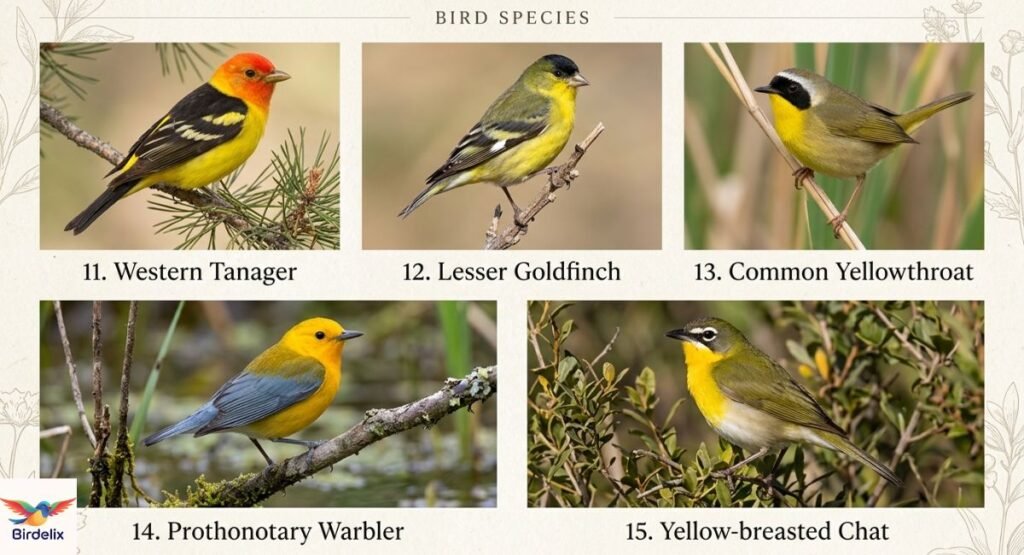
The Western Tanager is a colorful songbird found mainly in western North America. Breeding males have a yellow body, black wings, and a red-orange head. Females and immature birds are less brightly colored, often showing yellow-green feathers instead. These birds inhabit forests, especially during the breeding season. They eat insects and fruit, moving through trees as they search for food. Their combination of a yellow body, dark wings, and reddish head makes adult males especially distinctive.
12. Lesser Goldfinch
The Lesser Goldfinch is a small finch found across much of the western and southwestern USA. Males usually have yellow underparts, dark wings, and a dark or greenish-black cap, depending on the region. Females are more olive-colored. These active birds visit gardens, open woodland, and areas with plenty of seed-producing plants. They feed mainly on seeds and may gather around suitable feeders. Their small bodies and contrasting wings help distinguish them from other goldfinches.
13. Common Yellowthroat
The Common Yellowthroat is a small warbler with olive upperparts and a bright yellow throat and breast. Adult males have a distinctive black facial mask that makes identification easier. The species lives in marshes, wet meadows, and dense shrubs across much of North America. It feeds on insects and other small invertebrates. Common Yellowthroats often remain hidden in thick vegetation, so you may hear one before seeing it. Look for a yellow throat and, in males, the dark mask.
14. Prothonotary Warbler
The Prothonotary Warbler has brilliant golden-yellow plumage, blue-grey wings, and a relatively large head for a small songbird. It breeds in wooded wetlands and swamps in the eastern USA. The species feeds mainly on insects, spiders, and other small invertebrates found around trees and water. Its unusually bright body color makes it stand out among many warblers. If you see a golden bird moving through wet woodland, check its wing color and habitat before identifying it.
15. Yellow-breasted Chat
The Yellow-breasted Chat is larger than many other warblers and has a bright yellow breast, olive upperparts, and noticeable white markings around its eyes. It prefers dense thickets, scrub, and overgrown woodland edges across parts of North America. Its diet includes insects, berries, and other small food items. Chats can be difficult to see because they often stay inside thick vegetation. Their larger build and white facial markings help distinguish them from smaller yellow songbirds.
16. Yellow-rumped Warbler
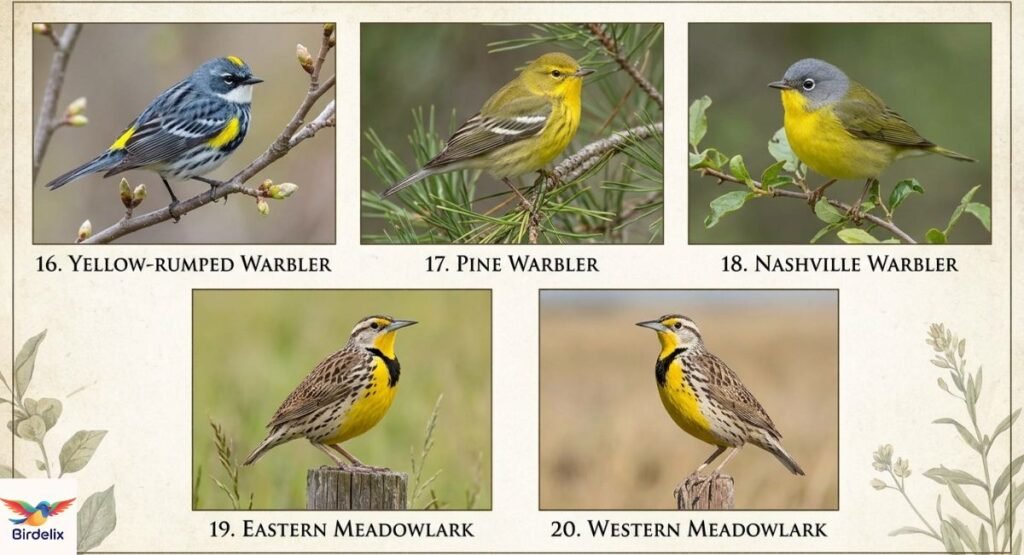
The Yellow-rumped Warbler is a familiar North American warbler with a yellow rump and yellow patches on its sides. Depending on the form and season, its plumage may also show grey, brown, black, or white markings. It inhabits forests, woodland edges, and shrubby areas. The species eats insects and berries, with fruit becoming especially useful when insects are less available. Look for the yellow rump, which may be especially noticeable when the bird flies away.
17. Pine Warbler
The Pine Warbler has yellowish underparts, olive upperparts, and subtle streaking. It is strongly associated with pine forests in the eastern and southeastern USA. These birds search branches and foliage for insects, but they may also eat seeds. Their subdued colors can make them harder to identify than brighter yellow warblers. The combination of yellow plumage, a relatively sturdy bill, and a preference for pine trees can help you recognize this species.
18. Nashville Warbler
The Nashville Warbler is a small songbird with a yellow breast, olive back, and a pale eye ring. Adults often have a grey head, creating a noticeable contrast with the yellow underside. The species breeds in parts of North America and migrates through wooded and shrubby habitats. It feeds mainly on insects and other small invertebrates. When identifying one, examine its eye ring, head color, and body shape. These details are more useful than yellow coloring alone.
19. Eastern Meadowlark
The Eastern Meadowlark is a grassland bird with brown, streaked upperparts and a bright yellow breast. A bold black V-shaped mark sits across its chest. It lives in open fields, pastures, and grasslands in the eastern and central USA. Meadowlarks feed on insects, seeds, and other small food items. They often forage on the ground and sing from exposed perches. The yellow breast and black V are important clues when distinguishing this species from other field birds.
20. Western Meadowlark
The Western Meadowlark closely resembles the Eastern Meadowlark. It has yellow underparts, brown-streaked upperparts, and a black V across the breast. It lives in open grasslands and fields across western and central North America. The two meadowlark species can be difficult to separate by appearance alone. Their songs and geographic ranges are often more useful than color. If you see a yellow-breasted bird in a wide grassy field, listen carefully and consider your location.
21. Baltimore Oriole
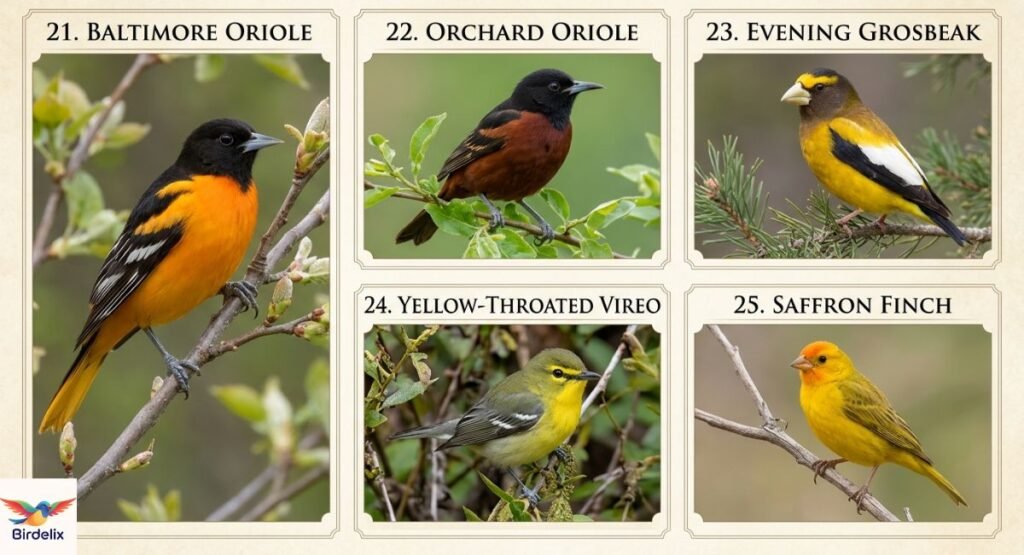
The Baltimore Oriole is famous for its vivid orange-and-black plumage rather than a truly yellow body. Adult males have orange underparts, a black head, and black wings with white markings. Females and immature birds are generally duller and may show yellow-orange tones. These orioles breed in the eastern USA and favor mature trees, open woodland, and parks. They eat insects, fruit, and nectar. Their contrasting black head and orange body make them different from typical yellow warblers.
22. Orchard Oriole
The Orchard Oriole shows different colors depending on age and sex. Adult males are mainly chestnut and black, while females and immature birds are more yellow-green. This difference can lead to confusion when birdwatchers search for yellow birds. Orchard Orioles live in open woodland, orchards, and areas with scattered trees in eastern North America. They eat insects, fruit, and nectar. Check the bird’s age-related plumage and overall pattern before identifying it.
23. Evening Grosbeak
The Evening Grosbeak is a large finch with a thick, pale bill. Adult males have a yellow body, dark head markings, and black-and-white wings. Females are more grey and olive, with yellow details. These birds inhabit coniferous and mixed forests in parts of North America. They eat seeds, buds, and other plant material. Their heavy bill and stocky body help separate them from smaller yellow finches. Sightings can vary considerably by region and season.
24. Yellow-throated Vireo
The Yellow-throated Vireo has olive upperparts, yellow underparts, and a noticeably yellow throat. It also has a sturdy bill and pale markings around the face. The species breeds in deciduous woodlands across eastern North America. It searches branches for insects and other small invertebrates, often moving deliberately through the canopy. Its yellow throat, olive back, and thicker bill can help distinguish it from smaller warblers. Listening to its song can also support identification.
25. Saffron Finch
The Saffron Finch is a bright yellow bird native to South America. Adults often have a golden-yellow body, and some show orange coloring around the crown. It has a sturdy bill and feeds on seeds, grains, and other plant material, along with some insects. Saffron Finches have also been introduced to places outside their native range, including Hawaii. They are not typical wild birds across the mainland USA, so check the location before assuming a yellow bird is this species.
Yellow Birds UK: Common Yellow Birds Found in Britain
| Bird Name | Appearance | Common Habitat | Main Food |
| Yellowhammer | Yellow head and underparts with a streaked brown back | Farmland, hedgerows, and open countryside | Seeds, grains, and insects |
| European Goldfinch | Red face, black-and-white head, and yellow wing stripe | Gardens, parks, and open woodland | Thistle and other seeds |
| Eurasian Siskin | Yellow wing patches with a streaked greenish body | Coniferous forests and gardens | Tree seeds and other plant foods |
| Grey Wagtail | Grey upperparts, bright yellow underside, and long tail | Streams, rivers, and waterways | Insects and small invertebrates |
| Yellow Wagtail | Yellow underparts and a slender body | Wet meadows, farmland, and grasslands | Insects |
| Blue Tit | Blue cap and wings with yellow underparts and white cheeks | Gardens, parks, and woodland | Insects, caterpillars, and seeds |
| Greenfinch | Greenish-yellow feathers with bright yellow wing markings | Gardens, hedgerows, and farmland | Seeds and plant material |
Yellow and Black Birds: How to Recognize Them
| Bird Name | Yellow and Black Markings | Key Identification Feature | Typical Habitat |
| American Goldfinch | Bright yellow body with black wings in breeding males | Black forehead and white wing markings | Gardens, fields, and open areas in the USA |
| Yellow-headed Blackbird | Yellow head and chest with a black body | Large body and contrasting yellow head | Marshes and wetlands in North America |
| European Goldfinch | Yellow wing stripe with black-and-white wings | Red face and patterned head | Gardens, parks, and open woodland in Europe |
| Eurasian Siskin | Yellow wing and tail patches with darker markings | Small size and streaked body | Coniferous forests and mixed woodland |
| Western Tanager | Yellow body, black wings, and red-orange head in breeding males | Brightly colored head and contrasting wings | Forests in western North America |
Small Yellow Birds You May See in Your Backyard
| Bird Name | Appearance | Where You May See It | What It Eats |
| American Goldfinch | Small finch; breeding males have bright yellow bodies and black wings | US backyards, gardens, and seed feeders | Sunflower, nyjer, and other seeds |
| Yellow Warbler | Mostly yellow body, with reddish breast streaks in many males | Trees, shrubs, and leafy areas during breeding season or migration | Insects and caterpillars |
| European Goldfinch | Red face, brown body, and bright yellow wing stripe | UK and European gardens and parks | Thistle and other seeds |
| Eurasian Siskin | Small, streaked bird with yellow wing patches | European gardens, woodland, and some feeders | Conifer and alder seeds |
| Blue Tit | Blue cap and wings, white cheeks, and yellow underside | UK gardens, trees, and bird feeders | Insects, caterpillars, and seeds |
Note: The European Goldfinch, Eurasian Siskin, and Blue Tit are primarily relevant to UK and European birdwatching. In the USA, the American Goldfinch is a more familiar backyard species.
Yellow Warbler vs. Other Yellow Birds
Several small birds have yellow feathers, so a quick glance may not be enough to identify them. Compare the bird’s face, bill, wings, and body markings. Its habitat and geographic range can also narrow down the possibilities.
The Yellow Warbler is usually more uniformly yellow than many similar species. The American Goldfinch has a thicker bill and stronger black wing markings, while the Yellow-rumped Warbler often shows a yellow rump and side patches. The Common Yellowthroat is particularly recognizable when a male’s black facial mask is visible.
Yellow Warbler vs. American Goldfinch
The Yellow Warbler is a slender insect-eating songbird with yellow feathers and, in many males, fine reddish breast streaks. The American Goldfinch has a thicker, conical bill and more obvious black wings. Feeding behavior is another clue: Yellow Warblers search foliage for insects, while American Goldfinches often feed on seeds.
Yellow Warbler vs. Yellow-rumped Warbler
The Yellow Warbler usually looks more evenly yellow across its head and underside. The Yellow-rumped Warbler has distinct yellow patches, especially on its rump, and often shows more contrasting grey, brown, or black markings. When the bird flies, a flash of yellow near the base of its tail can be a useful clue.
Yellow Warbler vs. Common Yellowthroat
The Yellow Warbler has a mostly yellow face and body, while the male Common Yellowthroat has a bold black facial mask and yellow throat. Common Yellowthroats also spend much of their time in dense vegetation near wetlands. If the bird has a dark mask, check for a Common Yellowthroat before identifying it as a Yellow Warbler.
Yellow Cardinal: Is There Really a Yellow Cardinal Bird?
Yes, the Yellow Cardinal is a real bird, but it is not the same species as the familiar Northern Cardinal. The true Yellow Cardinal (Gubernatrix cristata) is native to South America. It has yellow-and-black plumage and a noticeable crest. It is endangered, with habitat loss and trapping contributing to its decline.
People sometimes use the same name when discussing a Northern Cardinal with unusual yellow feathers. That is a separate situation. A rare color variation does not turn a Northern Cardinal into the South American Yellow Cardinal. Geography, facial markings, crest shape, and overall appearance are important when telling them apart.
Yellow Cardinal Appearance and Identifying Features
The true Yellow Cardinal has yellow feathers, dark markings, and a prominent crest. It belongs to a different group from the Northern Cardinal, despite its similar common name. Its bold pattern and crest help distinguish it from many other yellow birds. A photograph should be checked carefully because lighting can make yellow and orange feathers look different.
Where Yellow Cardinals Live
The true Yellow Cardinal lives in parts of South America, including areas of Argentina, Uruguay, and southern Brazil. It is not a typical wild bird in the USA. Its population is endangered, and remaining groups face pressure from habitat loss and trapping. If a bright yellow bird appears in a North American backyard, do not automatically identify it as a Yellow Cardinal.
Yellow Cardinal vs. Northern Cardinal
The Yellow Cardinal has yellow-and-black plumage and is native to South America. The Northern Cardinal is a North American species; adult males are normally red, while females are mostly warm brown with reddish accents. A rare yellow-looking Northern Cardinal would be an unusual color variation, not the same species as the true Yellow Cardinal. Compare the face, crest, and geographic location before deciding.
Where Do Yellow Birds Live?
Yellow birds live in many environments, from backyards and parks to wetlands, forests, and open grasslands. Each species has different needs for food, shelter, and nesting sites. Some are year-round residents, while others migrate between breeding and wintering grounds.
For readers in the USA, the most useful first step is to check which species live in the region. A yellow bird in a western marsh may be a Yellow-headed Blackbird, while a small yellow bird in a leafy eastern yard may be a warbler or finch.
Yellow Birds in North America
North America supports many yellow-colored birds, including American Goldfinches, Yellow Warblers, Common Yellowthroats, Yellow-rumped Warblers, and Yellow-headed Blackbirds. They live in different habitats, so location matters. Goldfinches often visit seed-rich areas, warblers search foliage for insects, and Yellow-headed Blackbirds favor wetlands. Seasonal migration also affects which species you may see.
Yellow Birds in the UK
British birdwatchers may encounter Yellowhammers, European Goldfinches, Eurasian Siskins, Grey Wagtails, Yellow Wagtails, Blue Tits, and Greenfinches. Some are familiar garden birds, while others are more closely linked to farmland, woodland, or rivers. The season and local habitat can help narrow down an identification. A UK field guide is useful when comparing similar species.
Yellow Birds in Gardens and Backyards
Backyards can attract yellow birds when they offer safe places to feed, drink, and rest. American Goldfinches may visit seed feeders, while insect-eating warblers search shrubs and trees. Native plants can provide natural food and shelter. Keep feeders and water dishes clean, place them where birds can watch for danger, and avoid using pesticides that reduce insect food.
Yellow Birds in Forests, Wetlands, and Grasslands
Forests support species such as Western Tanagers, Pine Warblers, and Yellow-throated Vireos. Wetlands provide food and nesting sites for Yellow-headed Blackbirds and Common Yellowthroats. Open grasslands and pastures are home to Eastern and Western Meadowlarks. These habitats differ in vegetation, water, and food supplies, so knowing the setting can make bird identification easier.
What Do Yellow Birds Eat?
Yellow plumage does not mean that all yellow birds eat the same food. Their diets depend on their species, bill shape, habitat, and the time of year. Some finches mainly eat seeds, while many warblers search leaves and branches for insects.
A bird’s feeding behavior can be a useful identification clue. Watching whether it cracks seeds, searches tree bark, or catches insects in flight may help you recognize it. If you want to attract birds, offer food suited to local species and keep feeding areas clean.
Seeds and Grains
Finches such as the American Goldfinch, Lesser Goldfinch, and European Goldfinch eat a variety of seeds. Sunflower and nyjer seeds can attract American Goldfinches, while naturally growing thistles and other seed-bearing plants provide additional food. A bird’s short, strong, conical bill is often a sign that seeds are an important part of its diet.
Insects and Caterpillars
Many yellow warblers and vireos eat insects, caterpillars, spiders, and other small invertebrates. They search leaves, twigs, and branches for food. Insects are especially important for many nesting birds because growing chicks need protein. Planting native vegetation and reducing pesticide use can help maintain the insect populations that support these birds.
Fruits and Nectar
Some orioles and tanagers eat fruit and may feed on nectar. Fruit can also provide useful energy when insects are less available. If you offer fruit to backyard birds, use suitable fresh food and remove spoiled pieces. Avoid processed sweets and sugary foods intended for people. Natural fruiting plants are often a better long-term source of food and shelter.
Why Are Some Birds Yellow?
Yellow feathers can make a bird more visible, but their color is not just decoration. Pigments, feather structure, genetics, age, and seasonal changes all influence how a bird looks. Some species have bright yellow bodies, while others show only small patches.
Color can also vary between males, females, and young birds. A bird that looks bright yellow in spring may appear olive or brownish later in the year. These differences are normal in many species and should be considered during identification.
Yellow Feathers and Natural Pigments
Many yellow feathers get their color from carotenoid pigments, which birds obtain through food. These pigments contribute to yellow, orange, and red colors in many species. The brightness of plumage can depend on the bird’s species, diet, and feather condition. However, not all feather colors are produced in the same way, so carotenoids do not explain every yellow-looking feather.
Differences Between Male and Female Yellow Birds
Male American Goldfinches become bright yellow during the breeding season, while females are usually more olive-colored. In other species, males and females may look more alike. Young birds can also have different markings from adults. For this reason, you should not identify a bird’s sex by color alone unless you know the species and its seasonal plumage.
Why Yellow Birds Change Colour With the Seasons
Some birds change appearance when they replace old feathers through molting. The American Goldfinch is a clear example: breeding males are bright yellow and black, while winter plumage is much duller. Seasonal changes usually reflect the replacement and wear of feathers rather than a sudden change in pigment. Light and viewing angle can also affect how bright a bird appears.
Conclusion
Yellow birds bring color and movement to gardens, forests, wetlands, and grasslands. From the American Goldfinch to the Yellow Warbler, each species has its own markings, behavior, and habitat. Looking at the bird’s bill, wings, face, and location can help you identify it more accurately.
Remember that not every yellow bird is fully yellow, and some change appearance with the seasons. With careful observation, you can learn to recognize more yellow birds and understand what makes each one special. Keep clean water available, grow native plants, and give wild birds safe places to feed and rest.
FAQs
What is the most common yellow bird in the UK?
The Yellowhammer is one of Britain’s best-known yellow birds, especially in open countryside and farmland. Blue Tits, Greenfinches, and European Goldfinches are also familiar birds with yellow feathers or markings.
What is the most common yellow bird in the USA?
The American Goldfinch is one of the most familiar bright yellow birds across much of the USA. Its numbers and visibility vary by region and season, and other yellow species may be more common in particular habitats.
What small yellow bird visits gardens?
In the USA, the American Goldfinch often visits gardens with seed-producing plants and suitable feeders. In the UK, Blue Tits and Greenfinches are common garden visitors with yellow markings. Yellow Warblers may also appear in trees and shrubs.
Which yellow birds have black wings?
Male American Goldfinches have bright yellow bodies and black wings. Yellow-headed Blackbirds have yellow heads and chests with black bodies, while male Western Tanagers have yellow bodies, black wings, and red-orange heads.
Is a yellow cardinal a real bird?
Yes. The true Yellow Cardinal (Gubernatrix cristata) is a real, endangered South American species. It is different from the Northern Cardinal, which is normally red in adult males. A rare yellow-looking Northern Cardinal is not the same species.

Welcome to Birdelix! I’m Anam Sattar, an AI-powered SEO Specialist and Content Writer with over 5 years of experience in creating high-quality, search-optimized content. I help businesses improve their search engine rankings, increase organic traffic, and build beautiful, user-friendly websites. My mission is to make SEO, content creation, and web design simple, effective, and accessible for everyone. Let’s grow your online presence and achieve success together!