


Black birds are fascinating creatures found in backyards, forests, wetlands, and open fields across North America. Some are known for their glossy feathers and intelligent behavior, while others stand out with colorful wings, bright eyes, or long tails. From the familiar American Crow to the striking Red-Winged Blackbird, these birds come in many shapes and sizes. Learning about different black bird species makes it easier to recognize them during your next outdoor adventure.
This guide explores common black birds, their habitats, diets, and unique characteristics. You’ll also discover birds that look like crows, helpful bird identification tips, and the symbolic meanings people associate with these remarkable feathered visitors.
15 Black Birds
1. American Crow
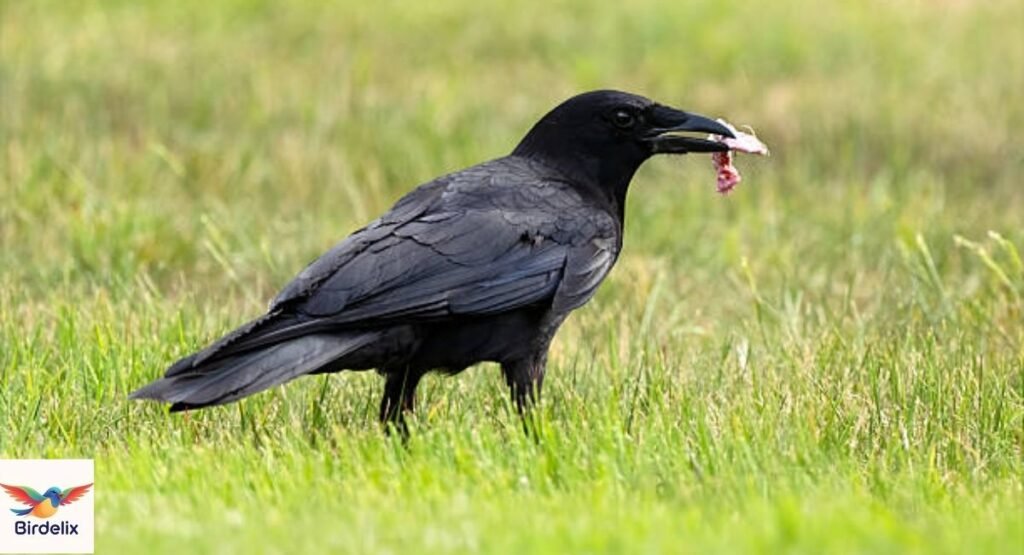
The American Crow is one of the most recognizable black birds in North America. It has entirely black feathers, a sturdy bill, dark eyes, and a fan-shaped tail. These intelligent birds live in cities, suburbs, farmland, parks, and forests.
American Crows eat insects, seeds, fruits, small animals, and food scraps. They often gather in large groups and communicate through loud caws. Their intelligence, adaptability, and problem-solving abilities make them particularly interesting to observe.
2. Common Raven
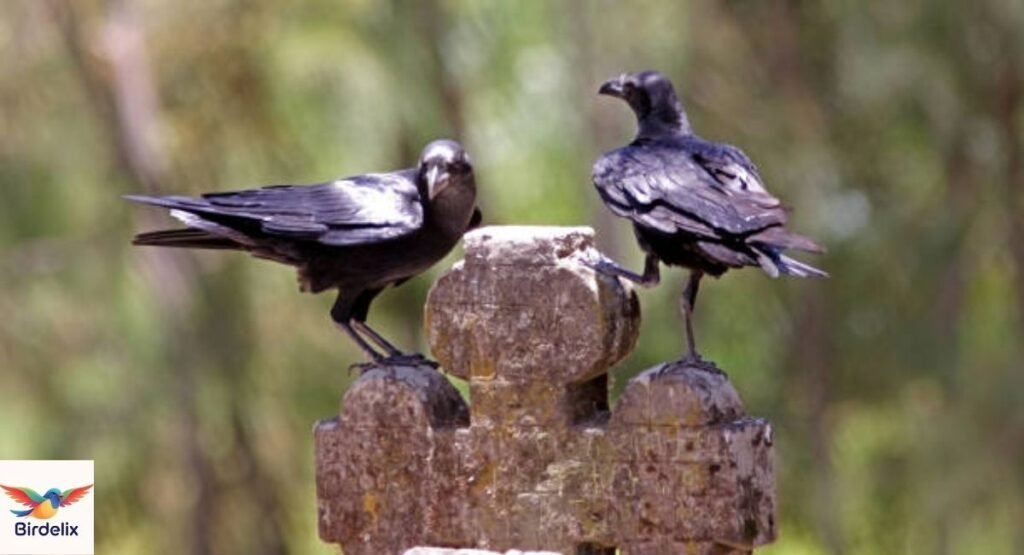
The Common Raven is a large, completely black bird that resembles the American Crow. However, ravens have heavier bills, shaggy throat feathers, and longer, wedge-shaped tails. Their deep croaking calls also sound different from the crow’s familiar caw.
Ravens live in forests, mountains, deserts, and remote wilderness areas. They eat carrion, insects, small animals, eggs, and other available foods. In folklore, ravens often represent wisdom, mystery, transformation, and intelligence.
3. Red-Winged Blackbird
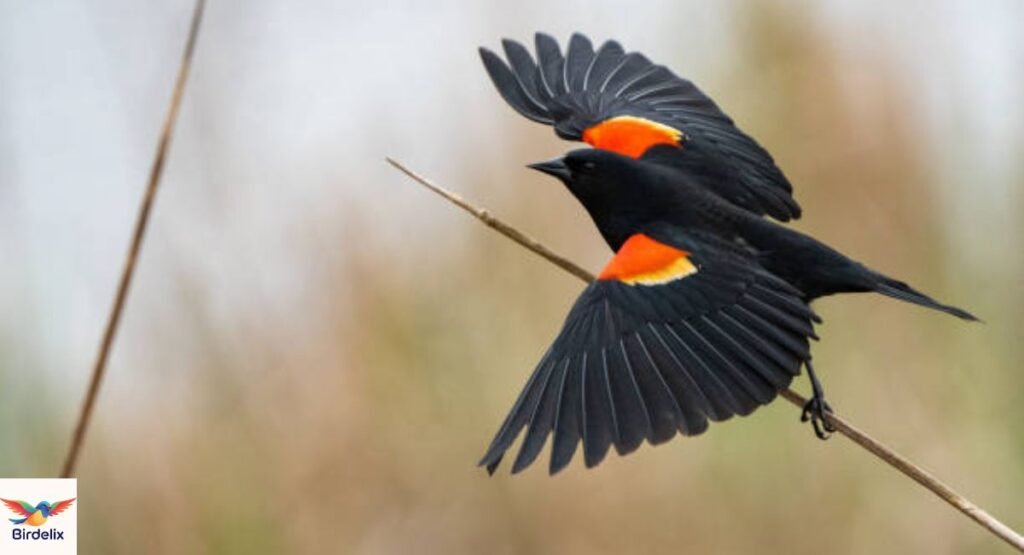
The Red-Winged Blackbird is easy to identify because males have glossy black feathers with bright red shoulder patches. These colorful markings often include a yellow border, making the bird especially noticeable during spring and summer.
This species commonly inhabits marshes, wetlands, ponds, and grassy fields. Males defend their territories with distinctive calls, while females have brown, streaked feathers that provide excellent camouflage. Their contrasting appearances make them a great example of how male and female birds can look different.
4. Common Grackle
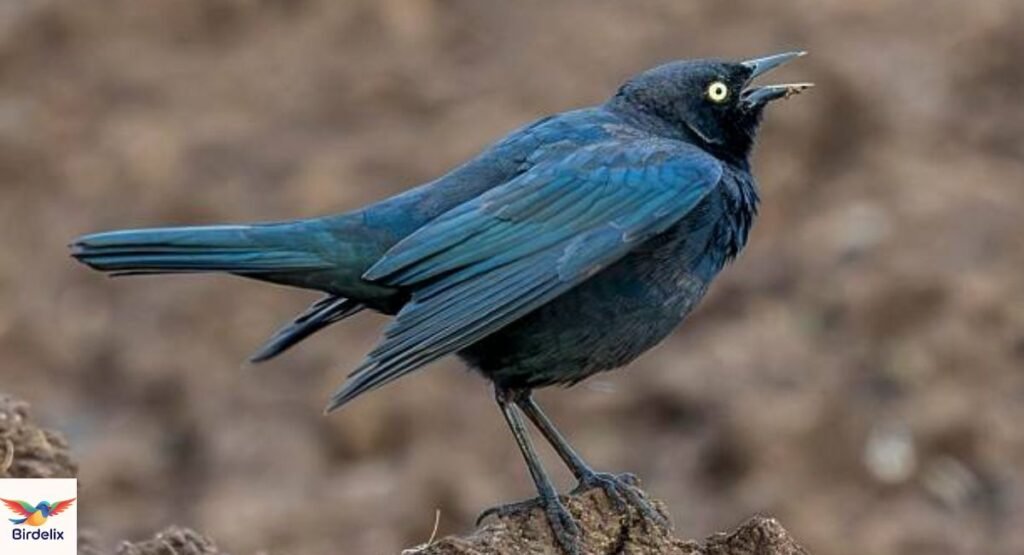
The Common Grackle has shiny black plumage, a long tail, and striking yellow eyes. Its head often appears blue or purple in sunlight, while its body displays bronze or greenish reflections. These features distinguish it from many other black-colored birds.
Common Grackles live in gardens, parks, agricultural fields, and woodland edges. They eat insects, seeds, grains, fruits, and small aquatic animals. Their noisy calls and tendency to gather in large flocks make them familiar visitors throughout much of North America.
5. Great-Tailed Grackle
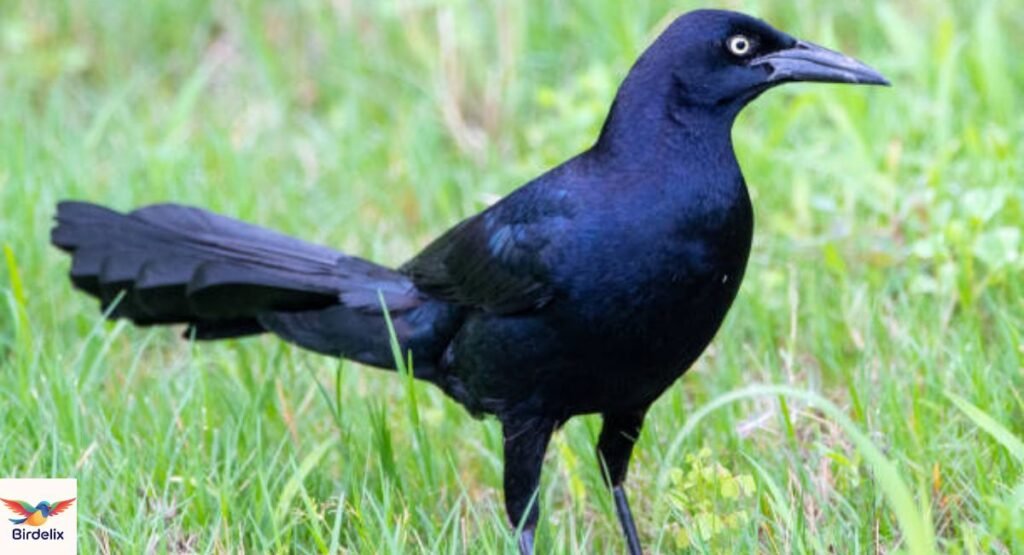
The Great-Tailed Grackle is known for its exceptionally long tail, glossy feathers, and bright yellow eyes. Males are typically larger and darker than females, while females have brown upperparts and lighter underparts.
These birds thrive in urban neighborhoods, parking lots, wetlands, and agricultural areas. They feed on insects, seeds, fruits, and discarded food. Their long tails and loud vocalizations make them easy to recognize, particularly in warmer parts of the United States.
6. Brewer’s Blackbird
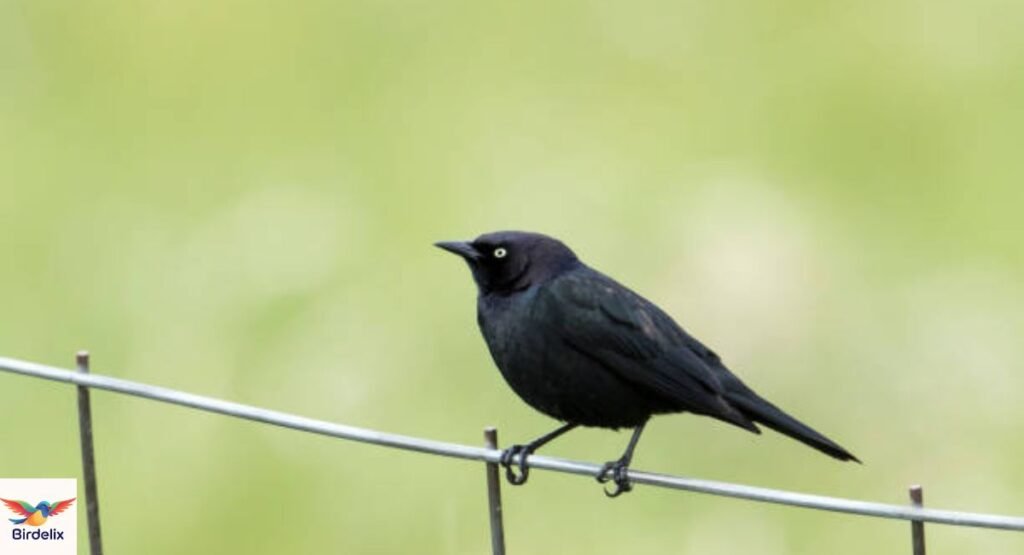
Brewer’s Blackbird is a medium-sized bird with glossy black feathers and a relatively slender body. Males usually have bright yellow eyes and an iridescent sheen across their heads. Females are more understated, with brownish-gray plumage and darker wings.
You can find Brewer’s Blackbirds in open fields, parks, lawns, and agricultural areas. They feed on insects, seeds, grains, and small invertebrates. These adaptable birds frequently forage on the ground, sometimes gathering in flocks around livestock or people.
7. European Starling
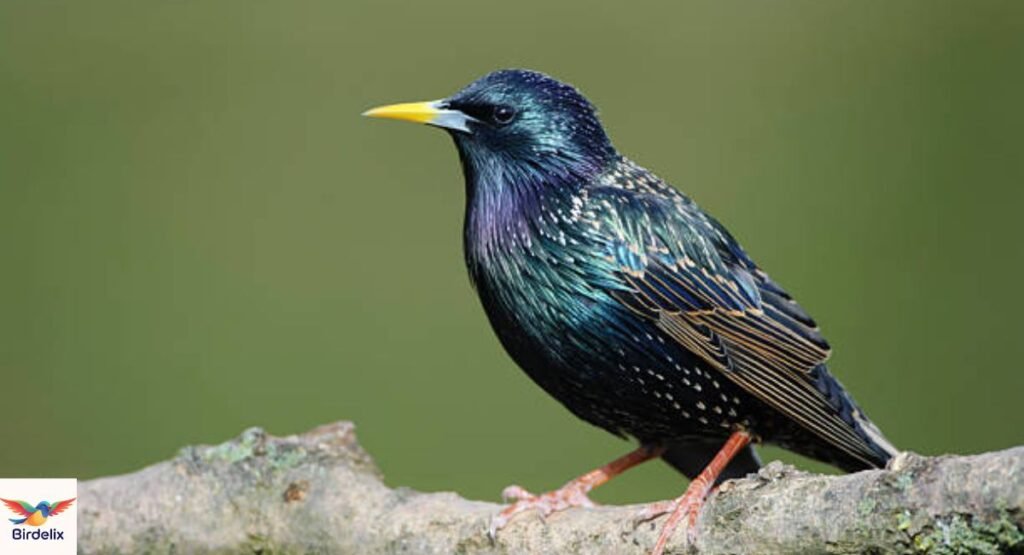
The European Starling has dark, glossy plumage that often shines purple and green in sunlight. During fall and winter, its feathers may display pale spots that gradually become less noticeable as the breeding season approaches.
European Starlings live in cities, gardens, farmland, and open countryside. They eat insects, fruits, seeds, and grains. Their ability to imitate sounds and gather in enormous flocks makes them distinctive, although they can compete with native birds for nesting cavities.
8. Rusty Blackbird
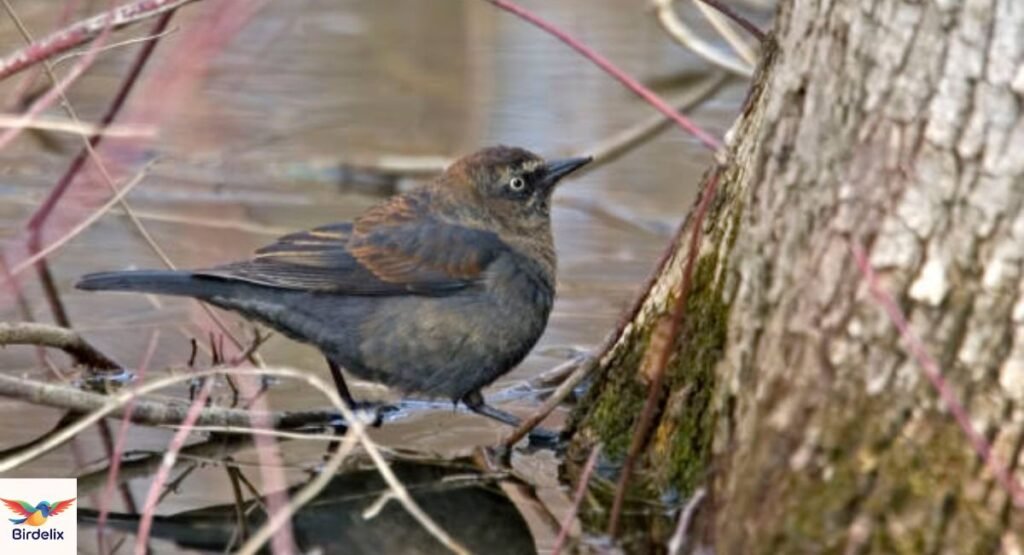
The Rusty Blackbird is a medium-sized bird that changes appearance with the seasons. During breeding season, males look mostly black, while their winter plumage develops rusty-brown edges that give the species its name.
This bird prefers wooded wetlands, bogs, and forested areas near water. Its diet includes insects, aquatic invertebrates, seeds, and small organisms found in wet soil. Rusty Blackbirds are less common than many familiar backyard species, so spotting one can be a special experience.
9. Brown-Headed Cowbird

The Brown-Headed Cowbird is easily recognized by its contrasting colors. Males have glossy black bodies and rich brown heads, while females are mostly grayish-brown with subtle streaking.
These birds often appear in pastures, gardens, open woodlands, and areas where livestock graze. They feed on seeds and insects, frequently following animals to catch disturbed insects. Brown-Headed Cowbirds are also known for brood parasitism, meaning females lay their eggs in the nests of other bird species.
10. American Redstart
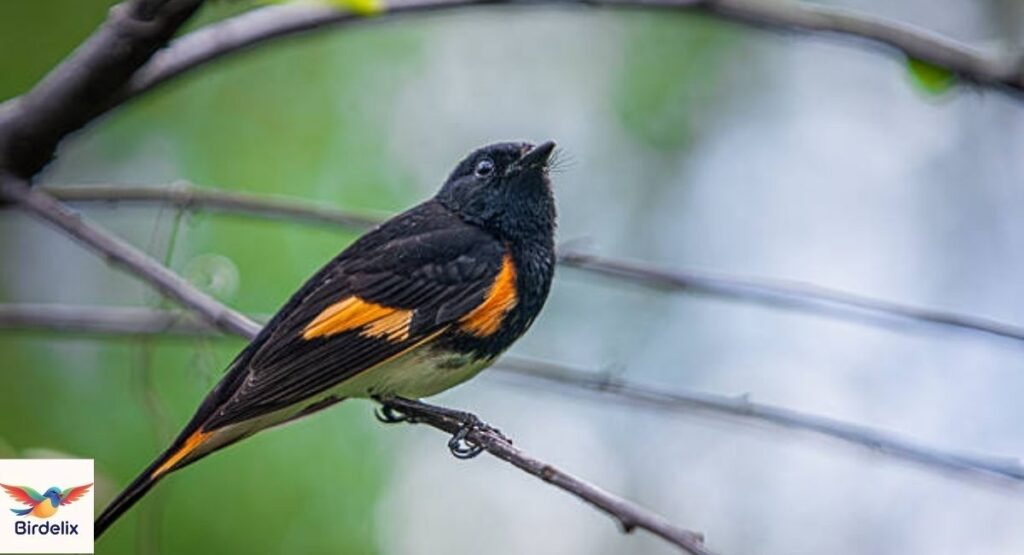
The American Redstart is a small songbird with a black-and-orange color pattern in adult males. Its black body contrasts with bright orange patches on the wings, sides, and tail. Females and young birds generally display yellow markings instead of orange.
American Redstarts inhabit forests, wooded parks, and shrubby areas, especially during migration. They eat insects and spiders, often flicking their tails and spreading their wings to flush prey from leaves. Their lively movements make them exciting birds to watch.
11. Great Cormorant
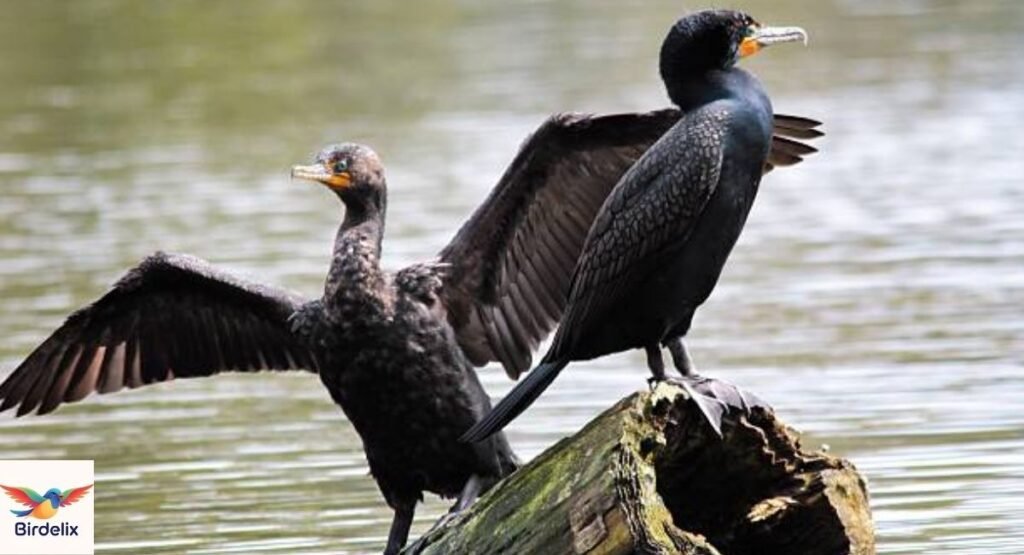
The Great Cormorant is a large, dark waterbird with a long neck, hooked bill, and webbed feet. Adults typically have black plumage with subtle greenish reflections, while breeding birds may develop white patches around the face or thighs.
These birds live along coastlines, estuaries, lakes, and rivers. They dive underwater to catch fish, then often spread their wings to dry their feathers. Their long bodies and fishing behavior make them easy to distinguish from crows and other land-dwelling black birds.
12. Lark Bunting

The Lark Bunting is a grassland bird with a noticeably different appearance between the sexes. Breeding males are mostly black with prominent white wing patches, while females are brown and heavily streaked.
This species prefers open prairies, grasslands, and agricultural fields. It feeds on seeds and insects, often foraging on the ground. Male Lark Buntings also perform impressive courtship displays, sometimes singing while flying above the grassland.
13. Phainopepla
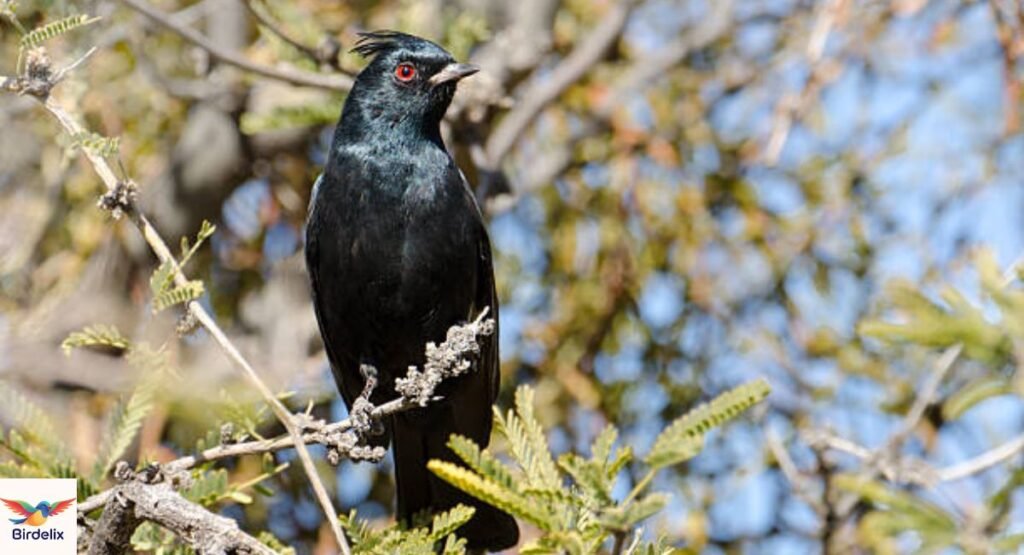
The Phainopepla is a sleek bird found mainly in the southwestern United States and parts of Mexico. Adult males have glossy black feathers, a noticeable crest, and bright red eyes. Females are grayish, with similar body shapes but less dramatic coloring.
Phainopeplas favor desert scrub, dry woodland, and areas containing mistletoe plants. They eat mistletoe berries and other fruits, along with some insects. Their distinctive crest and red eyes make them stand out among other dark-plumaged birds.
14. Yellow-Billed Magpie
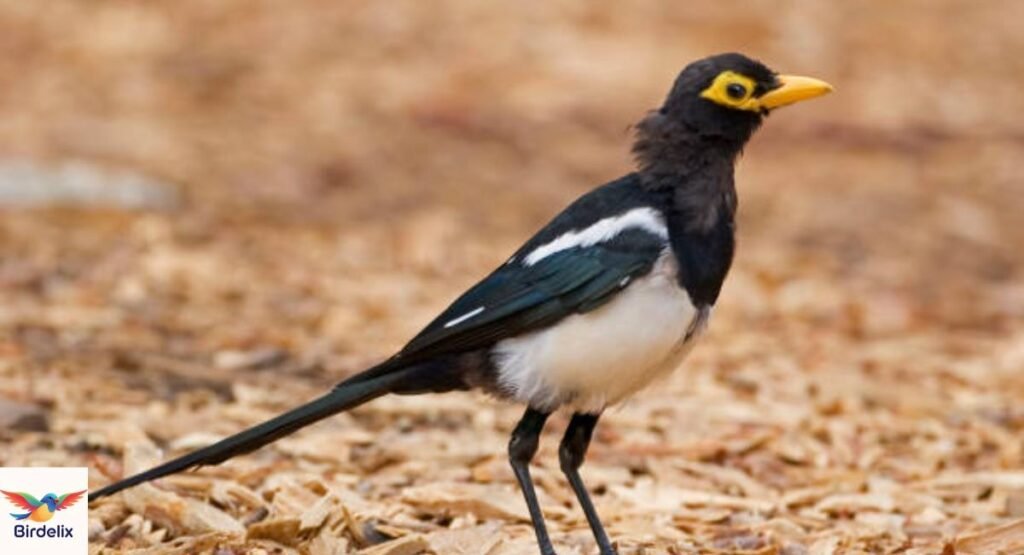
The Yellow-Billed Magpie is a striking black-and-white bird with a bright yellow bill and a long tail. Its black feathers often display blue-green iridescence, particularly on the wings and tail. White patches provide a sharp contrast against its dark body.
This species is native to California, where it inhabits open oak woodlands, farmland, and grasslands. It eats insects, fruits, seeds, and small animals. Its bold markings and long tail make identification easier than with many uniformly black birds.
15. Bobolink
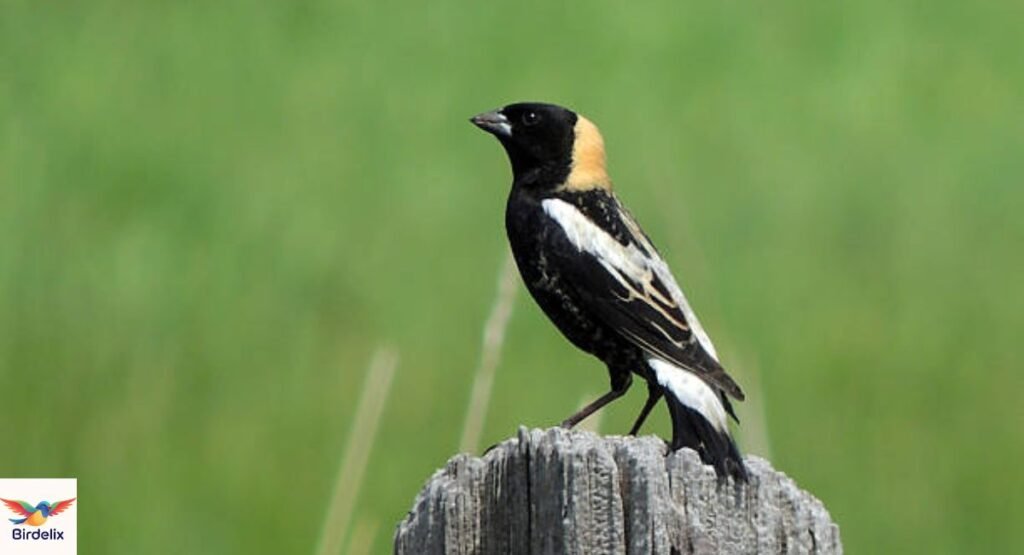
The Bobolink is a grassland songbird known for its unusual breeding plumage. Adult males have black undersides, a creamy yellow patch on the back of the head, and white markings across the upper back. Females and nonbreeding birds look more brown and streaked.
Bobolinks prefer open meadows, hayfields, and grasslands. They feed on seeds and insects, particularly during the breeding season. Their bubbling songs and impressive seasonal migrations make them distinctive members of North America’s grassland bird community.
Black Birds That Look Like Crows
Several dark-colored birds resemble crows at first glance. However, their body size, tail shape, eye color, and feather patterns can help you identify them correctly.
| Bird | Key identifying feature | Typical appearance |
| American Crow | Sturdy bill and fan-shaped tail | Entirely black |
| Common Raven | Heavy bill and wedge-shaped tail | Large and shaggy-throated |
| Common Grackle | Long tail and yellow eyes | Glossy black with iridescence |
| Great-Tailed Grackle | Extremely long tail | Black male with bright eyes |
| Brewer’s Blackbird | Yellow eyes and slender body | Glossy black male |
| European Starling | Short tail and pointed bill | Dark with purple-green sheen |
Crows and ravens are generally larger and have heavier bills than blackbirds. Grackles often have longer tails, while starlings are smaller and more compact. Observing these details can make black bird identification much easier.
Common Black Birds You May See in Your Backyard
Many black birds visit residential gardens, particularly where food, water, and shelter are available. American Crows, Common Grackles, European Starlings, and Brewer’s Blackbirds are frequent visitors in many regions.
You may also spot Red-Winged Blackbirds near ponds, marshes, and wet areas. Offering native plants, maintaining clean birdbaths, and avoiding unnecessary pesticide use can help attract a greater variety of birds.
Remember that not every dark bird is entirely black. Some species have brown bodies, white wing patches, orange markings, or iridescent feathers that become visible under different lighting conditions.
What Do Black Birds Mean?
Black birds have different symbolic meanings across cultures, traditions, and personal beliefs. Their dark feathers and distinctive calls have inspired stories about mystery, wisdom, change, and the natural world.
Ravens often symbolize intelligence and transformation in folklore. Crows are frequently associated with adaptability and cleverness, while blackbirds may represent change, communication, or new beginnings in some traditions.
These interpretations are cultural beliefs rather than scientific facts. Seeing a black bird does not automatically predict good or bad luck. In nature, its presence usually reflects ordinary activities such as searching for food, defending territory, or traveling between habitats.
How to Identify a Black Bird: 5 Features to Check
Identifying a dark bird can be challenging because several species share similar plumage. Instead of relying on feather color alone, examine its size, shape, behavior, habitat, and distinctive markings.
| Feature | What to observe |
| Size | Is the bird small like a starling or large like a raven? |
| Bill and tail | Check whether the bill is slender or heavy and the tail is short or long. |
| Feather color | Look for red shoulder patches, white markings, or purple-green reflections. |
| Eyes | Notice whether the eyes are yellow, red, or dark. |
| Habitat and behavior | Check whether the bird is feeding on the ground, swimming, or visiting wetlands. |
Pay attention to seasonal changes, too. Some birds develop different feather patterns during breeding season, while juveniles may look noticeably different from adults. Taking a quick photograph or noting the bird’s call can also help you identify it later.
Conclusion
Black birds come in many shapes, sizes, and colors, from the intelligent American Crow to the glossy Common Grackle and colorful Red-Winged Blackbird. Although their dark feathers may appear similar at first, differences in tail shape, bill size, eye color, and habitat make each species unique.
Learning about these birds can help you recognize more wildlife in your backyard, local parks, and natural spaces. Pay attention to their markings, calls, and behavior the next time you spot one. With a little practice, identifying different black birds becomes easier and makes every birdwatching experience more rewarding.
FAQs
1. What are the most common black birds in North America?
American Crows, Common Grackles, European Starlings, Red-Winged Blackbirds, and Brown-Headed Cowbirds are among the familiar dark-plumaged birds in many parts of North America.
2. Which black birds look like crows?
Common Ravens, Common Grackles, and Great-Tailed Grackles can resemble crows. Their sizes, tail shapes, bills, and eye colors help distinguish them.
3. What is the difference between a crow and a raven?
Ravens are generally larger, with heavier bills, shaggy throat feathers, and wedge-shaped tails. Crows usually have more rounded or fan-shaped tails and a familiar cawing call.
4. Which black bird has red or orange wings?
The male Red-Winged Blackbird has bright red shoulder patches edged with yellow. The male American Redstart has orange markings on its wings, sides, and tail.
5. What does it mean when you see a black bird?
Some traditions associate black birds with wisdom, mystery, transformation, or change. These meanings depend on cultural beliefs and personal interpretations rather than scientific evidence.

Welcome to Birdelix! I’m Anam Sattar, an AI-powered SEO Specialist and Content Writer with over 5 years of experience in creating high-quality, search-optimized content. I help businesses improve their search engine rankings, increase organic traffic, and build beautiful, user-friendly websites. My mission is to make SEO, content creation, and web design simple, effective, and accessible for everyone. Let’s grow your online presence and achieve success together!