


North America is home to many colorful birds with bright orange, rusty, and reddish-orange feathers. Some have orange bodies and black wings, while others display warm colors on their breasts, throats, faces, or tails. These beautiful birds can be found in backyards, forests, wetlands, and open fields across the United States. Learning about the Types of Orange Birds makes birdwatching more exciting and helps you identify different species with confidence.
In this guide, you’ll discover 20 fascinating birds, their unique feather patterns, preferred habitats, and feeding habits. You’ll also learn how orange plumage varies between species and how to recognize birds using their size, color, and behavior.
How to Recognize an Orange Bird
Identifying an orange bird takes more than looking at its color. Several species have similar shades, but their body shapes, bills, wing patterns, and habitats often differ. A bird with a long, pointed bill and bright orange body may be an oriole, while a small bird with rusty feathers and a hovering flight could be a hummingbird. Notice how the bird moves and where it spends its time.
Look at the whole bird before deciding which species you have seen. Check its head, breast, back, wings, and tail. Then consider your location and the season. A bird found near a western mountain stream may be different from one visiting an eastern backyard. For accurate orange bird identification, compare several features instead of relying on one patch of color.
Bright Orange vs. Rusty Orange Feathers
Bright orange feathers can look almost flame-colored in sunlight. The male Baltimore Oriole is a good example, with vivid orange underparts and a contrasting black head. Other species have softer shades, including rusty brown, copper, or salmon. These colors may look orange from a distance but appear more muted when you see the bird clearly.
The American Robin has a familiar rusty-orange breast, while the Carolina Wren shows warm brown and orange-buff tones. Say’s Phoebe has a softer salmon-colored underside. These differences help separate bright orange plumage from rust-colored feathers. Lighting, feather condition, and the bird’s age can also affect how its colors appear.
Birds With Orange Breasts, Faces, and Wing Patches
Not every orange bird has an orange body. Eastern Bluebirds have blue upperparts and warm orange breasts, while Barn Swallows combine dark blue backs with orange faces and underparts. The American Redstart has black feathers marked with bright orange patches on its sides, wings, and tail. These patterns can make a bird recognizable even when orange covers only a small area.
Pay close attention to the exact location of the color. A black bird with orange-red shoulder patches may be a Red-Winged Blackbird, whereas an orange-breasted bird with a blue back may be a bluebird. The orange breast markings, orange wing patches, and contrasting colors often provide stronger identification clues than the overall shade alone.
Why Male and Female Birds May Look Different
Male and female birds of the same species sometimes have noticeably different feathers. Male Baltimore Orioles are bright orange and black, while females usually have more muted yellow-orange underparts and grayish or brownish upperparts. Young birds may also resemble females before developing adult plumage. These differences are normal and can make identification harder for beginners.
Some species show smaller differences between the sexes. Male House Finches often have red, orange, or yellowish coloring, while females are mainly brown and streaked. Female hummingbirds may lack the bright throat patches seen in males. When identifying a bird, consider male and female plumage differences, age, and season before deciding that two birds belong to different species.
20 Orange Birds to Know in North America
Orange coloration appears in many bird families, from orioles and warblers to hummingbirds, thrushes, and bluebirds. Some species are mostly orange, while others have only a few warm-colored markings. The following guide explains what to look for and where you are most likely to find each bird in the United States.
Remember that a bird’s range can change with the season. Some species breed in the United States but spend winter farther south, while others remain in one region throughout the year. For the clearest identification, compare your sighting with a reliable field guide or a trusted resource such as Cornell Lab of Ornithology’s All About Birds.
1. Baltimore Oriole
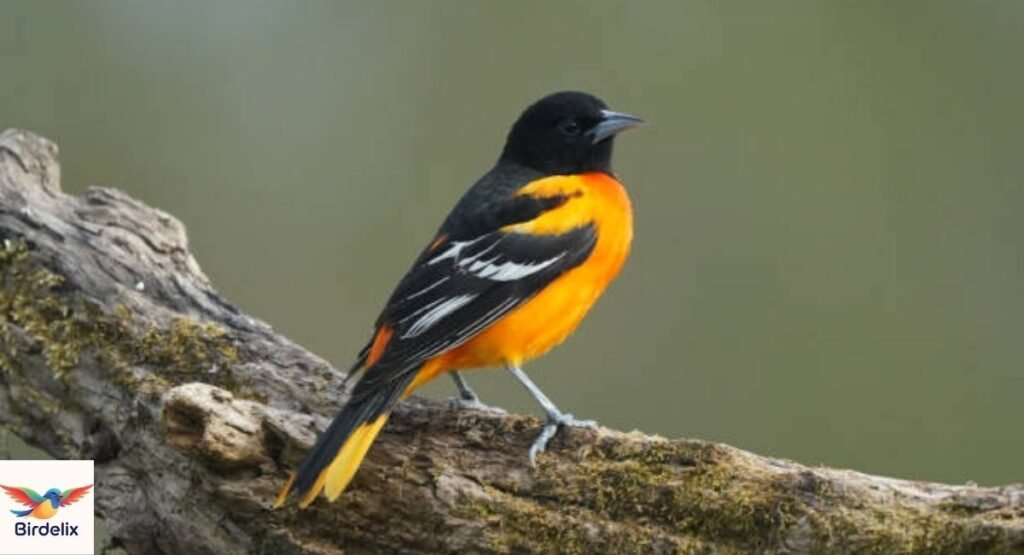
The Baltimore Oriole is one of the best-known orange and black birds in eastern North America. Adult males have a vivid orange body, a black head and back, and black wings with white markings. Females usually have softer yellow-orange underparts and less dramatic upperparts. Their pointed bills help them pick insects and fruit from trees.
Baltimore Orioles breed across much of the eastern and central United States before migrating to warmer regions for winter. Look for them in open woodlands, parks, orchards, and leafy backyards. They often feed high in the canopy, where their bright colors can be surprisingly difficult to see. You can compare their field marks with the Cornell Lab identification guide.
2. American Robin

The American Robin is a familiar backyard bird with a rusty-orange breast, gray-brown back, dark head, and yellow bill. Its rounded body and upright posture make it easy to recognize. Both sexes have orange breasts, although the male’s colors are often stronger. White markings around the eyes and throat can also help with identification.
Robins live across much of the United States and use lawns, parks, gardens, woodland edges, and open spaces. They often run across grass, pause, and pull earthworms from the soil. Their diet includes insects, earthworms, and berries. Some populations migrate, while others remain in the same general area throughout the year, depending on local weather and food supplies.
3. Bullock’s Oriole
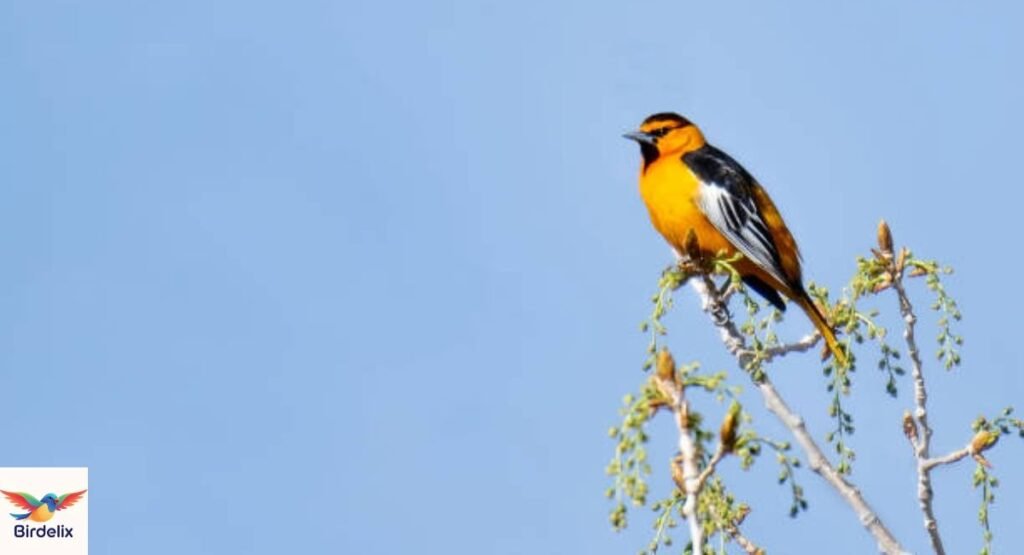
Bullock’s Oriole is a striking western species with bright orange underparts, a black back, and a large white wing patch. Adult males have an orange face with a black line through the eye and a black throat. Females are much duller, with yellowish-orange coloring, grayish upperparts, and white wing bars. Their pointed bills are well suited to feeding among leaves and twigs.
This oriole occurs mainly in western North America, including parts of California, the Great Basin, and areas farther north. It often lives in open woodlands, cottonwood groves, parks, and streamside habitats. Bullock’s Orioles eat insects, fruit, and nectar. Where their range overlaps with the Baltimore Oriole, comparing facial markings and wing patterns is especially useful.
4. Orchard Oriole
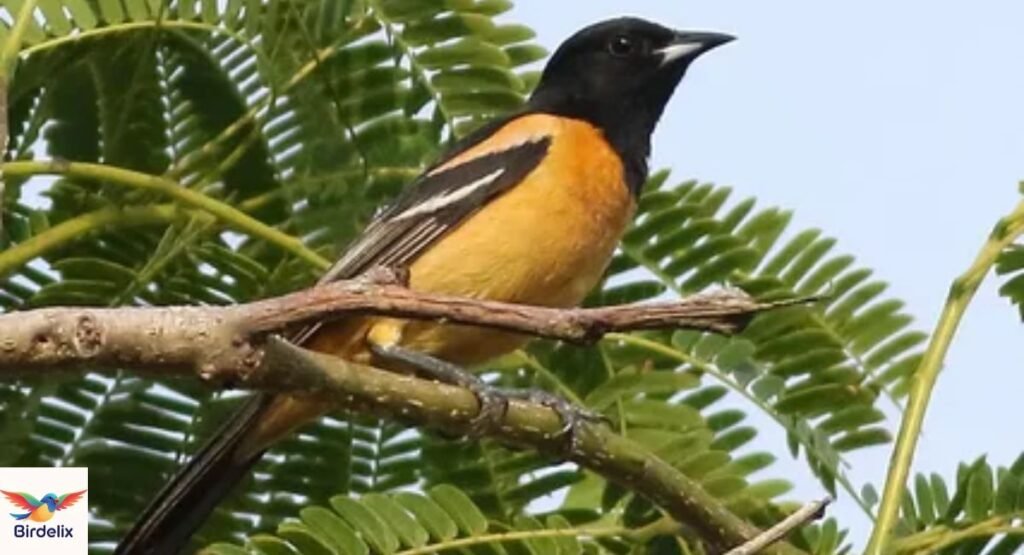
The male Orchard Oriole has deep chestnut-orange underparts, a black head, and dark upperparts. Its colors are usually darker and more reddish than the bright orange of a male Baltimore Oriole. Females are yellow-green with pale underparts, making them less obvious among leaves. Their slender shape and pointed bill help identify them as orioles.
Orchard Orioles breed in parts of the eastern and central United States, often near orchards, scattered trees, river edges, and open woodland. They feed on insects, fruit, and nectar, frequently moving through the outer branches of trees. They are migratory and generally spend winter farther south. Their smaller size and chestnut coloration are helpful clues when comparing them with other orange oriole species.
5. Blackburnian Warbler
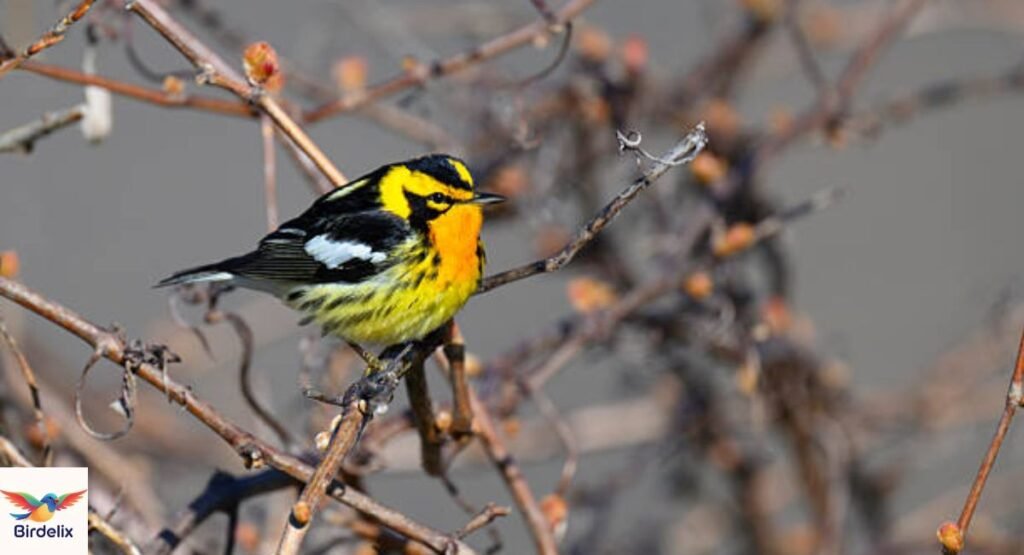
The Blackburnian Warbler is a small songbird famous for the male’s brilliant flame-orange throat and face. Black markings frame the orange area, while white wing bars and dark upperparts create a sharp contrast. Females and young birds are less colorful, usually showing yellowish tones rather than the male’s vivid orange throat. Its small size can make it challenging to observe clearly.
This warbler breeds mainly in forests across parts of northeastern and northern North America, including the United States. During migration, it may appear in wooded parks and gardens. It spends much of its time high in trees, searching leaves and branches for insects. Its bright throat is a strong identification clue, especially when sunlight reaches the canopy.
6. American Redstart
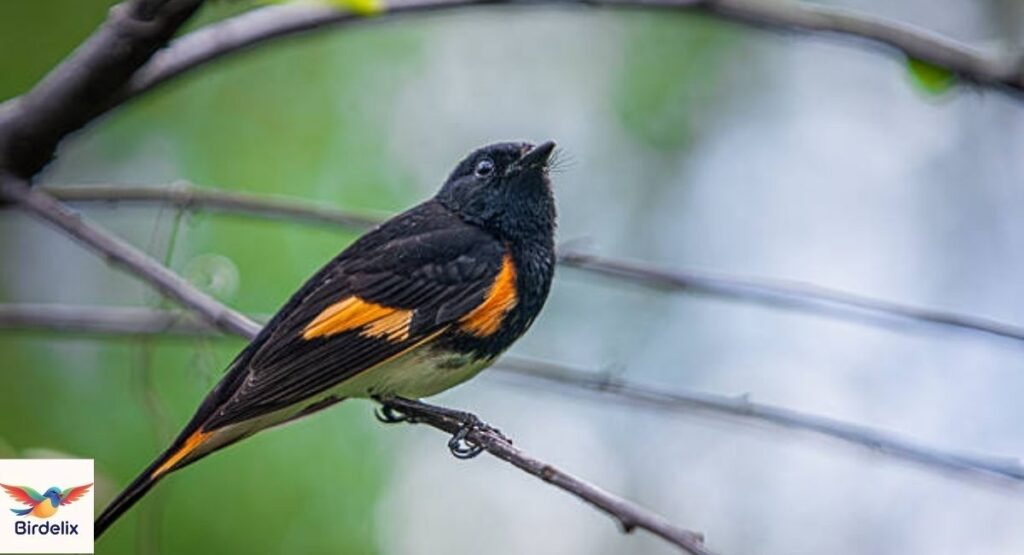
The male American Redstart has mostly black plumage with orange patches on its sides, wings, and tail. Females and immature birds usually have gray or olive upperparts with yellow rather than orange markings. The species is small, active, and quick to move through vegetation. Its bright patches become especially noticeable when it spreads its tail or flicks its wings.
American Redstarts breed across much of the United States and Canada before migrating to warmer areas for winter. They favor leafy forests, wooded streams, and shrubby habitats. While feeding, they fan their tails and flash their wings to flush insects from leaves. This behavior, combined with their distinctive markings, can help you identify them even when they do not sit still for long.
7. Varied Thrush
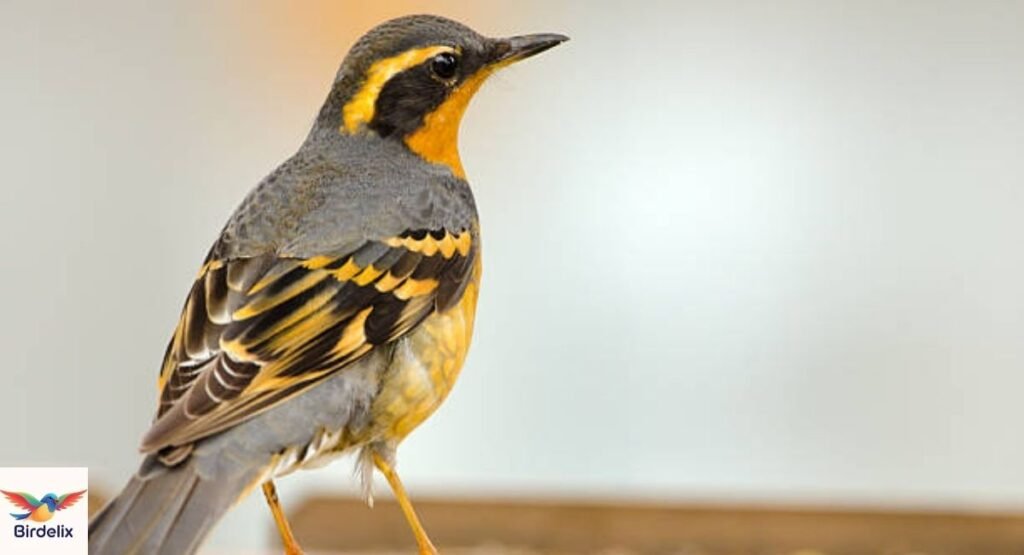
The Varied Thrush has a dark blue-gray or blackish back, an orange breast, and orange markings above the eye. A dark breast band divides its warm-colored underside, giving it a different appearance from the American Robin. Males tend to have stronger contrasts, while females are generally duller. Its rounded body and forest-dwelling habits are additional identification clues.
This species is most closely associated with the Pacific Northwest and western forests. During the breeding season, it uses dense, moist woodland, while wintering birds may visit parks and gardens with suitable trees and shrubs. Varied Thrushes forage on the ground and in low vegetation for insects, berries, and other food. Their strong orange breast and dark band are key features to notice.
8. Rufous Hummingbird
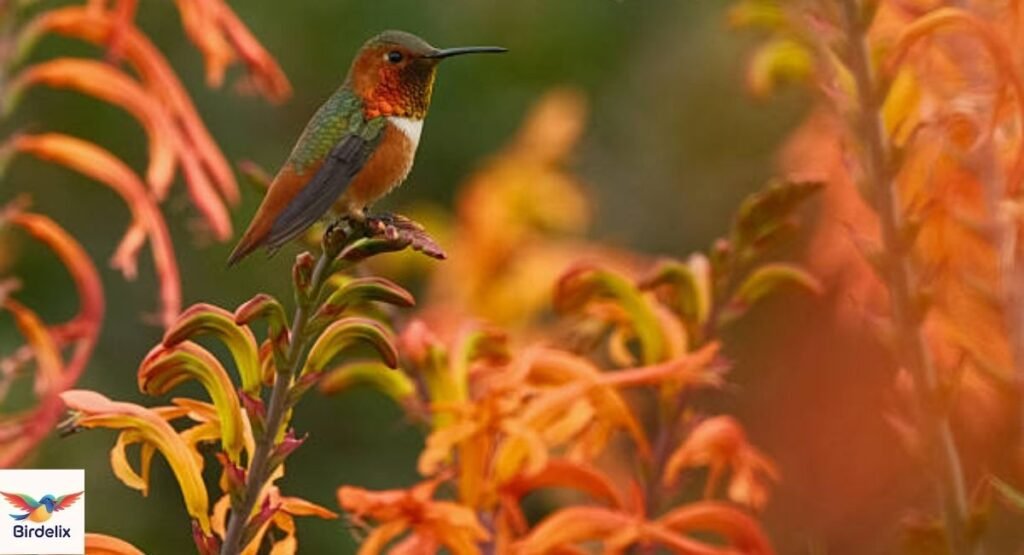
The Rufous Hummingbird is a tiny bird known for its coppery-orange body and fast, energetic flight. Adult males often have a bright orange-red throat, while females usually show green upperparts and rusty sides. Some birds have more green than others, so color alone may not always provide a definite identification. Their long, narrow bills help them reach nectar inside flowers.
Rufous Hummingbirds breed in western North America and make impressive seasonal journeys between breeding and wintering areas. They visit flowering plants, feeders, and gardens where nectar is available. They also eat small insects and spiders, which supply important nutrients. Their hovering flight, tiny size, and rusty feathers make them recognizable, especially in western gardens during migration.
9. Allen’s Hummingbird

Allen’s Hummingbird resembles the Rufous Hummingbird, with rusty-orange sides, a green back, and a bright throat patch on adult males. Males often show an orange-red throat, while females have softer colors and may display small orange patches. Because the two species look so similar, even experienced birdwatchers sometimes need to study their tail feathers and other fine details.
Allen’s Hummingbird is associated mainly with coastal California and parts of the Pacific Coast. It visits gardens, scrub, woodland edges, and flowering areas where nectar is available. Like other hummingbirds, it also catches tiny insects for protein. Location can help narrow down the identification, but it is best to compare several physical features instead of relying only on orange coloration.
10. Western Tanager
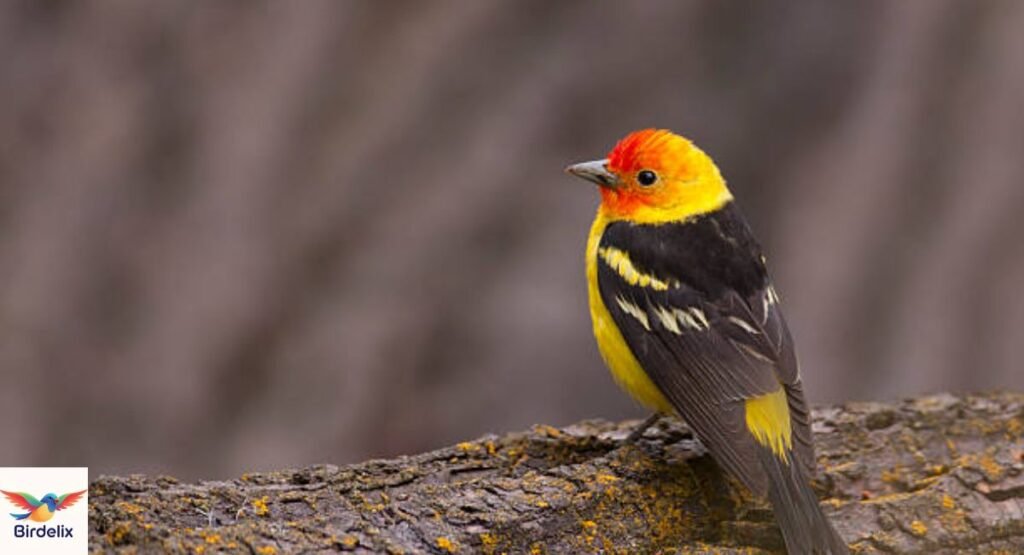
The male Western Tanager has an orange-red head, a yellow body, and black wings. Its combination of warm and cool colors makes it one of the most eye-catching birds of western forests. Females are usually yellow-green with darker wings and lack the male’s vivid head color. The species has a sturdy body and a short, thick bill suited to its varied diet.
Western Tanagers breed in coniferous and mixed forests across western North America. They may also appear in wooded parks during migration. Their food includes insects, fruit, and other small natural items. They often forage in the canopy, so listening for calls and scanning the tops of trees can help you find them. Their orange-red head is a useful clue when distinguishing them from other yellow birds.
11. House Finch
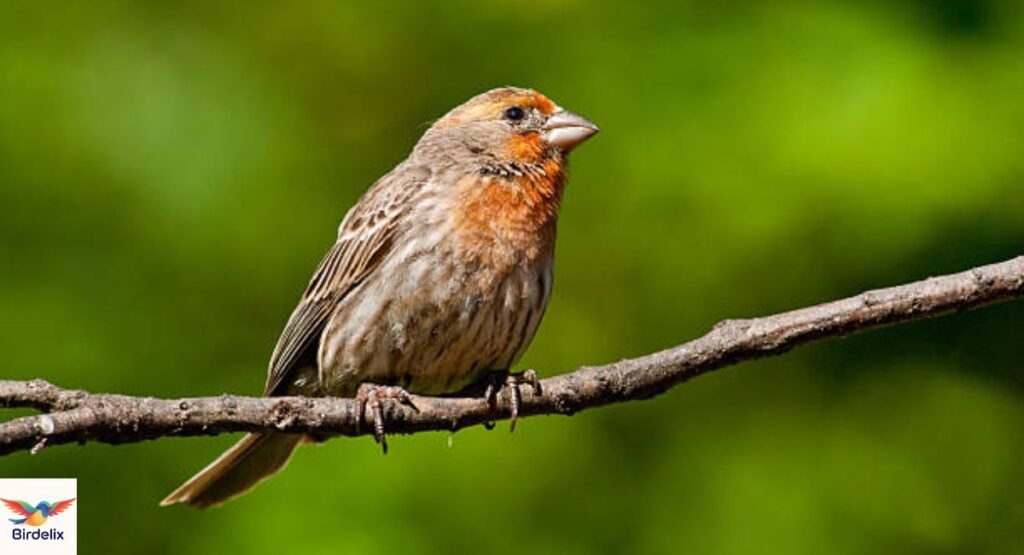
The House Finch is a small, adaptable songbird often seen around homes, shopping areas, gardens, and feeders. Males can have red, orange, or yellowish coloring on the head, breast, and rump, while females are brown and heavily streaked. The intensity of a male’s color can vary with diet, so not every male appears bright red or orange.
House Finches occur across much of the United States, especially in settled areas with trees, shrubs, and food sources. They eat seeds, buds, and some fruit, and they readily use suitable feeders. Their conical bills are designed for cracking seeds. If you see a small bird with a streaked brown body and warm-colored head or breast, check whether it is a male House Finch.
12. Black-Headed Grosbeak
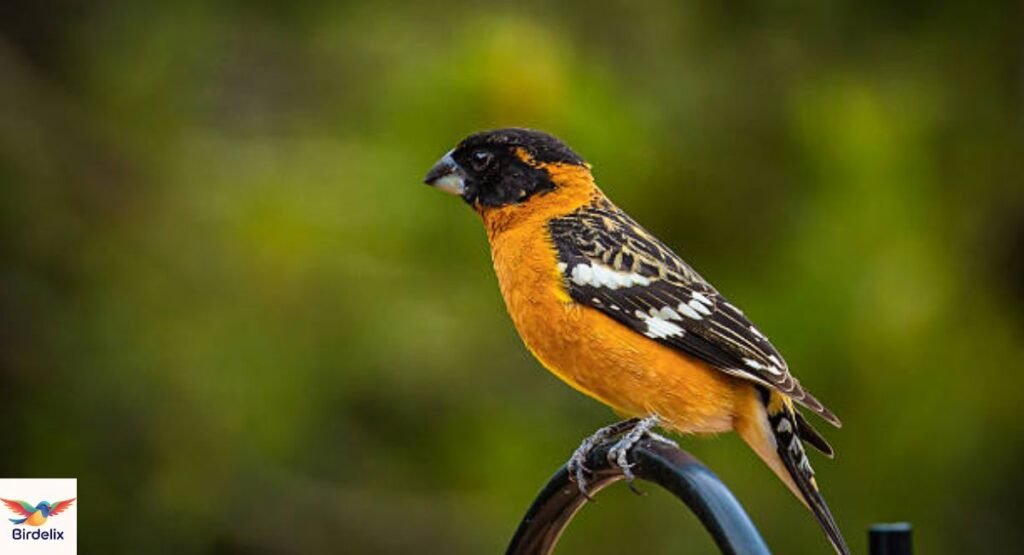
The male Black-Headed Grosbeak has a black head, orange-buff underparts, dark wings, and bold white wing patches. Its thick, triangular bill is stronger than the bills of many small songbirds. Females have a brown-and-white striped head and a more muted body, so they may not look orange at first glance. The male’s color pattern is usually the easiest to recognize.
This grosbeak breeds in western North America, using open woodlands, forest edges, and leafy areas near streams. It feeds on insects, seeds, and fruit. Its strong bill helps it handle larger seeds than many smaller birds can manage. During migration, it may visit wooded yards and parks. Look for its orange-buff underside and black head when identifying it among other western songbirds.
13. Say’s Phoebe

Say’s Phoebe is a flycatcher with a gray-brown back, a darker head, and a soft salmon-orange or rusty underside. Its colors are more muted than those of an oriole, but its warm belly stands out against the rest of its body. It often sits upright on exposed perches and makes short flights to catch insects.
This species lives mainly in western North America, especially open country, deserts, rocky landscapes, and areas with scattered buildings or shrubs. It often chooses a fence, rock, or low branch as a lookout. Its habit of returning to the same perch makes observation easier. When you see a gray bird with a warm-colored belly in open western habitat, Say’s Phoebe is worth considering.
14. Eastern Bluebird
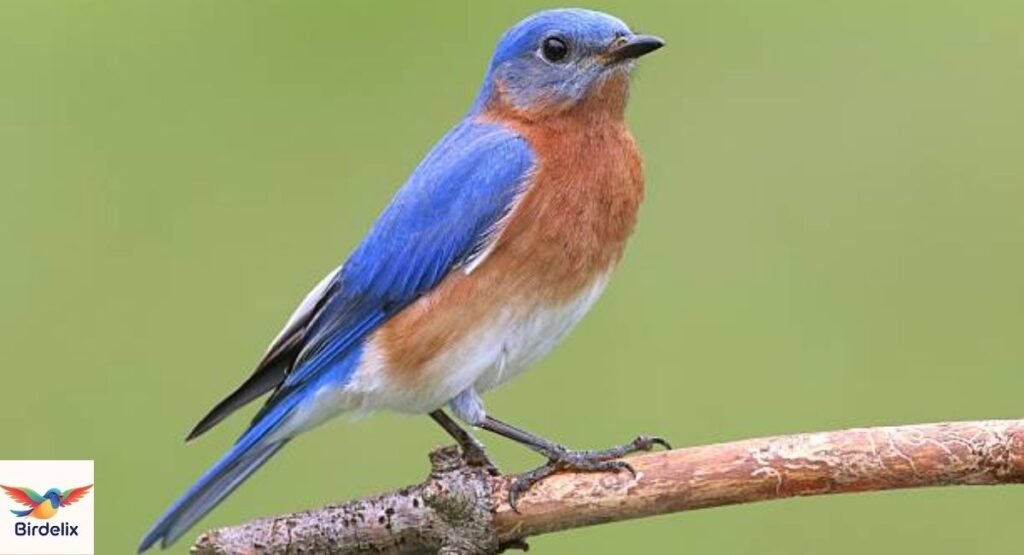
The male Eastern Bluebird has bright blue upperparts, a rusty-orange breast, and a pale underside. Females have softer blue-gray upperparts and less intense orange coloring. Its rounded body, short bill, and neat appearance make it easy to distinguish from larger orange-breasted birds. The contrast between blue and orange is one of its most recognizable features.
Eastern Bluebirds live across much of the eastern United States and parts of central North America. They prefer open fields, meadows, orchards, and woodland edges where they can spot insects from a perch. They also use nest boxes when suitable natural cavities are scarce. Their diet includes insects, spiders, and fruit, depending on the season. Look for them sitting on fences or low branches before dropping to the ground for prey.
15. Western Bluebird
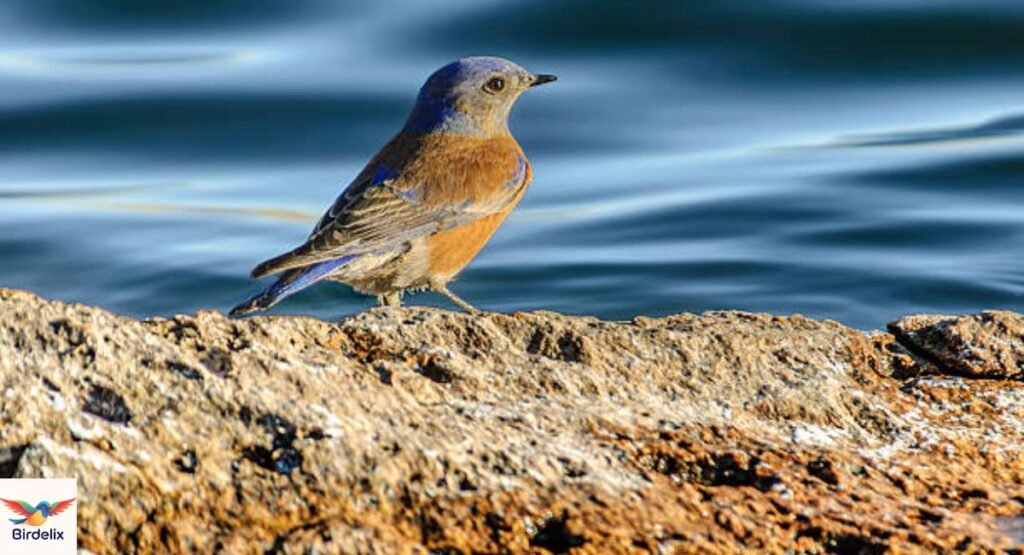
The Western Bluebird has a blue head and wings, a warm orange breast, and a blue or blue-gray back. Adult males show the strongest colors, while females are generally duller. Although it resembles the Eastern Bluebird, its color distribution and geographic range help separate the two. Its compact body and short bill are useful clues during identification.
Western Bluebirds live across parts of the western United States, especially in open woodland, grassland edges, and areas with scattered trees. They often perch on branches or fence posts while watching for insects. Nest boxes can help support local populations where natural cavities are limited. If you spot a blue bird with an orange breast in western habitat, compare its head and back markings before deciding which bluebird species you have found.
16. Barn Swallow
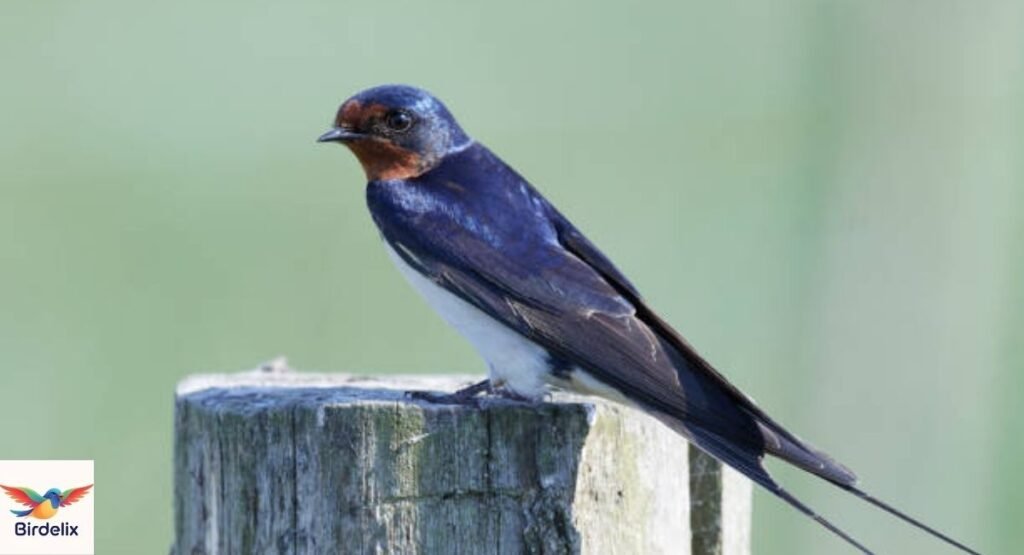
The Barn Swallow has glossy blue upperparts, a rusty-orange forehead and throat, warm underparts, and a deeply forked tail. Its long, pointed wings and streamlined body are built for fast, agile flight. The bird often appears to glide and turn effortlessly as it catches insects in the air. Its orange face and blue back make a distinctive combination.
Barn Swallows occur across much of the United States during the breeding season and migrate south for winter. They use farms, open fields, wetlands, and areas near water, where flying insects are plentiful. They often build mud nests on barns, bridges, and other sheltered structures. Watching their flight can help you distinguish them from other swallows, which may have different tail shapes or throat colors.
17. Belted Kingfisher
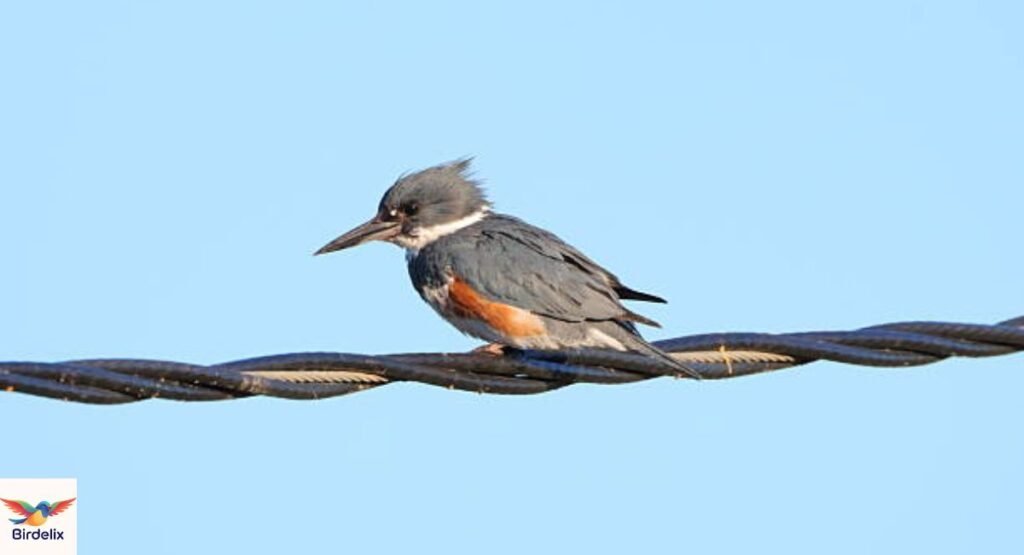
The Belted Kingfisher has a large head, shaggy crest, blue-gray upperparts, and a white collar. Females have a rusty-orange band across the belly and additional orange coloring along the sides, making them more colorful underneath than males. Its long, pointed bill and stocky shape distinguish it from many other birds near water.
Belted Kingfishers live around rivers, lakes, ponds, and coastal waters across much of North America. They often perch above the water, watch for fish, and dive headfirst to catch prey. Their rattling call can reveal their presence before you see them. If you spot a crested bird near a river with blue-gray upperparts and an orange belly band, a female Belted Kingfisher may be the answer.
18. Red-Winged Blackbird
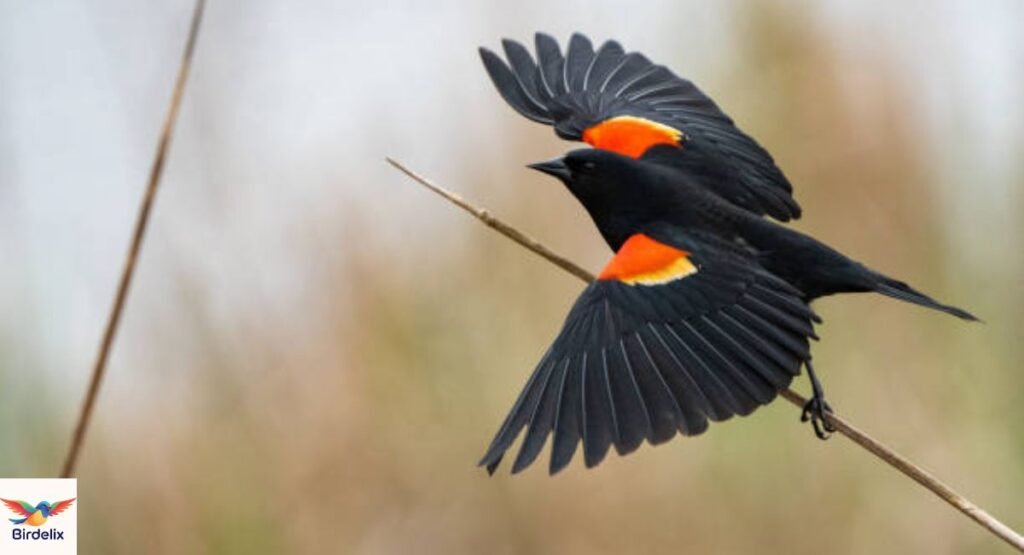
The Red-Winged Blackbird is mainly black, not orange, but adult males have bright red shoulder patches that can appear orange-red in certain light. A narrow yellow border often separates the colored patch from the black body. Females look very different, with brown, cream, and heavy streaking that helps them blend into marsh vegetation.
This species is common in wetlands, marshes, grassy fields, and roadside ditches across much of the United States. Males often perch on tall reeds or exposed stems while calling and defending their territories. Their shoulder patches are especially visible during displays. Because the orange-like color covers only a small area, this bird is a useful reminder to examine individual markings rather than judging by the overall body color.
19. Carolina Wren

The Carolina Wren is a small, energetic bird with rich rusty-brown upperparts, a warm orange-buff underside, a white eyebrow stripe, and a slightly curved bill. Its tail often points upward as it moves through brush and dense vegetation. Both sexes look similar, which makes its distinctive shape, color, and loud song important clues for identification.
Carolina Wrens live throughout much of the eastern United States and remain in many areas year-round. They explore gardens, woodpiles, shrubs, sheds, and woodland edges while searching for insects and spiders. They may also eat fruit or seeds. Their rich song can be surprisingly loud for such a small bird. Look in sheltered, brushy places rather than only at feeders when trying to find one.
20. Red-Breasted Nuthatch
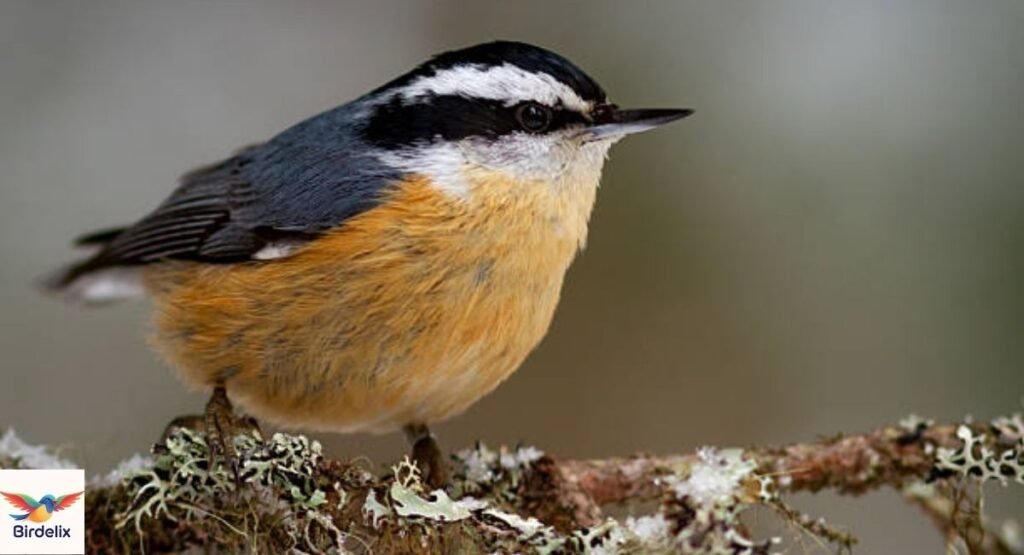
The Red-Breasted Nuthatch is a small bird with a blue-gray back, a black eye stripe, a white eyebrow, and rusty-orange underparts. Its compact body and pointed bill help distinguish it from larger orange-breasted species. It often moves headfirst down tree trunks, an unusual behavior that can make it easy to recognize once you notice it.
This nuthatch lives in coniferous forests across parts of North America and may appear in parks and backyards with suitable evergreen trees. Its diet includes insects, seeds, and conifer seeds, depending on the season. Some populations move south when food becomes scarce, while others remain in their usual range. Its rusty breast, blue-gray back, and tree-climbing behavior make a helpful combination of identification clues.
Orange Birds That Are Easy to Confuse
Several species share orange feathers but differ in size, markings, or habitat. Comparing these features is often more reliable than relying on color alone. The following examples cover some common identification challenges, especially for birdwatchers who are learning to recognize orange bird species in their yards or during outdoor trips.
When two birds look similar, note where the color appears and how the bird behaves. A long pointed bill, a dark breast band, a forked tail, or a particular wing patch can help narrow the possibilities. Geographic range is another useful clue, although some species overlap or appear outside their usual range during migration.
Baltimore Oriole vs. Bullock’s Oriole
The Baltimore Oriole is mainly an eastern and central species, while Bullock’s Oriole is found mostly in the West. Adult males of both species combine orange and black feathers, but their face patterns differ. A male Baltimore Oriole has a mostly black head, whereas Bullock’s Oriole has an orange face with a black line through the eye and a black throat.
Their wing markings also help separate them. Bullock’s Oriole usually shows a larger white wing patch, while the Baltimore Oriole has a different arrangement of white markings on its black wings. Females of both species are duller and can be harder to identify. The Cornell Lab comparison guide offers useful photographs for checking these details.
American Robin vs. Varied Thrush
Both birds have orange breasts and brown or dark upperparts, but their patterns differ. The American Robin usually has a more uniform rusty-orange breast, a gray-brown back, and a dark head. The Varied Thrush has a strong dark band across the breast and orange markings above the eye, giving it a more sharply patterned appearance.
Habitat can also help. American Robins are common in lawns, gardens, parks, and many open habitats across the United States. Varied Thrushes are more closely associated with western forests, especially in the Pacific Northwest. If the bird has a dark chest band and appears in dense, moist woodland, consider the Varied Thrush before settling on a robin.
Rufous Hummingbird vs. Allen’s Hummingbird
Rufous and Allen’s Hummingbirds are small, fast-moving birds with similar rusty-orange coloring. Adult males of both species can have bright orange-red throats, while females tend to show green upperparts and rusty sides. Their colors overlap so much that a quick glimpse may not be enough for a confident identification.
Geographic range can help, particularly along the Pacific Coast, but it does not always settle the question. Experts may examine tail-feather shapes, subtle plumage details, and other features. If you cannot see those details clearly, record the bird as an unidentified hummingbird rather than guessing. Careful observation is more useful than forcing a precise label.
Eastern Bluebird vs. Western Bluebird
Eastern and Western Bluebirds both have blue upperparts and orange breasts. The Eastern Bluebird is common across much of the eastern United States, while the Western Bluebird lives in western regions. Their color patterns overlap, so the bird’s location is often an important first clue.
Look closely at the head, throat, and back, then compare the bird with photographs from a trusted field guide. Both species use open areas with scattered trees and may visit nest boxes. Since their ranges differ, a bluebird seen in the East is more likely to be an Eastern Bluebird, while one in suitable western habitat may be a Western Bluebird.
Orange Birds by Their Color Patterns
Color patterns offer a practical way to narrow down bird identification. Some species have a strong orange-and-black contrast, while others combine orange breasts with blue backs or show rusty colors across most of their bodies. Grouping birds by their markings can help you remember what to look for during a walk or backyard observation.
However, birds within the same color group may belong to very different families. Their bills, body shapes, calls, and feeding styles can vary greatly. Use color as a starting point, then confirm the identification with other features. This approach is especially helpful when a bird is far away or only visible for a few seconds.
Birds With Orange and Black Feathers
Baltimore Orioles, Bullock’s Orioles, and Orchard Orioles are well-known examples of birds with orange-and-black plumage. Male Blackburnian Warblers also show strong dark markings around their orange throat and face. American Redstarts have orange patches against a mostly black body, so their orange is more limited than that of an oriole.
The location and shape of each patch matter. A Baltimore Oriole has a broad orange body, while an American Redstart flashes orange on its wings, sides, and tail. Bullock’s Orioles show a distinctive black eye line and white wing patch. Comparing these patterns can make orange and black bird identification much easier.
Birds With Orange Breasts and Blue Backs
Eastern Bluebirds, Western Bluebirds, and Barn Swallows are good examples of birds with orange breasts and blue upperparts. Bluebirds have rounded bodies and short bills, while Barn Swallows have long pointed wings and a deeply forked tail. These differences are easy to notice when the birds perch or fly in open areas.
Their habitats provide further clues. Bluebirds often sit on fences, low branches, or nest boxes while watching for insects. Barn Swallows spend much of their time in flight, catching insects over fields and water. If a blue-and-orange bird keeps swooping through the air, its shape and flight style may point toward a swallow rather than a bluebird.
Birds With Rusty or Copper-Colored Bodies
Rufous Hummingbirds, Carolina Wrens, Say’s Phoebes, and Red-Breasted Nuthatches show different versions of rusty or copper-colored feathers. Rufous Hummingbirds can appear bright copper-orange, while Carolina Wrens have a more subdued rusty-brown body. Say’s Phoebes show a softer salmon-colored underside, and Red-Breasted Nuthatches combine rusty underparts with blue-gray backs.
These birds are not always easy to recognize by color alone. Size and behavior are useful clues. A tiny bird hovering near flowers may be a hummingbird, while a bird climbing headfirst down a tree trunk may be a nuthatch. A flycatcher sitting on an exposed rock or fence could be Say’s Phoebe. Matching the color with the behavior gives a clearer result.
Birds With Small Orange Patches on Their Wings
Some birds show orange only in a small part of their plumage. The American Redstart has orange patches on its wings, sides, and tail, while the Red-Winged Blackbird has red-orange shoulder patches bordered by yellow. These markings can become more visible when the birds spread their wings or display their feathers.
Do not assume that a bird with an orange patch belongs to the same group as a fully orange species. Red-Winged Blackbirds have a mostly black body, and American Redstarts have a different shape and feeding style. Look for the patch’s position, the bird’s overall size, and its habitat to avoid confusing unrelated species.
Where to Find Orange Birds in the United States
The best place to find an orange bird depends on its species and seasonal range. Some birds are common around homes and neighborhood parks, while others prefer dense forests, wetlands, or open western landscapes. The United States has a wide range of habitats, so different regions offer different opportunities for birdwatching.
Start by observing the habitat around you. Look at the trees, water sources, shrubs, and open ground. Then consider which birds are expected in your area during the current season. A field guide or range map can help you distinguish a regular resident from a seasonal visitor or an unusual sighting.
Orange Birds in Backyards and Neighborhood Parks
American Robins, House Finches, Carolina Wrens, and Eastern Bluebirds may appear in residential areas where food and shelter are available. Robins often search lawns for worms, while House Finches visit seed feeders and eat small seeds. Carolina Wrens prefer dense cover, and bluebirds often use open lawns, meadows, and nest boxes.
To attract birds, keep a variety of native shrubs and trees in your yard. Provide clean water and avoid using pesticides that reduce insect food. Different birds have different needs, so a yard with varied plants and safe shelter may support more species than one designed around a single feeder. Bird-friendly landscaping can make everyday observations more rewarding.
Orange Birds in Forests and Woodlands
Forests support many colorful species, including Blackburnian Warblers, Western Tanagers, Black-Headed Grosbeaks, and Varied Thrushes. Some forage high in the canopy, while others search lower branches or the forest floor. Their colors can blend into leaves and shadows, so listening for calls and watching movement may be as useful as looking for orange feathers.
Eastern forests and western coniferous forests support different bird communities. Blackburnian Warblers favor forested breeding areas in the north and east, while Western Tanagers are associated with western forests. Varied Thrushes are strongly linked to the Pacific Northwest. When exploring woodland habitats, bring binoculars and scan tree trunks, branch tips, and canopy openings.
Orange Birds Near Rivers, Marshes, and Lakes
Waterways provide food, nesting areas, and shelter for many birds. Belted Kingfishers perch above rivers and ponds to watch for fish, while Red-Winged Blackbirds often use marsh vegetation and wetland edges. Barn Swallows hunt flying insects over water, and American Robins may forage on nearby lawns or in wooded areas.
A quiet approach can improve your chances of seeing these birds. Stand at a safe distance from nests and avoid disturbing feeding areas. Look for exposed perches, reeds, muddy banks, and branches near the water. A bird’s behavior often reveals what it is doing: kingfishers may dive for fish, while swallows swoop through the air after insects.
Orange Birds in Western Deserts and Open Country
Western deserts, dry grasslands, rocky areas, and open country provide habitat for birds such as Say’s Phoebes and, in suitable areas, Western Bluebirds. Rufous Hummingbirds may also pass through western landscapes during migration, especially where flowering plants provide nectar. These species use different parts of the habitat, from exposed perches to flowers and scattered trees.
In open country, birds may be easier to spot against the sky, but they can still be far away. Scan fence posts, rocks, shrubs, and isolated trees. Watch for a flycatcher returning to the same perch or a bluebird dropping to the ground for insects. Always consider the region and season before deciding which orange-marked species you have seen.
When Can You See Orange Birds?
The best season for seeing orange birds varies by species and location. Migratory birds may appear only during breeding season or while traveling between northern breeding grounds and warmer wintering areas. Other species remain in one region all year. Weather, food availability, and local habitat can influence when and where you see them.
A useful way to plan birdwatching is to learn which species occur in your state and when they usually arrive. Range maps and seasonal reports can help set expectations. Remember that migration dates are not identical every year. A warm spring, a cold spell, or changes in food supplies may affect the timing of sightings.
Orange Birds During Spring and Summer
Spring and summer are excellent times to look for orioles, warblers, tanagers, and hummingbirds in areas where they breed. Many migratory birds return to establish territories, find mates, and raise young. Their songs and calls may make them easier to locate, even when their colorful feathers are hidden among branches.
Male birds often show their strongest breeding colors during this period, although species differ in their timing and appearance. Baltimore Orioles may visit leafy trees and fruit feeders, while Blackburnian Warblers spend much of their time high in forests. Hummingbirds visit flowering plants and feeders as they search for energy-rich nectar. Observe nesting birds from a distance to avoid disturbing them.
Migratory Orange Birds and Their Seasonal Movements
Many orange-colored birds migrate between breeding areas and wintering grounds. Baltimore Orioles and Bullock’s Orioles generally leave much of the United States during winter, while Western Tanagers and many hummingbirds also move seasonally. Their movements follow changing food supplies, weather conditions, and the need to breed in suitable habitats.
Migration can make a species appear in places where it is not present for most of the year. During spring and fall, parks, gardens, and wooded areas may provide temporary feeding stops. If you see an unfamiliar orange bird, check whether the species is migrating through your region. Local bird reports and range maps can help confirm whether the sighting fits the season.
Orange Birds You May See Throughout the Year
Some birds remain in parts of the United States all year. Carolina Wrens and House Finches are year-round residents in much of their ranges, while American Robins may remain in some areas and move away from others. Local conditions make a difference, so the same species may be common throughout the year in one state but seasonal in another.
Winter birdwatching can still reveal warm colors. Look for robins feeding on berries, House Finches visiting seed feeders, or Carolina Wrens moving through shrubs and woodpiles. In some years, Red-Breasted Nuthatches move beyond their usual range in search of food. Checking local sightings can help you understand which birds are likely to appear during colder months.
What Makes a Bird’s Feathers Orange?
Many yellow, orange, and reddish feather colors come from carotenoid pigments obtained through food. Birds may gain these pigments by eating fruits, seeds, or other food sources, depending on the species. The pigments are processed by the body and deposited into growing feathers. This helps explain why some birds display bright colors while closely related species show softer shades.
Not every orange or rusty feather gets its color in exactly the same way. Feather structure and other pigments can also influence how a color looks. Age, sex, diet, and feather wear may change a bird’s appearance over time. A young bird may look duller than an adult, and old or worn feathers may not appear as bright as fresh plumage.
How to Make Your Yard More Attractive to Orange Birds
A bird-friendly yard offers food, water, shelter, and safe places to rest. Different orange-colored birds have different diets, so there is no single feeder that attracts every species. Orioles may visit fruit or nectar stations, House Finches eat seeds, and hummingbirds feed on nectar while also catching small insects.
Native plants can provide a more natural food supply than feeders alone. Berry-producing shrubs, flowering plants, and trees support insects and fruit-eating birds throughout the year. Keep water sources clean, reduce window collision risks, and manage outdoor cats responsibly. These steps help make a yard safer for birds, whether you want to see orioles, bluebirds, hummingbirds, or other local species.
Choose Food That Matches the Species
Different birds need different foods. House Finches readily eat seeds, while hummingbirds depend on nectar and small insects. Orioles eat insects, fruit, and nectar, and American Robins search for worms, insects, and berries. Choosing food that matches a species is more effective than expecting all birds with orange feathers to visit the same feeder.
If you offer fruit or nectar, keep feeding stations clean and replace food before it spoils. Avoid using artificial dyes in hummingbird nectar, and never use moldy fruit. Feeders should supplement natural food sources rather than replace habitat. Native plants that produce flowers, seeds, berries, and insects can support birds for longer periods and attract a wider range of species.
Grow Native Plants That Provide Fruits and Insects
Native trees, flowering plants, and berry-producing shrubs can provide natural food and shelter. Plants that support caterpillars and other insects are especially useful during the breeding season, when many adult birds need protein to feed their young. Local native plant guides can help you choose species suited to your soil, rainfall, and climate.
Different plants support different birds. Flowering plants may attract hummingbirds and insects, while fruit-bearing shrubs can provide food for robins and orioles. Trees and shrubs also offer nesting places and cover from predators. A yard with several layers of vegetation can serve more bird species than a lawn with few plants or hiding places.
Add Clean Water and Safe Places to Rest
A clean birdbath can attract birds that need water for drinking and bathing. Use a shallow basin with a gentle slope, and change the water regularly to keep it fresh. During hot weather, frequent cleaning is important. In cold regions, safe water access can be useful when natural sources freeze, provided the setup is maintained properly.
Birds also need places to rest and escape danger. Native shrubs, mature trees, and dense vegetation provide shelter from wind and predators. Place feeders where birds have nearby cover but can still see approaching threats. Avoid locations that make it easy for cats to ambush birds. Safe resting areas make your yard more useful to birds throughout the year.
Make Windows and Outdoor Spaces Safer for Birds
Window collisions are a serious risk because birds may mistake reflections of trees or sky for open space. Use exterior window markers, screens, or other visible treatments to help birds recognize glass. Place feeders either very close to windows or farther away according to reliable bird-safety guidance, and adjust the setup if collisions occur.
Outdoor cats can also threaten birds, especially fledglings and ground-feeding species. Keeping cats indoors or using secure outdoor enclosures can reduce this risk. Avoid unnecessary pesticide use, since many birds depend on insects for food. Small changes to windows, gardens, and pet routines can help protect the birds you enjoy watching.
Conclusion
The Types of Orange Birds found across North America show how varied bird colors can be. Some, such as the Baltimore Orioles, have bright orange bodies and black wings. Others, including American Robins and bluebirds, display orange only on their breasts. Rusty feathers, orange-red patches, and copper-colored bodies add even more variety to the birds you may encounter.
When identifying a bird, look beyond its color. Consider its size, body shape, markings, behavior, habitat, and geographic range. Use a reliable field guide to check your observations, and give birds the space they need to feed and nest safely. With patience and careful observation, you can enjoy discovering more of the remarkable birdlife around you.
FAQs
What are the easiest orange birds to identify?
American Robins, Baltimore Orioles, and Eastern Bluebirds are good starting points. Their orange markings and overall body patterns are distinctive, especially when you can see the bird clearly.
Which birds have orange breasts but are not fully orange?
Eastern and Western Bluebirds, American Robins, Barn Swallows, and Varied Thrushes have orange or rusty breasts with differently colored upperparts. Their body shape and markings help tell them apart.
What small birds have orange or rusty feathers?
Rufous Hummingbirds, Allen’s Hummingbirds, American Redstarts, and Red-Breasted Nuthatches are small species with orange, coppery, or rusty markings. Size, flight, and habitat help with identification.
Why do some birds appear orange while others look red?
Pigments, diet, feather structure, age, and lighting all affect how warm colors appear. Some species also have genetic differences that influence the colors of their feathers.
Which orange birds can you attract to a backyard?
Depending on your location, American Robins, House Finches, orioles, and bluebirds may visit yards with suitable food, native plants, water, and shelter. The species you attract will depend on local habitat and range.

Welcome to Birdelix! I’m Anam Sattar, an AI-powered SEO Specialist and Content Writer with over 5 years of experience in creating high-quality, search-optimized content. I help businesses improve their search engine rankings, increase organic traffic, and build beautiful, user-friendly websites. My mission is to make SEO, content creation, and web design simple, effective, and accessible for everyone. Let’s grow your online presence and achieve success together!